Options

Options are versatile derivative instruments that give traders the right, but not the obligation, to buy (Call) or sell (Put) a digital asset at a specific strike price.Unlike futures, options offer a flexible way to hedge against "black swan" events or speculate on implied volatility. The 2026 landscape features a surge in on-chain options vaults (DOVs) and structured products that simplify complex "Greeks" for retail users. Explore this tag for insights into premium pricing, expiration cycles, and advanced strategic hedging in the decentralized derivatives market.

20825 Articles
Created: 2026/02/02 18:52
Updated: 2026/02/02 18:52
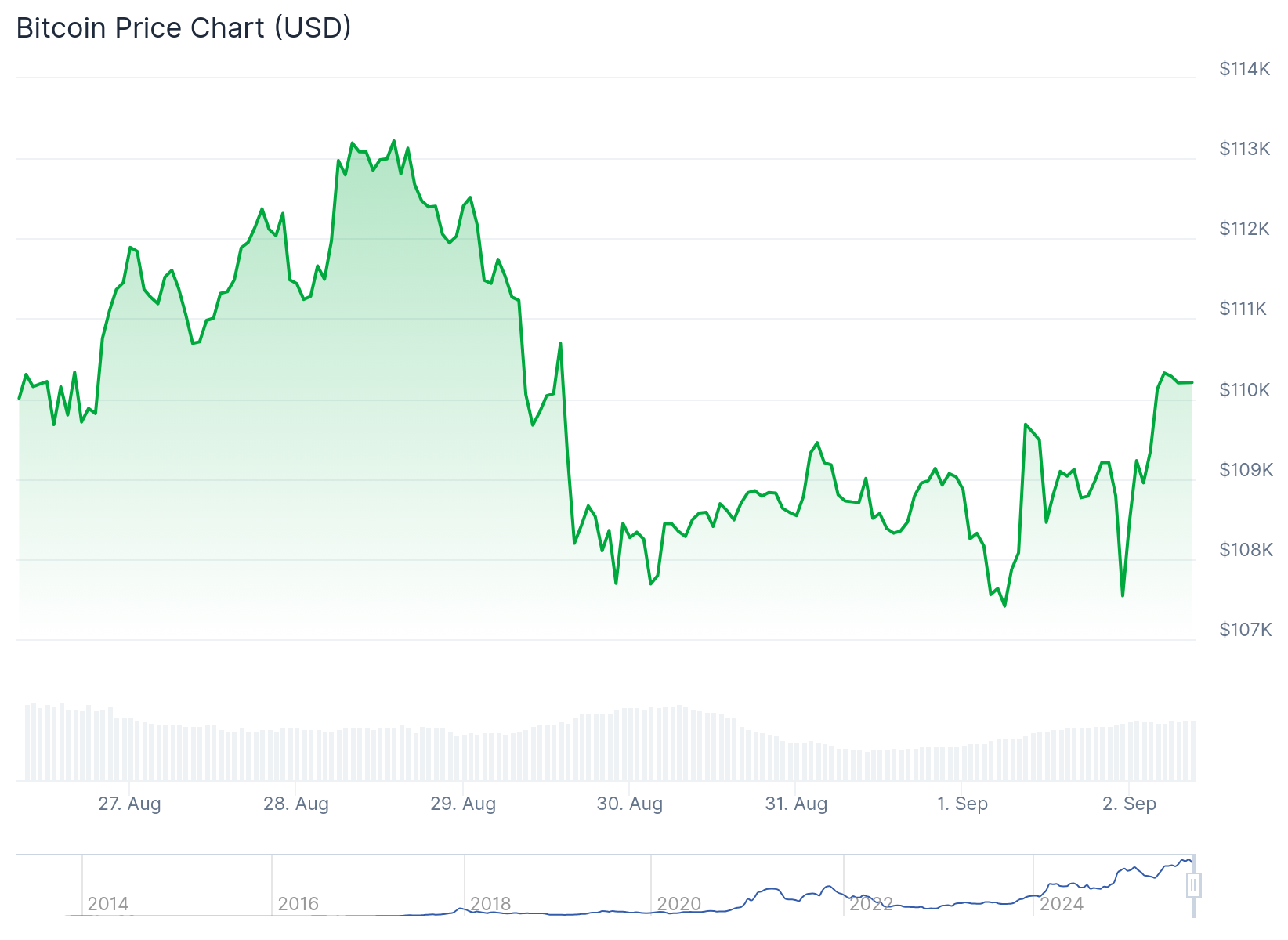
Bitcoin (BTC) Price: Why September Could Spell More Trouble for Bulls

Bitcoin (BTC) Price: Why September Could Spell More Trouble for Bulls

TLDR Bitcoin hovers around $110,000 as gold surges to record $3,508 per ounce ETF outflows totaled $751 million in August, ending four months of steady inflows September historically weak month for Bitcoin with multiple negative returns Ethereum shows fatigue with 28% drop in active addresses since July Friday’s jobs report could determine if Fed cuts [...] The post Bitcoin (BTC) Price: Why September Could Spell More Trouble for Bulls appeared first on CoinCentral.

Author: Coincentral
Dogecoin ETF Incoming? PEPE and BONK See Volume Spike to New Records

Dogecoin ETF Incoming? PEPE and BONK See Volume Spike to New Records

Speculation is mounting around the possibility of a Dogecoin ETF, and the news has sparked a surge in trading activity […] The post Dogecoin ETF Incoming? PEPE and BONK See Volume Spike to New Records appeared first on Coindoo.

Author: Coindoo
Forget Stablecoins, Fiat Is the Real Scam: Surviving EM Currency Snaps with Bitcoin and Beyond

Forget Stablecoins, Fiat Is the Real Scam: Surviving EM Currency Snaps with Bitcoin and Beyond

Forget Stablecoins, Fiat Is the Real Scam: Surviving EM Currency Snaps with Bitcoin and BeyondPhoto by Sunday Abegunde on Unsplash Hello Crypto Trailblazers, You’re chilling with your morning smoothie or maybe burning the midnight oil over a coding session, when you catch wind of the Nigerian naira trading at a staggering 1,535 per USD, scraping its 52-week lows like a crypto token in a bear market freefall. It’s a gut punch, right? If you’re thinking, “I’m safe in my DeFi bubble, no worries,” pump the brakes. If your income, suppliers, or even your NFT collectors are tied to emerging market (EM) currencies, this is your wake-up call. Currency slides in places like Nigeria don’t just drift downward like a lazy river. They snap, like a rubber band stretched too far, then spiral into a chaotic cascade that wrecks prices, erodes wages, and obliterates savings faster than a scam coin’s rug pull. For our crypto crew, this isn’t just news; it’s a signal to act, because those ripples can hit your wallet, your operations, or your decentralized dreams harder than a 51% attack. I’m not here to spook you, but to arm you with the knowledge and tools to surf these waves like a pro. Whether you’re a Bitcoin HODLer, a DeFi yield farmer, a DAO contributor, or just someone dabbling in cross-border crypto trades, EM currency volatility is a beast you need to tame. Let’s dive deep into what’s happening, share some real-world stories, and map out how to protect your stack when fiat currencies start acting like memecoins gone wrong. Plus, I’ll throw in some extra context on why this matters for our global crypto community and how you can stay ahead of the game. The Naira’s Nosedive: A Case Study in Fiat Fragility Let’s zoom in on Nigeria, where the naira’s been on a wild ride, hitting 1,535 against the dollar and flirting with historic lows. Inflation’s clocking in at a brutal 34%, driven by a mix of skyrocketing import costs, policy hiccups, and global economic headwinds. This isn’t just a stat; it’s a reality check for anyone whose business or investments touch Nigeria’s economy. Maybe you’re a Web3 founder hiring Nigerian developers, paying them in USD through a crypto wallet, only to hear they’re struggling because their local costs are exploding. Or perhaps you’re running a remittance service, and your Nigerian users are watching their naira payouts buy less groceries each week. If you’re trading on a decentralized exchange with liquidity pools tied to EM economies or backing blockchain startups in Africa, these currency swings can turn your sweet 15% APY into a bitter 20% loss before you can say “gas fees.” This isn’t unique to Nigeria. We’ve seen this movie play out in Argentina, where the peso’s been in a death spiral, or Turkey, where the lira’s taken a beating, or Venezuela, where the bolívar’s worth less than the paper it’s printed on. Emerging market currencies don’t just trend downward like a stock chart with a bad earnings report. They snap under pressure, whether it’s from central bank missteps, capital fleeing to safer havens, or global shocks like oil price spikes. Once that snap happens, the cascade kicks in: import prices soar, local businesses jack up costs, wages lose purchasing power, and savings? They’re toast, like a wallet drained by a phishing scam. For anyone in the crypto space with exposure to these markets, whether through suppliers, clients, or investments, ignoring this is like leaving your private keys on a sticky note. Why Crypto Folks Should Care If you’ve been in crypto for more than a hot minute, you’re used to volatility. Price pumps, dumps, and sideways action are just part of the game. But EM currency slides add a layer of fiat chaos that can mess with even the tightest blockchain strategies. Think about it: Bitcoin was born from the ashes of the 2008 financial crisis, a middle finger to centralized monetary systems that keep printing money like it’s going out of style. Fast forward to 2025, and stablecoins like USDC or USDT are lifelines for millions in EMs, letting people preserve value when their local currency’s in freefall. Nigeria’s a prime example, with crypto adoption skyrocketing as folks swap naira for Bitcoin or stables to protect their wealth. The data backs this up: Nigeria’s one of the top countries globally for crypto transaction volume per capita, and it’s no surprise why. When fiat fails, crypto steps up. But here’s the flip side. If you’re on the sending end, say, a crypto fund investing in African blockchain projects or a dev team paying EM-based talent, these currency snaps can hit you hard. Your dollar-based payouts might seem stable, but your partners’ costs are ballooning, squeezing their margins or forcing you to renegotiate. If you’re running a DAO with global contributors or trading in liquidity pools with EM exposure, those naira-to-dollar swings can erode your returns faster than a flash crash. I’ve heard stories from crypto friends who got burned when they didn’t hedge their EM exposure, like one dev who paid Nigerian freelancers in USD but lost big when their local costs forced a 30% rate hike. Another buddy running a remittance app saw his Nigerian user base shrink because payouts couldn’t keep up with inflation. These aren’t hypotheticals; they’re real risks we face in this borderless crypto world. Your Crypto Hedge Playbook: Stay Ahead of the Snap Alright, let’s get to the good stuff: how to protect your bag when EM currencies start wobbling. Crypto’s our superpower here, built to outmaneuver fiat’s fragility. Here’s a playbook tailored for our community of builders, traders, and dreamers: Stack Bitcoin Like It’s Digital Gold: Bitcoin’s fixed supply is your shield against fiat devaluation. When currencies like the naira tank, BTC’s scarcity makes it a rock-solid store of value. Same goes for Ethereum, with its DeFi and NFT utility. If you’ve got naira or other EM currencies in your orbit, swap some for BTC or ETH to lock in value before the next snap. Stablecoins to the Rescue: USDC or USDT on fast, cheap networks like Solana or Polygon are your go-to for dodging FX volatility. Paying suppliers in Nigeria? Invoice in stables to keep things predictable. Your partners get stability, you avoid currency conversion headaches, and everyone sleeps better. I’ve seen startups save thousands by switching to USDC for cross-border payments. DeFi: Work Hard, Yield Harder: Got capital exposed to EM markets? Put it to work in DeFi. Lend USDC on protocols like Aave or Compound for steady yields, or explore options markets on dYdX to bet against further EM currency drops. Want to get fancy? Look into tokenized real-world assets from EM regions, but only if they’re backed by diversified collateral to avoid counterparty risk. A friend of mine doubled his returns by lending stables while hedging with ETH calls during a currency dip. Streamline Cross-Border Flows: If your business involves sending money to EMs, use crypto-native solutions like Stellar for fast, low-cost transfers. Local platforms in Nigeria, like BuyCoins or Bundle, can bridge naira to crypto smoothly, letting your partners convert at the best rates without bank fees eating their lunch. This is a game-changer for remittances or payroll. Stay Sharp with On-Chain Intel: Use analytics platforms like Dune or Nansen to track wallet flows from EM regions. A sudden spike in stablecoin deposits often signals a currency crisis brewing. Set alerts, monitor trends, and move your funds before the cascade hits. One trader I know saved his portfolio by spotting a USDT inflow surge from Nigeria and hedging early. This isn’t financial advice, so do your own research, but these strategies are battle-tested by crypto OGs who’ve navigated fiat storms before. The beauty of crypto is its permissionless nature, letting us move faster than the bureaucrats who tanked the naira in the first place. Crypto’s Role in EM Resilience Let’s zoom out. Nigeria’s naira drama is just one chapter in a global story. Similar currency woes in Egypt, Pakistan, and beyond are pushing people toward crypto as a lifeline. In these markets, blockchain isn’t just tech; it’s a survival tool. When local currencies lose trust, Bitcoin, Ethereum, and stables become the people’s money, bypassing banks and borders. Ethereum’s upgrades, like the Merge anniversaries, keep making it a powerhouse for EM adoption, with layer-2 solutions like Arbitrum slashing fees for users in high-inflation zones. Meanwhile, Nigeria’s own eNaira, a central bank digital currency, is trying to keep up, but it’s tethered to the naira’s shaky foundation, while true crypto runs free and untamed. This is why we’re in crypto, right? To build a world where centralized failures don’t dictate our financial freedom. I think of folks I’ve met in the community, like a Nigerian artist who turned his NFT sales into USDC to buy a house, or a dev in Argentina who escaped peso inflation by HODLing BTC. These stories remind us that crypto isn’t just about profits; it’s about empowerment. If you’re exposed to EM currencies, whether through business, investments, or personal ties, don’t wait for the next snap to hit. Hedge now, build redundancies, and keep your eyes on the blockchain horizon. A Personal Note from Your Sidekick I got into this crypto journey because I saw what fiat chaos did to real people, from friends in Zimbabwe who lost everything to inflation, to family in Lebanon whose savings evaporated. Those who got into crypto early? They’re still standing, some even thriving. If you’re reading this and you’ve got ties to EM markets, take it from me: don’t sleep on this. Hedge your exposure, diversify your stack, and lean into the tools that make crypto so powerful. Got a story about dodging a currency crisis with crypto? I’d love to hear it, so hit reply and share your tale. Stay decentralized, stay unstoppable, Crypto Circuit P.S. Digging these newsletters? Subscribe for free weekly drops packed with crypto insights and global vibes. No fluff, just the real stuff. And if you’re in Nigeria or another EM, you’re the heart of this revolution, keep pushing the boundaries of what’s possible. Forget Stablecoins, Fiat Is the Real Scam: Surviving EM Currency Snaps with Bitcoin and Beyond was originally published in Coinmonks on Medium, where people are continuing the conversation by highlighting and responding to this story

Author: Medium
The Fiat Algorithm: How Broken Money Programs the Economy to Exploit

The Fiat Algorithm: How Broken Money Programs the Economy to Exploit

The world runs on fiat money — and it’s hardwired to sell our future at a discount TL;DR: The article uses a cash flow analysis to demonstrate how inflationary fiat money distorts economic incentives. It compares two companies: Company A, which focuses on long-term sustainable practices, and Company B, which maximises short-term profits through unsustainable methods. Using a 7% annual discount rate (reflecting money’s depreciation), the present value of Company B’s earnings is higher than Company A’s, despite both generating the same total earnings over 15 years. This shows how debasement rewards short-termism. In contrast, under a deflationary “hard money” system (where money appreciates at 5% annually), the analysis flips: Company A’s long-term earnings are valued higher, incentivising sustainability. The article shows that inflation-driven discounting punishes future-oriented investments, while deflation aligns profitability with sustainability by naturally rewarding long-term value creation. Today, we live under an inflationary economic framework. In simple terms, this means that whatever deflationary forces are created by productivity growth, they must be offset by inflationary forces (monetary expansion) to achieve net positive inflation (aka the inflation target).In an inflationary economy, natural deflation (caused by productivity growth) must be offset by an inflationary force to achieve the inflation target. This is a structural reality: if we fail to do this, the real value of debt will rise, ultimately causing the current economy to collapse under its own weight. This is because the entire system is highly leveraged — with approximately $3-4 of debt existing for every $1 of actual value globally.* To generate the required inflationary force, the type of money we use is continuously debased — diluted through the creation of more units — which results in a consistent loss of purchasing power. In practical terms, this means that every dollar today will buy you fewer goods and services next year, and even less the year after. The act of debasing money is referred to as “monetary expansion” or “monetary inflation”. This debasement can lead to price inflation (which ultimately is the goal in aggregate)— where prices rise, as measured by the Consumer Price Index — or it can simply suppress prices from falling. Advocates of this system argue that monetary expansion — frequently referred to as “stimulating the economy” — is a prerequisite for achieving any productivity growth in the first place. This gets the causal arrows exactly backwards. Productivity growth does not come from stimulating the economy with money; it comes from tinkering, trial and error, and real human ingenuity. The surplus created by innovation then gives us the optionality of what to do with it: consume it, save it, or reinvest it. To confuse money creation with productivity creation is like confusing the scoreboard with the game. You don’t win a football match by changing the numbers on the scoreboard (that’s called cheating); you win by playing the game better — which then changes the scoreboard as a consequence. The problem is that, once you accept this flawed causality, policymakers keep making sure there is always plenty of money floating around — far more claims on goods than actual goods to buy. When someone then tries to “tighten” that money supply, the economy feels pain in the short term. That pain is then used as proof that stimulating the economy is necessary — when in reality it only proves how backward everything is. In this piece, we will delve into the potential long-term benefits of an alternative system and examine how the continuous debasement of money fundamentally distorts the economy’s incentive structures, driving overconsumption, waste, and practices that not only threaten social cohesion but also the planet itself. We will explore why monetary debasement not only encourages unethical behaviors but is, in fact, indistinguishable from it. We will show how the “fiat algorithm” — the built-in rule that money must constantly lose value — programs the economy and all its participants to exploit. Fiat money — depreciating in purchasing power To illustrate, we’ll use the U.S. dollar, the world’s reserve currency, as a template for this exercise. The U.S. dollar is the most widely used currency globally and also one of the least inflationary. Like most international currencies, it is “fiat money”, meaning it is issued at the discretion of the government with nothing with no inherent constraints. Over the past 100 years, the dollar has expanded at an average annual rate of approximately 7%**, resulting in a halving of its purchasing power roughly every eight years. This rate of expansion has been deemed necessary to achieve a target of 2% net positive inflation, as visualised in the previous graph. Without these inflationary measures, the dollar’s purchasing power would have naturally appreciated over the same period. Later, we will explore what such appreciation could mean for the economy. For now, though, the analysis that follows will compare a type of money similar to the one we use today — one that is continuously devalued — and examine the incentive structures it creates. Cash Flow Analysis In finance, determining the value of a company involves estimating the present value of its future cash flows. Simply put, this means projecting the company’s future earnings and calculating what those earnings are worth today. This process relies on discounting, which adjusts future earnings to reflect their value in today’s terms. This adjustment accounts for the time value of money —the principle that a dollar today may hold a different value compared to a dollar in the future, due to factors such as monetary debasement. To make this adjustment, companies and investors use what’s known as a discount rate, which reflects the degree to which future earnings are valued today. As we will see, the higher the discount rate, the more heavily the future is discounted, meaning future cash flows are valued less in today’s terms. Conversely, a lower discount rate — or even a negative one — assigns more value to those future cash flows. While the anticipation of those future earning is an art and highly subjective — relying on assumptions about market trends, competition, and other factors — the ultimate objective remains consistent. To illustrate how the type of money we use — one that is continuously depreciating in value — strongly shapes those assessments and, consequently, the types of behaviors that are rewarded, we will compare two hypothetical companies, Company A and Company B. In this simplified example, both companies generate the same total earnings over a 15-year period, but the distribution of these earnings differ due to variations in their business practices. Let’s delve in. Company A— Maximises Long Term, Sustainable Practices This company template is designed to illustrate a business model — such as a farming enterprise — focused on long-term, sustainable growth.Linear earnings distribution, weighted to the right. Practices: Organic farming methods without synthetic chemicals. Crop rotation and natural pest control to maintain biodiversity and soil integrity. Soil enrichment through composting and conservation techniques to enhance fertility and long-term productivity. Earnings Profile: Linear earnings distribution, weighted to the right, reflecting gradual growth as sustainable investments yield increasing returns over time. Consequences: Gradual increases in yield as sustainable practices improve soil health. Long-term productivity is secured, preserving resources for future generations. Company B— Maximises Short-Term, Unsustainable Practices This company template is designed to illustrate a business model — such as an intensive farming operation — focused on short-term profit maximisation, prioritising immediate gains at the expense of long-term sustainability.Linear earnings distribution, weighted to the left. Business Model: Focuses on short-term profits through intensive and exploitative methods that deplete natural resources without regard for long-term viability. Earnings Profile: Linear earnings distribution, weighted to the left, reflecting high initial profits that steadily decline as the consequences of unsustainable practices gradually deplete the soil. Practices: Heavy reliance on pesticides and chemical fertilisers to artificially boost short-term yields. Continuous cropping with little allowance for soil recovery or replenishment. Consequences: Accelerated soil degradation and environmental damage, including significant harm to local ecosystems and loss of biodiversity. Over time, the land becomes increasingly infertile, rendering it unusable by the end of 15 years. This leads to the collapse of the business and nothing for future generations to build upon. Case Study: Cash Flow Analysis with Depreciating Money When we conduct a simple cash flow analysis on these two companies, using the previously mentioned discount rate of 7% annually — a rate that reflects the depreciation of the dollar — the results reveal the impact of a depreciating currency on their valuation:Company B’s present value of future earnings are higher than Company A’s. It’s important to note that the actual figures themselves are not what matters in this example. What matters is that both companies generate the same total earnings ($12,000) over 15 years — only distributed differently over time. Despite this identical total, the valuation method systematically favors Company B, which pursues unsustainable practices — even though it’s clear from the outset that these practices deplete the soil and undermine the long-term viability of the business. Despite achieving the same total earnings, the present value of Company A’s future earnings is only $6,155, compared to $8,417 for Company B. In other words, Company B, under the given circumstances, is likely to attract more capital than Company A. This structural bias reveals how artificial monetary expansion distorts investment incentives by heavily discounting (and effectively punishing) future earnings in favor of near-term profits. Before exploring an alternative scenario, let’s push this concept further with an even more extreme example: instead of linear earnings distribution, we’ll analyse exponential earnings distribution for both Company A and Company B.Left: Exponential earnings distribution, weighted to the right. Right: Exponential earnings distribution, weighted to the left. A simple cash flow analysis of these distribution curves yields the following results:Company B’s present value of future earnings are higher than Company A’s. In this extreme example, the bias becomes even more glaring, overwhelmingly favoring Company B. Here, Company B is ruthlessly stripping the land of every ounce of value it can extract as fast as possible, with total disregard for the long-term devastation it leaves behind. Their reckless, exploitative practices are rewarded exponentially, actively incentivising the most unsustainable and destructive behaviors imaginable. Meanwhile, a company taking the polar opposite approach — sacrificing short-term profits to prioritise long-term success through investments in research, development, or regenerative practices — is harshly penalised. Their dedication to investing in the future value is actively punished, sending a clear signal that responsible practices are economically irrational under this system. The same total earnings over the same period give Company B a present value that is nearly twice as high as Company A’s! What we can conclude is that not only are short-term profits ‘generally’ incentivised over long-term sustainable investments in an economy with a depreciating currency, but also that the more aggressive and extreme the pursuit of those short-term profits are, the greater the rewards! Now, consider how these results would look if the discount rate were even higher — as it is in most other countries around the world. The faster the currency debases, the more pronounced and magnified this effect becomes. Hard money — appreciating in purchasing power In contrast to the inflationary scenario we just explored, which reflects the economic framework we currently operate under, let us now consider an alternative economic order — one where the natural deflationary force of progress is NOT offset by artificial inflationary forces. In this alternative scenario, instead of enduring a debasement of money through an artificial inflationary force of approximately 7% annually, we imagine a hypothetical system where the purchasing power of money appreciates over time at an annual rate of 5%, driven by the naturally deflationary force of productivity growth. This appreciation means that one dollar next year would buy more goods and services than it does today — the inverse of the inflationary model. Case Study: Cash Flow Analysis with Appreciating Money Now, let’s examine how a monetary system with these deflationary properties would influence company valuations.Company A’s present value of future earnings are higher than Company B’s.Company A’s present value of future earnings are higher than Company B’s. What do you see? The incentive structures are completely reversed in this scenario. Long-term practices are not only encouraged, but the more ambitious and forward-looking the approach, the greater the compounding effect of the new discount rate. What’s even more remarkable is that this shift isn’t the result of artificially altering incentive structures through interventions. Instead, it comes from not engaging in monetary manipulation, thereby allowing the natural incentive structures of the economy to emerge. Of course, this is a simplification of the forces at play. The discount rate, for instance, is not solely constructed by the cost of capital (like the changing value of money over time); it also includes elements such as risk premiums. There is no doubt that long-term investments inherently carry more uncertainty because the further into the future we look, the harder it becomes to foresee outcomes. But it’s also true that in an economy free from excessive leverage (debt), many of the risks currently accounted for in various risk premiums would naturally diminish. For example, a less-leveraged system would be far less vulnerable to external shocks (and volatility). The origin of “growth of all cost” There are essentially two ways a company can position itself in an economy: It can be repulsive to investors — meaning it struggles to attract capital and slowly declines. It can be attractive to investors — meaning it secures funding, expands, and survives. Now, let’s take the starting point that the U.S. dollar is being debased at an annual rate of 7%. This means that any given company must grow its cash flows at a rate of at least 7% per year just to maintain its value in real terms. If a company grows at a slower rate, it is effectively shrinking in purchasing power. Over time, this leads to a slow but steady march toward bankruptcy. Why not just raise prices? At first glance, companies might attempt to offset this issue by increasing their prices by 7% each year. But in aggregate, this isn’t a sustainable solution. Why? Because prices in the economy cannot sustainably rise faster than wages, and wages cannot sustainably rise faster than actual productivity growth. But here’s the problem: Productivity growth in the economy is always lower than the rate of monetary debasement. If companies raise prices faster than wages increase, demand collapses, and they lose customers. Where does this leave us? For a company to remain competitive — that is, to avoid the slow track to bankruptcy and attract capital — it must at the very least grow at the rate of monetary debasement. Some companies can achieve this organically for a time — through innovation, market expansion, or efficiency improvements. But over the long term, no individual company — and certainly not the economy as a whole — can sustain a 7% growth rate indefinitely. Why? Because this growth rate compounds. A company growing at 7% annually must double its cash flows every 10 years just to stay even. In a single decade, the pressure to extract value and expand operations becomes exponentially harder. This relentless demand for growth forces businesses into short-term, unsustainable strategies — cost-cutting at the expense of long-term stability, financial engineering over real innovation, and resource exploitation instead of conservation. It’s not that businesses necessarily choose to operate this way. It’s that they must — because the monetary system demands it. If a company cannot grow sustainably (meaning organically) at the rate of monetary debasement, what options does it have? Go bankrupt, even if it’s otherwise a well-run business. Pursue unsustainable growth practices to keep up with the system’s demands. In a world where money constantly loses value, most businesses choose the latter. Here’s how they do it: Shrinkflation — Reducing product size while keeping the price the same, hoping consumers won’t notice. Quality degradation — Using cheaper, artificial ingredients, pesticides, or inferior materials to cut costs. Wage suppression — Keeping wages stagnant, cutting benefits, or increasing workload without compensation. Aggressive acquisitions — Larger companies buy up competitors to inflate cash flows rather than grow through real productivity. Excessive leverage — Taking on massive debt or overextending supply chains, making businesses dangerously fragile to external shocks. The race to the bottom Each of these strategies buys time but at the cost of long-term viability. There is only so much a company can shrink packaging, dilute product quality, suppress wages, or pile on debt before the cracks begin to show. And yet — this is exactly how the global economy operates today. We see ecosystems deteriorating as businesses prioritise short-term profits over sustainability. We feel the pressure of working harder for less, as wages fail to keep up with the cost of living. We experience declining product quality while corporations report record earnings. The irony is that many fail to recognise why this is happening. A system that consumes itself Monetary debasement is not just an economic issue — it’s an existential threat to all forms of capital. It programs the economy to consume and deplete: Financial capital — Purchasing power constantly goes down. Human capital — Workers squeezed to their limits, with wages lagging behind productivity. Natural capital — Resources extracted recklessly to meet short-term growth targets. Social capital — Trust and stability undermined as economic insecurity fuels division. The destruction we see around us — from environmental degradation to increasing inequality — is not an accident. It is the logical outcome of a system that forces perpetual expansion at the cost of everything else.Monetary debasement leads to the destruction of all forms of capital. The fallacy of using monetary policy to instill sustainability Faced with the very real consequences of the inflationary order — an economy that perpetually rewards short-term profits and actively depletes capital in all its forms —policymakers often make the mistake of advocating for centralised interventions that involve running a budget deficit to mitigate the harmful outputs of this system. In many cases, this takes the form of justifying money printing (further increasing the inflationary force) to fund various initiatives — such as temporary tax incentives or subsidies — to encourage companies to adopt long-term practices. This has the effect of, in a sense, ‘artificially lowering the discount rate’ by rewarding companies that engage in practices the central government deem sustainable. While such efforts may seem noble, they fail to address the systemic issues — and instead exacerbate them. Even when subsidised projects achieve success in isolation, they inadvertently redirect everyone outside the program to focus on short-term gains, intensifying the very behaviors these policies aim to correct. Instead of attempting to artificially manage sustainability through monetary manipulation, we should advocate for a neutral and incorruptible hard money system. Hard money, inherently compatible with deflation, constantly reflects economic reality, seamlessly extending the ethics of nature into our economy. It would align profitability with sustainability in ways that are currently beyond the imagination of most. Sustainability would no longer require enforcement to the same extent because the most profitable way of doing business would naturally be to pursue the most ambitious and sustainable visions. This shift would redirect the collective intelligence of 10 billion people toward the right cause: investing in tomorrow. Follow me on Twitter for more: https://x.com/PetterEnglund *https://www.iif.com/Products/Global-Debt-Monitor **https://fred.stlouisfed.org/series/M2SL The Fiat Algorithm: How Broken Money Programs the Economy to Exploit was originally published in Coinmonks on Medium, where people are continuing the conversation by highlighting and responding to this story

Author: Medium
Aim for 30 articles in a month by spending just 60 minutes a day.

Aim for 30 articles in a month by spending just 60 minutes a day.

This document outlines a practical strategy for writing and publishing 30 articles on Medium within 30 days, dedicating approximately one hour per day to the task. It covers idea generation, efficient writing techniques, editing, publishing, and maintaining consistency to achieve this ambitious goal.Photo by KOBU Agency on Unsplash Introduction: The 30-Day Medium Challenge The challenge of writing 30 articles in 30 days on Medium might seem daunting, but it’s achievable with the right approach. This strategy focuses on maximizing productivity within a limited timeframe (one hour per day) and emphasizes consistency over perfection. The goal is to establish a writing habit, build a portfolio, and gain exposure on the Medium platform. Phase 1: Idea Generation (Days 1–3) The first few days should be dedicated to brainstorming and outlining potential article topics. This upfront investment will save time and prevent writer’s block later.Steps to Generate Article Ideas Brainstorming Techniques: Mind Mapping: Start with a central theme (e.g., “Productivity”) and branch out with related ideas. Keyword Research: Use tools like Google Keyword Planner or Ahrefs to identify trending topics and keywords relevant to your niche. Personal Experiences: Reflect on your own experiences, challenges, and lessons learned. These often make for compelling and relatable content. Current Events: Analyze current events and offer your unique perspective or analysis. “How-To” Guides: Identify common problems or questions in your area of expertise and create step-by-step guides. Creating a Content Calendar: List at least 30 article ideas. Aim for more if possible, to have backup options. Organize the ideas into categories or themes. Assign a tentative title and a brief outline to each idea. Schedule the articles for specific days in the month. This provides structure and accountability. Prioritizing Ideas: Choose topics you’re passionate about and knowledgeable in. This will make the writing process more enjoyable and efficient. Consider the potential audience for each topic. Are there enough people interested in reading about it? Assess the feasibility of writing each article within one hour. Some topics might require more research or effort. Phase 2: Writing (Days 4–27) This phase focuses on writing the articles according to the content calendar. The key is to write consistently and efficiently.Phase 2: Writing Process Time Management: Allocate a specific time slot each day for writing. Consistency is crucial. Break down the writing process into smaller tasks: outlining, drafting, editing. Use a timer to stay on track. For example, spend 40 minutes writing the first draft and 20 minutes editing. Efficient Writing Techniques: Write First, Edit Later: Focus on getting your ideas down on paper (or screen) without worrying about grammar or style. Editing can be done later. Use Templates: Create a basic article template with headings, subheadings, and a call to action. This will save time and ensure consistency. Keep it Simple: Use clear and concise language. Avoid jargon or overly complex sentences. Focus on Value: Provide valuable information, insights, or entertainment to your readers. Use Examples and Anecdotes: Illustrate your points with real-world examples or personal anecdotes to make your articles more engaging. Overcoming Writer’s Block: Take a Break: Step away from your computer and do something relaxing. Change Your Environment: Write in a different location. Freewriting: Write whatever comes to mind for a few minutes without worrying about grammar or structure. Read Other Articles: Get inspired by reading articles in your niche. Talk to Someone: Discuss your topic with a friend or colleague. Phase 3: Editing and Publishing (Days 28–30) The final phase involves editing the articles and publishing them on Medium.Editing and Publishing Process Editing Checklist: Grammar and Spelling: Use a grammar checker like Grammarly or ProWritingAid. Clarity and Conciseness: Remove unnecessary words and phrases. Structure and Flow: Ensure the article is well-organized and easy to read. Formatting: Use headings, subheadings, bullet points, and images to break up the text. Call to Action: Include a clear call to action at the end of the article (e.g., “Leave a comment,” “Share this article,” “Follow me on Medium”). Choosing a Publication: Research relevant Medium publications in your niche. Submit your articles to publications with a large following to increase visibility. Follow the publication’s submission guidelines carefully. Publishing on Medium: Choose a Compelling Title: The title is the first thing readers will see, so make it attention-grabbing. Add a Featured Image: Use a high-quality image that is relevant to the article. Use Relevant Tags: Add relevant tags to help readers find your article. Promote Your Articles: Share your articles on social media and other platforms. Scheduling Articles: Medium allows you to schedule articles for future publication. This can be useful for maintaining a consistent publishing schedule. Maintaining Consistency and Momentum Track Your Progress: Keep a record of the articles you’ve written and published. This will help you stay motivated and on track. Celebrate Your Successes: Acknowledge your accomplishments along the way. Don’t Be Afraid to Experiment: Try different writing styles, topics, and publications. Engage with Your Audience: Respond to comments and questions from readers. Learn from Your Mistakes: Analyze your performance and identify areas for improvement. Conclusion Writing 30 articles in 30 days on Medium is a challenging but rewarding experience. By following this strategy, you can establish a writing habit, build a portfolio, and gain exposure on the Medium platform. Remember to focus on consistency, efficiency, and providing value to your readers. Good luck! Aim for 30 articles in a month by spending just 60 minutes a day. was originally published in Coinmonks on Medium, where people are continuing the conversation by highlighting and responding to this story

Author: Medium
El Salvador Announces Bitcoin Histórico Conference for November 2025

El Salvador Announces Bitcoin Histórico Conference for November 2025

TLDR El Salvador’s Bitcoin Histórico conference will take place on November 12-13, 2025. Prominent speakers include Ricardo Salinas, Jeff Booth, and Max Keiser. Tickets for the event will be priced at $350, with VIP passes at $2,100. El Salvador continues to push Bitcoin adoption under President Nayib Bukele. El Salvador is set to host Bitcoin [...] The post El Salvador Announces Bitcoin Histórico Conference for November 2025 appeared first on CoinCentral.

Author: Coincentral
Traders Eye Upside as Gold Surges to Fresh Records

Traders Eye Upside as Gold Surges to Fresh Records

The post Traders Eye Upside as Gold Surges to Fresh Records appeared on BitcoinEthereumNews.com. Bitcoin BTC$110,487.38 hovered around $110,000 on Tuesday morning even as gold tore through record highs, indicating how crypto traders are hedging the Federal Reserve’s next move. Crypto majors spent the past seven days bleeding lower before an uptick on Tuesday. Bitcoin rose 2.7%, while ether (ETH) remained flat. Other majors, such as XRP XRP$2.8051, Solana’s SOL (SOL) and dogecoin DOGE$0.2146 added more than 3%, with overall market capitalization rising 1.8%. The contrast with gold was stark. Bullion for immediate delivery jumped to $3,508 an ounce on Tuesday, topping its April record. The metal is now up more than 30% this year, becoming the best performing major commodity in 2025 and beating BTC’s year-to-date gains of 16%. Traders cite Fed Chair Jerome Powell’s comments at Jackson Hole, which opened the door to rate cuts in September, as the trigger. A weaker US jobs market has strengthened the case for easing, and investors are seeking protection in hard assets. Nick Ruck, director at LVRG Research, said the parallel rallies in gold and bitcoin signal a broader shift in hedging behavior. “Gold’s surge reflects a structural shift where it acts as a hedge against monetary debasement and equity volatility. Bitcoin’s evolving role as an inflation hedge suggests these assets are increasingly complementary rather than competitive,” Ruck told CoinDesk. Meanwhile, Ethereum is showing signs of fatigue despite the broader narrative of institutional adoption. Daily volumes have slowed from July peaks, and on-chain metrics show a 28% drop in active addresses since late July. Augustine Fan, head of insights at SignalPlus, said rotation within digital asset tokens (DATs) has left majors on the sidelines. “The aggregate DAT premium softened back toward lows, with new inflows topping out. Rotation is taking place with Solana as the latest destination,” Fan said. He noted that Solana’s rebound in…

Author: BitcoinEthereumNews
Could This Be the Start of a Massive Comeback?

Could This Be the Start of a Massive Comeback?

The post Could This Be the Start of a Massive Comeback? appeared on BitcoinEthereumNews.com. Altcoins The latest move to bring Pi Network into the mainstream hasn’t yet translated into price momentum. Even after Pi became available through Onramp Money — opening direct purchase options in over 60 countries — the token continues to hover below $0.35. Adoption First, Price Later Onramp’s integration makes Pi purchasable via widely used services like Alipay, Maya, and GCash, giving the project’s community easier access than ever before. For many, this represents one of the first large-scale fiat gateways into Pi, but trading charts tell a different story. Sellers remain in control, and the coin has lost more than 80% of its value in six months. A Blueprint for Controlled Rollouts Rather than flood exchanges with supply, Pi Network has opted for a slower, more deliberate model. Tokens are released through foundation wallets to regulated partners such as Onramp, Banxa, and TransFi. These onramps collectively support 170+ payment methods, spreading access while maintaining compliance. Analysts like Dr Altcoin describe this as a strategy to funnel tokens toward real usage — apps, commerce, and peer-to-peer transactions — instead of fueling short-lived speculation. Institutional Signals The controlled approach is also finding allies in traditional finance. Europe recently saw the debut of a Pi-based exchange-traded product (ETP), a sign that institutions may be warming up to Pi’s compliance-heavy model. Supporters argue that these building blocks — onramps, financial products, and regulatory cooperation — set Pi apart from projects that rely purely on hype. The Market Reality For now, though, the numbers remain stubborn. Pi slid 4.5% in the last 24 hours to $0.344 and failed to hold above $0.35 despite the Onramp announcement. Attempts at recovery quickly fizzled as weak buying pressure met with steady selling. The Pi Core Team frames this as part of a bigger picture: real-world integration before price…

Author: BitcoinEthereumNews
RAK Properties to Accept Bitcoin and Crypto for Real Estate in UAE

RAK Properties to Accept Bitcoin and Crypto for Real Estate in UAE

TLDR RAK Properties now accepts BTC, ETH, and USDT for international property purchases. All crypto payments are converted to AED via Hubpay’s regulated payment platform. The Mina project will deliver 800+ waterfront units before the end of 2025. UAE crypto adoption surged, with retail activity growing 75% year over year. RAK Properties, a publicly listed [...] The post RAK Properties to Accept Bitcoin and Crypto for Real Estate in UAE appeared first on CoinCentral.

Author: Coincentral
Starknet Outage: Unpacking the Critical 20-Minute Halt on Ethereum’s L2

Starknet Outage: Unpacking the Critical 20-Minute Halt on Ethereum’s L2

BitcoinWorld Starknet Outage: Unpacking the Critical 20-Minute Halt on Ethereum’s L2 The crypto world recently witnessed an unexpected event: a significant Starknet outage. This incident, which saw block production halt for a concerning 20 minutes, sent ripples of discussion across the community. For a network built on the promise of scalability and efficiency, such a pause naturally raises questions about stability and resilience. Let’s delve into what happened and what this brief but impactful interruption signifies for the future of Ethereum’s Layer 2 ecosystem. What Exactly Caused the Starknet Outage? According to reports from Wu Blockchain and observations on the Voyager explorer, the Starknet (STRK) network, a prominent ZK-rollup-based Ethereum Layer 2, experienced a service issue. This led to a complete halt in block production for approximately 20 minutes. While the exact root cause was not immediately detailed, such events in blockchain networks typically stem from various factors. Potential causes for a network halt can include: Software bugs: Unforeseen errors in the network’s code. Consensus issues: Disagreements among network validators on the next valid block. Infrastructure overload: Sudden spikes in transaction volume overwhelming the system. Security incidents: Though less common for a full halt, they are always a consideration. This particular Starknet outage quickly became a talking point, emphasizing the fragility even of advanced blockchain solutions. The Immediate Impact of the Starknet Outage A 20-minute halt might seem brief in the grand scheme of things, but in the fast-paced world of decentralized finance (DeFi) and blockchain transactions, it can feel like an eternity. During this period, users attempting to process transactions on Starknet would have experienced delays or outright failures. This directly impacts user experience and can lead to missed opportunities for traders or disruptions for dApp users. Moreover, such an event can temporarily erode user confidence. When a network like Starknet, designed to enhance Ethereum’s performance, faces an operational pause, it highlights the inherent challenges in maintaining continuous uptime for complex Layer 2 solutions. It serves as a stark reminder that even the most innovative technologies are not immune to technical glitches. Understanding the specifics of this Starknet outage is crucial for assessing its long-term implications. Learning from the Starknet Outage: Enhancing Resilience Every network incident, including this recent Starknet outage, offers valuable lessons for developers and the wider blockchain community. For Starknet, it’s an opportunity to thoroughly investigate the cause, implement robust fixes, and enhance their monitoring and response protocols. Transparency in communication during and after such events is also paramount for maintaining trust. For users and developers relying on Layer 2 solutions, this incident underscores the importance of: Diversification: Not putting all eggs in one basket; considering multiple Layer 2 options. Monitoring: Staying informed about network status and updates from official channels. Risk Assessment: Understanding the potential for downtime and building applications with resilience in mind. The incident prompts a broader discussion on the stress testing and emergency protocols that ZK-rollups employ to ensure continuous operation, even under unexpected conditions. This commitment to continuous improvement ultimately strengthens the entire ecosystem. The recent 20-minute Starknet outage was a moment of reflection for the Layer 2 landscape. While brief, it highlighted the critical need for robust infrastructure, transparent communication, and continuous improvement in the pursuit of decentralized scalability. As Starknet and other ZK-rollups continue to evolve, these experiences will undoubtedly contribute to building more resilient and reliable networks, ultimately benefiting all users of the Ethereum ecosystem. The journey to a truly seamless and scalable blockchain future is ongoing, and every challenge overcome makes the network stronger. Frequently Asked Questions (FAQs) Q1: What is Starknet? A1: Starknet is a ZK-rollup-based Ethereum Layer 2 network designed to scale Ethereum by processing transactions off-chain, thereby reducing costs and increasing throughput. Q2: What happened during the recent Starknet outage? A2: The Starknet network experienced a service issue, halting block production for approximately 20 minutes, which meant no new transactions could be processed. Q3: Was the Starknet outage a security breach? A3: No official reports indicate the Starknet outage was a security breach. It was likely caused by software bugs, consensus issues, or infrastructure problems. Q4: How does a network halt impact users? A4: Users face transaction delays or failures, leading to missed opportunities and a temporary dip in confidence regarding the network’s reliability and uptime. Was this article helpful in understanding the recent Starknet outage? Share your thoughts and spread awareness within the crypto community! Follow us on social media and share this article to keep others informed about critical developments in the blockchain space. To learn more about the latest crypto market trends, explore our article on key developments shaping Ethereum price action. This post Starknet Outage: Unpacking the Critical 20-Minute Halt on Ethereum’s L2 first appeared on BitcoinWorld and is written by Editorial Team

Author: Coinstats