Liquidation

Liquidation occurs when a trader’s collateral is no longer sufficient to cover their leveraged position’s losses, triggering an automated forced closure by the exchange's liquidation engine. It is a critical risk-management mechanism that ensures the solvency of lending protocols and derivative platforms. In 2026, the focus has moved toward MEV-resistant liquidation models that protect users from predatory "cascades." This tag provides essential information on maintenance margins, health factors, and how to avoid liquidation in high-volatility environments.

14461 Articles
Created: 2026/02/02 18:52
Updated: 2026/02/02 18:52
3 Best Cryptos to Buy for 10x ROI — Bitcoin and XRP Named With MAGACOIN FINANCE and AVAX Presale Picks

3 Best Cryptos to Buy for 10x ROI — Bitcoin and XRP Named With MAGACOIN FINANCE and AVAX Presale Picks

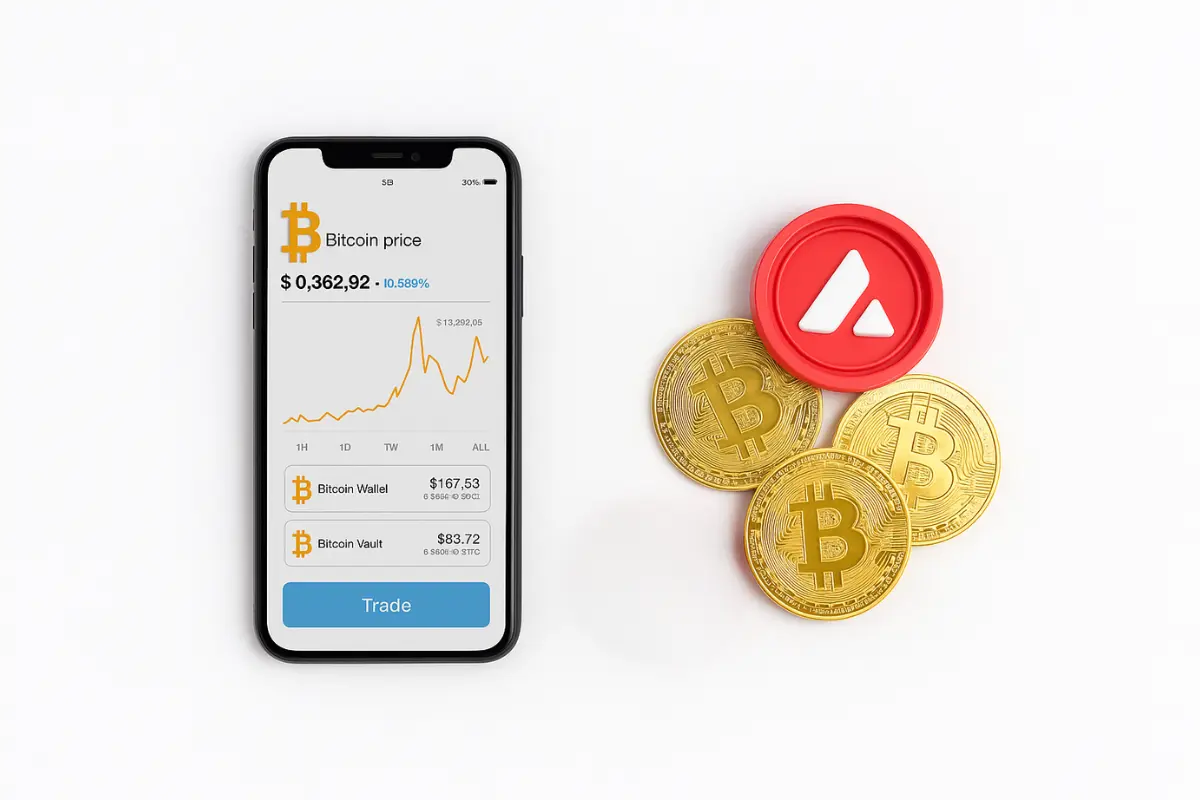
The crypto market is once again on fire, and traders are seeking tokens that can generate high returns in the coming cycle. Bitcoin remains the favorite among most, although recent whale-driven price swings are causing some investors to seek alternative avenues of quick growth. This is why names such as Avalanche, with a new presale price of only $0.005, are finding their way onto more watchlists. Analysts believe that these projects have solid fundamentals and the potential to increase, which makes them one of the best cryptos to buy today, offering a chance at returns of 10x. Bitcoin (BTC) Price Struggles With Whale Pressure Bitcoin fell by almost 3% to a low of $109,436 on Friday. Large whale orders raised by traders were also flagged as attempts to manipulate the order book. These were referred to by many as spoofy tricks – maneuvers in which whales change the liquidity to trap retail traders. Notably, the pullback contributed to a week of turbulence in BTC. It announced more than $350 million in long liquidations within 24 hours. Some traders have considered Bitcoin in a capitulation stage, and this normally prepares greater purchasing chances in case history repeats. The next important driver is the US inflation data, or PCE numbers. Bitcoin may be relieved in case inflation subsides. Otherwise, whales might continue pushing the market down until the next recession. Avalanche (AVAX) Building for the Next Rally Avalanche remains popular as a blockchain that is fast and scalable. Its subnets provide flexibility to developers to develop projects without high cost or delay in confirmation. That combination has rendered it widespread among DeFi and enterprise groups. AVAX has a market cap of $9.6 billion and trades at around $23. Its position is considered to be strong, according to analysts, provided that it can overcome resistance in the area of the $2025 range. That could be a clean breakout that would pull the token up sharply. Avalanche is also making upgrades to enhance network efficiency. Along with the growing DeFi and NFT initiatives, these trends continue to put AVAX on the radar of having one of the highest 10x ROI potential outlooks among the medium-cap coins. MAGACOIN FINANCE – $0.005 Presale Secured with Dual Audits MAGACOIN FINANCE is being put alongside Bitcoin and AVAX, its rivals among the giants, due to its potential to grow exponentially. The existing coins are not going away, but MAGA is taking the lead with projections of up to 1200% returns on early investors. The project gained confidence when it passed two CertiK and HashEx audits. Both audits attested to smart contract security and transparency – two aspects that are of great concern to presale buyers. The combination of powerful audits, increased demand, and a fast-growing community, according to analysts, is why it is one of the best cryptos to buy under $1 today. Final Thoughts Bitcoin and Avalanche remain high-profile market choices. However, when it comes to the best crypto to buy in 2025, under $1, MAGACOIN FINANCE is getting the most buzz. It has passed dual audits and is projected to drive an ROI of above 1200%, so it is among the best cryptocurrencies that investors should not miss in their portfolios. To learn more about MAGACOIN FINANCE, visit: Website: https://magacoinfinance.com Access: https://magacoinfinance.com/access Twitter/X: https://x.com/magacoinfinance Telegram: https://t.me/magacoinfinance  Disclaimer: This content is a sponsored post and is intended for informational purposes only. It was not written by 36crypto, does not reflect the views of 36crypto and is not a financial advice. Please do your research before engaging with the products.The post 3 Best Cryptos to Buy for 10x ROI — Bitcoin and XRP Named With MAGACOIN FINANCE and AVAX Presale Picks appeared first on 36Crypto.

Author: Coinstats
James Wynn's ETH long position was partially liquidated again, with the latest liquidation price at $4,361

James Wynn's ETH long position was partially liquidated again, with the latest liquidation price at $4,361

PANews reported on September 4 that according to Lookonchain monitoring, the ETH long position of whale James Wynn was once again partially liquidated. Its latest liquidation price was adjusted to $4,361, putting it at risk of being liquidated again.

Author: PANews
Over $94M Wiped Out In 24 Hours

Over $94M Wiped Out In 24 Hours

The post Over $94M Wiped Out In 24 Hours appeared on BitcoinEthereumNews.com. Massive Crypto Futures Liquidations: Over $94M Wiped Out In 24 Hours Skip to content Home Crypto News Massive Crypto Futures Liquidations: Over $94M Wiped Out in 24 Hours Source: https://bitcoinworld.co.in/crypto-futures-liquidations-impact-2/

Author: BitcoinEthereumNews
Massive Crypto Futures Liquidations: Over $94M Wiped Out in 24 Hours

Massive Crypto Futures Liquidations: Over $94M Wiped Out in 24 Hours

BitcoinWorld Massive Crypto Futures Liquidations: Over $94M Wiped Out in 24 Hours The cryptocurrency market delivered a dramatic reminder of its inherent volatility recently, with over $94 million in crypto futures liquidations rocking major digital assets within just 24 hours. This significant event underscores the magnified risks present in leveraged perpetual futures trading. Understanding Massive Crypto Futures Liquidations A “liquidation” in futures trading happens when a trader’s position is automatically closed by an exchange. This occurs because their margin, or collateral, is no longer sufficient to cover potential losses as the market moves strongly against their leveraged position. The recent surge in crypto futures liquidations, particularly for short positions, points to a sudden upward price movement that caught many bearish traders off guard. What Triggered These Sudden Crypto Futures Liquidations? The latest figures paint a clear picture of market pressure: Bitcoin (BTC): $35.38 million was liquidated. A significant 80.68% of these were short positions, indicating traders betting on a price decline were squeezed by an unexpected rally. Ethereum (ETH): Even more impactful, $50.66 million in ETH futures were liquidated. Short positions accounted for 69.02% of this total, signaling strong upward momentum for the second-largest cryptocurrency. Solana (SOL): SOL also saw substantial liquidations, totaling $8.76 million. Here, 59.2% were short positions, reflecting a broader market sentiment shift that surprised many. These numbers reveal a powerful short squeeze. When prices rise unexpectedly, short sellers are forced to buy back assets to cover their positions, which further fuels the price increase and cascades into more liquidations. This phenomenon often leads to rapid, sharp price movements. Navigating Volatility: Lessons from Crypto Futures Liquidations This wave of crypto futures liquidations serves as a potent reminder of the risks in leveraged trading. While futures offer potential for magnified gains, they also come with amplified losses. For traders, understanding market sentiment and employing robust risk management strategies are crucial. Key takeaways for traders include: Manage Leverage: Avoid excessively high leverage; even minor price fluctuations can lead to quick liquidations. Set Stop-Loss Orders: Automatically close positions to limit potential losses if the price moves against you. Monitor Market Sentiment: Stay informed about trends and news that could trigger sudden price shifts. The dominance of short liquidations suggests that bearish bets might have been overextended. Traders anticipating further price declines should approach the market with caution, considering the potential for unexpected pumps. In conclusion, the past 24 hours dramatically illustrated the high stakes in crypto futures trading. The $94 million in crypto futures liquidations, predominantly from short positions, underscores the unpredictable nature of the market and the critical importance of disciplined trading strategies. Staying informed and managing risk will remain paramount for all participants. To learn more about the latest crypto market trends, explore our article on key developments shaping Bitcoin price action. Frequently Asked Questions (FAQs) What are crypto futures liquidations? Crypto futures liquidations happen when a trader’s leveraged position is automatically closed by an exchange because their margin balance falls below the required level, typically due to significant adverse price movement. Why were short positions mostly liquidated? Short liquidations occur when the price of an asset unexpectedly rises. Traders who bet on a price decline are forced to buy back the asset at a higher price, causing a “short squeeze” that fuels further price increases and liquidations. How can traders avoid liquidation? Traders can mitigate liquidation risks by using lower leverage, setting stop-loss orders, maintaining sufficient margin, and closely monitoring market sentiment and news. What does this event mean for the broader crypto market? While individual liquidations impact specific traders, large-scale events like this can create temporary price instability. They highlight underlying market demand or a shift in investor confidence, but are not always definitive indicators of a full market reversal. If you found this analysis insightful, please consider sharing it with your network! Your support helps us continue providing valuable insights into the dynamic world of cryptocurrency. Share this article on your social media platforms to help others understand the complexities of crypto futures liquidations and market volatility. This post Massive Crypto Futures Liquidations: Over $94M Wiped Out in 24 Hours first appeared on BitcoinWorld and is written by Editorial Team

Author: Coinstats
Ark Invest: The Birth of a DeFi Super App

Ark Invest: The Birth of a DeFi Super App

By Lorenzo Valente As the crypto market matures, investors are looking for clues from past tech booms to predict the next big trend or inflection point. Historically, digital assets have been difficult to compare to previous technology cycles, making it difficult for users, developers, and investors to predict their long-term trajectory. This dynamic is changing. According to our research, the “application layer” in the crypto space is evolving, much like the unbundling and rebundling cycles experienced by SaaS (Software as a Service) and FinTech platforms. In this article, I’ll describe how the unbundling and rebundling cycle seen in SaaS and Fintech plays out in DeFi (decentralized finance) and crypto applications. The pattern evolves as follows: The concept of "Composability" is key to understanding the unbundling and rebundling cycle. This is an analytical term used in the fintech and crypto communities to refer to the ability of financial or decentralized applications and services—particularly at the application layer—to seamlessly interact, integrate, and build upon each other like Lego blocks. With this concept at the core, we describe the shift in product structure in the following two subsections. From Verticalization to Modularization: The Great Unbundling In 2010, Spark Capital’s Andrew Parker published a blog post outlining how dozens of startups were capitalizing on the unbundling opportunity presented by Craigslist, the then-horizontal internet marketplace offering everything from apartments and gig work to merchandise sales, as shown in the image below. Source: Parker 2010. For illustrative purposes only and should not be considered investment advice or a recommendation to buy, sell, or hold any specific security. Parker concludes that many successful companies—Airbnb, Uber, GitHub, Lyft—started by focusing on and verticalizing a small part of Craigslist's broad functionality and dramatically improving it. This trend ushered in the first major phase of "marketplace unbundling," during which Craigslist's fully bundled, multi-purpose marketplace gave way to single-purpose apps. The newcomers didn't just improve Craigslist's user experience (UX)—they redefined it. In other words, unbundling broke a broad-based platform into narrowly defined, autonomous verticals, disrupting Craigslist by serving users in unique ways. What made that wave of unbundling possible? Fundamental shifts in technology infrastructure, including advances in APIs (application programming interfaces), cloud computing, mobile user experiences, and embedded payments, lowered the barrier to entry for building focused applications with world-class user experiences. The same unbundling is also evolving in the banking industry. For decades, banks have offered a bundled set of financial services—everything from savings and loans to insurance—under a single brand and app. However, over the past decade, fintech startups have been precisely dismantling this bundle, each focusing on a specific vertical. Traditional banking bundles include: Payments and Remittances Checking and savings accounts Interest-bearing products Budgeting and financial planning Loans and Credit Investment and wealth management Insurance Credit and debit cards Over the past decade, the banking bundle has systematically unbundled into a series of venture-backed fintech companies, many of which are now unicorns, decacorns, or near-centacorns: Payments and remittances: PayPal, Venmo, Revolut, Stripe Bank accounts: Chime, N26, Monzo, SoFi Savings and Earnings: Marcus, Ally Bank Personal finance and budgeting: Mint, Truebill, Plum Loans and credit: Klarna, Upstart, Cash App, Affirm Investing and Wealth Management: Robinhood, eToro, Coinbase Insurance: Lemonade, Root, Hippo Card and expense management: Brex, Ramp, Marqeta Each company focuses on a service it can hone and deliver better than the incumbent, combining its skill set with new technology levers and distribution models to offer growth-oriented niche financial services in a modular manner. In both SaaS and FinTech, unbundling is not only disrupting incumbents but also creating entirely new categories, ultimately expanding the total addressable market (TAM). From modularity back to bundling: The Great Rebundling Airbnb recently launched its new Services & Experiences app and redesigned it to allow users to not only book accommodations but also explore and purchase add-on services such as museum visits, food tours, dining experiences, gallery walks, fitness classes, and beauty treatments. Airbnb, once a peer-to-peer accommodations marketplace, is evolving into a vacation superapp—rebundling travel, lifestyle, and local services into a single, cohesive platform. Furthermore, over the past two years, the company has expanded its product offerings beyond home rentals and is now integrating payments, travel insurance, local guides, concierge-style tools, and curated experiences into its core booking service. Robinhood is undergoing a similar transformation. The company, which disrupted the brokerage industry with commission-free stock trading, is now aggressively expanding into a full-stack financial platform and is re-bundling many of the verticals previously unbundled by fintech startups. Over the past two years, Robinhood has: Launch of payment and cash management features (Robinhood Cash Card) Increase cryptocurrency trading Launch of retirement accounts Launch of margin investing and credit cards Acquired Pluto, an AI-powered research and wealth advisory platform The moves suggest that Robinhood, like Airbnb, is bundling together previously fragmented services to build a comprehensive financial super app. By controlling more of the financial stack—savings, investing, payments, lending, and advice—Robinhood is reinventing itself from a brokerage to a full-service consumer finance platform. Our research shows that this unbundling and rebundling dynamic is impacting the crypto industry. In the remainder of this article, we provide two case studies: Uniswap and Aave. DeFi’s Unbundling and Rebundling Cycle: Two Case Studies Case Study 1: Uniswap — From Monolithic AMM to Liquidity Lego and Back to a Trading Super App In 2018, Uniswap launched on Ethereum as a simple yet revolutionary automated market maker (AMM). In its early stages, Uniswap was a vertically integrated application: a small smart contract codebase with an official frontend hosted by its team. The core AMM functionality—swapping ERC-20 tokens in a constant product pool—existed within a single on-chain protocol. Users primarily accessed it through Uniswap's own web interface. This design proved highly successful, with Uniswap's cumulative on-chain trading volume exploding to over $1.5 trillion by mid-2023. With its tightly controlled technology stack, Uniswap provided a smooth user experience for token swaps, which guided the development of DeFi in its early days. At the time, Uniswap v1/v2 implemented all trading logic on-chain, requiring no external price oracles or off-chain order books. The protocol internally determined prices within a closed system, using its liquidity pool reserves (the x*y=k formula). The Uniswap team developed the primary user interface (app.uniswap.org) to interact directly with the Uniswap contracts. Early on, most users accessed Uniswap through this dedicated front-end, similar to a proprietary exchange portal. Beyond Ethereum itself, Uniswap does not rely on any other infrastructure. Liquidity providers and traders interact directly with Uniswap contracts, with no built-in external data feeds or plugin hooks. The system was simple but isolated. As DeFi expanded, Uniswap evolved into a composable liquidity "Lego" rather than a standalone application. The protocol's open, permissionless nature meant other projects could integrate Uniswap's pools and add layers. Uniswap Labs gradually relinquished control over parts of the stack, allowing external infrastructure and community-built features to play a greater role: Decentralized Exchange (DEX) Aggregators and Wallet Integrations: The majority of Uniswap's trading volume began flowing through external aggregators like the 0x API and 1inch, rather than through Uniswap's own interface. By the end of 2022, an estimated 85% of Uniswap's swap volume was routed through aggregators like 1inch as users sought the best prices across multiple exchanges. Wallets like MetaMask also integrated Uniswap liquidity into their swap functionality, allowing users to trade on Uniswap from their wallet applications. This external routing reduced reliance on Uniswap's native frontend and made AMMs more like a plug-and-play module in the DeFi stack. Oracles and Data Indexers: While Uniswap's contracts did not and still do not require price oracles to trade, the broader ecosystem built around Uniswap does. Other protocols use Uniswap's pool prices as on-chain oracles, and the Uniswap interface itself relies on external indexing services. For example, Uniswap's frontend uses subgraphs from The Graph to query pool data off-chain for a smoother user interface (UI) experience. Rather than building its own indexing nodes, Uniswap leverages community-driven data infrastructure—a modular approach that offloads the heavy lifting of data queries to specialized indexers. Multi-chain Deployment: During its modularization phase, Uniswap expanded beyond Ethereum to numerous blockchains and Rollups, including Polygon, Arbitrum, BSC, and Optimism. Uniswap's governance mandated the deployment of its core protocol on these networks, effectively treating each blockchain as a base-layer plugin for Uniswap's liquidity. This multi-chain strategy emphasizes Uniswap's composability: the protocol can exist on any Ethereum Virtual Machine (EVM)-compatible chain, rather than tying its fate to a single, vertically integrated environment. Recently, Uniswap has been moving back towards vertical integration, seemingly with the goal of capturing more of the user journey and optimizing the stack for its use cases. Key reintegration developments include: Native Mobile Wallet: In 2023, Uniswap released the Uniswap Wallet—a self-hosted mobile application—followed by a browser extension, allowing users to store tokens and interact directly with Uniswap products. The launch of the wallet was a significant step toward controlling the user interface layer, rather than ceding it to wallets like MetaMask. With its own wallet, Uniswap now vertically integrated user access, ensuring that swaps, browsing non-fungible tokens (NFTs), and other activities occurred within an environment it controlled and could potentially be routed to Uniswap liquidity. Integrated Aggregation (Uniswap X): Instead of relying on third-party aggregators to find the best prices, Uniswap also introduced Uniswap X, a built-in aggregation and trade execution layer. Using an open network of off-chain "fillers," Uniswap X sources liquidity from various AMMs and private market makers, then settles trades on-chain. As a result, Uniswap has transformed its interface into a one-stop trading portal that aggregates liquidity sources for the benefit of users—similar to the services provided by 1inch or Paraswap. By running its own aggregator protocol, Uniswap Labs has reintegrated this functionality, keeping users in-house while guaranteeing the best prices. Importantly, Uniswap X is integrated into the Uniswap web app itself—and potentially into the wallet in the future—so users no longer need to leave Uniswap for the aggregator. Application-Specific Chain (Unichain): In 2024, Uniswap announced its own Layer 2 blockchain—dubbed "Unichain"—as part of the Optimism Superchain. Taking vertical integration to the infrastructure level, Unichain is a custom rollup tailored for Uniswap and DeFi trading, aiming to reduce Uniswap user fees by approximately 95% and latency to approximately 250 milliseconds. Uniswap will control the blockchain environment in which its contracts operate, rather than operating as an application on another chain. By operating Unichain, Uniswap will be able to optimize everything from gas costs to maximum extractable value (MEV) mitigation for its exchange and introduce native protocol fee sharing with UNI holders. This full-circle transformation transforms Uniswap from an Ethereum-dependent decentralized application (dApp) to a vertically integrated platform with a proprietary UI, execution layer, and dedicated blockchain. Case Study 2: Aave — From P2P Lending Market to Multi-Chain Deployment and Back to a Credit Super App Aave's origins can be traced back to ETHLend in 2017, a self-contained lending application that gave way to a decentralized peer-to-peer lending marketplace, renamed Aave, in 2018. The team developed smart contracts for lending and provided an official web interface for user participation. During this phase, ETHLEND/Aave matched lenders and borrowers using an order book approach and handled everything from interest rate logic to loan matching. As it evolved toward a pooled lending model similar to Compound, Aave underwent vertical integration. The Aave v1 and v2 contracts on Ethereum incorporated innovations like flash loans—an in-protocol feature that allows for uncollateralized borrowing with repayments in the same transaction—as well as interest rate algorithms. Users primarily accessed the protocol through the Aave web dashboard. The protocol managed key functions, such as interest accrual and liquidations, internally, with minimal reliance on third-party services. In short, Aave's early design was a monolithic money market: a dApp with its own UI that handled deposits, loans, and liquidations in a single location. Aave is part of the broader DeFi symbiosis, integrating MakerDAO's DAI stablecoin as a key collateral and lending asset from the outset. In fact, in its incarnation as ETHLend, Aave launched simultaneously with Maker and immediately supported DAI, reflecting the tight coupling between those vertically integrated pioneers and demonstrating early on that no protocol is an island. Even in its "vertical" phase, Aave benefited from the product of another protocol—its stablecoin—to operate. As DeFi has grown, Aave has unbundled and adopted a modular architecture, outsourcing parts of its infrastructure and encouraging others to build on its platform. Several shifts illustrate Aave’s move toward composability and external dependencies: External Oracle Network: Rather than operating its own price feeds, Aave uses Chainlink's decentralized oracles to provide reliable asset prices for collateral valuation. Price oracles are crucial to any lending protocol, as they determine when loans become undercollateralized. Aave governance has selected Chainlink Price Feeds as the primary oracle source for most assets on aave.com, outsourcing pricing infrastructure to a specialized third-party network. While this modular approach improves security—for example, Chainlink aggregates many data sources—it also means Aave's stability relies on external services. Wallet and App Integration: Aave's lending pools have become the building blocks for numerous other dApp integrations. Portfolio managers and dashboards like Zapper and Zerion, DeFi automation tools like DeFi Saver, and yield optimizers all access Aave's contracts through its open software development kit (SDK). Users can deposit or borrow through third-party frontends that interface with Aave, but the official Aave interface is just one of many access points. Even DEX aggregators indirectly leverage Aave's flash loans for complex, multi-step trades executed by services like 1inch. By open-sourcing its design, Aave allows for composability: other protocols can integrate Aave's functionality—for example, using Aave flash loans within a Uniswap arbitrage bot—all coordinated by external aggregators. As a liquidity module rather than a standalone application, its composability expands Aave's influence in the DeFi ecosystem. Multi-chain deployment and isolated models: Similar to Uniswap, Aave is deployed on multiple networks—such as Polygon, Avalanche, Arbitrum, and Optimism—essentially cross-chain modularity. Aave v3 introduced features such as isolated markets for certain assets—architectural modularity—creating different risk parameters for each market, sometimes operating separately from the main pool. It also introduced permissioned variants, such as "Aave Arc" for Know Your Customer (KYC) institutions, which are conceptually independent "module instances" of Aave. These examples demonstrate Aave's flexibility to operate in a variety of environments, not just one integrated one. During this unbundling phase, Aave relies on a broader infrastructure stack: Chainlink oracles for data, The Graph for indexing, wallets and dashboards for user access, and tokens from other protocols—like Maker's DAI or Lido's staked ETH—as collateral. This modular approach increases Aave's composability and reduces the need to "reinvent the wheel." The tradeoff is a partial loss of control over those parts of the stack, and the risks associated with relying on external services. Lately, Aave has shown signs of returning to vertical integration by developing in-house versions of key components that it previously relied on others. For example, in 2023, Aave launched its own stablecoin, GHO. Historically, Aave has facilitated lending and borrowing of various assets, notably MakerDAO’s DAI stablecoin, which has scaled significantly on Aave. With GHO, Aave now has a native stablecoin on its platform that acts as a distribution channel for other protocol stablecoins. Like DAI, GHO is an overcollateralized, decentralized, USD-pegged stablecoin. Users can mint GHO with their deposits on Aave V3, which allows Aave to acquire a previously outsourced vertical part of the lending stack—stablecoin issuance. Therefore: Aave is an issuer of a stablecoin—not just a lending venue for existing stablecoins—and directly controls the parameters and revenue of the stablecoin. GHO is a competitor to DAI, so now Aave can recycle interest payments into its own ecosystem. GHO interest can benefit AAVE token stakers rather than indirectly increasing MakerDAO fees. The introduction of GHO also requires dedicated infrastructure. Aave has facilitators—including the main Aave pool—that can mint and burn GHO and set governance policies. By controlling this new layer of functionality, Aave has built an internal version of the MakerDAO product to serve its own community. In another notable move, Aave is leveraging Chainlink's Smart Value Routing (SVR), or a similar mechanism, to recapture MEV (maximum extractable value, similar to payment for order flow in stocks) for Aave users. Tighter coupling with the oracle layer to redirect arbitrage profits back into the protocol is blurring the line between the Aave platform and the underlying blockchain mechanisms. This move suggests Aave's interest in customizing even lower-level infrastructure, such as oracle behavior and MEV capture, for its own benefit. While Aave hasn't yet launched its own wallet or chain like Uniswap and others, its founder's other ventures suggest his goal is to build a self-sustaining ecosystem. For example, the Lens Protocol, a social network, could be integrated with Aave for social reputation-based finance. Architecturally, Aave is moving towards providing all key financial primitives: lending, stablecoins (GHO), and potentially decentralized social identity (Lens), rather than relying on external protocols. In my opinion, this product strategy is about deepening the platform: with stablecoins, lending, and other services, Aave's user retention and protocol revenue should benefit. In short, Aave has evolved from a closed-loop lending dApp to an open lego that connects to DeFi and relies on others such as Chainlink and Maker, and is now returning to a more expansive vertically integrated financial suite. In particular, the launch of GHO emphasizes Aave's intention to reintegrate the stablecoin layer it once outsourced to MakerDAO. Our research suggests that the journeys of Uniswap, Aave, MakerDAO, Jito, and other protocols illustrate broader cyclical patterns in the crypto industry. In the early days, vertical integration—building a single, monolithic product with a very specific purpose—was necessary to pioneer new features like automated trading, decentralized lending, stablecoins, or MEV capture. These self-contained designs allowed for rapid iteration and quality control in emerging markets. As the space matured, modularity and composability became priorities: protocols unbundled portions of their stack to launch new features or provide more value to external stakeholders, becoming "money Legos" by leveraging the strengths of other protocols. However, the success of modularity and composability has brought new challenges. Relying on external modules introduces dependency risk and limits the ability to capture value created elsewhere within the protocol. Now, the largest players and protocols with strong product-market fit (PMF) and revenue streams are shifting their strategies back toward vertical integration. While not abandoning decentralization or composability, these projects are reintegrating key components for strategic reasons: launching their own chains, wallets, stablecoins, frontends, and other infrastructure. Their goal is to provide a more seamless user experience, capture additional revenue streams, and protect against dependency on competitors. Uniswap is building a wallet and chain, Aave is issuing GHO, MakerDAO is forking Solana to build NewChain, and Jito is merging staking/re-staking with MEV. We believe that any sufficiently large DeFi application will eventually seek its own vertically integrated solution. in conclusion History doesn't repeat itself, but it does rhyme. The crypto world is humming a familiar tune. Much like the SaaS and marketplace revolutions of the past decade, DeFi and application-layer protocols are focusing on new technical primitives, evolving user expectations, and a desire for greater value capture, all while moving along a trajectory of unbundling and rebundling. In the 2010s, startups specializing in niche segments of the massive Craigslist marketplace effectively atomized it into distinct companies. This unbundling gave rise to giants—Airbnb, Uber, Robinhood, Coinbase—all of which have since embarked on their own rebundling journeys, integrating new verticals and services into cohesive, sticky platforms. The crypto space is following the same path at a revolutionary pace. What started as strictly scoped vertical experiments—Uniswap as an AMM, Aave as a money market, Maker as a stablecoin treasury—became modularized into permissionless Lego blocks, opening up liquidity, outsourcing key functions, and allowing composability to flourish. Now that usage has scaled, the market is fragmenting, and the pendulum is starting to swing back. Today, Uniswap is becoming a trading super-app with its own wallet, chain, cross-chain standards, and routing logic. Aave is issuing its own stablecoin, bundling lending, governance, and credit primitives. Maker is building an entirely new chain to improve the governance of its currency ecosystem. Jito unifies staking, MEV, and validator logic into a full-stack protocol. Hyperliquid merges exchanges, L1 infrastructure, and the EVM into a seamless on-chain financial operating system (OS). In crypto, primitives are unbundled by design, but the best user experiences — and the most defensible businesses — are increasingly rebundled. This isn’t a betrayal of composability, but an implementation of it: build the best possible Lego brick and use it to build the best possible castle. DeFi is compressing the entire cycle into just a few years. How? DeFi operates in a completely different way: Permissionless infrastructure reduces the friction of experimentation: any developer can fork, copy, or extend an existing protocol in hours rather than months. Capital formation is instant — With tokens, teams can fund new projects, ideas, or incentives faster than ever before. Liquidity is highly liquid. Total value locked (TVL) moves at an incentivized pace, making it easier for new experiments to gain traction and successful experiments to scale exponentially. Larger addressable market size. Protocols have access to a global, permissionless pool of users and capital from day one, typically achieving scale faster than their Web2 counterparts that are limited by geography, regulation, or distribution channels. DeFi’s super apps are rapidly expanding in real time. We believe the winners won’t be the protocols with the most modular stack, but rather those that know exactly which parts of the stack to own, which to share, and when to switch between the two.

Author: PANews
Asset Managers Shift from BTC to ETH amid volatile August

Asset Managers Shift from BTC to ETH amid volatile August

The post Asset Managers Shift from BTC to ETH amid volatile August appeared on BitcoinEthereumNews.com. Crypto markets swung hard in August 2025, with Bitcoin hitting a new all-time high before a whale sale sent it back near $113,000. Amid that, professional managers quietly shifted strategies, cutting exposure to Bitcoin and adding it to Ethereum and DeFi tokens. Summary August 2025 was a volatile month for crypto, with Bitcoin swinging between $112,000 and $124,400 before a whale-driven sell-off pulled it back to $113,000, while Ethereum and DeFi tokens surged amid ETF inflows and staking yields. Finestel analysts say professional asset managers responded by cutting exposure to Bitcoin, boosting Ethereum and DeFi altcoins, and leaning on stablecoins for safety. Institutional and regulatory developments added clarity, reinforcing a more disciplined, yield-focused market. Some months in crypto feel like a rollercoaster. And August 2025 was no exception. With price swings, regulatory updates, and whale-driven dumps, the month was anything but dull for traders. Finestel, a platform for crypto auto trading and client management, found that professional investors were quietly changing their strategies last month. In an analytical report shared with crypto.news, the firm revealed that asset managers mainly focused on cutting exposure to Bitcoin (BTC) at peaks, and instead adding it to Ethereum (ETH), DeFi tokens, as well as leaning on stablecoins for safety. One big whale Bitcoin, which began August in the $112,000-$119,000 range after weak U.S. jobs data and tariff news, saw optimism mid-month when Fed Chair Jerome Powell implied there might be a September rate cut. And while that ballooned BTC to a new all-time high at $124,400 and briefly pushed the crypto market above $4 trillion, the rally still ended abruptly after a whale fat-fingered a 24,000 BTC sell, sparking $900 million in liquidations and sending Bitcoin back toward $113,000 by the month’s close. Despite those up and downs, Finestel noted that Bitcoin managed to…

Author: BitcoinEthereumNews
Dogecoin At $0.21, BONK Eyes Breakout

Dogecoin At $0.21, BONK Eyes Breakout

The post Dogecoin At $0.21, BONK Eyes Breakout appeared on BitcoinEthereumNews.com. Meme coins remain in focus this week, with Dogecoin holding at $0.21 and BONK testing a key support zone. Meanwhile, MAGACOIN FINANCE is drawing attention as a fresher meme coin with utility, offering diversification for those who missed earlier rallies in DOGE and BONK. Dogecoin Still Among the Best Altcoins to Buy at $0.21 Dogecoin, the largest meme coin by market cap, has seen its price slip 1.24% in the past 24 hours to around $0.214. Traders have been cautious after repeated failed attempts to break above the $0.23–$0.24 zone. These rejections triggered liquidations and left Dogecoin consolidating near a key support band. Part of the hesitation also comes from uncertainty around a Dogecoin ETF. While Grayscale, Bitwise, and 21Shares have filed applications, the SEC has yet to provide clarity, leading to muted enthusiasm. Analysts point out that Dogecoin’s “meme asset” tag makes approval less straightforward compared to Bitcoin and Ethereum. Despite this, Dogecoin continues to benefit from its established community, exchange liquidity, and ongoing mainstream integrations. Analysts note that a recovery above $0.221 could re-open the path toward $0.232 and higher.  For traders seeking exposure to established meme coins, Dogecoin remains one of the best altcoins to buy, particularly at its current consolidation zone. BONK Retests Support Ahead of Possible Breakout Bonk coin, the Solana-based meme token, is testing its $0.000021–$0.000022 support range. After weeks of cooling off, the price action has formed a triangle structure that traders view as a decisive setup for the next major move. A breakout above $0.000026 could spark renewed momentum, while holding current levels remains crucial for stability. Institutional interest has added credibility to Bonk. Earlier this year, Safety Shot Inc., a NASDAQ-listed firm, allocated $25 million into BONK, marking a rare corporate treasury entry for a meme token.  Additionally, ongoing token burn…

Author: BitcoinEthereumNews
XRP Price Recovers, Ripple Expands Major Collab, XRP Longs Liquidations Accelerate: XRP and Ripple News Recap

XRP Price Recovers, Ripple Expands Major Collab, XRP Longs Liquidations Accelerate: XRP and Ripple News Recap

The post XRP Price Recovers, Ripple Expands Major Collab, XRP Longs Liquidations Accelerate: XRP and Ripple News Recap appeared on BitcoinEthereumNews.com. XRP, the third-largest cryptocurrency in the world, is sending moderately optimistic signals to its community. Amid the news of Ripple expanding its collaboration with Thunes Network, the capitalization of XRP exceeded $170 billion. XRP exceeds USDT by market cap as price shows first signs of recovery XRP, a Ripple-linked cryptocurrency, is among the best performers in the top 20 altcoins by market cap. In the last 24 hours, its price added 2.2%. XRP is trading at $2.86 on major spot cryptocurrency exchanges, CoinGecko data says. Image by CoinGecko XRP’s capitalization has, therefore, exceeded that of U.S. Dollar Tether (USDT), the largest altcoin ever. XRP’s cap hit $170.37 billion in equivalent while USDT’s circulation is $168 billion in equivalent. At the same time, XRP still fails to break from its prolonged downtrend that started July 28, 2025, when XRP’s price reached its 2025 record high over $3.64. In just a few weeks, XRP’s price lost 27.2%, while altcoin markets in general are outperforming.    The distribution of LINEA might be the end of the era of big airdrops like Arbitrum’s and Optimism’s campaigns. Source: https://u.today/xrp-price-recovers-ripple-expands-major-collab-xrp-longs-liquidations-accelerate-xrp-and-ripple

Author: BitcoinEthereumNews
Solana Price Prediction: SOL to Reach $400 By Q4, But This Crypto is Gearing Up for a Bigger Rally

Solana Price Prediction: SOL to Reach $400 By Q4, But This Crypto is Gearing Up for a Bigger Rally

Solana (SOL) is again showing strong performance as analysts monitor the possibility of a rise to the $400 level by Q4, but industry observers are paying even closer attention to Mutuum Finance. This new coin may be setting up a bigger rally in the decentralized finance market. Mutuum Finance (MUTM) is in the 6th phase […]

Author: Cryptopolitan
Best Altcoins to Buy: Dogecoin Holds $0.21 and BONK Eyes Breakout After Cooling Off

Best Altcoins to Buy: Dogecoin Holds $0.21 and BONK Eyes Breakout After Cooling Off

Dogecoin holds $0.21 as BONK retests support. Analysts weigh which meme coins rank among the best altcoins to buy right now.

Author: Blockchainreporter