Liquidation

Liquidation occurs when a trader’s collateral is no longer sufficient to cover their leveraged position’s losses, triggering an automated forced closure by the exchange's liquidation engine. It is a critical risk-management mechanism that ensures the solvency of lending protocols and derivative platforms. In 2026, the focus has moved toward MEV-resistant liquidation models that protect users from predatory "cascades." This tag provides essential information on maintenance margins, health factors, and how to avoid liquidation in high-volatility environments.

14858 Articles
Created: 2026/02/02 18:52
Updated: 2026/02/02 18:52
$102 Million Wiped Out In An Hour

$102 Million Wiped Out In An Hour

The post $102 Million Wiped Out In An Hour appeared on BitcoinEthereumNews.com. Shocking Crypto Futures Liquidation: $102 Million Wiped Out In An Hour Skip to content Home Crypto News Shocking Crypto Futures Liquidation: $102 Million Wiped Out in an Hour Source: https://bitcoinworld.co.in/shocking-crypto-futures-liquidation/

Author: BitcoinEthereumNews
Crypto Liquidations: Ethereum’s Shocking $43.7M Plunge in 24 Hours

Crypto Liquidations: Ethereum’s Shocking $43.7M Plunge in 24 Hours

BitcoinWorld Crypto Liquidations: Ethereum’s Shocking $43.7M Plunge in 24 Hours The cryptocurrency market is a wild ride, often characterized by rapid shifts and unexpected turns. Recently, a significant event has captured the attention of traders and investors alike: massive crypto liquidations. Over the past 24 hours, Ethereum (ETH) has unfortunately led this charge, seeing a staggering $43.7 million in liquidations across the perpetual futures market. This dramatic shift highlights the inherent volatility and risks present in highly leveraged trading. What Exactly Are Crypto Liquidations, and Why Do They Matter? If you’re new to the world of futures trading, understanding crypto liquidations is crucial. Essentially, a liquidation occurs when an exchange forcefully closes a trader’s leveraged position due to a sudden price movement against their trade. This happens when the trader’s margin balance falls below the maintenance margin requirement, meaning they no longer have sufficient funds to keep the position open. It’s a mechanism designed to prevent traders from losing more money than they have in their account, but it can be a brutal experience for those caught on the wrong side of a market swing. The recent figures paint a clear picture of market turbulence: Ethereum (ETH): A colossal $43.71 million liquidated, with a majority (57.91%) being long positions. This indicates that many traders were betting on ETH’s price to rise, only to be met with a sharp downturn. Bitcoin (BTC): Not far behind, BTC saw $32.66 million liquidated. An even higher percentage (78.82%) of these were long positions, suggesting widespread optimism that quickly evaporated. Solana (SOL): This popular altcoin experienced $14.40 million liquidated, with long positions making up 58.2% of the total. These numbers aren’t just statistics; they represent significant financial losses for many participants. The dominance of long position liquidations across all three major cryptocurrencies suggests a broad market correction or a “long squeeze,” where cascading liquidations further fuel price declines. Why Did Ethereum Lead This Wave of Crypto Liquidations? While the exact catalysts for such widespread crypto liquidations can be complex, several factors often contribute. Market-wide sentiment, macroeconomic news, regulatory updates, or even large institutional trades can trigger significant price movements. When prices move sharply downwards, especially after a period of upward momentum, traders holding highly leveraged long positions are particularly vulnerable. Ethereum’s recent performance might have attracted a large number of optimistic leveraged bets, making it susceptible to leading the liquidation charts when the market turned. It’s a stark reminder that leverage amplifies both gains and losses. While it can accelerate profits during favorable market conditions, it can also lead to rapid and substantial capital depletion when the market moves unexpectedly. Understanding the inherent risks associated with leveraged trading is paramount for anyone venturing into the perpetual futures market. Navigating Volatility: What Can Traders Learn from Recent Crypto Liquidations? The recent surge in crypto liquidations offers valuable lessons for traders. Firstly, risk management is not just a suggestion; it’s a necessity. Implementing stop-loss orders, avoiding excessive leverage, and diversifying portfolios can help mitigate potential losses. Secondly, market sentiment can shift quickly. Relying solely on upward trends without considering potential reversals can be perilous. Always be prepared for volatility and have a strategy for managing adverse price movements. For those looking to engage with perpetual futures, here are some actionable insights: Start Small: Begin with smaller position sizes to understand market dynamics without risking significant capital. Set Clear Limits: Always use stop-loss orders to define your maximum acceptable loss per trade. Manage Leverage: While tempting, high leverage significantly increases liquidation risk. Use it judiciously, if at all. Stay Informed: Keep an eye on market news, technical indicators, and overall economic sentiment. The cryptocurrency market, with its 24/7 nature, demands constant vigilance. These significant liquidation events, while painful for some, serve as crucial reminders of the importance of disciplined trading practices and robust risk management strategies. A Resilient Market Amidst the Turbulence Despite the significant crypto liquidations, the cryptocurrency market often demonstrates remarkable resilience. While individual traders may face losses, the underlying technology and innovation continue to evolve. These periods of correction can also present opportunities for long-term investors to accumulate assets at more favorable prices, provided they have a strong conviction in the asset’s future. In conclusion, the past 24 hours have been a harsh lesson in market volatility, with Ethereum at the forefront of substantial crypto liquidations. This event underscores the critical need for prudent risk management, especially when engaging in leveraged trading. As the crypto landscape continues to mature, understanding and adapting to these market dynamics will be key to sustainable participation. Frequently Asked Questions About Crypto Liquidations Q1: What is a crypto liquidation? A1: A crypto liquidation occurs when an exchange automatically closes a trader’s leveraged position because their margin balance falls below a required level, typically due to a significant price movement against their trade. It prevents further losses beyond the initial margin. Q2: Why did Ethereum (ETH) lead the recent liquidations? A2: Ethereum likely led due to a combination of factors, including its significant market capitalization, high trading volume in perpetual futures, and potentially a large number of highly leveraged long positions that were caught off guard by a price downturn. Q3: What’s the difference between long and short liquidations? A3: A long liquidation happens when a trader betting on a price increase (a “long” position) has their position closed because the price drops. A short liquidation occurs when a trader betting on a price decrease (a “short” position) has their position closed because the price rises. Q4: How can traders protect themselves from crypto liquidations? A4: Traders can protect themselves by using prudent risk management strategies such as setting stop-loss orders, avoiding excessive leverage, managing position sizes, and diversifying their portfolios. Staying informed about market trends is also crucial. Q5: Do crypto liquidations affect the overall market? A5: Yes, large-scale crypto liquidations can amplify market movements. When many leveraged positions are closed simultaneously, it can create cascading sell-offs (in the case of long liquidations) or buy-ins (for short liquidations), contributing to increased volatility and price swings. Did you find this analysis of recent crypto liquidations insightful? Share your thoughts and this article with your network on social media! Your insights help foster a more informed trading community. To learn more about the latest crypto market trends, explore our article on key developments shaping Ethereum price action. This post Crypto Liquidations: Ethereum’s Shocking $43.7M Plunge in 24 Hours first appeared on BitcoinWorld.

Author: Coinstats
Tether And Circle Print $1.5B In Hours: Fresh Liquidity Incoming

Tether And Circle Print $1.5B In Hours: Fresh Liquidity Incoming

The stablecoin market is once again making headlines as two of the largest issuers, Tether (USDT) and Circle (USDC), significantly expanded supply in just hours. According to data shared by Lookonchain, Tether minted another 1 billion USDT, while Circle printed 500 million USDC only seven hours earlier. These issuances highlight how stablecoins continue to play […]

Author: Bitcoinist
Crypto market news: BTC near $112K, ETH drops below $4,200 as fear grips traders

Crypto market news: BTC near $112K, ETH drops below $4,200 as fear grips traders

The post Crypto market news: BTC near $112K, ETH drops below $4,200 as fear grips traders appeared on BitcoinEthereumNews.com. Bitcoin hovers above $112K, with bulls defending key support. Ethereum drops 7% weekly as ETF outflows pressure sentiment. Institutions stay invested, betting on a stronger Q4 recovery. Crypto markets are still reeling from a fierce “Red September” selloff that has sent jitters through traders and investors alike. There is a strong undercurrent of caution right now with investors watching the macro headlines, especially the Fed’s latest moves, and feeling heat from a resurgent US dollar and mounting regulatory uncertainties. The fear factor is high among retail traders, especially with meme coins back in panic territory, but interestingly, big institutions haven’t cleared out. That says a lot about the market’s long-term resilience. For all the volatility, veteran investors seem to believe this selloff could be paving the way for a healthier Q4, especially if some regulatory clarity and macro relief finally show up. Major crypto movers Bitcoin’s been tossed around all week, trying to hold firm just above the $112,000 mark. Despite all the drama, BTC’s daily change has been pretty muted, but it’s still down roughly 2% over the past seven days. The tension is palpable; there’s talk that a slip below $112,000 could trigger another rapid drop, but so far, bulls are digging in their heels. Ethereum is also fighting for higher ground, currently near $4,200. Its weekly loss is steeper than Bitcoin’s, about 7% and analysts see ETF outflows and seasonal September trading patterns in play. For Solana, it’s a similar story, with sellers driving the price toward $216, the coin shedding more than 2% in the latest session, and short-term holders running for cover. XRP has been a mild outlier, eking out some gains where most heavyweights reversed. It bounced up to around $2.86 and stayed resilient after threatening a breakdown below key support. DOGE, however, lost…

Author: BitcoinEthereumNews
Is Bitcoin undervalued? Clues that whales may already be buying

Is Bitcoin undervalued? Clues that whales may already be buying

The post Is Bitcoin undervalued? Clues that whales may already be buying appeared on BitcoinEthereumNews.com. Key Takeaways  Why is Bitcoin undervalued now? The MVRV Ratio turned negative, signaling undervaluation zones and potential reversal as whales accumulated 56,372 BTC since late August. What data supports a rebound case? The NVT Ratio dropped 38% to 27.42, Weighted Sentiment recovered, and Open Interest rose 1.47%, showing cautious optimism. Bitcoin [BTC] fell 8.8% from its $123.8K peak on the 13th of August to $112.2K, testing investor conviction. On-chain data, however, showed signs of potential strength.  The Market Value to Realized Value (MVRV) Ratio turned negative, highlighting undervaluation. At the same time, whale activity remains consistent as accumulation trends hold steady, and exchange reserves continue to drop.  Together, these shifts hint at a potential buildup toward the next leg higher. Stronger network health The Network Value to Transaction (NVT) Ratio declined by 38%, placing it at 27.42. This sharp move downward suggested Bitcoin’s valuation was aligned more closely with actual network activity. Importantly, such drops often coincide with periods where transaction volume strengthens relative to market cap, hinting at improved organic demand.  While prices remain pressured, the healthier transaction-to-value alignment suggested that Bitcoin was entering a more sustainable growth phase, particularly if volumes remain resilient despite volatility. Source: CryptoQuant Bitcoin’s sentiment rebounds Santiment’s Weighted Sentiment rebounded from deep negative readings back toward neutral. The shift highlighted fading bearishness, but conviction remained cautious as volatility continued to shape positioning. Importantly, sentiment recoveries from such low levels often precede relief rallies, even if caution still defines trader behavior.  The data suggested cautious optimism may be forming, which, if supported by steady accumulation, could help Bitcoin mount a stronger rebound attempt. Source: Santiment Traders refuse to step aside Bitcoin’s Open Interest rose 1.47% to $41.97 billion. The modest increase indicated that traders kept positions open despite recent downside pressure. Elevated OI, however, brings…

Author: BitcoinEthereumNews
Fed cuts rates, markets cheer — Bitcoin hedges uncertainty

Fed cuts rates, markets cheer — Bitcoin hedges uncertainty

The post Fed cuts rates, markets cheer — Bitcoin hedges uncertainty appeared on BitcoinEthereumNews.com. The Federal Reserve cut rates by 25 basis points, lowering the target range to 4.0–4.25%. Powell said it was ‘another step toward a more neutral policy stance’ and that policy was ‘not on a preset course’ — framing the move as a temporary adjustment to shifting conditions rather than the start of a full pivot. But the move came with inflation running above target for more than four years straight — the longest stretch since the late 1990s. And according to the Fed’s own September 2025 projections, PCE inflation is expected to remain above 2% until 2028, while the federal funds rate is forecast to decline from 3.6% in 2025 to 3.1% in 2027. Normally, higher rates are used to tame persistent inflation, but the Fed is charting a path of loosening policy instead. Summary of Economic Projections | Source: Federal Reserve, September 2025 From hawkish pledges to capitulation Only weeks earlier at Jackson Hole, Powell wrapped himself in hawkish feathers, pledging: “Come what may, we will not allow a one-time increase in the price level to become an ongoing inflation problem.” That was supposed to be a red line, yet Powell has erased it himself with this cut. He called it risk management, but in reality, it looks more like surrender. Of course, Powell defended the move, but the markets interpreted it as dovish, and risk assets surged. Excess liquidity masks real risk The credit market makes the absurdity blindingly obvious — junk debt trades like blue chips, as if risk had vanished. The U.S. high-yield spread — the extra yield investors demand to hold risky corporate debt instead of safe Treasuries — has collapsed to just 2.9%, near cycle lows, while CCC-rated junk debt, the riskiest tier, has fallen from 11.4% in April to only 7.9% today. Equity volatility…

Author: BitcoinEthereumNews
Bitcoin becomes a macroeconomic asset as countries race to ramp up adoption

Bitcoin becomes a macroeconomic asset as countries race to ramp up adoption

The post Bitcoin becomes a macroeconomic asset as countries race to ramp up adoption appeared on BitcoinEthereumNews.com. Bitcoin (BTC) adoption is growing among countries, with 32 nations actively pursuing exposure through legislation, representing roughly one in six nations worldwide, according to a Bitcoin Policy Institute report published Sept. 22. The study documents a rapid acceleration in government adoption following President Donald Trump’s election and subsequent executive order establishing a US Strategic Bitcoin Reserve. The report identified active Bitcoin exposure in 27 countries, while 13 have proposed legislation to gain such exposure. The numbers reflect overlapping categories, as some nations pursue multiple approaches simultaneously. Argentina operates government-backed mining using flared gas while proposing legislation for a strategic reserve. The United Arab Emirates (UAE) employs three active exposure methods: government-backed mining, sovereign wealth fund investments in Bitcoin ETFs, and tax payment acceptance. Strategic Bitcoin Reserve is the go-to strategy Strategic Bitcoin Reserves (SBR) represent the most common approach, with 16 countries having proposed or enacted such policies. Trump’s executive order established federal policy of retaining rather than selling seized Bitcoin holdings, citing $17 billion in potential gains that would have been missed from previous liquidations. Arizona, New Hampshire, and Texas have codified state-level reserves into law, with dozens more states considering similar measures. Strategic Bitcoin reserves lead among 56 total exposure instances across 32 nations (Source: Bitcoin Policy Institute) Besides the idea of an SBR, government-backed Bitcoin mining ranks as the second most prevalent method, with 14 countries actively or proposing such operations. Government-backed exploration Ten nations currently mine through electricity provision arrangements that generate profit-sharing Bitcoin accumulation. Argentina, Bhutan, El Salvador, Ethiopia, Iran, North Korea, Oman, Russia, the UAE, and Venezuela all maintain or previously operated government mining programs. Seven countries hold Bitcoin through passive holdings, comprising seized cryptocurrency that governments have chosen not to sell. Bulgaria, China, Finland, Georgia, India, the United Kingdom, and Venezuela maintain such…

Author: BitcoinEthereumNews
Don’t Be Fooled by XRP Price Dump, Bollinger Bands Signal New All-Time High

Don’t Be Fooled by XRP Price Dump, Bollinger Bands Signal New All-Time High

The post Don’t Be Fooled by XRP Price Dump, Bollinger Bands Signal New All-Time High appeared on BitcoinEthereumNews.com. XRP dipping under $2.90 might be enough to put off anyone thinking of buying at the last minute, but for now the key indicator is showing something else entirely. The weekly Bollinger Bands still keep XRP well above the midline at $2.70, while the top band sits far higher at $3.54.  So, after yesterday’s notorious dip, which led to $1.6 billion in liquidations in just 24 hours, the price of XRP plummeted, falling from $3 to $2.70. Many rushed to proclaim this as the end of the altseason, but those making bearish calls may find themselves on the losing side once the dust has settled. The Bollinger Bands show that, after the sell-off, XRP stopped falling at the middle band — a key support level on the weekly chart. XRP/USD by TradingView The XRP price has been stuck between $2.77 and $2.96 all month, moving sideways while every attempt to dip below $2.77 is being rejected. Sellers keep testing that level and failing, and the band just keeps holding.  $3.16 XRP is the key A break above this price point will change the daily structure and put a stamp for the price in the higher range, where new highs are more likely to come into play. With a market cap of $180 billion, XRP is not some meme coin that is all about hype. It trades on liquidity flows, and Bollinger compression has consistently been a reliable signal when the market is about to expand. The move under $2.90 is not confirmation of weakness; it is just positioning inside the bands before the next attempt higher. Charts show a clear upward trend, suggesting XRP may be on the rise. Traders selling into dips may miss this opportunity. Source: https://u.today/dont-be-fooled-by-xrp-price-dump-bollinger-bands-signal-new-all-time-high

Author: BitcoinEthereumNews
Cardano (ADA) Price Prediction as New Rival Crypto Sets New Records in September

Cardano (ADA) Price Prediction as New Rival Crypto Sets New Records in September

The post Cardano (ADA) Price Prediction as New Rival Crypto Sets New Records in September appeared on BitcoinEthereumNews.com. Cardano (ADA) is still among the top altcoins in the market, with its investors eagerly anticipating a breakout. But September has seen a new entrant that’s diverting everyone’s focus away from ADA. Mutuum Finance (MUTM), a DeFi token in its infancy, has already broken to new presale highs, thrilling investors ahead of ADA’s consistent but slow-growth performance. Mutuum Finance is at presale stage 6 and can be purchased at $0.035.  The project has received over $16.2 million and more than 16,500 unique holders have taken part. While ADA’s price forecast remains within the realm of prevailing market sentiment, Mutuum’s innovative lending and borrowing platform is giving it the kind of traction that could establish it as the next crypto winner. Cardano on the Cusp of a Breakout  Cardano (ADA) sits at around $0.92, showing strong resilience as it holds above support levels of $0.80-$0.85. Resistance remains at $1.00-$1.10 and suggests ADA may need new catalysts, e.g., substantial network upgrades or increasing developer & institutional interest, to overcome levels. Price action has been solid but disciplined vs. explosive, as one would expect in its senior place in the altcoin hierarchy. In comparison, Mutuum Finance is in investors’ sights as having superior upside potential this cycle. Mutuum Finance (MUTM) Excites Investors Mutuum Finance is now in stage six of its presale at $0.035 following its 16.17% increase from the previous stage. The market is seeing an all-time high demand for the project with more than 16,500 investors subscribed and over $16.2 million raised. Mutuum Finance (MUTM) has introduced a $50,000 USDT Bug Bounty Program for platform security. The bugs have been graded on four levels i.e., critical, major, minor, and low. The protocol has strong security on whatever asset is collateralized without impacting protocol and user security. They target collateral ratios, lending…

Author: BitcoinEthereumNews
What's next for Bitcoin after spike in long liquidations?

What's next for Bitcoin after spike in long liquidations?

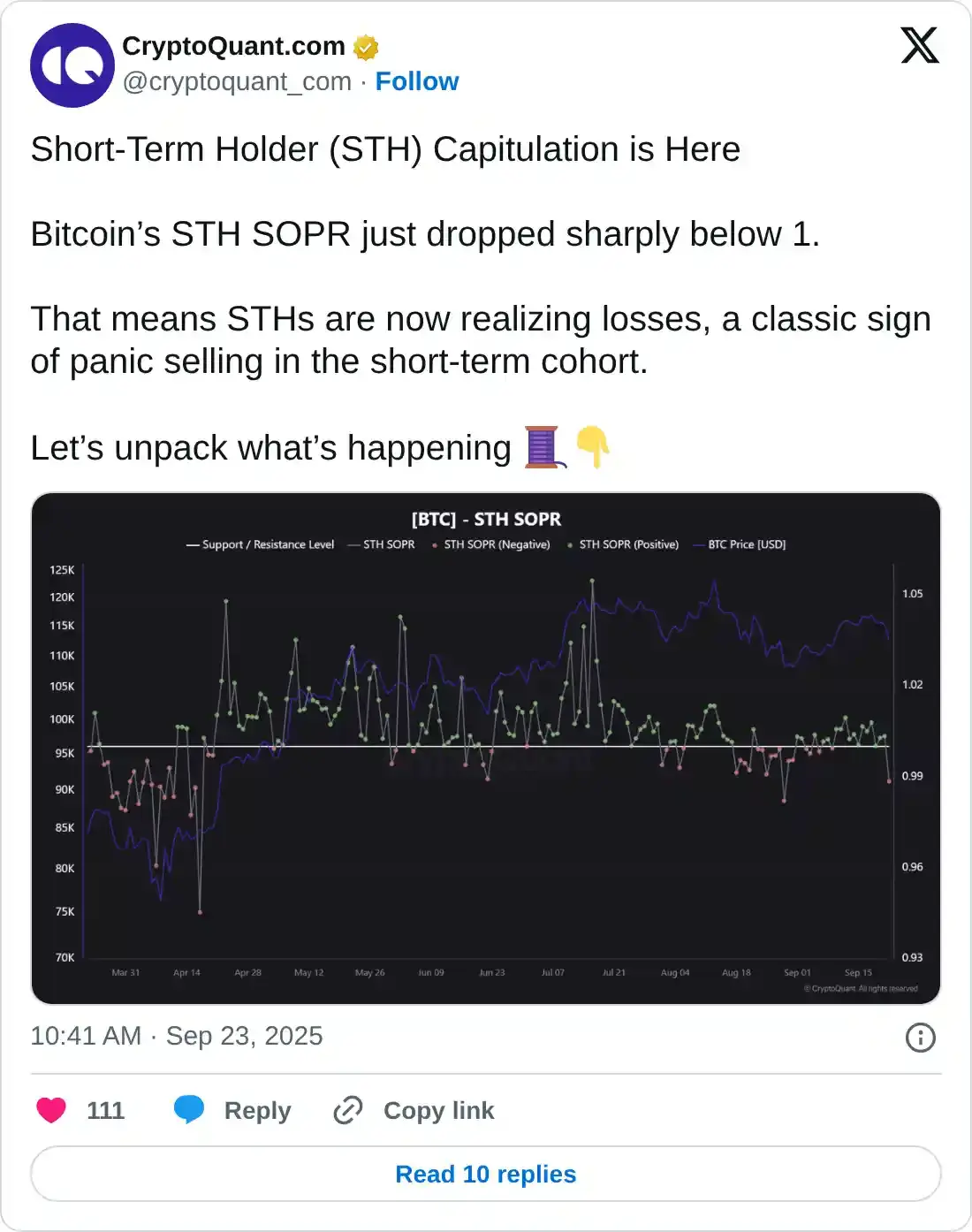
Bitcoin (BTC) fell to a two-week low of $111,500 on Tuesday after significant long liquidations triggered panic selling among short-term holders.

Author: Fxstreet