Index

A crypto Index provides a way for investors to gain diversified exposure to a specific basket of digital assets through a single tokenized product. These indices often track specific sectors, such as DeFi, DePIN, or RWA, and are automatically rebalanced via smart contracts. In 2026, AI-managed thematic indices have become the gold standard for passive investing, allowing users to track the "blue chips" of the Web3 economy without manual portfolio management. This tag covers index methodology, rebalancing frequency, and the benefits of diversified crypto baskets.

25212 Articles
Created: 2026/02/02 18:52
Updated: 2026/02/02 18:52

China set its strongest yuan fix since January after the U.S. dollar dropped

China set its strongest yuan fix since January after the U.S. dollar dropped

The post China set its strongest yuan fix since January after the U.S. dollar dropped appeared on BitcoinEthereumNews.com. China’s central bank pushed the yuan’s daily reference rate stronger on Monday than it has since January, reacting fast after Jerome Powell’s Jackson Hole speech sent the dollar sliding. The People’s Bank of China (PBOC) set the fix at 7.1161 per dollar, down from 7.1321 on Friday, the firmest level since November. According to Bloomberg, the dollar weakened after Powell left the door open for rate cuts, saying the labor market is showing signs of strain even though inflation still hasn’t cooled completely. The Dollar Spot Index fell 0.8% following his remarks. The onshore yuan gained slightly, trading at 7.1605 per dollar, after hitting 7.1593, its highest level since late July. But while the reference rate got stronger, the yuan lost ground against a broader set of currencies. Bloomberg’s gauge tracking China’s currency versus major peers showed a decline early in the session, even with Monday’s firmer fix. The fixing dropped below 7.12 for the first time since last November, a sign officials may be responding more aggressively to the greenback’s retreat and trying to keep the yuan stable amid renewed global pressure. Beijing pumps liquidity into market to calm bond stress The PBOC also moved aggressively to pump cash into the system this month. Beijing added 600 billion yuan ($84 billion) through a mix of one-year Medium-Term Lending Facility loans and three- and six-month outright reverse repos. Bloomberg’s tally showed this was the largest monthly liquidity injection since January. The injection came as yields surged in the latest 30-year government bond auction, with investors demanding the highest payouts since December. As the central bank added cash, China’s overnight repo rate fell to 1.35%, dropping seven basis points. Futures tied to 30-year government bonds also jumped as much as 0.7%, their strongest one-day rise since April. The goal is to…

Author: BitcoinEthereumNews
Metaplanet Adds $11.7 Million Bitcoin Purchase, Joins FTSE Japan Index

Metaplanet Adds $11.7 Million Bitcoin Purchase, Joins FTSE Japan Index

TLDR Japanese Bitcoin treasury firm Metaplanet purchased 103 BTC for $11.7 million, bringing total holdings to 18,991 BTC Company upgraded from small-cap to mid-cap status in FTSE Russell’s September review, gaining inclusion in FTSE Japan Index Metaplanet automatically added to FTSE All-World Index following Japan Index inclusion Company ranks seventh globally in public corporate bitcoin [...] The post Metaplanet Adds $11.7 Million Bitcoin Purchase, Joins FTSE Japan Index appeared first on CoinCentral.

Author: Coincentral
Bitcoin Treasury Firm, Metaplanet Buys 103 More Bitcoin, Holdings Near 19,000 BTC

Bitcoin Treasury Firm, Metaplanet Buys 103 More Bitcoin, Holdings Near 19,000 BTC

The post Bitcoin Treasury Firm, Metaplanet Buys 103 More Bitcoin, Holdings Near 19,000 BTC appeared on BitcoinEthereumNews.com. The post Bitcoin Treasury Firm, Metaplanet Buys 103 More Bitcoin, Holdings Near 19,000 BTC appeared first on Coinpedia Fintech News Japanese-listed company Metaplanet Inc. has added another 103 Bitcoin to its treasury, spending around 1.736 billion yen ($11.78 million). With this latest move, the company’s total Bitcoin stash has climbed to 18,991 BTC, representing a massive investment of nearly 285.8 billion yen ($1.94 billion). This purchase is part of Metaplanet’s ongoing Bitcoin Treasury Operations, a strategy that uses metrics like BTC Yield and BTC Gain to track performance. Over the past few quarters, these numbers have shown strong results, providing a direct boost to shareholder value. A Steady Bitcoin Accumulation Strategy Metaplanet Bitcoin’s holding journey began in April 2024 and has been steadily stacking BTC ever since. This isn’t a one-time gamble but a clear sign the company sees Bitcoin as a long-term store of value. Fast forward to August 2025, and Metaplanet now holds nearly 19,000 BTC, putting it in 7th place worldwide among corporate Bitcoin holders, right up there with some of the biggest global names that also keep Bitcoin on their balance sheets.  With each reporting period, the company has revealed consistent accumulation, showing that Bitcoin is no longer just an investment for Metaplanet; it has become a core pillar of its business strategy. Metaplanet Q2 2025 Revenue Jumps 41%, Net Income Hits ¥11.1B The company’s growing Bitcoin position comes alongside impressive financial results. In the second quarter of 2025, Metaplanet reported revenues of 1.2 billion yen ($8.4 million), marking a 41% increase from the previous quarter. Net income also turned around dramatically, reaching 11.1 billion yen ($75.1 million), compared to a 5 billion yen ($34.2 million) loss in the first quarter. In its quarterly report, the company reaffirmed its full-year projections of 3.4 billion yen in…

Author: BitcoinEthereumNews
Big Bull Saylor Gives Another Signal Today – Another CEO Says, “Don’t Wait a Bear Market for a Couple of Years”

Big Bull Saylor Gives Another Signal Today – Another CEO Says, “Don’t Wait a Bear Market for a Couple of Years”

The post Big Bull Saylor Gives Another Signal Today – Another CEO Says, “Don’t Wait a Bear Market for a Couple of Years” appeared on BitcoinEthereumNews.com. Bitcoin Magazine CEO David Bailey drew a very optimistic picture for Bitcoin (BTC) in his statement on the X platform. Bailey said, “There will be no more Bitcoin bear markets in the next few years. Every sovereign state, bank, insurance company, business, pension fund, and other institution will eventually hold Bitcoin. This process has officially begun, and we haven’t even occupied 0.01% of the total market yet. The price of Bitcoin will rise much higher.” Meanwhile, Michael Saylor, chairman of Strategy (formerly MicroStrategy), shared a BTC chart on the X platform, once again showing buy points marked in orange. Saylor has been known to make official announcements about the company’s Bitcoin accumulation shortly after releasing this data. Therefore, investors are expecting MicroStrategy to announce new BTC purchases next week. According to the data, MicroStrategy’s Bitcoin portfolio currently holds 629,376 BTC, worth a total of $72.1 billion. With an average purchase price of $73,332, the company’s investment represents a 56.22% profit at current prices. The last transaction took place on August 18, 2025. On that date, the company purchased 430 BTC for $119,666. The purchase cost approximately $51.4 million, with a current value of $49.26 million and a current loss of 4.16%. *This is not investment advice. Follow our Telegram and Twitter account now for exclusive news, analytics and on-chain data! Source: https://en.bitcoinsistemi.com/big-bull-saylor-gives-another-signal-today-another-ceo-says-dont-wait-a-bear-market-for-a-couple-of-years/

Author: BitcoinEthereumNews
The Week Ahead: Crypto Markets Brace for Nvidia Earnings and Fed Inflation Data

The Week Ahead: Crypto Markets Brace for Nvidia Earnings and Fed Inflation Data

TLDR Nvidia reports quarterly earnings Wednesday with investors watching AI demand growth and China trade policy impacts Federal Reserve’s preferred inflation measure (PCE) releases Friday, could influence September rate cut decision Fed Chair Powell’s dovish Jackson Hole comments boosted rate cut expectations above 80% for September meeting Rate-sensitive sectors like homebuilders and banks rallied strongly [...] The post The Week Ahead: Crypto Markets Brace for Nvidia Earnings and Fed Inflation Data appeared first on CoinCentral.

Author: Coincentral
Metaplanet Joins FTSE Japan Index: Upgraded to Mid-Cap

Metaplanet Joins FTSE Japan Index: Upgraded to Mid-Cap

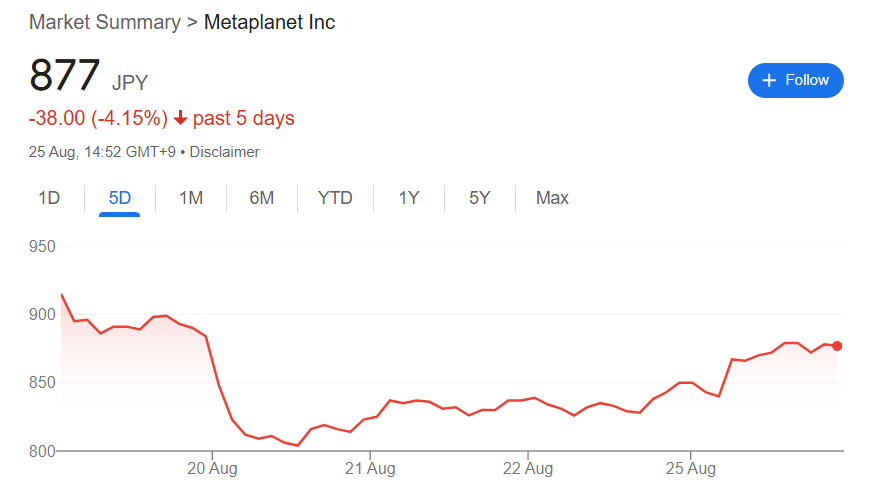
The post Metaplanet Joins FTSE Japan Index: Upgraded to Mid-Cap appeared on BitcoinEthereumNews.com. FTSE Russell, a London Stock Exchange Group (LSEG) subsidiary, announced on August 22 that Metaplanet has moved from the small-cap category to mid-cap. The company will join the FTSE Japan Index from September 22, a step that may raise its profile and attract institutional investment. FTSE Japan Entry Expands Global Reach The FTSE Japan Index measures the performance of large- and mid-cap Japanese companies through a market capitalization-weighted system. Global asset managers, including Vanguard, use the index as a benchmark for ETFs. Inclusion strengthens Metaplanet’s presence, as companies in the FTSE Japan Index are automatically added to the FTSE All-World Index. This step could boost liquidity and visibility while increasing passive capital inflows from funds tied to these indices. On August 13, Metaplanet reported consolidated financial results for Q2 2025. Revenue rose 41% year-on-year to about $8.15 million, while operating profit climbed 38% to $5.43 million. Bitcoin income dominated results. Through a put option selling strategy, the company earned $12.9 million, or 91% of total revenue. Metaplanet’s shareholder count surged past 128,000, representing a tenfold increase since it adopted a Bitcoin treasury approach. The company also expanded holdings. It purchased 775 BTC on August 18 and another 103 BTC on August 25, lifting total reserves to 18,991 BTC. Management aims to own 210,000 BTC by the end of 2027. Rising NAV Premium and Institutional Demand Metaplanet raised $1.65 billion year-to-date through stock options to finance Bitcoin acquisitions. Executives said shares trade at a premium to net asset value (NAV) due to the rapid growth in Bitcoin yield per share, which surged 468% in 2025. Other factors include inflows from ETFs and systematic profits from Bitcoin volatility via put option strategies. These elements, combined with index inclusion, could drive sustained institutional demand. Metaplanet now stands out in Japan’s mid-cap segment, leveraging…

Author: BitcoinEthereumNews
Fed Rate Cut: Why September’s Crucial Move Looks Unlikely

Fed Rate Cut: Why September’s Crucial Move Looks Unlikely

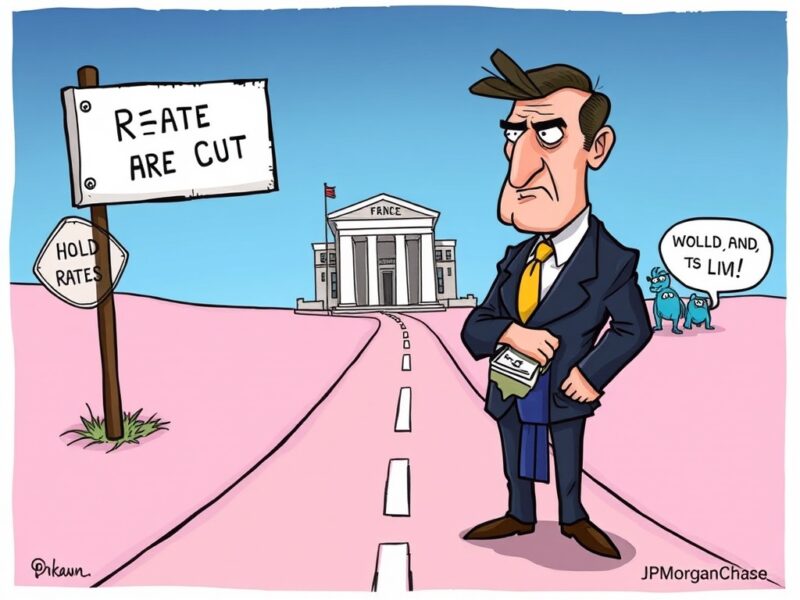
BitcoinWorld Fed Rate Cut: Why September’s Crucial Move Looks Unlikely The anticipation around a potential Fed rate cut has been a hot topic, especially for those watching the markets, including the dynamic world of cryptocurrencies. Recently, Wall Street giant JPMorganChase delivered a dose of reality, suggesting that a September Fed rate cut is highly improbable. This perspective challenges the earlier hints from Federal Reserve Chair Jerome Powell about a possible shift towards easing monetary policy. Why a September Fed Rate Cut Seems Remote JPMorganChase’s analysis, as reported by South Korean outlet News1, points to several factors making an immediate easing unlikely. Despite some growing calls for lower rates, the bank believes the Federal Open Market Committee (FOMC) will choose to hold steady. Dovish Voices vs. Consensus: The committee saw a change with Stephen Miran joining, replacing Adriana Kugler. Miran’s presence is seen as adding more “dovish” voices, meaning those who favor lower interest rates. However, this doesn’t guarantee a consensus. Powell’s Swing Vote: With a more diverse range of opinions, a unanimous decision becomes less likely. This scenario often leaves Chair Powell with a crucial “swing vote,” making his decision pivotal. Persistent Inflation Risks: Most significantly, JPMorgan argues that ongoing inflation risks remain a major deterrent. The Fed’s primary mandate is price stability, and until inflation is firmly under control, a proactive Fed rate cut is difficult to justify. This cautious stance highlights the complex balancing act the Federal Reserve faces between supporting economic growth and taming rising prices. Many market participants are eager for a Fed rate cut, hoping it will stimulate economic activity and potentially benefit risk assets like crypto. Unpacking the Fed’s Dilemma: Inflation vs. Easing The Federal Reserve’s decisions are never simple. On one hand, persistent high interest rates can slow down economic growth, impacting everything from consumer spending to business investments. On the other hand, cutting rates too soon could reignite inflation, erasing progress made over the past year. The Fed carefully monitors a wide array of economic data, including: Consumer Price Index (CPI) and Personal Consumption Expenditures (PCE) for inflation. Employment figures, such as the unemployment rate and job growth. GDP growth, indicating overall economic health. These indicators provide a clearer picture of whether the economy can withstand current rates or if an adjustment, like a Fed rate cut, is truly necessary. JPMorgan’s view suggests that the current data still points towards caution rather than immediate action. What Does This Mean for Your Portfolio? For investors, particularly in the volatile cryptocurrency market, the Fed’s monetary policy has significant implications. Higher interest rates generally make traditional, less risky investments more attractive, potentially drawing capital away from speculative assets like crypto. Conversely, a Fed rate cut often signals a more accommodative environment, which can fuel enthusiasm for riskier assets. If JPMorgan’s prediction holds true, and a September Fed rate cut doesn’t materialize, investors might need to brace for continued market stability or even some headwinds. It underscores the importance of a well-diversified portfolio and staying informed about macroeconomic trends. Looking Ahead: The Path to a Fed Rate Cut While September might be off the table, the discussion around a future Fed rate cut is far from over. The Fed’s stance is data-dependent, meaning future economic reports will heavily influence their decisions. Should inflation show sustained and significant declines, or if the labor market weakens unexpectedly, the pressure for easing will undoubtedly grow. Key takeaways for investors: Stay Informed: Keep a close eye on upcoming inflation reports and Fed speeches. Assess Risk: Understand how different interest rate scenarios could impact your investments. Long-Term View: Avoid making hasty decisions based on short-term predictions. The journey to a more relaxed monetary policy will likely be gradual, with the Federal Reserve prioritizing long-term economic stability over quick adjustments. Summary: JPMorganChase’s assessment provides a crucial reality check for those anticipating a September Fed rate cut. Citing persistent inflation risks and a more divided FOMC, the bank suggests the Federal Reserve will likely maintain its current policy. This cautious approach emphasizes the Fed’s commitment to price stability, urging investors to consider the broader economic landscape when making financial decisions, especially concerning risk assets like cryptocurrencies. Frequently Asked Questions (FAQs) Q1: Why does JPMorganChase think a September Fed rate cut is unlikely? JPMorganChase believes a September Fed rate cut is unlikely due to persistent inflation risks, a more diverse range of opinions within the FOMC making a unanimous decision less probable, and the critical swing vote held by Chair Jerome Powell. Q2: Who is Stephen Miran and how does his presence affect the Fed’s decision? Stephen Miran recently joined the FOMC, replacing Adriana Kugler. His presence adds more “dovish” voices to the committee, meaning those who generally favor lower interest rates. However, this increased diversity of opinion can make achieving a consensus on a Fed rate cut more challenging. Q3: What are “dovish voices” in the context of the Federal Reserve? “Dovish voices” refer to members of the Federal Reserve’s policy-making committee who tend to favor lower interest rates and a more accommodative monetary policy to stimulate economic growth, even if it means tolerating slightly higher inflation. Q4: How do the Fed’s interest rate decisions impact the cryptocurrency market? When the Fed raises interest rates, traditional, less risky investments become more attractive, potentially drawing capital away from speculative assets like cryptocurrencies. Conversely, a Fed rate cut can signal a more accommodative environment, which often encourages investment in riskier assets, including crypto. Q5: What economic data does the Fed consider when deciding on a Fed rate cut? The Fed considers a broad range of economic data, including inflation indicators like the Consumer Price Index (CPI) and Personal Consumption Expenditures (PCE), employment figures (unemployment rate, job growth), and Gross Domestic Product (GDP) growth, to gauge the overall health of the economy and guide its monetary policy decisions. If you found this analysis insightful, please share it with your network! Understanding the Federal Reserve’s stance on a potential Fed rate cut is vital for anyone navigating today’s financial markets. Spread the word and help others stay informed. To learn more about the latest crypto market trends, explore our article on key developments shaping Bitcoin price action. This post Fed Rate Cut: Why September’s Crucial Move Looks Unlikely first appeared on BitcoinWorld and is written by Editorial Team

Author: Coinstats
Metaplanet was included in the FTSE Japan and World indices due to its strong performance in the second quarter.

Metaplanet was included in the FTSE Japan and World indices due to its strong performance in the second quarter.

PANews reported on August 25 that according to Cointelegraph, Bitcoin fund management company Metaplanet has been upgraded from a small-cap stock to a mid-cap stock in the index provider FTSE Russell's September 2025 semi-annual assessment, thereby including it in the flagship FTSE Japan Index. The index provider, which updates and rebalances its indices quarterly, has included Metaplanet in the FTSE Japan Index, a stock market index covering mid-cap and large-cap companies listed on Japanese exchanges, based on its strong second-quarter performance. Metaplanet's inclusion in the FTSE Japan Index means it will automatically be included in the FTSE All-World Index, which covers the largest listed companies by market capitalization in each region.

Author: PANews
Dogecoin Price Holds Between Support And Resistance Levels

Dogecoin Price Holds Between Support And Resistance Levels

The post Dogecoin Price Holds Between Support And Resistance Levels appeared on BitcoinEthereumNews.com. Dogecoin traded in a limited range during 2025. At the time of writing, the Dogecoin price held near $0.22 while the DOGE/BTC pair showed modest gains. Analysts said the token displayed relative stability despite uncertain market conditions. The question was whether buyers could maintain support and eventually break above resistance. Dogecoin Price Stayed Within a Narrow Range At the time of writing, the Dogecoin price moved between support near $0.21 and resistance close to $0.24. This defined corridor marked the boundaries where buyers and sellers acted most strongly. Analysts said that support near $0.21 represented the level where demand consistently returned. On the other side, sellers stepped in close to $0.24, preventing further upside progress. Over several sessions, the range held. Analysts noted that participation increased when the price neared either boundary. The steady interaction suggested a balance of interest on both sides of the market. In previous years, Dogecoin showed similar extended consolidation phases. Those periods often came before more significant moves. At present, however, the token continued to trade inside its defined levels without a clear breakout. Consolidation Pattern Repeated on Weekly DOGE/BTC Chart On the weekly DOGE/BTC chart, Dogecoin showed a repeating pattern of extended consolidation. Analysts described the formation as a descending trendline that acted as resistance and a horizontal line that served as support. This structure mirrored earlier phases in the token’s history. In past cycles, such setups had preceded stronger upward moves. However, the latest pattern still required confirmation before any new direction could emerge. The current support zone showed continued buyer activity. This zone was often marked in green on trading charts. It reflected the point where demand outweighed supply. Repeated rejections near the descending trendline reinforced the role of sellers. Each time the price approached the line, momentum weakened. The inability to…

Author: BitcoinEthereumNews
Key Economic Events: Your Crucial Guide to This Week’s Market Movers

Key Economic Events: Your Crucial Guide to This Week’s Market Movers

BitcoinWorld Key Economic Events: Your Crucial Guide to This Week’s Market Movers Get ready, crypto enthusiasts! This week brings a series of key economic events that could significantly sway traditional markets and, by extension, the volatile world of digital assets. Understanding these pivotal moments is crucial for navigating potential shifts in investor sentiment and market liquidity. From central bank insights to critical economic data, staying informed is your best strategy. What Key Economic Events Are Shaping Monday’s Outlook? The week kicks off with significant commentary from Federal Reserve officials, offering valuable insights into the U.S. monetary policy landscape. These key economic events often provide clues about future interest rate decisions, which directly influence the strength of the dollar and investor appetite for risk assets like cryptocurrencies. Monday, August 25 (All times UTC): 19:15 U.S. Fed Logan Speaks: Dallas Fed President Lorie Logan’s remarks can shed light on the Fed’s perspective on inflation and economic growth. Traders often scrutinize these speeches for any hawkish or dovish leanings. 23:15 U.S. FOMC Member Williams Speaks: New York Fed President John Williams, a permanent voting member of the FOMC, offers another crucial perspective. His comments can carry significant weight regarding the Fed’s policy path. These early week speeches are important because they help set the tone for market expectations. A hawkish stance could strengthen the dollar, potentially creating headwinds for crypto prices, while a dovish tone might have the opposite effect. Mid-Week Market Movers: More Fed Insights and Beyond As the week progresses, central bank communication remains a focal point. Continuous dialogue from Federal Reserve members helps market participants build a comprehensive picture of the economic outlook and policy direction. Monitoring these ongoing key economic events is essential for any informed investor. Tuesday, August 26: 12:30 U.S. FOMC Member Barkin Speaks: Richmond Fed President Thomas Barkin’s insights will contribute further to the ongoing discussion about economic conditions and monetary policy. His remarks can offer regional perspectives that inform the broader Fed narrative. Wednesday, August 27: 15:45 U.S. FOMC Member Barkin Speaks: Barkin delivers another speech, providing an additional opportunity for markets to gauge the Fed’s sentiment. Consistent messaging or any shift in tone from officials can trigger market reactions. These speeches are not just academic exercises; they are powerful signals. Investors actively listen for nuances that could indicate a change in the Fed’s strategy, impacting everything from bond yields to equity valuations and, ultimately, the crypto market. Critical Data Releases: How Will Key Economic Events Impact Thursday? Thursday is packed with crucial economic data releases, moving beyond just central bank speeches. These quantitative key economic events provide concrete evidence of economic health and inflationary pressures, often leading to immediate market volatility. Prepare for potential shifts as these numbers hit the wire. Thursday, August 28: 01:00 S. Korea Interest Rate Decision (Aug.): An interest rate decision from a major Asian economy like South Korea can impact global sentiment, especially for emerging markets and currencies. 12:30 U.S. GDP (QoQ) (Q2): Gross Domestic Product is the broadest measure of economic activity. This second-quarter reading will indicate whether the U.S. economy is expanding, contracting, or stagnating. A strong GDP report suggests economic resilience, while a weak one could fuel recession fears. 12:30 U.S. Initial Jobless Claims: This weekly report provides a real-time snapshot of the labor market’s health. A rise in jobless claims indicates a weakening job market, which can signal broader economic slowdown. 20:00 U.S. Fed Waller Speaks: Another influential voice from the Federal Reserve, Governor Christopher Waller, will offer his perspective. His remarks are closely watched for insights into the Fed’s current thinking on inflation and employment. Collectively, these Thursday releases offer a comprehensive view of the U.S. economic landscape. Strong data might reinforce expectations for higher interest rates, while weaker figures could prompt discussions of potential rate cuts, both of which have profound implications for market risk appetite. The Week’s Grand Finale: Understanding Friday’s Key Economic Events The week concludes with a highly anticipated inflation report, often considered the Federal Reserve’s preferred gauge for price stability. This particular key economic event is pivotal for understanding the ongoing battle against inflation and its potential impact on future monetary policy decisions. Friday, August 29: 12:30 U.S. Core PCE Price Index (YoY) (Jul.): The Personal Consumption Expenditures (PCE) price index, particularly the ‘Core’ reading (excluding volatile food and energy prices), is the Federal Reserve’s primary inflation measure. A higher-than-expected reading could reinforce the need for tighter monetary policy, while a lower figure might offer some relief. This data directly influences interest rate expectations. The Core PCE report is a significant market mover. Its outcome can solidify or shift market expectations for the Fed’s next moves, influencing everything from the dollar’s value to stock market performance and, importantly, the sentiment surrounding cryptocurrencies. Be prepared for potential volatility following this release. Staying informed about these crucial economic releases is not just for traditional investors; it is equally vital for those in the crypto space. These key economic events collectively paint a picture of global economic health and monetary policy direction, which inevitably ripples through all asset classes. By understanding these dynamics, you can make more informed decisions and better position your portfolio for the week ahead. Frequently Asked Questions (FAQs) What is the FOMC and why are their members’ speeches important? The FOMC, or Federal Open Market Committee, is the monetary policy-making body of the Federal Reserve System. Speeches by FOMC members are crucial because they communicate the Fed’s outlook on the economy, inflation, and future interest rate policy. These insights can significantly influence market sentiment and asset prices, including cryptocurrencies. How do U.S. GDP reports impact financial markets and crypto? The U.S. Gross Domestic Product (GDP) report measures the total value of goods and services produced in the economy. It’s a key indicator of economic health. Strong GDP can lead to a stronger dollar and potentially higher interest rates, which might put pressure on risk assets like crypto. Conversely, weak GDP could signal a slowdown, potentially leading to a weaker dollar and a more favorable environment for some crypto assets. What is the Core PCE Price Index and why is it significant? The Core PCE (Personal Consumption Expenditures) Price Index is the Federal Reserve’s preferred measure of inflation, excluding volatile food and energy prices. It’s significant because the Fed uses it to guide its monetary policy decisions, particularly regarding interest rates. A higher-than-expected PCE can signal persistent inflation, potentially leading to more aggressive rate hikes and impacting market sentiment. How do interest rate decisions, like South Korea’s, affect global markets? Interest rate decisions by central banks, even in smaller economies, can create ripple effects globally. They influence currency strength, capital flows, and investor confidence. For instance, a rate hike in South Korea could strengthen the Won and potentially draw capital away from other markets, indirectly affecting global liquidity and investor appetite for risk, including crypto. Why should crypto investors pay attention to traditional economic events? While cryptocurrencies are a distinct asset class, they do not exist in a vacuum. Macroeconomic factors, central bank policies, and global economic health significantly influence investor sentiment and liquidity across all markets. Traditional key economic events can drive changes in the dollar’s strength, risk appetite, and overall market stability, all of which impact crypto valuations. Did you find this guide to the week’s key economic events helpful? Share this article with your network on social media to help others stay informed and navigate the markets with greater confidence! To learn more about the latest crypto market trends, explore our article on key developments shaping Bitcoin price action. This post Key Economic Events: Your Crucial Guide to This Week’s Market Movers first appeared on BitcoinWorld and is written by Editorial Team

Author: Coinstats