Airdrop

An Airdrop is a distribution of free tokens to a community, typically used as a marketing tool or a reward for early protocol adopters and testers. In 2026, the "points-to-airdrop" model has matured into merit-based incentive programs that utilize Sybil-resistance and Proof-of-Humanity to filter out bots. Airdrops remain a primary method for decentralized governance (DAO) bootstrapping. Follow this tag for the latest on retroactive rewards, eligibility criteria, and how to participate in the most anticipated token distributions in the ecosystem.

5523 Articles
Created: 2026/02/02 18:52
Updated: 2026/02/02 18:52
Best Crypto Presale to Buy Now For 100x Growth. Which Tokens Are You Still Early On?

Best Crypto Presale to Buy Now For 100x Growth. Which Tokens Are You Still Early On?

The next crypto bull cycle is brewing, and early presale entries are once again becoming the go-to strategy for traders chasing 100x gains. Projects like Opter, BFX, and BDAG still give early buyers a serious edge. Each one targets a different sector of blockchain, but which has the best upside potential? Opter: The future of [...] The post Best Crypto Presale to Buy Now For 100x Growth. Which Tokens Are You Still Early On? appeared first on Blockonomi.

Author: Blockonomi
After a seven-year wait, Aztec finally launched its token, but its return with a privacy narrative has been embroiled in controversy surrounding its initial coin offering (ICO).

After a seven-year wait, Aztec finally launched its token, but its return with a privacy narrative has been embroiled in controversy surrounding its initial coin offering (ICO).

Author: Nancy, PANews As signs of a shift from a bull to a bear market become increasingly apparent in the crypto market, more and more projects, such as Monad, MegaETH, and Meteora, are rushing to launch their own tokens in an attempt to seize the last window of liquidity. Recently, Aztec Network, a once-star project, announced its token launch, returning to the market after seven years, riding the wave of the privacy trend, but its token sale has sparked controversy. TGE's airdrop was absent, and mutual funds with over 70% valuation discounts faced dissatisfaction. After years of waiting and multiple cycles of change, Aztec has finally announced the launch of its own cryptocurrency. On November 13th, Aztec disclosed its token economic model, with a genesis supply of 10.35 billion AZTEC tokens. Of these, 27.26% is allocated to investors and early supporters, 21.06% to the core team, 11.71% to the foundation, 10.73% to ecosystem subsidies, 4.89% to future incentives, 2.41% to Y1 Network Rewards, and the remaining 21.96% (approximately 2.273 billion tokens) is allocated to token sales, including the Phase 2 public auction (14.95%), Uniswap V4 liquidity pools (2.64%), the Phase 1 genesis sequencer sale (1.93%), and Bilateral reservations (2.44%). Tokens will primarily be used for sequencer staking, network governance, and network fee payments. The annual inflation cap will not exceed 20%, determined by governance. As announced by Aztec, it is launching TGE through an AZTEC token sale. The Genesis Sequential round sale will run from 22:00 on November 13 to 22:00 on December 1, while the open auction will take place from 22:00 on December 1 to 22:00 on December 6. This token sale will be conducted based on Uniswap's newly launched Continuous Liquidation Auction (CCA) . This scheme aims to drive liquidity and facilitate open price discovery for newly issued or low-liquidity tokens on Uniswap v4. It operates entirely on-chain, with a single liquidation price set per block. Higher bids are prioritized for execution, and bids at the same price are distributed proportionally, with all successful bidders paying the same price. Proceeds are automatically pooled in v4 after the auction concludes. Aztec is the first project to adopt this mechanism and can opt to use the ZK Passport module for private and verifiable participation verification. However, Aztec's token sale plan has been met with criticism from the community. As a privacy project with substantial funding and high visibility, Aztec was initially a prime target for arbitrageurs, but the official announcement that there would be no airdrops rendered the time and money invested by long-term users meaningless. Instead, Aztec emphasizes community priority, opening up early bidding opportunities to network contributors, including testnet node operators, Aztec Connect users, zk.money users, and active community members. Currently, over 300,000 addresses have been whitelisted. More attention is focused on the valuation and lock-up conditions. Aztec tokens have a starting FDV of $350 million, with a public sale ratio of 14.5%. Although the official statement claims this price represents a discount of approximately 75% to the implied valuation of the latest equity funding round, many community members still believe the valuation is mismatched with the project's current output. Meanwhile, Aztec's initial coin offering (ICO) has been criticized for its long lock-up period. Both the genesis sale (minimum staking requirement of 200,000 AZTEC) and the open auction require a 12-month lock-up period, with tokens from the public auction subject to a governance vote after 90 days to determine whether they should be immediately unlocked. Given the current depressed market sentiment and the poor performance of most projects after their TGE (Time-Based Event), these lock-up conditions amplify the financial risk for participants. It's worth noting that the white paper indicates 0.12% of the tokens (approximately 12.42 million) will be allocated to "non-internal early contributors, community members, and related stakeholders," with most of this distribution to be completed before the token sale begins. Furthermore, for compliance reasons, Aztec requires participants to complete KYC and mint NFTs before entering the auction process. However, this requirement, which contrasts with its privacy narrative, has become another focal point of community discussion. After raising over $100 million, the company is transforming its business and launching its own cryptocurrency to capitalize on the resurgence of the privacy sector. Aztec, a once-popular project, has been dedicated to building privacy solutions on Ethereum since its launch in 2018. Public information shows that Aztec completed four rounds of financing between 2018 and 2022, raising a total of over $119 million. Investors included heavyweight institutions in the industry such as Vitalik Buterin, ConsenSys, Paradigm, a16z, Ethereal Ventures, and Coinbase Ventures. However, despite its large funding and high market attention, Aztec's ecosystem development has not progressed ideally. Especially after Tornado Cash was sanctioned by the US OFAC in 2022, the regulatory risks for the entire privacy-related project sector increased significantly. In March 2023, Aztec announced a business transformation, gradually shutting down its DeFi privacy bridge project, Aztec Connect, and discontinuing the deposit function of zk.money. The official statement indicated that no regulatory agencies had contacted them, and that this move was driven by commercial considerations, shifting their focus to the development of the zero-knowledge universal language Noir and next-generation crypto blockchains. This decision impacted the Aztec ecosystem, which at the time had accumulated tens of millions of dollars in transaction volume and hundreds of thousands of users through Aztec Connect and zk.money. After a period of weakening privacy narratives, Aztec continued to update its products, but market enthusiasm clearly declined. According to DeFi Llama data, Aztec's total value locked (TVL) fell from a peak of $21 million to a low of approximately $4 million. However, the privacy sector began to show signs of recovery at the end of last year. In November 2024, a US court ruled that OFAC's sanctions against Tornado Cash were illegal and removed it from the sanctions list in March of this year, bringing positive signals to crypto privacy projects. Taking advantage of this opportunity, Aztec announced the establishment of its foundation in February of this year, immediately sparking speculation about its token issuance plans. Subsequently, Aztec launched its public testnet, attracting user interaction and driving a rebound in TVL (Total Value Limit). Within just four weeks, the platform saw the development of over 30 new applications, with more than 17,000 node connections. Following this, Aztec also completed network upgrades, expanded its developer ecosystem, and implemented cross-chain and performance optimizations. Recently, with the significant price increases of privacy coins such as Zcash, market attention to the privacy sector has risen again, providing a relatively favorable window of opportunity for Aztec's token launch. However, given the current sluggish crypto market environment and rapidly changing narratives, whether Zcash can sustain its ecosystem development and attract long-term developer and user participation after gaining short-term attention and liquidity through its token launch remains to be seen.

Author: PANews
Whale.io Unveils Weekend Minting Sale for Crock Dentist NFTs with 50% Discount

Whale.io Unveils Weekend Minting Sale for Crock Dentist NFTs with 50% Discount

The post Whale.io Unveils Weekend Minting Sale for Crock Dentist NFTs with 50% Discount appeared on BitcoinEthereumNews.com. Advertisement &nbsp &nbsp Disclaimer: The below article is sponsored, and the views in it do not represent those of ZyCrypto. Readers should conduct independent research before taking any actions related to the project mentioned in this piece. This article should not be regarded as investment advice. Whale.io has announced a special Weekend Sale Campaign for its Crock Dentist NFT collection, offering users a 50% discount on minting fees. The promotion begins this Friday and will run through Monday, November 17, 2025, allowing collectors to mint NFTs at 250 USDT, down from the regular price of 500 USDT. The Crock Dentist NFT series, launched last month, has already gained traction with over 300 NFTs minted and active secondary market trading. Following its debut, Whale.io completed its first Solana (SOL) airdrop in late October, distributing roughly $5,000 in SOL to holders, each receiving an average of 0.19 SOL. Initially, minting was restricted to a maximum of five NFTs per account, with prices starting at 100 USDT and gradually rising to 500 USDT. This limit has now been lifted, allowing users to mint an unlimited number of NFTs throughout the weekend sale. Early adopters who secured five NFTs at the introductory rate benefited from approximately $85 worth of SOL rewards from the first airdrop. NFTs That Deliver Recurring Rewards Beyond collectibles, Crock Dentist NFTs serve as reward-generating assets within the Whale Originals gaming ecosystem. Each NFT entitles its holder to a share of the game’s revenue pool, funded through a 3% house edge (with a 97% return-to-player rate). Advertisement &nbsp Proceeds from this pool are periodically distributed to holders through airdrops in SOL, and soon, in $WHALE tokens. Each NFT represents a 0.1% share of the total distribution pool, with allocations scaling based on the number of NFTs owned. Whale.io’s first…

Author: BitcoinEthereumNews
Why PEPE and DOGE Holders Rush to Buy New Altcoin OPTER

Why PEPE and DOGE Holders Rush to Buy New Altcoin OPTER

PEPE and DOGE holders have been nursing some serious bruises lately. PEPE‘s down 44% over the past month, sitting around $0.0000061 and DOGE‘s fallen 38%, hovering near $0.17. But while meme coin veterans lick their wounds, a different crowd’s loading up on something completely different: Opter. Opter‘s a decentralized perpetuals exchange priced at just $0.02 […] The post Why PEPE and DOGE Holders Rush to Buy New Altcoin OPTER appeared first on Live Bitcoin News.

Author: LiveBitcoinNews
Aztec Network Opens Token Sale via Uniswap’s New CCA Model

Aztec Network Opens Token Sale via Uniswap’s New CCA Model

The post Aztec Network Opens Token Sale via Uniswap’s New CCA Model appeared on BitcoinEthereumNews.com. [Zug, Nov. 13, 2025] Aztec Network, the privacy-native Layer 2 on Ethereum, today announced its token sale, with registration for the token sale beginning today at 3 pm CET. The token sale will leverage Uniswap Labs’ newly launched Continuous Clearing Auction (CCA), a set of smart contracts developed with Aztec as a core contributor that aims to make token distribution more transparent and accessible to a broader audience. Aztec will be the first project to leverage CCA, “Fair, community access should be the foundation of token launches,” said Zac Williamson, Co-Founder of Aztec Network. “Given that the current system heavily favors insiders and whales over long-standing community members, CCA will. It completely changes that unjust dynamic and demonstrates our shared commitment to building infrastructure that truly serves the community.” Rather than conducting a traditional airdrop, Aztec’s token sale uses the CCA protocol to prioritize fairness, accessibility, and fair price discovery for community members who wish to help bootstrap the network’s decentralized staking set and participate in network governance. The community-first distribution offers a starting floor price based on a $350 million fully diluted valuation (FDV), which represents an approximate discount of 75% to an implied network valuation (based on the latest valuation from Aztec Labs’ equity financings). The auction also features per-user participation caps to give community members genuine, bid-clearing opportunities to participate. The CCA protocol aims to address the current challenges in token distribution, where retail participants are often disadvantaged against whales and institutions that hold large amounts of money. “For the past several months, we’ve worked closely with Uniswap Labs as contributors on the CCA protocol,” said Joe Andrews, President and Co-founder at Aztec Labs. “This launch is a first for Ethereum; we have incorporated zero-knowledge proofs into the sale smart contracts by using ZkPassport’s Noir circuits to…

Author: BitcoinEthereumNews
Which Altcoin Is Money Flowing Into in November? XRP, Filecoin or Opter?

Which Altcoin Is Money Flowing Into in November? XRP, Filecoin or Opter?

Traders searching for the next strong altcoin this month are increasingly gravitating toward the OPTER token as momentum shifts across the market. With XRP and Filecoin (FIL) showing slower movement in recent weeks, many investors are exploring assets tied to active platforms and real trading incentives. Opter’s live ecosystem, presale activity, and reward-driven trading model […]

Author: Cryptopolitan
Solana Active Addresses Hit 12-Month Low as Network Activity Cools

Solana Active Addresses Hit 12-Month Low as Network Activity Cools

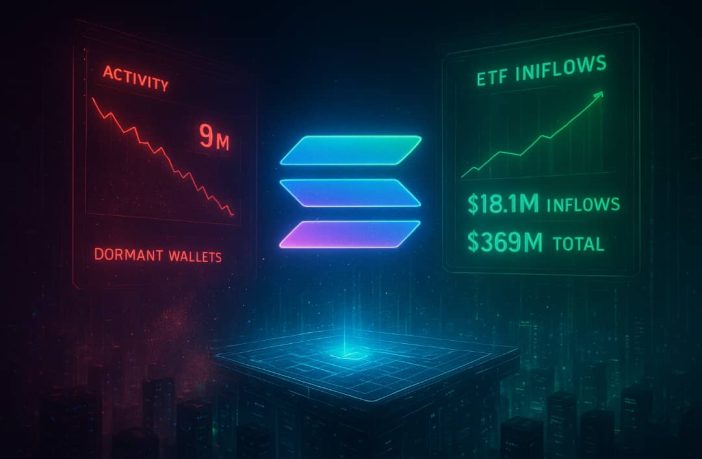
The number of active addresses on the Solana blockchain has fallen sharply to 3.3 million, marking a 12-month low. The drop represents a major pullback from January’s peak of more than 9 million, when the network surged amid the memecoin boom that brought record transaction activity. 🚨 Active Solana addresses number has dropped to a [...]

Author: Null TX
BitMine Bolsters Ethereum Holdings as Retail Money Flows to Opter

BitMine Bolsters Ethereum Holdings as Retail Money Flows to Opter

The post BitMine Bolsters Ethereum Holdings as Retail Money Flows to Opter appeared on BitcoinEthereumNews.com. Bitmine just revealed that it now holds 3.5 million ETH. Experts are buzzing about this accumulation as it may drive market sentiment to ETH. But savvy minds are pointing to something else. Retail money is flowing into $OPTER, a presale coin from Opter, the platform that fuses centralized and decentralized experience.  Opter: Gamified trading with rewards Opter is gaining traction as a decentralized perpetuals exchange that blends the speed of centralized platforms with the transparency and security of on-chain settlements. Why settle for holding ETH when you can leverage and trade it on Opter? It isn’t just about perpetual trading and the power of leverage. The real fun is in the dual nature of Opter. Traders experience the speed and swift order executions of centralized exchanges, but the holders can trade directly from their wallets without KYC, just like a decentralized one. A standout feature is the Opter XP System, which rewards users depending on their trade volume, position duration, and profitability. Users level up to unlock fee discounts, staking boosts, and seasonal airdrop rewards, turning trading into a skill based progression game. The presale allows participants to acquire $OPTER tokens either through direct purchase or by trading on the platform. Traders can rack up 1200 $OPTER for every $100,000 worth of trades. With over $132 million in trading volume, Opter is already demonstrating traction and providing major crypto like leveraged ETH as an active way to earn rewards beyond traditional holding. BitMine: Passive ETH growth and yield BitMine is one of the largest ETH holders, and its recent announcement of nesting 3.5 million ETH has raised many eyebrows. With the recent market dips, BitMine has seen it as the perfect opportunity to swell its coffers. Holding 3.5 million ETH in its reserves demonstrates the potential of simply holding Ethereum…

Author: BitcoinEthereumNews
A Brief Analysis of the New Protocol CCA Jointly Released by Uniswap and Aztec

A Brief Analysis of the New Protocol CCA Jointly Released by Uniswap and Aztec

Author: Zhixiong Pan Let's talk about the new protocol CCA jointly released by Uniswap and Aztec, which stands for "Continuous Clearing Auction." It's specifically designed for price discovery and liquidity initialization of new assets. After the auction process is complete, the project team can import the funds and tokens raised into Uniswap v4, connecting them to secondary market trading. The core objective of this protocol is to address the question of "how to price new assets." Historically, there have been many approaches: team airdrops (essentially free giveaways), Dutch auctions, fixed-price sales, as well as LBP, Bonding Curve, etc., all of which essentially involve "using some mechanism to sell a portion of tokens to the earliest participants." However, Uniswap believes that these existing mechanisms each have their own pitfalls: some have very arbitrary pricing, some are extremely time-dependent, and some cannot provide sustained liquidity. Therefore, they hope that CCA can simultaneously address two issues: relatively fair price discovery and smooth, sustainable liquidity initiation. Essentially, CCA is a protocol independent of Uniswap v4, serving as a complete issuance and pricing framework. However, it can also connect with the AMM kernel through Uniswap v4's hooks mechanism, especially after the CCA auction is completed, automatically injecting liquidity into Uniswap v4 smart contracts. So what does this have to do with Aztec? Aztec's involvement in this matter is actually quite deep: they not only participated in the design of the CCA mechanism, but also became the first project to use CCA for token auctions. Furthermore, the CCA protocol itself can also incorporate KYC/compliance capabilities. Aztec used an identity verification function called ZKPassport in this auction. This is a project within the Aztec ecosystem, developed using their Noir language, and completes compliance checks through zero-knowledge proofs without exposing user privacy details. Returning to CCA, it's not a fixed set of rules or a "single solution," but rather a configurable auction framework. It can be roughly broken down into the following steps: Configuration phase: The auction initiator first sets the rules on the chain, such as the start and end times, the total number of "rounds" or time periods in the auction, the proportion of tokens released in each time period, the minimum price (floor price), whether whitelisting/identity verification is required, and how to import liquidity into Uniswap v4 after the auction ends, etc. Bidding Phase: During the auction, participants can place bids at any time. Each bid includes two parameters: the amount of money invested and the maximum acceptable price per unit. Bids can be increased or adjusted afterward, and each order is recorded independently. Spreading Phase: The system will automatically spread a bid across the remaining "release periods". Therefore, the earlier you place a bid, the longer the time you participate, and the more rounds you have the opportunity to participate in the liquidation. Liquidation Phase: In each round, the system accumulates all valid bids for that round and then uses a unified set of rules to find a price that can sell all the tokens to be released in that round. This price becomes the final transaction price for that round. All bids with a max_price higher than or equal to this price will receive their corresponding share in that round according to the rules. Closing: Once all rounds are completed, the auction ends. Participants can claim their earned tokens and any unsold funds; the protocol then injects the raised assets and the assets prepared by the project team into Uniswap v4 according to the pre-agreed strategy, officially launching the secondary market liquidity pool. I think it's more like a time slice of the traditional "one-off auction": instead of clearing out all at once at a certain moment, it breaks down a large round into multiple smaller stages, allowing prices and the game to unfold over time. This is precisely why it's called a "Continuous Clearing Auction".

Author: PANews
Best Crypto Presales to Watch in November 2025 – Top Tokens Heating Up

Best Crypto Presales to Watch in November 2025 – Top Tokens Heating Up

Understanding the Presale Landscape in 2025 November 2025 marks a pivotal moment for early-stage crypto investors. With Bitcoin stabilizing near $95K and global liquidity returning to risk assets, the presale market has become a launchpad for innovation – and alpha. Crypto presales are early funding rounds where investors buy tokens before their official exchange debut. […] The post Best Crypto Presales to Watch in November 2025 – Top Tokens Heating Up  appeared first on Live Bitcoin News.

Author: LiveBitcoinNews