

How Tether Maintains Its 1:1 Peg: Mechanics of USDT Reserves
TL;DR
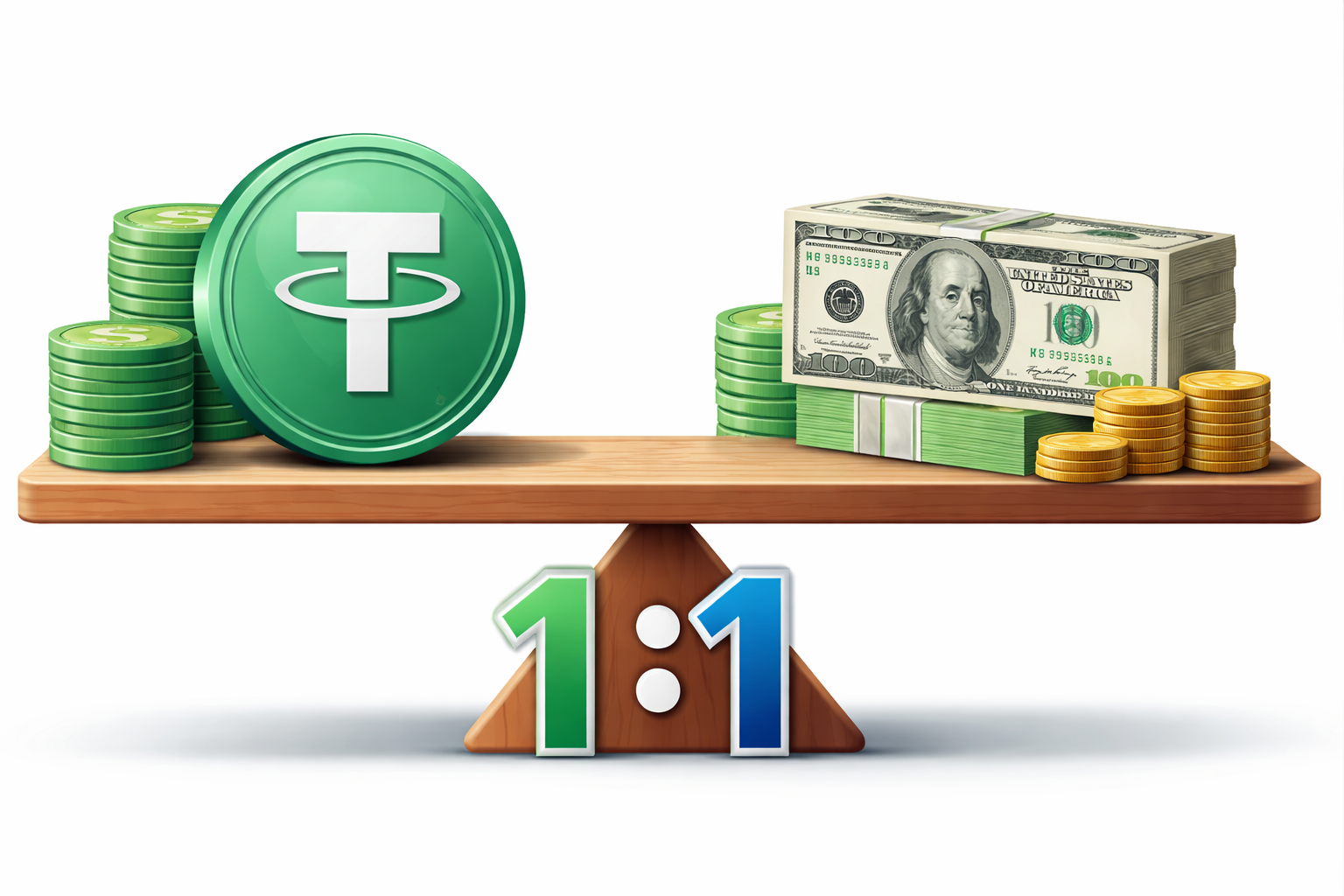
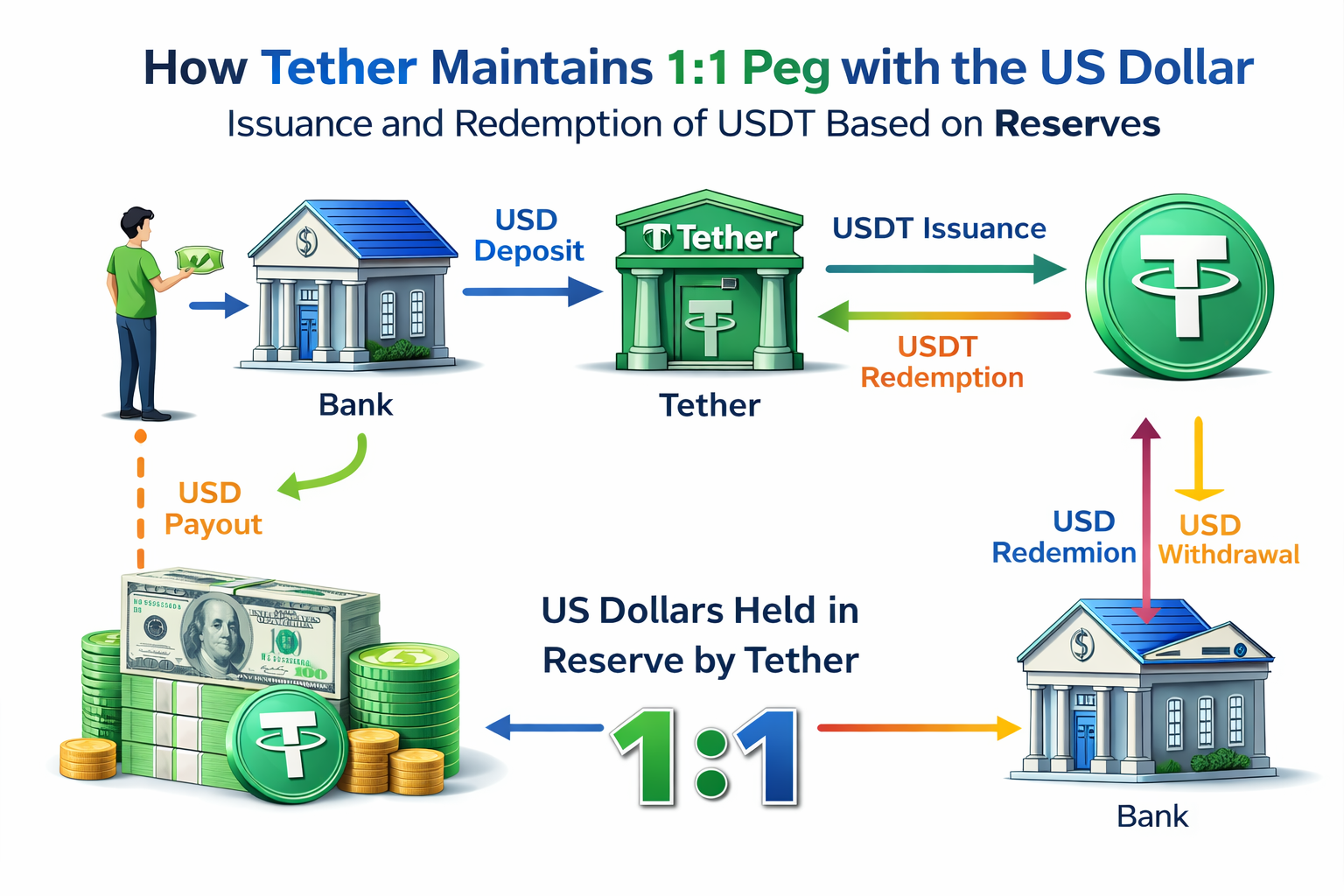
- Tether (USDT) is pegged 1:1 to the US Dollar, meaning for every USDT issued, there is an equivalent amount of reserves held.
- Tether’s reserves include fiat currencies, cash equivalents, bank deposits, and other assets like bonds, loans, and other investments that help maintain the stable value of USDT.
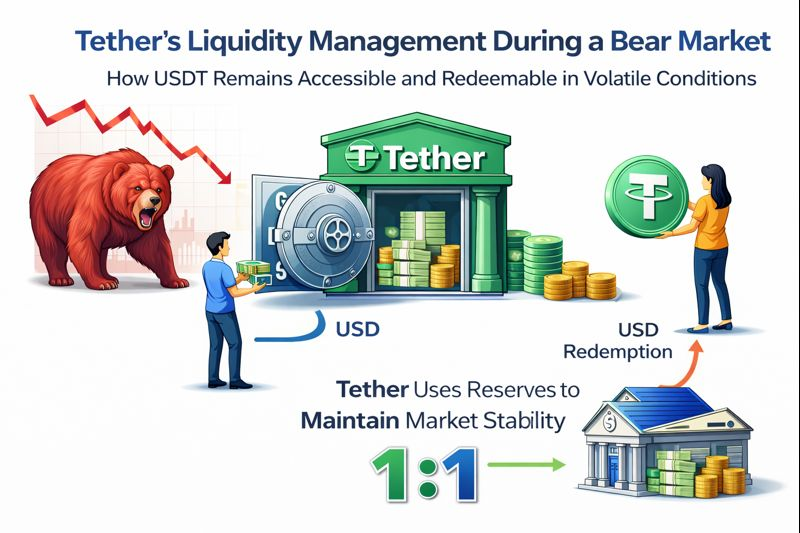
- The mechanics of USDT reserves are designed to ensure liquidity during both market crashes and bear markets.
- Tether faces scrutiny regarding its reserve transparency, especially in the context of USDT depegging history.
- Understanding Tether liquidity in a bear market and how it manages its reserves is crucial for maintaining the stable value of USDT.
Introduction
What is Tether (USDT)?
How Tether Maintains Its 1:1 Peg
Reserve Transparency and Scrutiny
Tether’s Liquidity in a Bear Market
Tether’s Role in Stablecoin Mechanics During a Crash
Tether Depegging History and Future Outlook
Frequently Asked Questions (FAQ)
How does Tether maintain its 1:1 peg with the US Dollar?
What happens when USDT depegs from the US Dollar?
How does Tether’s liquidity work in a bear market?
What are the risks of Tether’s reserves?
What is the role of USDT during a crypto crash?
Conclusion
Disclaimer
Popular Articles
Security First: Identifying and Avoiding Common USDT Phishing Scams
Phishing scams targeting Tether (USDT) users are becoming increasingly common. Identifying these threats and following safe transaction practices can help users protect their assets and avoid falling
USDT Trading Pairs: Analyzing Bitcoin and Ethereum Liquidity
USDT trading pairs with Bitcoin (BTC) and Ethereum (ETH) are crucial for the cryptocurrency market. These pairs, such as BTC/USDT and ETH/USDT, offer high liquidity and are essential for accurate pric
The Role of USDT in Decentralized Finance (DeFi) Yield Farming
USDT (Tether) is a stablecoin pegged to the US Dollar and widely used in DeFi yield farming. By providing liquidity in DeFi protocols, USDT holders can earn interest, rewards, and APY (Annual Percenta
Trade the "Asian Pulse": HK50 (Hang Seng Index) USDT Futures Live on MEXC
Do you want to trade the volatility of Tencent, Alibaba, or Meituan without opening a complex Hong Kong brokerage account?MEXC has officially opened a fast lane to the Asian financial center. As of to
Hot Crypto Updates
View More
What is Accenture plc (ACN)? The Consulting Powerhouse Behind Enterprise AI Reinvention
In a market obsessed with “the next big software platform,” the most durable winners are often the firms that help everyone else change. That is the quiet premise behind Accenture plc: a global
USAT Stablecoin Complete Guide: Everything About Tether's US-Regulated Dollar-Backed Token in 2026
Comprehensive analysis of USAT stablecoin - Tether's US-regulated dollar-backed cryptocurrency. Learn about USAT's mechanisms, use cases, differences from USDT, and how to trade USAT on MEXC exchange
What is Mastercard Inc. (MA)? Payments Powerhouse, Growth Drivers, and Key Insights
Mastercard Inc. (NYSE: MA) is one of the world’s leading payment technology companies, connecting consumers, financial institutions, merchants, governments, and businesses across a global digital
What is Visa Inc. (V)? Global Payments Leader, Growth Drivers, and Strategic Insight
Visa Inc. (NYSE: V) is one of the world’s foremost payment technology companies, enabling secure, reliable electronic transactions between consumers, merchants, financial institutions, and
Trending News
View More
US Dollar holds gains ahead of US data, Fedspeak
The post US Dollar holds gains ahead of US data, Fedspeak appeared on BitcoinEthereumNews.com. Here is what you need to know on Thursday, January 15: The US Dollar

USD/INR expects cautious start on Friday as Oil price cools down
The post USD/INR expects cautious start on Friday as Oil price cools down appeared on BitcoinEthereumNews.com. The USD/INR pair ended Wednesday’s session with modest

Whale Activity Surges in Chainlink as Second ETF Hits the Market
The post Whale Activity Surges in Chainlink as Second ETF Hits the Market appeared on BitcoinEthereumNews.com. Crypto whales are increasing their exposure to Chainlink

Algorand (ALGO) Foundation Taps Ex-FinCEN, MoneyGram Execs for New US-Based Board
The post Algorand (ALGO) Foundation Taps Ex-FinCEN, MoneyGram Execs for New US-Based Board appeared on BitcoinEthereumNews.com. Iris Coleman Jan 14, 2026 15:
Related Articles

How Tether Maintains Its 1:1 Peg: Mechanics of USDT Reserves
Tether (USDT) is a stablecoin pegged 1:1 to the US Dollar, meaning each USDT is backed by an equivalent amount of reserves. Tether maintains its peg by holding a mix of fiat assets, cash equivalents,
Security First: Identifying and Avoiding Common USDT Phishing Scams
Phishing scams targeting Tether (USDT) users are becoming increasingly common. Identifying these threats and following safe transaction practices can help users protect their assets and avoid falling
USDT Trading Pairs: Analyzing Bitcoin and Ethereum Liquidity
USDT trading pairs with Bitcoin (BTC) and Ethereum (ETH) are crucial for the cryptocurrency market. These pairs, such as BTC/USDT and ETH/USDT, offer high liquidity and are essential for accurate pric
The Role of USDT in Decentralized Finance (DeFi) Yield Farming
USDT (Tether) is a stablecoin pegged to the US Dollar and widely used in DeFi yield farming. By providing liquidity in DeFi protocols, USDT holders can earn interest, rewards, and APY (Annual Percenta
