KOSPI Plunges: South Korean Markets Reel After Trump’s Critical Address
BitcoinWorld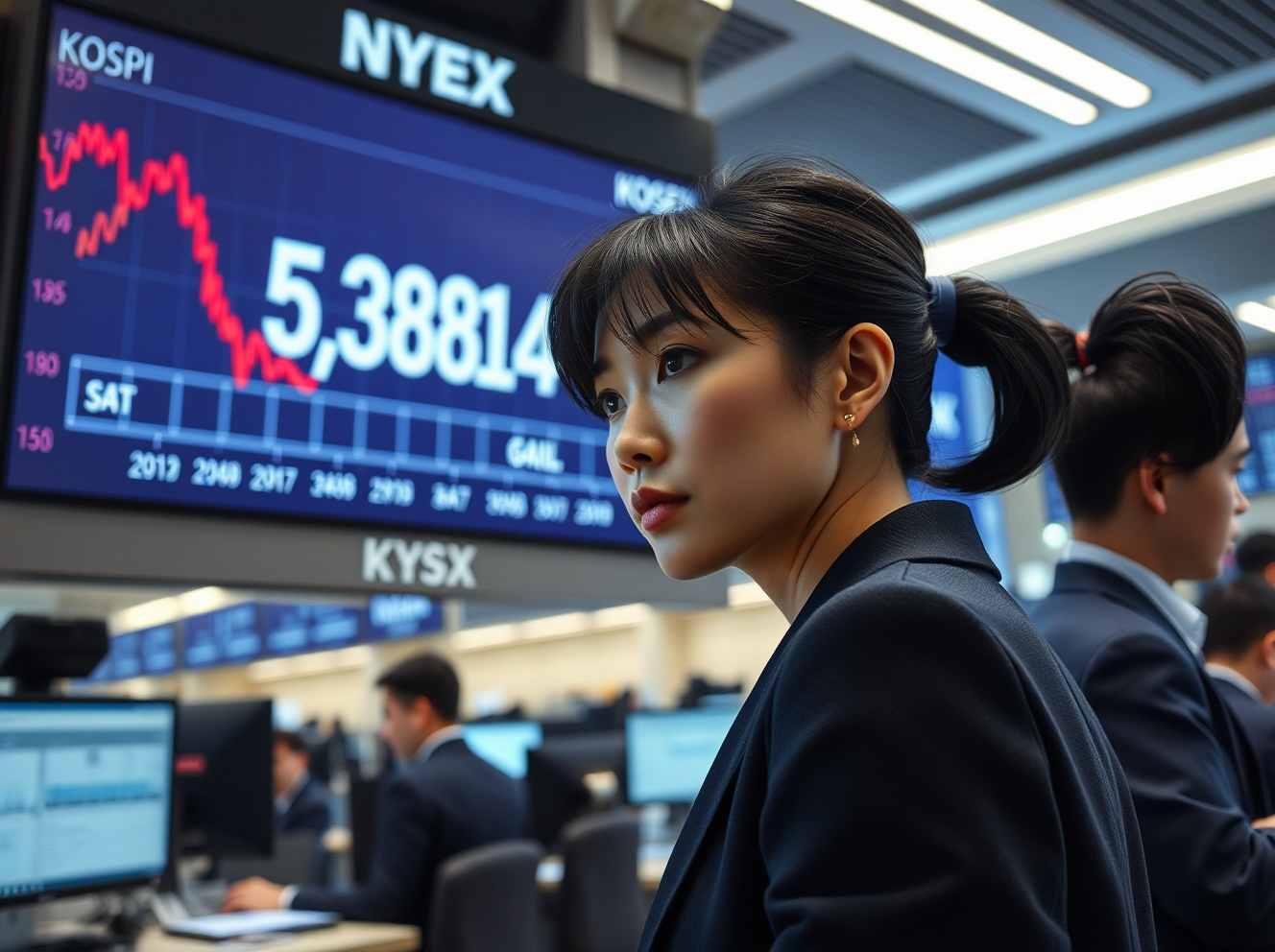
KOSPI Plunges: South Korean Markets Reel After Trump’s Critical Address
SEOUL, South Korea – Financial markets in South Korea experienced immediate and significant turbulence following a nationally televised address by U.S. President Donald Trump. The benchmark KOSPI index turned sharply lower, while the Korean won weakened considerably against the U.S. dollar, signaling a rapid reassessment of risk by global investors.
KOSPI Index Records Sharp Decline Post-Address
The Korea Composite Stock Price Index (KOSPI) closed its trading session at 5,381.48, marking a substantial decline of 1.78% from the previous day’s close. This drop represents one of the most significant single-day losses in recent weeks. Market analysts immediately linked the sell-off directly to the content and tone of President Trump’s speech, which addressed key international trade and geopolitical policies. Consequently, trading volume surged above the 30-day average as institutional investors adjusted their portfolios.
Furthermore, the sell-off was broad-based, affecting multiple sectors. Export-heavy industries, particularly automotive and technology, faced pronounced pressure. For instance, shares of major conglomerates like Samsung Electronics and Hyundai Motor led the downward move. This sector-specific weakness highlights investor concerns about potential disruptions to global supply chains and export demand.
Korean Won Weakens Against the Resurgent Dollar
Simultaneously, the foreign exchange market witnessed a stark reversal. The USD/KRW (U.S. dollar to Korean won) exchange rate rose by 0.42%, reaching 1,518.68 won per dollar. This movement indicates a swift flight to the perceived safety of the U.S. currency amid heightened uncertainty. The won’s weakness compounds challenges for South Korea’s import-dependent economy, potentially raising costs for energy and raw materials.
The following table illustrates the key market movements observed in the immediate aftermath of the address:
| Financial Instrument | Level | Change | Percentage Change |
|---|---|---|---|
| KOSPI Index | 5,381.48 | -97.52 | -1.78% |
| USD/KRW Exchange Rate | 1,518.68 | +6.35 | +0.42% |
Expert Analysis on the Market Mechanics
Financial experts point to several interconnected mechanisms driving the reaction. First, Trump’s rhetoric often catalyzes volatility in risk-sensitive emerging markets like South Korea. Second, specific policy hints regarding trade agreements or defense cost-sharing can directly impact corporate earnings forecasts. “The market is pricing in a higher risk premium for Korean assets,” noted a senior economist at the Korea Institute of Finance, referencing historical patterns of volatility following similar geopolitical events. The rapidity of the move suggests algorithmic trading systems also amplified the initial human-driven sell-off.
Historical Context and Comparative Market Impact
This event fits a pattern observed during previous administrations. South Korean financial markets have historically demonstrated high sensitivity to U.S. political statements, especially concerning:
- Trade Policy: Announcements related to tariffs or trade deal renegotiations.
- Security Alliances: Comments on military partnerships or cost-sharing agreements.
- North Korea Diplomacy: Shifts in diplomatic stance affecting regional stability.
Comparatively, the reaction was more immediate than responses to recent Federal Reserve statements but less severe than during periods of acute regional tension. Other Asian markets, including Japan’s Nikkei and Taiwan’s Taiex, also saw negative moves, though the KOSPI’s decline was among the steepest. This underscores South Korea’s specific exposure to shifts in U.S. international policy.
Broader Economic Implications for South Korea
The dual shock of falling equities and a weaker currency presents a complex scenario for policymakers at the Bank of Korea (BOK). A sustained won depreciation could fuel imported inflation, potentially limiting the central bank’s ability to support growth with lower interest rates. Conversely, the BOK may intervene in forex markets to smooth excessive volatility, as it has done in the past.
For corporations, a weaker won is a double-edged sword. It may boost the won-value of overseas earnings for exporters like Samsung and Hyundai. However, it simultaneously increases the cost of servicing foreign-denominated debt and purchasing imported components. The net effect on corporate balance sheets remains highly company-specific and dependent on the duration of the currency move.
Conclusion
The pronounced decline in the KOSPI index and the simultaneous weakening of the Korean won following President Trump’s address highlight the profound and immediate interconnectivity of global financial markets with geopolitical discourse. This event serves as a stark reminder of South Korea’s vulnerability to external policy shocks. Market participants will now closely monitor follow-up statements, official policy releases, and domestic economic indicators to gauge whether this represents a short-term adjustment or the beginning of a more sustained period of volatility for South Korean assets. The resilience of the KOSPI and the stability of the won in the coming sessions will be critical tests for investor confidence.
FAQs
Q1: Why did the KOSPI fall after Trump’s speech?
The KOSPI fell due to investor concerns that specific policies mentioned or implied in the address could negatively impact South Korea’s export-driven economy, trade relations, or regional security stability, leading to a rapid sell-off of risk assets.
Q2: What does a weaker Korean won mean for the economy?
A weaker won makes South Korean exports cheaper for foreign buyers, potentially boosting sales for companies like Samsung. However, it also makes imports (like oil and raw materials) more expensive, which can increase costs for businesses and consumers and contribute to inflation.
Q3: How does this compare to past market reactions to U.S. political events?
This reaction is consistent with historical patterns where South Korean markets show high sensitivity to U.S. geopolitical and trade rhetoric. The speed and scale are similar to reactions seen during prior trade negotiation uncertainties, though typically less severe than during direct security crises on the Korean peninsula.
Q4: Could the Bank of Korea intervene to stop the won’s decline?
Yes, the Bank of Korea (BOK) possesses substantial foreign exchange reserves and has a history of intervening in the market to smooth out what it considers excessive or disorderly currency movements that threaten financial stability.
Q5: Which South Korean stock sectors were most affected?
Export-oriented sectors, particularly technology, automotive, and shipbuilding, were among the hardest hit. These companies are most exposed to changes in global trade flows, supply chain costs, and international demand, which are often influenced by U.S. policy.
This post KOSPI Plunges: South Korean Markets Reel After Trump’s Critical Address first appeared on BitcoinWorld.


You May Also Like

United Way of Hunterdon County Partners with Financial Resources FCU on Financial Wellness Program
EUR/JPY Stalls: Critical 184.00 Level Holds as Markets Decipher ECB and BoJ Policy Signals