Why Altcoins Are Outperforming Bitcoin in the Current Cycle
The cryptocurrency market is entering a phase where altcoins are beginning to outperform Bitcoin, signaling a potential shift in market dynamics. While Bitcoin traditionally leads the market during early bullish phases, altcoins often take over once momentum stabilizes and capital begins to rotate into higher-risk assets.
In the current cycle, this rotation appears to be underway. Several altcoins across sectors like DeFi, Layer-1 blockchains, and AI tokens are posting stronger percentage gains than Bitcoin. This raises an important question: why are altcoins outperforming now, and can this trend continue?
Market Structure and Capital Rotation
The current market structure reflects a classic crypto cycle pattern. Bitcoin typically rallies first, attracting institutional capital and setting the foundation for broader market growth.
Once Bitcoin stabilizes or enters consolidation, traders begin reallocating capital into altcoins in search of higher returns. This process, known as capital rotation, is a key driver of altcoin outperformance.
In this phase, Bitcoin dominance usually declines, indicating that market share is shifting toward altcoins.
Declining Bitcoin Dominance
Bitcoin dominance is one of the most important indicators for understanding altcoin performance.
A declining dominance index suggests that:
- Capital is flowing into altcoins
- Risk appetite is increasing
- Traders are seeking higher returns
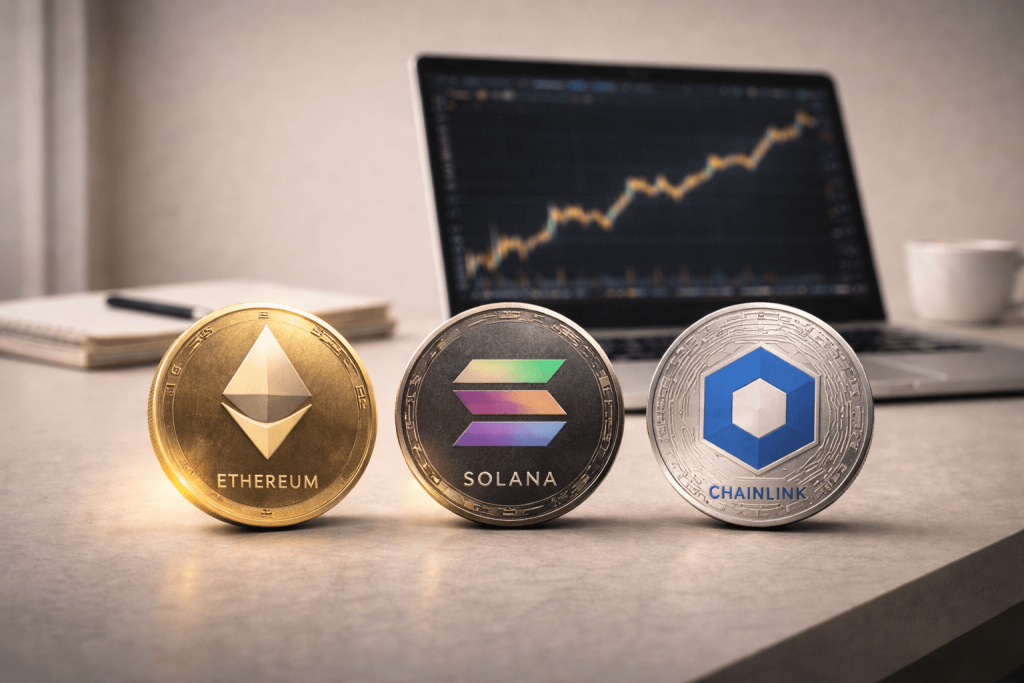
In the current cycle, Bitcoin dominance has shown signs of weakening, allowing altcoins like Ethereum, Solana, and XRP to gain momentum.
This trend often marks the early stages of an altseason, where altcoins outperform Bitcoin significantly.
Technical Patterns Supporting Altcoin Growth
From a technical perspective, many altcoins are showing bullish signals that support continued outperformance.
Higher Lows and Breakout Structures
Altcoins are forming higher lows on daily and weekly charts, indicating strong accumulation. Breakouts above resistance levels are being supported by increasing volume.
This structure suggests that buyers are stepping in aggressively, driving prices upward.
Volatility Expansion
Altcoins tend to have lower market caps compared to Bitcoin, which makes them more sensitive to capital inflows.
During periods of increased liquidity, altcoins experience larger price swings, often outperforming Bitcoin in percentage terms.
Key Reasons Behind Altcoin Outperformance
1. Higher Risk-Reward Potential
Altcoins inherently offer higher risk-reward ratios compared to Bitcoin. As market confidence grows, investors are more willing to take on risk in pursuit of greater returns.
This shift in sentiment drives capital into smaller-cap assets.
2. Sector-Specific Narratives
Unlike Bitcoin, which primarily serves as a store of value, altcoins are tied to specific sectors such as:
- Decentralized Finance (DeFi)
- Web3 and gaming
- Artificial Intelligence (AI)
- Layer-2 scaling solutions
These narratives attract targeted investment, leading to rapid growth in specific altcoins.
3. Innovation and Ecosystem Growth
Altcoins are often at the forefront of blockchain innovation. Projects introducing new technologies or use cases tend to attract both users and investors.
For example, Ethereum’s ecosystem expansion and Solana’s scalability improvements are driving increased adoption.
Market Trends and Recent Developments
Recent trends indicate that altcoin performance is being supported by both market sentiment and technological progress.
- Increased development activity across blockchain networks
- Rising total value locked (TVL) in DeFi platforms
- Growing adoption of Web3 applications
Additionally, institutional investors are beginning to explore altcoins beyond Bitcoin, particularly those with strong fundamentals and real-world use cases.
Risks That Could Impact Altcoin Performance
Despite strong momentum, altcoins come with significant risks.
1. Bitcoin Reasserting Dominance
If Bitcoin experiences a strong breakout, capital may rotate back into BTC, reducing altcoin momentum.
Historically, Bitcoin rallies can temporarily suppress altcoin performance.
2. Market Volatility
Altcoins are more volatile than Bitcoin, making them susceptible to sharp corrections.
Rapid gains can be followed by equally rapid declines, especially in low-liquidity environments.
3. Liquidity Constraints
Smaller altcoins may face liquidity challenges, leading to exaggerated price movements and increased risk for traders.
4. Regulatory Uncertainty
Regulatory developments can disproportionately impact altcoins, especially those tied to DeFi or emerging sectors.
Bullish Scenario for Altcoins
If current conditions persist, altcoins could continue to outperform Bitcoin:
- Continued decline in Bitcoin dominance
- Strong breakout patterns across altcoin charts
- Increased retail and institutional participation
- Expansion of blockchain ecosystems
In this scenario, the market could enter a full-scale altseason.
Bearish Scenario
On the downside, altcoin momentum could weaken if:
- Bitcoin dominance rises
- Market liquidity declines
- Macro conditions turn risk-off
- Key support levels break
These factors could lead to a pause or reversal in altcoin outperformance.
Final Outlook
The current cycle reflects a familiar pattern in crypto markets, where altcoins begin to outperform Bitcoin as capital rotates into higher-risk assets. Supported by strong technical patterns, growing narratives, and increasing adoption, altcoins are well-positioned for continued growth.
However, this phase also comes with increased volatility and risk. For traders and investors, the key is to balance opportunity with caution, closely monitor Bitcoin dominance, and track market trends.
As the cycle evolves, altcoins may continue to lead the market—but their performance will ultimately depend on broader crypto sentiment and macroeconomic conditions.


You May Also Like
What Will Happen to Bitcoin, Ethereum, Solana, and LINK as the US-Iran Warns Rests?

Why Dogecoin (DOGE) Is Down Over 50% in 6 Months