By arndxt , Crypto KOL Compiled by Felix, PANews This year's "January Barometer" research has been surprisingly accurate, suggesting a market reversal is imminent. The risk/reward ratio looks unbalanced: the probability of a correction after the FOMC meeting is high. It is recommended to lock in profits before the last wave of rise. Image source: Rambo Jackson This is the first time since December that altcoin open interest has surpassed Bitcoin’s, with the previous two times this occurred following local highs. Perhaps only 1% of participants can feel the real excitement. For everyone else, the winners will be those who hold assets that can keep paying attention when liquidity is low. Liquidity is selective, the macro environment is unfavorable, and fiat currencies are depreciating. Despite the unfavorable environment, assets are still rising. The biggest cycle difference: 2021 is a liquidity-driven cycle. With low credit costs and ample liquidity, risky assets are on a roll. 2025 is different. Interest rates are high and liquidity is tight. Yet, risk assets, from Bitcoin to gold, are slowly rising. Interest rates are high, credit is tight, and yet assets from Bitcoin to gold are still climbing. The driver is the devaluation of fiat currencies: Investors are hedging against the devaluation of cash. This has changed the market's tempo, with a broad-based risk-on rally giving way to selective inflows into quality and risk-resistant assets. The rules of the game have shifted from chasing everything to timing, patience, and discipline. The reason? Because fiat currencies themselves are weakening. Investors are looking not only for growth but also for protection against the devaluation of cash. 2021: Growth driven by liquidity expansion → Risk assets outperform. 2025: Growth driven by fiat currency devaluation → Hard and high-quality assets perform strongly. This makes the game tougher: you can’t rely on “money that’s everywhere.” But it also creates more favorable opportunities for those who adapt. Liquidity status test Despite positive signals (declining BTC dominance, altcoin holdings > BTC holdings, CEX token rotation), liquidity remains scarce. The influence of memes and celebrity coins has caused post-traumatic stress disorder (PTSD) in the market. Image source: Jukov Traders suffering from PTSD chase the next hot project, leaving little ongoing funding for builders. As a result, liquidity is concentrating towards higher market capitalization assets with loyal communities that can sustain attention and capital inflows. The Federal Reserve and Bonds The bond market has already priced in a downward trend. The probability of the Fed observing a 25 basis point rate cut is about 88%, while the probability of a 50 basis point rate cut is about 12%. The subtle differences are: Historically, the first 50 basis point rate cut = recession signal, leading to a slow drain on the market. A 25 basis point interest rate cut = a signal of a soft landing, which is conducive to economic growth. We are approaching a critical juncture. Based on seasonal indicators (such as the January Barometer), the risk of market volatility following the FOMC meeting has increased significantly. The key is: Stability beats hype. Patience trumps FOMO. Timing trumps alpha. Last week's market overview Dogecoin ETF Milestone: REX Shares and Osprey Funds' DOJE ETF marks the first U.S. fund directly tied to Dogecoin. This demonstrates the memecoin's acceptance within traditional markets, though retail investor demand is likely to dominate given Dogecoin's lack of utility. The Chicago Board Options Exchange (Cboe) plans to launch continuous futures contracts for Bitcoin and Ethereum: The proposed Bitcoin and Ethereum contracts would have maturities of up to 10 years and be cash-settled daily. This could reduce rollover costs, expand institutional derivatives strategies, and increase liquidity—pending regulatory approval. Ant Digital Asset Tokenization: By connecting $8.4 billion in renewable energy assets to Ant Chain, Ant Digital introduced real-time production data and automated revenue distribution. This institution-first model highlights the role of blockchain in large-scale infrastructure financing. Forward Industries’ Solana Treasury: A $1.65 billion private equity investment led by Galaxy and Jump Crypto makes Forward Industries a significant holder of Solana. This is one of the first major institutional treasury investments outside of Bitcoin and Ethereum, and could reshape Solana’s capital markets narrative. Related Reading: Trading Time: Central Bank Week Kicks Off, Bitcoin Needs to Consolidate $114,000 Support, Ethereum Strives to Hold $4,600By arndxt , Crypto KOL Compiled by Felix, PANews This year's "January Barometer" research has been surprisingly accurate, suggesting a market reversal is imminent. The risk/reward ratio looks unbalanced: the probability of a correction after the FOMC meeting is high. It is recommended to lock in profits before the last wave of rise. Image source: Rambo Jackson This is the first time since December that altcoin open interest has surpassed Bitcoin’s, with the previous two times this occurred following local highs. Perhaps only 1% of participants can feel the real excitement. For everyone else, the winners will be those who hold assets that can keep paying attention when liquidity is low. Liquidity is selective, the macro environment is unfavorable, and fiat currencies are depreciating. Despite the unfavorable environment, assets are still rising. The biggest cycle difference: 2021 is a liquidity-driven cycle. With low credit costs and ample liquidity, risky assets are on a roll. 2025 is different. Interest rates are high and liquidity is tight. Yet, risk assets, from Bitcoin to gold, are slowly rising. Interest rates are high, credit is tight, and yet assets from Bitcoin to gold are still climbing. The driver is the devaluation of fiat currencies: Investors are hedging against the devaluation of cash. This has changed the market's tempo, with a broad-based risk-on rally giving way to selective inflows into quality and risk-resistant assets. The rules of the game have shifted from chasing everything to timing, patience, and discipline. The reason? Because fiat currencies themselves are weakening. Investors are looking not only for growth but also for protection against the devaluation of cash. 2021: Growth driven by liquidity expansion → Risk assets outperform. 2025: Growth driven by fiat currency devaluation → Hard and high-quality assets perform strongly. This makes the game tougher: you can’t rely on “money that’s everywhere.” But it also creates more favorable opportunities for those who adapt. Liquidity status test Despite positive signals (declining BTC dominance, altcoin holdings > BTC holdings, CEX token rotation), liquidity remains scarce. The influence of memes and celebrity coins has caused post-traumatic stress disorder (PTSD) in the market. Image source: Jukov Traders suffering from PTSD chase the next hot project, leaving little ongoing funding for builders. As a result, liquidity is concentrating towards higher market capitalization assets with loyal communities that can sustain attention and capital inflows. The Federal Reserve and Bonds The bond market has already priced in a downward trend. The probability of the Fed observing a 25 basis point rate cut is about 88%, while the probability of a 50 basis point rate cut is about 12%. The subtle differences are: Historically, the first 50 basis point rate cut = recession signal, leading to a slow drain on the market. A 25 basis point interest rate cut = a signal of a soft landing, which is conducive to economic growth. We are approaching a critical juncture. Based on seasonal indicators (such as the January Barometer), the risk of market volatility following the FOMC meeting has increased significantly. The key is: Stability beats hype. Patience trumps FOMO. Timing trumps alpha. Last week's market overview Dogecoin ETF Milestone: REX Shares and Osprey Funds' DOJE ETF marks the first U.S. fund directly tied to Dogecoin. This demonstrates the memecoin's acceptance within traditional markets, though retail investor demand is likely to dominate given Dogecoin's lack of utility. The Chicago Board Options Exchange (Cboe) plans to launch continuous futures contracts for Bitcoin and Ethereum: The proposed Bitcoin and Ethereum contracts would have maturities of up to 10 years and be cash-settled daily. This could reduce rollover costs, expand institutional derivatives strategies, and increase liquidity—pending regulatory approval. Ant Digital Asset Tokenization: By connecting $8.4 billion in renewable energy assets to Ant Chain, Ant Digital introduced real-time production data and automated revenue distribution. This institution-first model highlights the role of blockchain in large-scale infrastructure financing. Forward Industries’ Solana Treasury: A $1.65 billion private equity investment led by Galaxy and Jump Crypto makes Forward Industries a significant holder of Solana. This is one of the first major institutional treasury investments outside of Bitcoin and Ethereum, and could reshape Solana’s capital markets narrative. Related Reading: Trading Time: Central Bank Week Kicks Off, Bitcoin Needs to Consolidate $114,000 Support, Ethereum Strives to Hold $4,600

Viewpoint: The market is nearing the end of its local peak, and it is recommended to lock in profits

2025/09/16 11:30
4 min read

By arndxt , Crypto KOL

Compiled by Felix, PANews

This year's "January Barometer" research has been surprisingly accurate, suggesting a market reversal is imminent. The risk/reward ratio looks unbalanced: the probability of a correction after the FOMC meeting is high.

It is recommended to lock in profits before the last wave of rise.
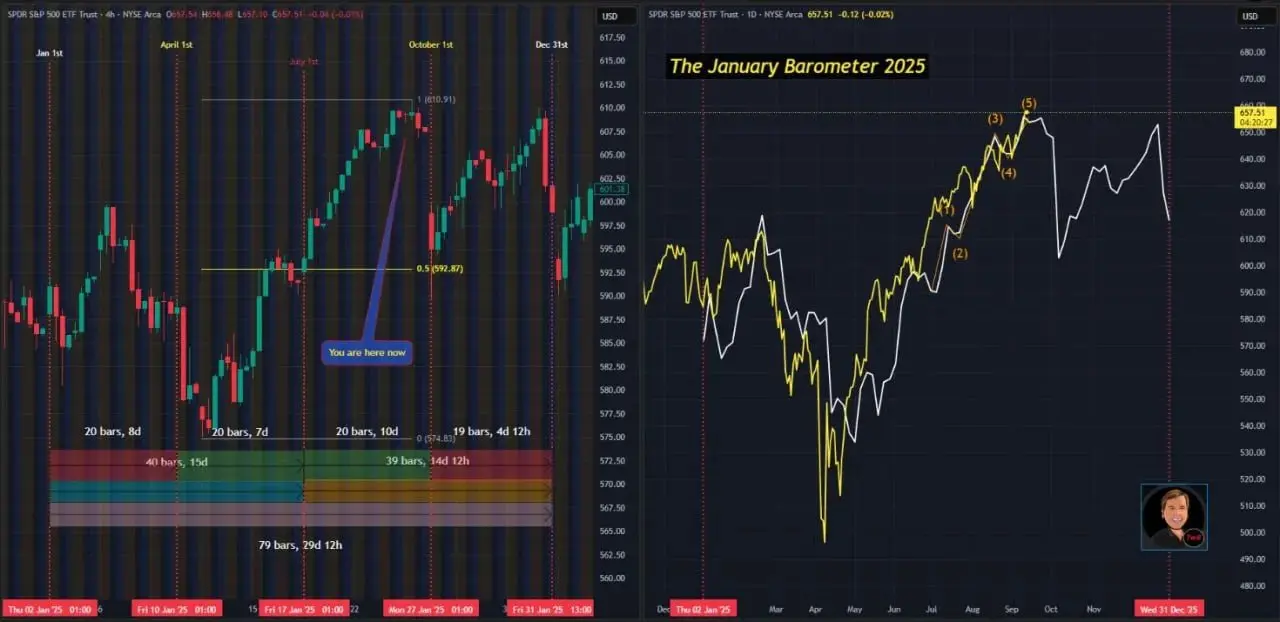
 Image source: Rambo Jackson

This is the first time since December that altcoin open interest has surpassed Bitcoin’s, with the previous two times this occurred following local highs.

Perhaps only 1% of participants can feel the real excitement. For everyone else, the winners will be those who hold assets that can keep paying attention when liquidity is low.

Liquidity is selective, the macro environment is unfavorable, and fiat currencies are depreciating. Despite the unfavorable environment, assets are still rising.

The biggest cycle difference: 2021 is a liquidity-driven cycle. With low credit costs and ample liquidity, risky assets are on a roll.

2025 is different. Interest rates are high and liquidity is tight. Yet, risk assets, from Bitcoin to gold, are slowly rising.

Interest rates are high, credit is tight, and yet assets from Bitcoin to gold are still climbing. The driver is the devaluation of fiat currencies: Investors are hedging against the devaluation of cash.

This has changed the market's tempo, with a broad-based risk-on rally giving way to selective inflows into quality and risk-resistant assets. The rules of the game have shifted from chasing everything to timing, patience, and discipline.

The reason? Because fiat currencies themselves are weakening. Investors are looking not only for growth but also for protection against the devaluation of cash.

  • 2021: Growth driven by liquidity expansion → Risk assets outperform.
  • 2025: Growth driven by fiat currency devaluation → Hard and high-quality assets perform strongly.

This makes the game tougher: you can’t rely on “money that’s everywhere.” But it also creates more favorable opportunities for those who adapt.

Liquidity status test

Despite positive signals (declining BTC dominance, altcoin holdings > BTC holdings, CEX token rotation), liquidity remains scarce. The influence of memes and celebrity coins has caused post-traumatic stress disorder (PTSD) in the market.
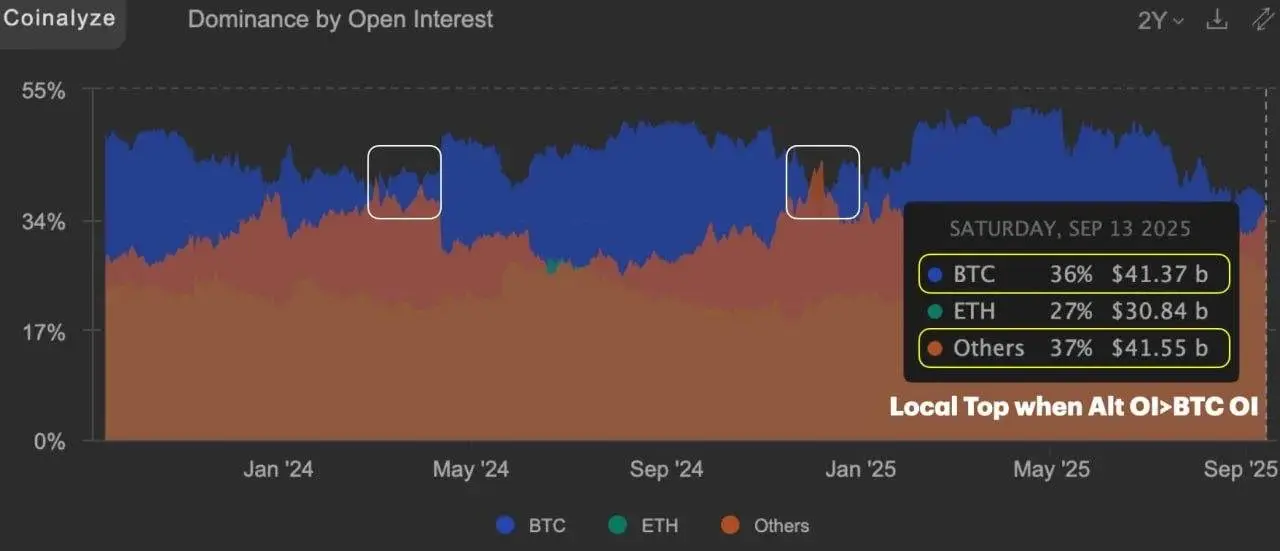
 Image source: Jukov

Traders suffering from PTSD chase the next hot project, leaving little ongoing funding for builders.

As a result, liquidity is concentrating towards higher market capitalization assets with loyal communities that can sustain attention and capital inflows.

The Federal Reserve and Bonds

The bond market has already priced in a downward trend. The probability of the Fed observing a 25 basis point rate cut is about 88%, while the probability of a 50 basis point rate cut is about 12%. The subtle differences are:

Historically, the first 50 basis point rate cut = recession signal, leading to a slow drain on the market.

A 25 basis point interest rate cut = a signal of a soft landing, which is conducive to economic growth.

We are approaching a critical juncture. Based on seasonal indicators (such as the January Barometer), the risk of market volatility following the FOMC meeting has increased significantly.

The key is:

  • Stability beats hype.
  • Patience trumps FOMO.
  • Timing trumps alpha.

Last week's market overview

Dogecoin ETF Milestone: REX Shares and Osprey Funds' DOJE ETF marks the first U.S. fund directly tied to Dogecoin. This demonstrates the memecoin's acceptance within traditional markets, though retail investor demand is likely to dominate given Dogecoin's lack of utility.

The Chicago Board Options Exchange (Cboe) plans to launch continuous futures contracts for Bitcoin and Ethereum: The proposed Bitcoin and Ethereum contracts would have maturities of up to 10 years and be cash-settled daily. This could reduce rollover costs, expand institutional derivatives strategies, and increase liquidity—pending regulatory approval.

Ant Digital Asset Tokenization: By connecting $8.4 billion in renewable energy assets to Ant Chain, Ant Digital introduced real-time production data and automated revenue distribution. This institution-first model highlights the role of blockchain in large-scale infrastructure financing.

Forward Industries’ Solana Treasury: A $1.65 billion private equity investment led by Galaxy and Jump Crypto makes Forward Industries a significant holder of Solana. This is one of the first major institutional treasury investments outside of Bitcoin and Ethereum, and could reshape Solana’s capital markets narrative.

Related Reading: Trading Time: Central Bank Week Kicks Off, Bitcoin Needs to Consolidate $114,000 Support, Ethereum Strives to Hold $4,600

Disclaimer: The articles reposted on this site are sourced from public platforms and are provided for informational purposes only. They do not necessarily reflect the views of MEXC. All rights remain with the original authors. If you believe any content infringes on third-party rights, please contact service@support.mexc.com for removal. MEXC makes no guarantees regarding the accuracy, completeness, or timeliness of the content and is not responsible for any actions taken based on the information provided. The content does not constitute financial, legal, or other professional advice, nor should it be considered a recommendation or endorsement by MEXC.

You May Also Like

Wormhole launches reserve tying protocol revenue to token

Wormhole launches reserve tying protocol revenue to token

The post Wormhole launches reserve tying protocol revenue to token appeared on BitcoinEthereumNews.com. Wormhole is changing how its W token works by creating a new reserve designed to hold value for the long term. Announced on Wednesday, the Wormhole Reserve will collect onchain and offchain revenues and other value generated across the protocol and its applications (including Portal) and accumulate them into W, locking the tokens within the reserve. The reserve is part of a broader update called W 2.0. Other changes include a 4% targeted base yield for tokenholders who stake and take part in governance. While staking rewards will vary, Wormhole said active users of ecosystem apps can earn boosted yields through features like Portal Earn. The team stressed that no new tokens are being minted; rewards come from existing supply and protocol revenues, keeping the cap fixed at 10 billion. Wormhole is also overhauling its token release schedule. Instead of releasing large amounts of W at once under the old “cliff” model, the network will shift to steady, bi-weekly unlocks starting October 3, 2025. The aim is to avoid sharp periods of selling pressure and create a more predictable environment for investors. Lockups for some groups, including validators and investors, will extend an additional six months, until October 2028. Core contributor tokens remain under longer contractual time locks. Wormhole launched in 2020 as a cross-chain bridge and now connects more than 40 blockchains. The W token powers governance and staking, with a capped supply of 10 billion. By redirecting fees and revenues into the new reserve, Wormhole is betting that its token can maintain value as demand for moving assets and data between chains grows. This is a developing story. This article was generated with the assistance of AI and reviewed by editor Jeffrey Albus before publication. Get the news in your inbox. Explore Blockworks newsletters: Source: https://blockworks.co/news/wormhole-launches-reserve
Share
BitcoinEthereumNews2025/09/18 01:55
Kalshi debuts ecosystem hub with Solana and Base

Kalshi debuts ecosystem hub with Solana and Base

The post Kalshi debuts ecosystem hub with Solana and Base appeared on BitcoinEthereumNews.com. Kalshi, the US-regulated prediction market exchange, rolled out a new program on Wednesday called KalshiEco Hub. The initiative, developed in partnership with Solana and Coinbase-backed Base, is designed to attract builders, traders, and content creators to a growing ecosystem around prediction markets. By combining its regulatory footing with crypto-native infrastructure, Kalshi said it is aiming to become a bridge between traditional finance and onchain innovation. The hub offers grants, technical assistance, and marketing support to selected projects. Kalshi also announced that it will support native deposits of Solana’s SOL token and USDC stablecoin, making it easier for users already active in crypto to participate directly. Early collaborators include Kalshinomics, a dashboard for market analytics, and Verso, which is building professional-grade tools for market discovery and execution. Other partners, such as Caddy, are exploring ways to expand retail-facing trading experiences. Kalshi’s move to embrace blockchain partnerships comes at a time when prediction markets are drawing fresh attention for their ability to capture sentiment around elections, economic policy, and cultural events. Competitor Polymarket recently acquired QCEX — a derivatives exchange with a CFTC license — to pave its way back into US operations under regulatory compliance. At the same time, platforms like PredictIt continue to push for a clearer regulatory footing. The legal terrain remains complex, with some states issuing cease-and-desist orders over whether these event contracts count as gambling, not finance. This is a developing story. This article was generated with the assistance of AI and reviewed by editor Jeffrey Albus before publication. Get the news in your inbox. Explore Blockworks newsletters: Source: https://blockworks.co/news/kalshi-ecosystem-hub-solana-base
Share
BitcoinEthereumNews2025/09/18 04:40
Optimizely Named a Leader in the 2026 Gartner® Magic Quadrant™ for Personalization Engines

Optimizely Named a Leader in the 2026 Gartner® Magic Quadrant™ for Personalization Engines

Company recognized as a Leader for the second consecutive year NEW YORK, Feb. 5, 2026 /PRNewswire/ — Optimizely, the leading digital experience platform (DXP) provider
Share
AI Journal2026/02/06 00:47