Japan is taking significant steps to overhaul its cryptocurrency tax regulations as part of broader efforts to foster a more accommodating environment for blockchain innovation and digital asset adoption. The current rules, which have been in place for years, are viewed by industry experts as a barrier to the growth and maturity of the country’s [...]Japan is taking significant steps to overhaul its cryptocurrency tax regulations as part of broader efforts to foster a more accommodating environment for blockchain innovation and digital asset adoption. The current rules, which have been in place for years, are viewed by industry experts as a barrier to the growth and maturity of the country’s [...]

Japan Aims to Cut Crypto Tax Rates from 55% to 20% – Here’s Their Plan
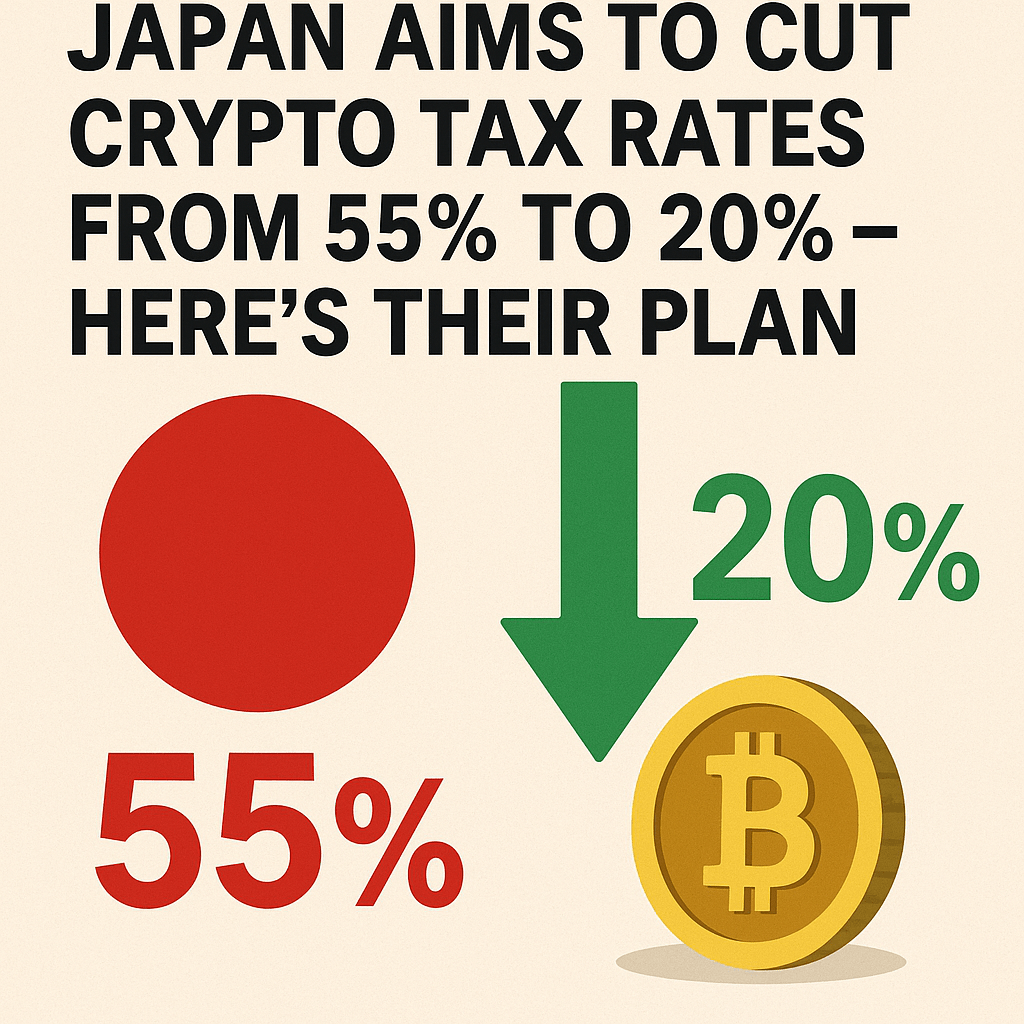
Japan Aims To Cut Crypto Tax Rates From 55% To 20% – Here's Their Plan

Japan is taking significant steps to overhaul its cryptocurrency tax regulations as part of broader efforts to foster a more accommodating environment for blockchain innovation and digital asset adoption. The current rules, which have been in place for years, are viewed by industry experts as a barrier to the growth and maturity of the country’s vibrant crypto sector. The proposed adjustments aim to simplify tax procedures and clarify how various digital assets are taxed, encouraging more participation from both retail and institutional investors.

Reforming Cryptocurrency Taxation Policies

Under Japan’s existing tax framework, cryptocurrency gains are taxed as miscellaneous income, which can result in a high tax burden and complex calculation methods. This has led to concerns that potential investors might be deterred from engaging with cryptocurrencies such as bitcoin, Ethereum, and other altcoins. To address these issues, authorities plan to revise tax policies by categorizing different types of digital assets more distinctly and providing clearer guidelines for their taxation.

One of the key reforms is to differentiate between various cryptocurrencies and tokens, including non-fungible tokens (NFTs) and decentralized finance (DeFi) assets, which currently fall into a vague regulatory gray area. These changes are expected to streamline the tax process, reduce compliance costs, and promote a more dynamic crypto ecosystem within Japan.

Enhancing Favorability for Blockchain Innovation

By refining its cryptocurrency regulations, Japan aims to bolster the country’s attractiveness as a hub for blockchain startups and crypto exchanges. The reforms are part of a broader strategy to foster innovation in digital finance and integrate new financial products safely into the economy. Additionally, clearer tax rules are expected to enhance transparency, making it easier for investors to report and pay taxes accurately, reducing the risk of legal disputes or penalties.

The move also aligns with global trends where jurisdictions are striving to create more crypto-friendly regulatory environments. Japan’s proactive approach demonstrates its commitment to staying at the forefront of the evolving blockchain and cryptocurrency landscape, encouraging the development of DeFi projects, NFTs, and other innovative digital assets.

Conclusion

Japan’s planned revisions to crypto tax regulations mark a significant step toward supporting the growth of digital assets and blockchain technology within its borders. By simplifying tax procedures and providing clearer guidance, the country hopes to attract more investment and innovation while ensuring a balanced and responsible regulatory framework. As the global crypto industry continues to evolve, Japan’s reforms highlight the importance of adaptive regulation in fostering a sustainable and thriving crypto sector.

This article was originally published as Japan Aims to Cut Crypto Tax Rates from 55% to 20% – Here’s Their Plan on Crypto Breaking News – your trusted source for crypto news, Bitcoin news, and blockchain updates.

Market Opportunity
Moonveil Logo
Moonveil Price(MORE)
$0.0005849
$0.0005849$0.0005849
-3.86%
USD
Moonveil (MORE) Live Price Chart
Disclaimer: The articles reposted on this site are sourced from public platforms and are provided for informational purposes only. They do not necessarily reflect the views of MEXC. All rights remain with the original authors. If you believe any content infringes on third-party rights, please contact service@support.mexc.com for removal. MEXC makes no guarantees regarding the accuracy, completeness, or timeliness of the content and is not responsible for any actions taken based on the information provided. The content does not constitute financial, legal, or other professional advice, nor should it be considered a recommendation or endorsement by MEXC.

You May Also Like

Ukraine Gains Leverage With Strikes On Russian Refineries

Ukraine Gains Leverage With Strikes On Russian Refineries

The post Ukraine Gains Leverage With Strikes On Russian Refineries appeared on BitcoinEthereumNews.com. Screen captures from a video posted on social media on September 13, 2025. The video claims to show a Ukrainian drone strike on the Novo-Ufa oil refinery in Russia. Social Media Capture Earlier this year, peace negotiations between Russia and Ukraine stalled, with some claiming that Ukraine had entered the talks with “no cards” to play. Since then, Ukraine has strengthened its position, launching a series of successful drone strikes against Russian refineries, eroding one of Russia’s most important sources of revenue. At the same time, Russia is pouring increasing resources into its summer offensive and strategic drone strikes, while achieving minimal results. This combination creates a financially unfavorable situation for the Russians and provides Ukraine with much-needed leverage for the next round of peace negotiations. Ukraine’s Strategic Strikes Against Russian Oil Refineries Throughout this past summer, Ukraine has launched a coordinated series of long-range drone attacks against Russian oil refineries, causing major disruptions to the country’s fuel infrastructure. Reports indicate that more than ten refineries were struck during August, shutting down about 17 percent of Russia’s refining capacity, or approximately 1.1 million barrels per day. Repeated strikes on the Ryazan refinery in the Moscow area and the Novokuibyshevsk refinery in the Samara region disabled several key distillation units. Meanwhile the Volgograd plant in southern Russia had to suspend processing oil after a recent strike. Other refineries across the country have also been targeted. These attacks have continued into September, with additional facilities hit and many struck multiple times. Long-range drones An-196 Liutyi of the Defence Intelligence of Ukraine stand in line before takeoff in undisclosed location, Ukraine, Feb. 28, 2025. (AP Photo/Evgeniy Maloletka) Copyright 2025 The Associated Press. All rights reserved Ukraine’s ability to strike deep targets in Russia stems from advances in its drone industry. Many of these…
Share
BitcoinEthereumNews2025/09/20 16:55
Zhongchi Chefu acquired $1.87 billion worth of digital assets from a crypto giant for $1.1 billion.

Zhongchi Chefu acquired $1.87 billion worth of digital assets from a crypto giant for $1.1 billion.

PANews reported on February 10th that Autozi Internet Technology (Global) Ltd. (AZI), a US-listed Chinese company, has successfully acquired approximately $1.87
Share
PANews2026/02/10 20:36
XRP news: Ripple expands RLUSD stablecoin use in UAE via Zand Bank

XRP news: Ripple expands RLUSD stablecoin use in UAE via Zand Bank

Ripple has expanded the reach of its RLUSD stablecoin in the Middle East through a new strategic partnership with UAE-based digital bank Zand, a move that could
Share
Crypto.news2026/02/10 20:08