The post Are crypto treasury companies a marvel of financial engineering or a ticking time bomb? appeared on BitcoinEthereumNews.com. The following is a guest post and opinion of Robert Schmitt, Founder of Cork Protocol. Many people view crypto treasury strategy companies as a form of leveraged crypto exposure to digital assets. In many ways, this thinking is correct, as these companies seek to deliver amplified returns by strategically accumulating and managing digital assets on their balance sheets. But given the leverage involved, a downturn could severely impact prices and cause significant contagion in broader markets, similar to the blowups experienced last crypto winter. So, what exactly are these companies? Marvels of financial engineering, or ticking time bombs ready to crash the market? To understand the risks, we first need to understand what a treasury strategy entails. There is not one singular approach, but a series of financial tools with different trade-offs, each carrying its own risks and considerations. The core objective of these strategies is to increase crypto holdings per share, effectively producing a “yield” for shareholders as each share accumulates more tokens backing it through the firm’s financial engineering efforts. The playbook has been largely popularized by companies like Strategy, which has accumulated over 600,000 BTC on its balance sheet, according to Strategy Investor Relations. Looking Under the Hood When the stock is trading above its Net Asset Value (NAV)—which is the per-share market value of the underlying crypto assets—it can issue new shares and sell via At-The-Market (ATM) offerings. This generates proceeds that are used to purchase more crypto. Holding other factors constant, this increases the crypto holdings per share depending on the stock premium to NAV. To raise cash from fixed-income investors, a company can issue preferred stock. For example, Strategy has issued preferred shares, raising over $6 billion, which pay dividends in the 8–10% annual range, according to Strategy SEC Filings. Treasury companies can also… The post Are crypto treasury companies a marvel of financial engineering or a ticking time bomb? appeared on BitcoinEthereumNews.com. The following is a guest post and opinion of Robert Schmitt, Founder of Cork Protocol. Many people view crypto treasury strategy companies as a form of leveraged crypto exposure to digital assets. In many ways, this thinking is correct, as these companies seek to deliver amplified returns by strategically accumulating and managing digital assets on their balance sheets. But given the leverage involved, a downturn could severely impact prices and cause significant contagion in broader markets, similar to the blowups experienced last crypto winter. So, what exactly are these companies? Marvels of financial engineering, or ticking time bombs ready to crash the market? To understand the risks, we first need to understand what a treasury strategy entails. There is not one singular approach, but a series of financial tools with different trade-offs, each carrying its own risks and considerations. The core objective of these strategies is to increase crypto holdings per share, effectively producing a “yield” for shareholders as each share accumulates more tokens backing it through the firm’s financial engineering efforts. The playbook has been largely popularized by companies like Strategy, which has accumulated over 600,000 BTC on its balance sheet, according to Strategy Investor Relations. Looking Under the Hood When the stock is trading above its Net Asset Value (NAV)—which is the per-share market value of the underlying crypto assets—it can issue new shares and sell via At-The-Market (ATM) offerings. This generates proceeds that are used to purchase more crypto. Holding other factors constant, this increases the crypto holdings per share depending on the stock premium to NAV. To raise cash from fixed-income investors, a company can issue preferred stock. For example, Strategy has issued preferred shares, raising over $6 billion, which pay dividends in the 8–10% annual range, according to Strategy SEC Filings. Treasury companies can also…

Are crypto treasury companies a marvel of financial engineering or a ticking time bomb?

The following is a guest post and opinion of Robert Schmitt, Founder of Cork Protocol.

Many people view crypto treasury strategy companies as a form of leveraged crypto exposure to digital assets. In many ways, this thinking is correct, as these companies seek to deliver amplified returns by strategically accumulating and managing digital assets on their balance sheets. But given the leverage involved, a downturn could severely impact prices and cause significant contagion in broader markets, similar to the blowups experienced last crypto winter.

So, what exactly are these companies? Marvels of financial engineering, or ticking time bombs ready to crash the market?

To understand the risks, we first need to understand what a treasury strategy entails. There is not one singular approach, but a series of financial tools with different trade-offs, each carrying its own risks and considerations.

The core objective of these strategies is to increase crypto holdings per share, effectively producing a “yield” for shareholders as each share accumulates more tokens backing it through the firm’s financial engineering efforts. The playbook has been largely popularized by companies like Strategy, which has accumulated over 600,000 BTC on its balance sheet, according to Strategy Investor Relations.

Looking Under the Hood

When the stock is trading above its Net Asset Value (NAV)—which is the per-share market value of the underlying crypto assets—it can issue new shares and sell via At-The-Market (ATM) offerings. This generates proceeds that are used to purchase more crypto. Holding other factors constant, this increases the crypto holdings per share depending on the stock premium to NAV.

To raise cash from fixed-income investors, a company can issue preferred stock. For example, Strategy has issued preferred shares, raising over $6 billion, which pay dividends in the 8–10% annual range, according to Strategy SEC Filings.

Treasury companies can also issue debt in the form of convertible notes, which are low-interest loans with embedded call options allowing lenders to convert debt to equity at a set price. These typically carry very low coupon rates (0–1%) because lenders receive the option-like upside if the underlying crypto asset appreciates.

Some companies also deploy assets in staking or DeFi strategies to earn additional yield for shareholders. However, the specifics depend on the company; not all actively stake or engage in restaking.

If the stock price falls below NAV, companies may buy back shares to increase crypto holdings per share. This buyback cash can come from balance sheet cash or from selling part of the crypto treasury.

The main risk source in a downturn lies in the use of debt and preferred stock, as both impose future cash liabilities. These non-dilutive capital-raising tools can increase risk depending on their scale relative to the company’s assets.

The Arbitrage Pendulum

The issuance of stock and equity buybacks are two sides of the same coin. Treasury company managers use stock issuance when prices are at a premium to NAV and buy back stock when at a discount, thereby managing crypto per share held. This is similar, but not identical, to the ETF mechanism of creation and redemption that keeps ETF prices tethered to NAV.

Crucially, deviations between stock price and NAV are captured by the treasury vehicle through these transactions, directly affecting crypto holdings per share. When the stock trades at a premium, treasury companies effectively generate buying pressure on the underlying crypto asset. Conversely, when trading at a discount, buybacks may create selling pressure as crypto assets are liquidated to fund purchases.

Many treasury company investors view these stocks as a “trade.” In bear markets, significant outflows could force asset sales, increasing downward pressure on crypto prices.
Buying stock in a treasury company provides direct exposure to the specific underlying crypto, so stock prices closely track the asset price and can contribute non-negligible buying or selling pressure on the crypto itself.

Understanding the Risks

As crypto treasury companies grow, their downside risks become more significant, driven mainly by three factors:

First, debt maturities loom large. For instance, Strategy holds about 630,000 BTC and carries roughly $8.2 billion in convertible debt maturing between 2028 and 2032. While this maturity timeline allows flexibility, including refinancing options, a severe Bitcoin price crash could constrain options.

Based on current holdings, a BTC price around $13,000 per coin might trigger a default scenario—a severe but not impossible event based on historical bear markets. The market likely prices this risk, motivating Strategy’s efforts to convert debt into equity preemptively while the stock trades above conversion prices, as outlined in Strategy’s Debt Maturity Schedule.

Second, the $3.95 billion in preferred stock issued by Strategy pays an 8–10% dividend, generating nearly $395 million in annual cash outflows. In a bear market where stock prices trade near or below NAV, raising capital through stock issuances becomes difficult, potentially forcing BTC sales or diluting shareholders. Either outcome risks further downward pressure.

Lastly, raising capital through new issuances becomes difficult during a bear market when the stock trades near or below NAV, potentially forcing asset sales or dilution. Persistent trading below NAV during outflows can cause treasury companies to sell crypto assets to fund buybacks, exacerbating price declines and possibly triggering a negative feedback loop.

The Recursive Nature of Crypto and Financial Markets

When markets rise, leverage amplifies volumes and valuations, enabling more leverage. In downturns, leverage is unwound aggressively, shrinking activity.

This dynamic underpins the risk and reward profile of treasury vehicles. While these vehicles are generally accretive to the ecosystem, a large amount of short-term speculative capital chases their stocks, which could lead to abrupt outflows when market sentiment shifts.

The crypto treasury strategy is effective with prudent risk management that avoids blowups.

So far, major market participants have taken a conservative approach. However, as crypto prices climb, leverage becomes more attractive. Aggressive issuance of debt and preferred stock in a race to dominate treasury assets could introduce substantial systemic risk.

Currently, many treasury companies operate with zero or modest leverage, supported by significant balance sheets. If leverage trends higher and becomes unstable, the fallout is sure to be disastrous—but that time has not come… yet.

Mentioned in this article

Source: https://cryptoslate.com/are-crypto-treasury-companies-a-marvel-of-financial-engineering-or-a-ticking-time-bomb/

Market Opportunity
Bitcoin Logo
Bitcoin Price(BTC)
$70,123.81
$70,123.81$70,123.81
+2.18%
USD
Bitcoin (BTC) Live Price Chart
Disclaimer: The articles reposted on this site are sourced from public platforms and are provided for informational purposes only. They do not necessarily reflect the views of MEXC. All rights remain with the original authors. If you believe any content infringes on third-party rights, please contact service@support.mexc.com for removal. MEXC makes no guarantees regarding the accuracy, completeness, or timeliness of the content and is not responsible for any actions taken based on the information provided. The content does not constitute financial, legal, or other professional advice, nor should it be considered a recommendation or endorsement by MEXC.

You May Also Like

Ethereum unveils roadmap focusing on scaling, interoperability, and security at Japan Dev Conference

Ethereum unveils roadmap focusing on scaling, interoperability, and security at Japan Dev Conference

The post Ethereum unveils roadmap focusing on scaling, interoperability, and security at Japan Dev Conference appeared on BitcoinEthereumNews.com. Key Takeaways Ethereum’s new roadmap was presented by Vitalik Buterin at the Japan Dev Conference. Short-term priorities include Layer 1 scaling and raising gas limits to enhance transaction throughput. Vitalik Buterin presented Ethereum’s development roadmap at the Japan Dev Conference today, outlining the blockchain platform’s priorities across multiple timeframes. The short-term goals focus on scaling solutions and increasing Layer 1 gas limits to improve transaction capacity. Mid-term objectives target enhanced cross-Layer 2 interoperability and faster network responsiveness to create a more seamless user experience across different scaling solutions. The long-term vision emphasizes building a secure, simple, quantum-resistant, and formally verified minimalist Ethereum network. This approach aims to future-proof the platform against emerging technological threats while maintaining its core functionality. The roadmap presentation comes as Ethereum continues to compete with other blockchain platforms for market share in the smart contract and decentralized application space. Source: https://cryptobriefing.com/ethereum-roadmap-scaling-interoperability-security-japan/
Share
BitcoinEthereumNews2025/09/18 00:25
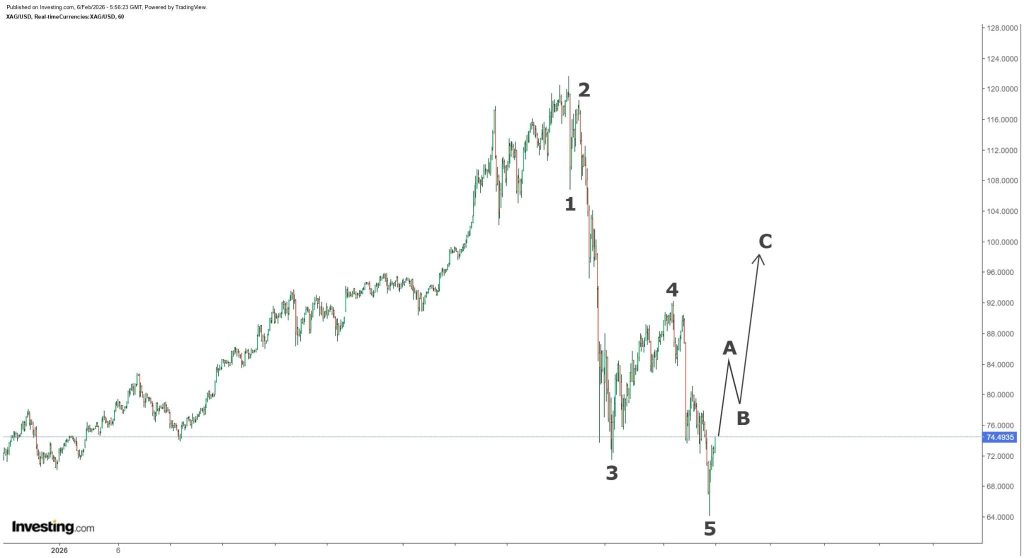
Silver Price Crash Is Over “For Real This Time,” Analyst Predicts a Surge Back Above $90

Silver Price Crash Is Over “For Real This Time,” Analyst Predicts a Surge Back Above $90

Silver has been taking a beating lately, and the Silver price hasn’t exactly been acting like a safe haven. After running up into the highs, the whole move reversed
Share
Captainaltcoin2026/02/07 03:15
Tapzi is Investors’ 1000x Pick in Volatile Market

Tapzi is Investors’ 1000x Pick in Volatile Market

The post Tapzi is Investors’ 1000x Pick in Volatile Market appeared on BitcoinEthereumNews.com. Crypto News 18 September 2025 | 00:05 Bitcoin swings after CPI data release as Tapzi’s presale gains momentum, emerging as a top crypto project in 2025. The crypto market moved sharply last week after the release of US Consumer Price Index (CPI) data. Bitcoin, the largest digital asset, reacted within minutes of the announcement, recording rapid swings before settling back near earlier levels.  At the same time, presale projects continued to attract investors, with Tapzi emerging as one of the most-watched tokens this month. It is being picked by investors as the next crypto to explode due to its high-growth potential in Tier 1 and Tier 2 countries, with Web3 gaming’s increasing adoption. Tapzi Presale Draws Attention While Bitcoin reacted to economic data, Tapzi’s presale has become a focal point among both retail and larger investors. Tapzi is a Web3 gaming platform designed to merge competitive gameplay with blockchain-based settlements. Players stake TAPZI tokens in head-to-head matches of chess, checkers, rock-paper-scissors, and tic-tac-toe. Winners receive tokens directly from prize pools funded by players, not by inflationary rewards. Don’t Watch the Wave – Ride It With $TAPZI! The presale opened with tokens priced at $0.0035. More than 27 million tokens have already been sold, with prices set to increase in each new stage. Analysts following the sale point to potential gains of around 300% once TAPZI lists on exchanges later this year. Liquidity locks and vesting schedules are in place to reduce the risks of sharp sell-offs after launch. This has placed Tapzi on the radar of investors searching for the best crypto to buy now. Bitcoin Price Reacts to CPI Last week, Bitcoin climbed toward $114,000 before jumping to $114,500, its highest level in weeks. The gains were short-lived as the price quickly dropped by $1,000. At press time, Bitcoin…
Share
BitcoinEthereumNews2025/09/18 06:26