Markets Reel as Iran Conflict Sparks Oil Shock

U.S. stocks clawed back from steep early losses on Tuesday as investors grappled with escalating conflict in the Middle East, surging oil prices, and renewed inflation fears.
The S&P 500 closed down 0.9% at 6,816.63 after plunging as much as 2.5% in morning trading. The Dow Jones Industrial Average fell 403 points (0.8%), having been down more than 1,200 points earlier in the session. The Nasdaq Composite dropped 1%.
The recovery came after President Trump said the U.S. Navy could begin escorting tankers through the Strait of Hormuz "if necessary" to "ensure the FREE FLOW of ENERGY to the WORLD." But markets remain on edge as Iran's Islamic Revolutionary Guard Corps has threatened to "burn any ship" attempting to pass through the chokepoint.
Oil surges, dollar strengthens
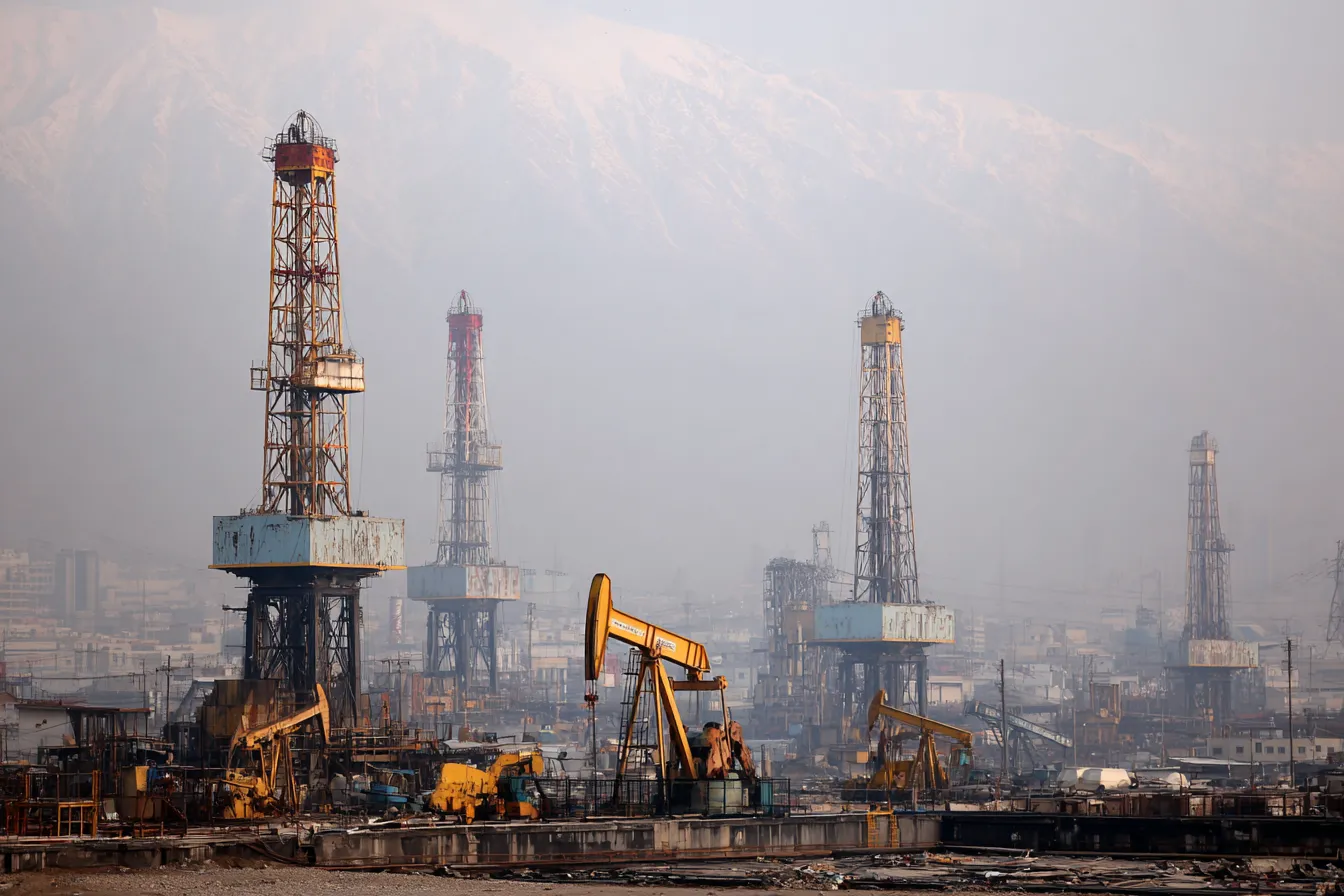
Brent crude surged above $87 per barrel after jumping more than 9% in a single session — one of the sharpest short-term spikes in over a year. West Texas Intermediate climbed past $83, up more than 8%. The Strait of Hormuz, which handles roughly 20% of the world's oil supply, has seen shipping traffic collapse since Iran began issuing warnings and attacking vessels over the weekend.
The U.S. dollar index (DXY) rose 0.5% to its highest level since January 19, as investors fled to safe-haven assets amid the uncertainty. Treasury yields also jumped, with the 10-year briefly rising above 4.10% on inflation concerns before settling near 4.06%.
The conflict has disrupted LNG supplies from Qatar — the world's largest exporter — sending European natural gas prices to their highest levels since Russia's 2022 invasion of Ukraine.
Rate cut hopes fade
The oil shock has upended expectations for monetary policy easing.
"When oil surges with this magnitude and velocity, inflation doesn't edge up slowly — it gathers force rapidly," said Nigel Green, CEO of deVere Group. "Energy is embedded in every supply chain. A sustained move toward $90 Brent fundamentally alters the inflation outlook and forces a repricing of interest rate expectations."
Green warned that markets had been positioned for lower borrowing costs, "but this narrative is now under threat. A renewed energy shock of this scale reduces the scope for rate cuts and raises the probability that monetary policy remains restrictive for longer than investors had assumed."
Traders are now pushing back forecasts for Fed rate cuts further into the summer, according to CME Group data.
Bitcoin rangebound as risk assets sell off
Bitcoin held relatively steady around $68,000, outperforming equities on a relative basis despite the risk-off environment. The largest cryptocurrency had rallied to $70,000 on Monday before retreating to $66,500, remaining within the trading range it has occupied since early February.
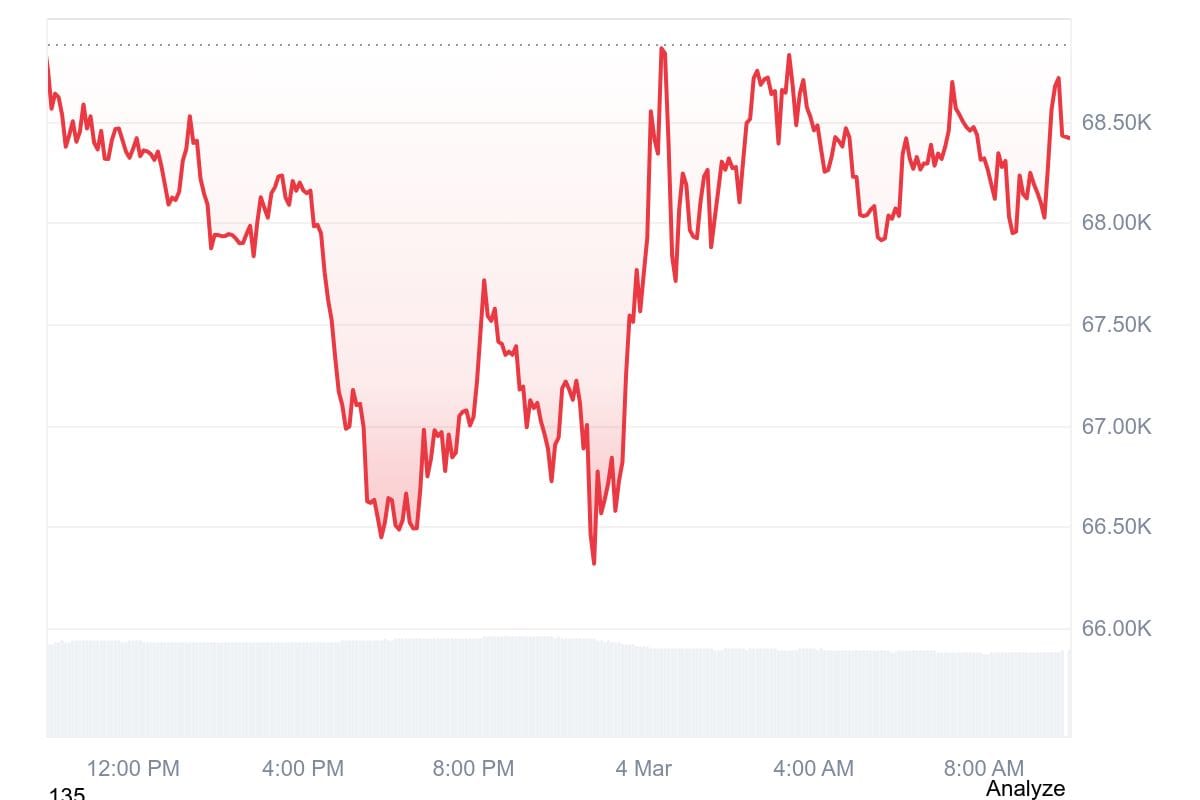 Bitcoin price (Chart: Coinmarketcap)
The dollar surge has pressured both crypto and gold. Gold, which hit a one-month high of $5,410 on Monday, fell back to $5,260 on Tuesday as investors rotated into the dollar.
Altcoins fared worse than bitcoin, with ADA, ZEC, and DASH dropping more than 4%. Circle, the issuer of USDC, has been a notable beneficiary — shares have risen approximately 20% since the U.S. strikes on Iran began, as stablecoin demand spikes amid the turmoil.
What's next
The trajectory of markets hinges on whether the conflict remains contained. Trump has signalled the war could last "weeks" but also suggested it could be fought "forever" with available U.S. munitions.
"Markets can't assume a rapid resolution," Green added. "Disruption to one of the most critical energy corridors in the world introduces structural risk. Portfolio positioning must reflect the possibility that elevated oil prices persist for months, not days."
You May Also Like

Stock Market Futures Surge on Iran Deal Rumors

South Korea’s FSC to move on Bithumb BTC accident, ‘global consistency’ in regulatory framework