

XRP Price: $652 Million Flows Into Binance as Geopolitical Tensions Push Token Down 4%
TLDR
- XRP dropped over 4% in 24 hours, trading around $1.37 as geopolitical tensions rattled crypto markets
- Over 472 million XRP (~$652 million) flowed into Binance in the past week, the largest inflow of February
- Iran’s Ali Larijani denied any US negotiation outreach, adding to risk-off sentiment across markets
- XRP is forming a bear pennant on the daily chart, with a potential 35% downside target near $0.86
- Key resistance sits at $1.40–$1.42; a break below $1.30 support could accelerate selling pressure
XRP fell more than 4% in 24 hours on Monday, trading around $1.37 as geopolitical tensions between the US, Israel, and Iran rattled risk assets globally.
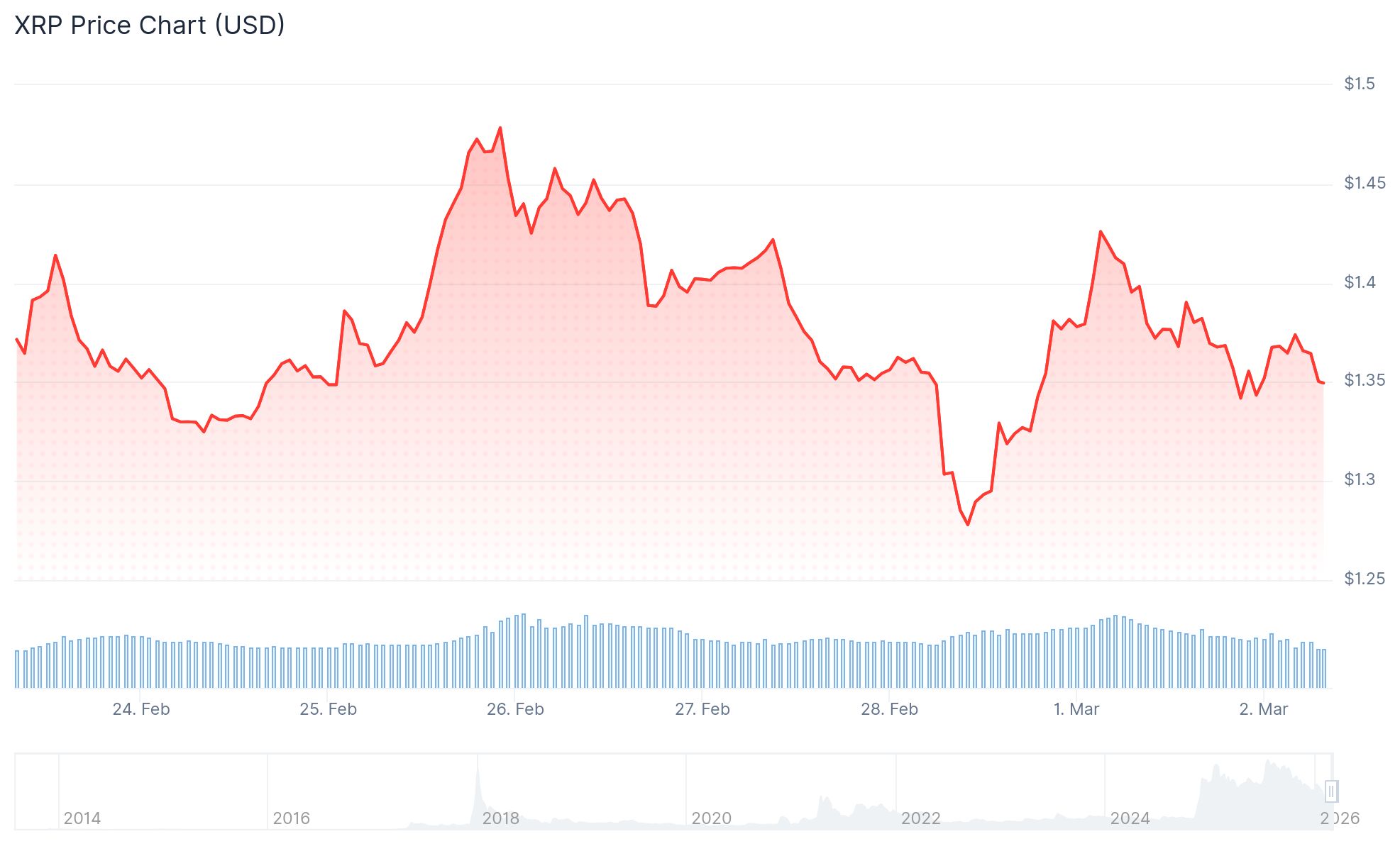 XRP Price
Reports over the weekend said a joint US-Israel strike on Iran triggered a sharp sell-off across crypto markets. The timing — just after traditional financial markets closed — amplified the reaction.
Gold surged as capital moved toward safe havens, while crypto markets declined alongside other risk assets.
Exchange inflows don’t automatically mean selling. Tokens moved onto exchanges can also reflect liquidity repositioning, collateral management, or hedging activity during volatile periods.
Binance’s XRP reserves had been declining since October 2025. This past week’s inflow marks a modest reversal of that trend.
Technical Picture
On the price chart, XRP is forming a bear pennant on the daily timeframe. This pattern typically forms after a sharp drop and resolves in the direction of the prior trend.
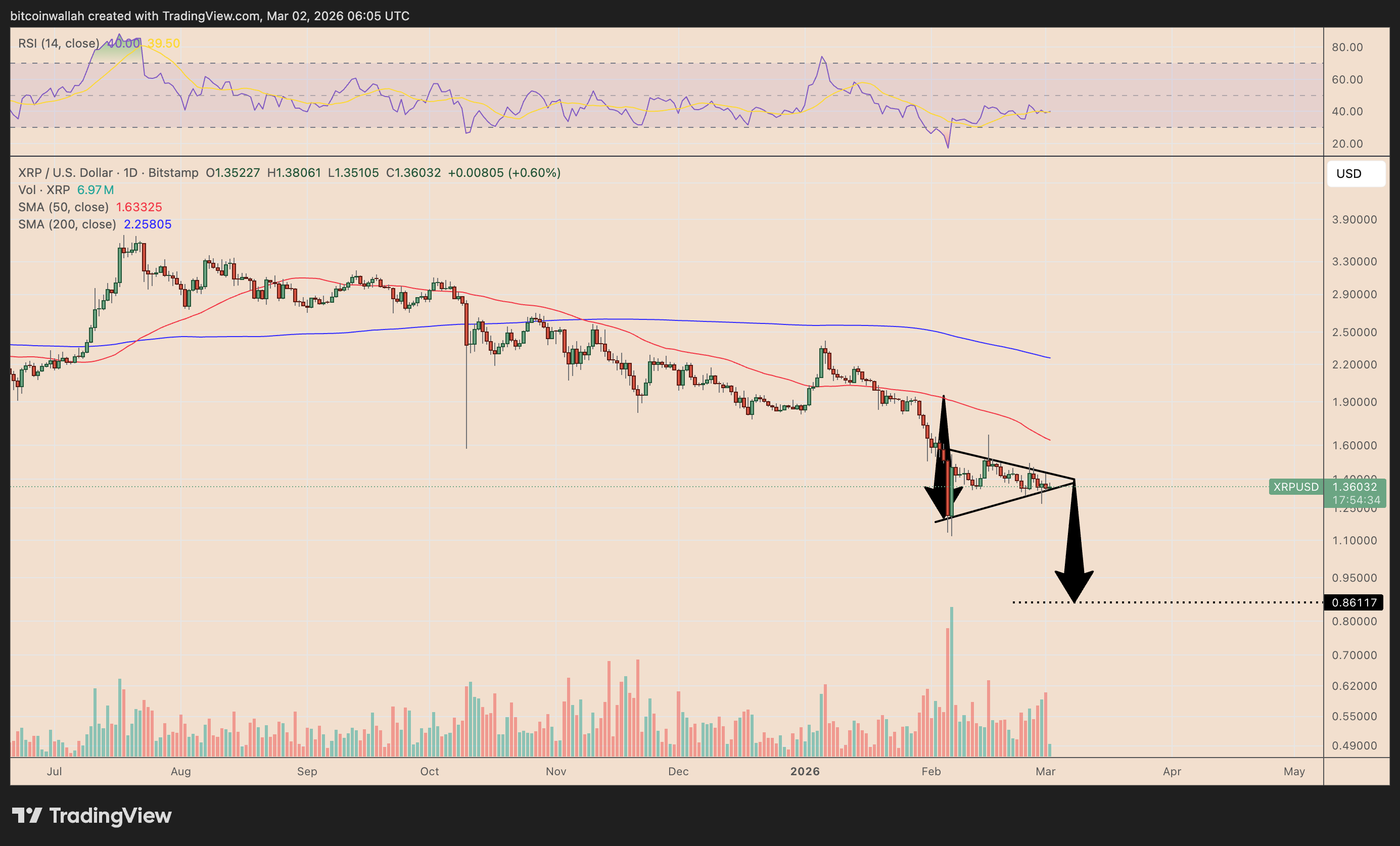 Source: TradingView
XRP has been consolidating in a tight range with lower highs pressing against support near $1.30–$1.35. The price sits below both its 50-day SMA (~$1.63) and 200-day SMA (~$2.26).
If XRP breaks below the pennant’s lower boundary, the measured-move target points to roughly $0.86 — about 35% lower from current levels.
Key resistance on the upside sits at $1.4080, the 61.8% Fibonacci retracement of the move from $1.4936 down to $1.2702. A close above that level could open the door to $1.42 and then $1.44.
On-Chain Signals
Glassnode’s MVRV Extreme Deviation Bands show XRP drifting back toward its cost-basis zone. If weakness continues, the next key support level is the -$0.5σ band near $1.00.
That places $1.00 as the first major downside target, with $0.86 in focus if a bear pennant breakdown is confirmed.
At the time of writing, XRP was trading at $1.37 with exchange reserves ticking higher following the week’s large inflows.
The post XRP Price: $652 Million Flows Into Binance as Geopolitical Tensions Push Token Down 4% appeared first on CoinCentral.
You May Also Like

Solana Hits $4B in Corporate Treasuries as Companies Boost Reserves

Polymarket Prices 86% Odds Of Sub-$80 – Will $83 Break?
