The post $27M Gone in Seconds: Venus Protocol User Hit by Phishing Attack appeared on BitcoinEthereumNews.com. Rumors spread fast in crypto. Yesterday, whispers of an exploit on Venus Protocol sent shockwaves across X. At first, some thought the lending protocol itself had been breached. But hours of joint analysis cleared the air, Venus wasn’t hacked. Instead, a phishing attack snared a whale, draining $27 million in assets with one bad transaction. This wasn’t a protocol failure. It was human error. And it’s a stark reminder of DeFi’s biggest weakness: one careless click can wipe out a fortune. The victim approved a malicious transaction from a fake site. That single signature gave the attacker’s burner wallet, 0x7fd8…202a, unlimited access to his tokens. Once approval was granted, the attacker struck instantly. Assets vanished in seconds. According to Cyvers Alerts 🚨ALERT🚨27M suspicious transaction has been detected involving a user of @VenusProtocol on the #BNBChain The user unknowingly approved a malicious transaction, granting token permissions that resulted in the loss of $27M in digital assets. The stolen funds are currently held… pic.twitter.com/WekHEicyec — 🚨 Cyvers Alerts 🚨 (@CyversAlerts) September 2, 2025 And, here’s what got drained: $19.8M vUSDT $7.15M vUSDC $146K vXRP $22K vETH Even 285 BTCB on BNB Chain Generational wealth gone. Just like that. The Wild Part: Venus Was Never Hacked Venus Protocol confirmed on X Update: we are in direct contact with the victim of the phishing attack, and the protocol will remain paused while we try to recover his funds. Venus was not exploited, but we are committed to protecting our users. If the protocol resumes now, the hacker gets the user’s funds. https://t.co/441ncPEbla — Venus Protocol (@VenusProtocol) September 2, 2025 that their contracts were safe. The frontend? Fine. No smart contract vulnerabilities. No code exploits. This was pure social engineering. A fake link, a trusted click, and boom, open approvals did the rest. That’s the… The post $27M Gone in Seconds: Venus Protocol User Hit by Phishing Attack appeared on BitcoinEthereumNews.com. Rumors spread fast in crypto. Yesterday, whispers of an exploit on Venus Protocol sent shockwaves across X. At first, some thought the lending protocol itself had been breached. But hours of joint analysis cleared the air, Venus wasn’t hacked. Instead, a phishing attack snared a whale, draining $27 million in assets with one bad transaction. This wasn’t a protocol failure. It was human error. And it’s a stark reminder of DeFi’s biggest weakness: one careless click can wipe out a fortune. The victim approved a malicious transaction from a fake site. That single signature gave the attacker’s burner wallet, 0x7fd8…202a, unlimited access to his tokens. Once approval was granted, the attacker struck instantly. Assets vanished in seconds. According to Cyvers Alerts 🚨ALERT🚨27M suspicious transaction has been detected involving a user of @VenusProtocol on the #BNBChain The user unknowingly approved a malicious transaction, granting token permissions that resulted in the loss of $27M in digital assets. The stolen funds are currently held… pic.twitter.com/WekHEicyec — 🚨 Cyvers Alerts 🚨 (@CyversAlerts) September 2, 2025 And, here’s what got drained: $19.8M vUSDT $7.15M vUSDC $146K vXRP $22K vETH Even 285 BTCB on BNB Chain Generational wealth gone. Just like that. The Wild Part: Venus Was Never Hacked Venus Protocol confirmed on X Update: we are in direct contact with the victim of the phishing attack, and the protocol will remain paused while we try to recover his funds. Venus was not exploited, but we are committed to protecting our users. If the protocol resumes now, the hacker gets the user’s funds. https://t.co/441ncPEbla — Venus Protocol (@VenusProtocol) September 2, 2025 that their contracts were safe. The frontend? Fine. No smart contract vulnerabilities. No code exploits. This was pure social engineering. A fake link, a trusted click, and boom, open approvals did the rest. That’s the…

$27M Gone in Seconds: Venus Protocol User Hit by Phishing Attack

4 min read

Rumors spread fast in crypto. Yesterday, whispers of an exploit on Venus Protocol sent shockwaves across X. At first, some thought the lending protocol itself had been breached.

But hours of joint analysis cleared the air, Venus wasn’t hacked. Instead, a phishing attack snared a whale, draining $27 million in assets with one bad transaction.

This wasn’t a protocol failure. It was human error. And it’s a stark reminder of DeFi’s biggest weakness: one careless click can wipe out a fortune.

The victim approved a malicious transaction from a fake site. That single signature gave the attacker’s burner wallet, 0x7fd8…202a, unlimited access to his tokens.

Once approval was granted, the attacker struck instantly. Assets vanished in seconds. According to Cyvers Alerts

And, here’s what got drained:

$19.8M vUSDT

$7.15M vUSDC

$146K vXRP

$22K vETH

Even 285 BTCB on BNB Chain

Generational wealth gone. Just like that.

The Wild Part: Venus Was Never Hacked

Venus Protocol confirmed on X

that their contracts were safe. The frontend? Fine. No smart contract vulnerabilities. No code exploits.

This was pure social engineering. A fake link, a trusted click, and boom, open approvals did the rest.

That’s the dark side of DeFi power. Unlimited token approvals make DeFi seamless and fast. But they also turn every wallet into a ticking time bomb if approvals fall into the wrong hands.

Community Reaction: Shock and Sympathy

Crypto Twitter lit up with reactions. Some expressed sympathy for the whale; others saw it as another warning.

He noted how attackers patiently wait for one careless moment. The phishing link likely circulated for days before the victim clicked.

Venus Protocol has since paused parts of the platform while working directly with the victim. Recovery options remain slim, but efforts are ongoing.

Why Phishing Keeps Winning in DeFi

DeFi removes middlemen. That’s the beauty, and the danger. You hold the keys. You sign the transactions. There’s no customer support if things go wrong.

Phishers exploit this perfectly:

  • Fake sites copy real ones pixel-for-pixel.
  • Twitter bots reply under official announcements with “urgent” links.
  • Unlimited approvals mean attackers only need access once.

In TradFi, banks can reverse fraudulent transfers. In DeFi, blockchain immutability means once assets leave your wallet, they’re gone.

Lessons Learned: How to Stay Safe

The Venus incident highlights simple but critical safety steps:

1. Don’t trust random links. Always type URLs manually or bookmark official sites.

2. Double-check every transaction. Read approvals before signing, infinite token access is risky.

3. Revoke old approvals regularly. Tools like Revoke.cash make it easy.

4. Use hardware wallets. They add a physical confirmation step attackers can’t bypass.

Phishers thrive in bull markets when wallets grow fat. They know greed kills caution. Don’t give them an opening.

The Bigger Picture: Social Engineering vs. Smart Contracts

This attack shows where DeFi risks really lie.

Smart contracts are getting stronger. Protocol exploits, while still happening, are down compared to 2021-22.

Humans, on the other hand, remain the weakest link.

Phishers don’t need to hack code when they can hack trust. A fake MetaMask popup. A Twitter link promising “airdrops.” One moment of distraction can cost millions.

Security experts argue education matters more than new tech here. Wallet UX improvements, clearer approval warnings, and better scam detection could help. But ultimately, self-custody comes with self-responsibility.

Will Funds Be Recovered?

Venus Protocol confirmed communication with the victim. Recovery efforts are on, but realistically, funds drained to attacker-controlled wallets rarely come back.

Sometimes, attackers negotiate for ransom-like returns, but there’s no sign of that yet. The assets may get mixed through bridges and mixers soon, making tracing harder.

Final Thoughts: A Wake-Up Call for DeFi Users

This wasn’t just another exploit headline. It’s a reminder that DeFi security starts with the user.

Protocols can be bulletproof. Audits can pass. But one bad click can still drain millions.

As the bull market heats up, expect more phishing attempts. More fake airdrops. More Twitter bots with urgent links.

  • Don’t be the next headline.
  • Double-check. Revoke often. Stay paranoid.
  • Because in DeFi, you only learn this lesson once.

Disclosure: This is not trading or investment advice. Always do your research before buying any cryptocurrency or investing in any services.

Follow us on Twitter @nulltxnews to stay updated with the latest Crypto, NFT, AI, Cybersecurity, Distributed Computing, and Metaverse news!

Source: https://nulltx.com/27m-gone-in-seconds-venus-protocol-user-hit-by-phishing-attack/

Market Opportunity
Threshold Logo
Threshold Price(T)
$0.006503
$0.006503$0.006503
-7.16%
USD
Threshold (T) Live Price Chart
Disclaimer: The articles reposted on this site are sourced from public platforms and are provided for informational purposes only. They do not necessarily reflect the views of MEXC. All rights remain with the original authors. If you believe any content infringes on third-party rights, please contact service@support.mexc.com for removal. MEXC makes no guarantees regarding the accuracy, completeness, or timeliness of the content and is not responsible for any actions taken based on the information provided. The content does not constitute financial, legal, or other professional advice, nor should it be considered a recommendation or endorsement by MEXC.

You May Also Like

Once Upon a Farm Announces Pricing of Initial Public Offering

Once Upon a Farm Announces Pricing of Initial Public Offering

BERKELEY, Calif.–(BUSINESS WIRE)–Once Upon a Farm today announced the pricing of its initial public offering of 10,997,209 shares of its common stock, 7,631,537
Share
AI Journal2026/02/06 08:15
Forward Industries Bets Big on Solana With $4B Capital Plan

Forward Industries Bets Big on Solana With $4B Capital Plan

The firm has filed with the U.S. Securities and Exchange Commission to launch a $4 billion at-the-market (ATM) equity program, […] The post Forward Industries Bets Big on Solana With $4B Capital Plan appeared first on Coindoo.
Share
Coindoo2025/09/18 04:15
332M accounts and $28B TVL,

332M accounts and $28B TVL,

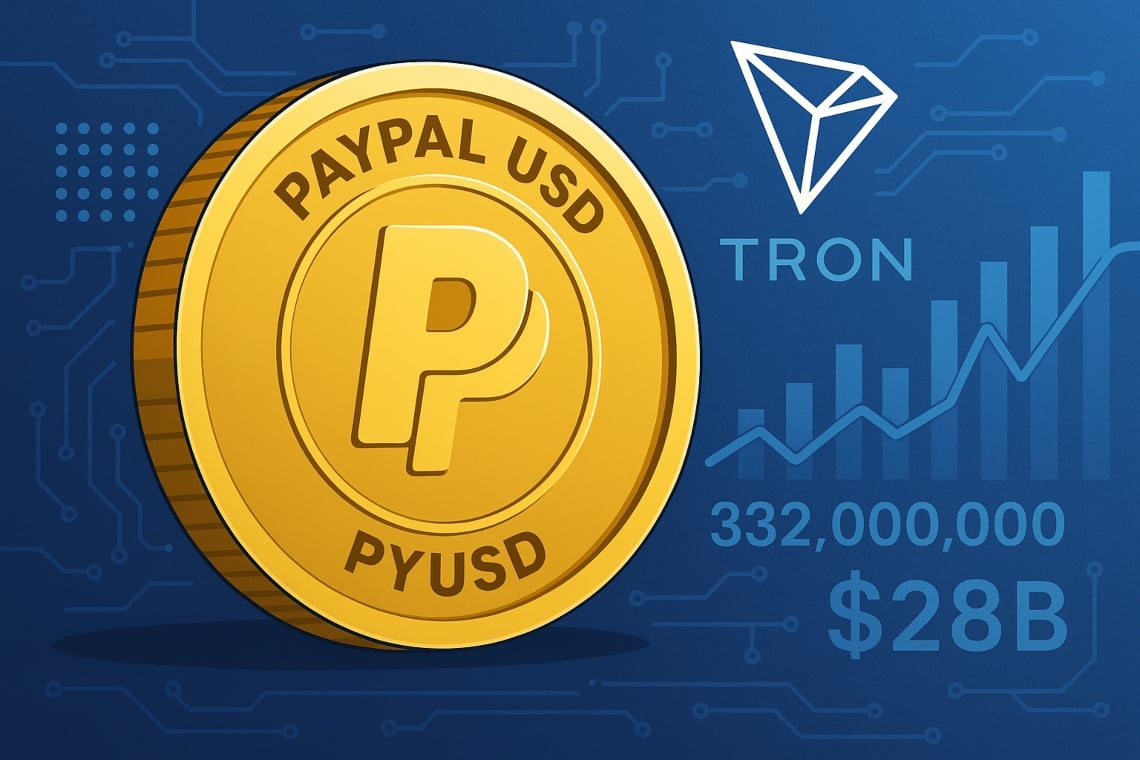
The post 332M accounts and $28B TVL, appeared on BitcoinEthereumNews.com. PayPal USD debuts on TRON as a permissionless token PYUSD0, enabled by LayerZero’s OFT standard and the Stargate Hydra extension. The announcement on September 18, 2025 (Geneva) introduces native interoperability between chains and transfers without manual steps for users; the news echoes elements already communicated by PayPal at the launch of PYUSD PayPal Newsroom. The move concerns an ecosystem that includes 332 million accounts and over $28 billion in TVL. In this context, the fungibility of a stablecoin regulated across multiple networks and the use of TRON as a settlement layer for payments and remittances is at stake. According to the data collected by TRONSCAN updated as of September 18, 2025, the network metrics confirm the cited volumes and highlighted traffic patterns. Our editorial team has verified the transaction logs and monitored the public chain metrics to corroborate the reported figures; the observations on daily flows and TVL are consistent with the network dashboards. Industry analysts observe that the entry of a regulated issuer like PayPal tends to increase institutional interest, provided there is transparency on reserves and compliance checks. What is PYUSD0 on TRON and why is it relevant PYUSD0 is the representation of PayPal USD on TRON. It is pegged one-to-one to PYUSD through the OFT standard: the two tokens remain a single stablecoin, fungible and reconciled across chains. The integration is made possible by Stargate Hydra, now operational through LayerZero. According to the founder of TRON, Justin Sun, the extension on TRON expands access and trust for users and institutions. For Bryan Pellegrino (CEO of LayerZero Labs), stablecoins represent a pillar of global payments and remittances, as the native compatibility between chains enables their operational scalability. It must be said that the alignment between issuer, cross-chain infrastructure, and settlement network is a key element. Key Numbers: TRON…
Share
BitcoinEthereumNews2025/09/19 08:18