BitcoinWorld Meta AI’s Troubled Alliance: Unraveling the Scale AI Partnership Challenges In the fast-paced world of technology, where massive investments often signal unwavering commitment, recent developments at Meta are raising eyebrows. Just months after a staggering $14.3 billion investment in Scale AI, a key partner in its ambitious Meta AI endeavors, cracks are already beginning to show. For those following the volatile cryptocurrency markets, the rapid shifts in the tech landscape offer a parallel narrative of high stakes and uncertain outcomes. Meta AI’s Billion-Dollar Bet: What Went Wrong? Meta’s significant investment in Scale AI, bringing on CEO Alexandr Wang and several top executives to run Meta Superintelligence Labs (MSL), was touted as a pivotal move to bolster its Meta AI capabilities. This strategic alliance was designed to accelerate Meta’s journey toward AI superintelligence. However, the initial promise seems to be fading. One notable departure is Ruben Mayer, former Senior Vice President of GenAI Product and Operations at Scale AI, who left Meta after just two months. Mayer, who oversaw AI data operations teams and reported directly to Wang, was not integrated into TBD Labs, the core unit responsible for building AI superintelligence. This raises immediate questions about the strategic alignment and the effectiveness of such a massive capital injection. The Fraying Threads of the Scale AI Partnership The relationship between Meta and Scale AI appears more complex than initially perceived. Beyond executive departures, there are significant concerns regarding data quality that threaten to unravel the Scale AI partnership. Sources indicate that researchers within Meta’s elite TBD Labs view Scale AI’s data as subpar. This perception is particularly striking given Meta’s multi-billion-dollar investment. Historically, Scale AI built its business on a crowdsourcing model that utilized a large, low-cost workforce for simple data annotation tasks. While effective for earlier AI models, modern, sophisticated AI now demands high-quality, expert-annotated data from specialists such as doctors, lawyers, and scientists. Competitors like Surge AI and Mercor, built on a foundation of highly paid, specialized talent from the outset, have been rapidly gaining ground, challenging Scale AI’s market position. Indeed, Meta, it turns out, is not putting all its eggs in one basket, actively working with these very competitors for its data needs. Why Quality Matters: The Role of AI Data Vendors The reliance on multiple AI data vendors highlights a critical challenge in the development of advanced AI: the paramount importance of data quality. While Meta has been working with Mercor and Surge AI even before TBD Labs was established, the continued and deepening reliance on these alternatives, post-investment in Scale AI, underscores a fundamental issue. High-quality data is the lifeblood of sophisticated AI models. If the foundational data is flawed or insufficient, even the most advanced algorithms will struggle to perform optimally. This situation puts Scale AI in a precarious position, especially after losing major clients like OpenAI and Google shortly after Meta’s investment, which led to 200 layoffs in its data labeling business. The market is clearly shifting towards vendors who can consistently deliver superior, expert-driven data, proving that even a massive investment cannot override the demand for quality. The Intense Battle for AI Talent Wars The internal dynamics at Meta’s AI unit have become increasingly chaotic, mirroring the broader AI talent wars gripping the tech industry. Bringing in top researchers from OpenAI and Scale AI, including Alexandr Wang, was intended to accelerate Meta’s AI ambitions. However, new talent has reportedly expressed frustration with navigating Meta’s corporate bureaucracy. Simultaneously, Meta’s existing GenAI team has seen its scope diminished, leading to a wave of departures. High-profile researchers like Rishabh Agarwal, Director of product management for generative AI Chaya Nayak, and research engineer Rohan Varma have announced their exits. Agarwal’s statement, citing Mark Zuckerberg’s own advice about taking risks, speaks volumes about the internal unrest and the allure of more agile environments. The ability to attract and, more importantly, retain top-tier AI talent is proving to be a formidable challenge for Meta, as researchers seek environments where they can make the greatest impact. Navigating Zuckerberg AI Strategy Amidst Internal Turmoil Mark Zuckerberg’s aggressive push into AI, following the lackluster launch of Llama 4, aimed to quickly catch up with industry leaders like OpenAI and Google. This involved striking major deals, recruiting top talent from rivals, and acquiring AI startups such as Play AI and WaveForms AI. The appointment of Alexandr Wang, not a traditional AI researcher by background, to lead MSL was an unconventional but calculated move, potentially aimed at leveraging Wang’s founder experience and network to attract more talent. However, the current turmoil suggests that even a massive investment and strategic hires might not be enough to smoothly execute the ambitious Zuckerberg AI strategy. The company is investing billions in data center buildouts, like the $50 billion Hyperion in Louisiana, to power these ambitions, yet internal friction and talent retention issues persist. The question remains: can Meta stabilize its AI operations and effectively harness this talent to launch its next-generation AI model by year-end? The journey to AI superintelligence is proving to be a treacherous one for the tech giant. The narrative surrounding Meta’s investment in Scale AI is one of ambitious vision meeting complex realities. What began as a strategic alliance, intended to solidify Meta’s position in the AI race, is now experiencing significant strain. From executive departures and data quality disputes to intense internal talent churn and the broader challenges of integrating diverse corporate cultures, the path to AI supremacy is fraught with obstacles. The ability of Meta to overcome these hurdles, refine its partnerships, and foster a cohesive, innovative environment will be critical in determining its future success in the rapidly evolving AI landscape. The unraveling of this key partnership highlights the intricate dance of technology, talent, and strategic execution in the pursuit of artificial superintelligence. To learn more about the latest AI market trends, explore our article on key developments shaping AI models features. This post Meta AI’s Troubled Alliance: Unraveling the Scale AI Partnership Challenges first appeared on BitcoinWorld and is written by Editorial TeamBitcoinWorld Meta AI’s Troubled Alliance: Unraveling the Scale AI Partnership Challenges In the fast-paced world of technology, where massive investments often signal unwavering commitment, recent developments at Meta are raising eyebrows. Just months after a staggering $14.3 billion investment in Scale AI, a key partner in its ambitious Meta AI endeavors, cracks are already beginning to show. For those following the volatile cryptocurrency markets, the rapid shifts in the tech landscape offer a parallel narrative of high stakes and uncertain outcomes. Meta AI’s Billion-Dollar Bet: What Went Wrong? Meta’s significant investment in Scale AI, bringing on CEO Alexandr Wang and several top executives to run Meta Superintelligence Labs (MSL), was touted as a pivotal move to bolster its Meta AI capabilities. This strategic alliance was designed to accelerate Meta’s journey toward AI superintelligence. However, the initial promise seems to be fading. One notable departure is Ruben Mayer, former Senior Vice President of GenAI Product and Operations at Scale AI, who left Meta after just two months. Mayer, who oversaw AI data operations teams and reported directly to Wang, was not integrated into TBD Labs, the core unit responsible for building AI superintelligence. This raises immediate questions about the strategic alignment and the effectiveness of such a massive capital injection. The Fraying Threads of the Scale AI Partnership The relationship between Meta and Scale AI appears more complex than initially perceived. Beyond executive departures, there are significant concerns regarding data quality that threaten to unravel the Scale AI partnership. Sources indicate that researchers within Meta’s elite TBD Labs view Scale AI’s data as subpar. This perception is particularly striking given Meta’s multi-billion-dollar investment. Historically, Scale AI built its business on a crowdsourcing model that utilized a large, low-cost workforce for simple data annotation tasks. While effective for earlier AI models, modern, sophisticated AI now demands high-quality, expert-annotated data from specialists such as doctors, lawyers, and scientists. Competitors like Surge AI and Mercor, built on a foundation of highly paid, specialized talent from the outset, have been rapidly gaining ground, challenging Scale AI’s market position. Indeed, Meta, it turns out, is not putting all its eggs in one basket, actively working with these very competitors for its data needs. Why Quality Matters: The Role of AI Data Vendors The reliance on multiple AI data vendors highlights a critical challenge in the development of advanced AI: the paramount importance of data quality. While Meta has been working with Mercor and Surge AI even before TBD Labs was established, the continued and deepening reliance on these alternatives, post-investment in Scale AI, underscores a fundamental issue. High-quality data is the lifeblood of sophisticated AI models. If the foundational data is flawed or insufficient, even the most advanced algorithms will struggle to perform optimally. This situation puts Scale AI in a precarious position, especially after losing major clients like OpenAI and Google shortly after Meta’s investment, which led to 200 layoffs in its data labeling business. The market is clearly shifting towards vendors who can consistently deliver superior, expert-driven data, proving that even a massive investment cannot override the demand for quality. The Intense Battle for AI Talent Wars The internal dynamics at Meta’s AI unit have become increasingly chaotic, mirroring the broader AI talent wars gripping the tech industry. Bringing in top researchers from OpenAI and Scale AI, including Alexandr Wang, was intended to accelerate Meta’s AI ambitions. However, new talent has reportedly expressed frustration with navigating Meta’s corporate bureaucracy. Simultaneously, Meta’s existing GenAI team has seen its scope diminished, leading to a wave of departures. High-profile researchers like Rishabh Agarwal, Director of product management for generative AI Chaya Nayak, and research engineer Rohan Varma have announced their exits. Agarwal’s statement, citing Mark Zuckerberg’s own advice about taking risks, speaks volumes about the internal unrest and the allure of more agile environments. The ability to attract and, more importantly, retain top-tier AI talent is proving to be a formidable challenge for Meta, as researchers seek environments where they can make the greatest impact. Navigating Zuckerberg AI Strategy Amidst Internal Turmoil Mark Zuckerberg’s aggressive push into AI, following the lackluster launch of Llama 4, aimed to quickly catch up with industry leaders like OpenAI and Google. This involved striking major deals, recruiting top talent from rivals, and acquiring AI startups such as Play AI and WaveForms AI. The appointment of Alexandr Wang, not a traditional AI researcher by background, to lead MSL was an unconventional but calculated move, potentially aimed at leveraging Wang’s founder experience and network to attract more talent. However, the current turmoil suggests that even a massive investment and strategic hires might not be enough to smoothly execute the ambitious Zuckerberg AI strategy. The company is investing billions in data center buildouts, like the $50 billion Hyperion in Louisiana, to power these ambitions, yet internal friction and talent retention issues persist. The question remains: can Meta stabilize its AI operations and effectively harness this talent to launch its next-generation AI model by year-end? The journey to AI superintelligence is proving to be a treacherous one for the tech giant. The narrative surrounding Meta’s investment in Scale AI is one of ambitious vision meeting complex realities. What began as a strategic alliance, intended to solidify Meta’s position in the AI race, is now experiencing significant strain. From executive departures and data quality disputes to intense internal talent churn and the broader challenges of integrating diverse corporate cultures, the path to AI supremacy is fraught with obstacles. The ability of Meta to overcome these hurdles, refine its partnerships, and foster a cohesive, innovative environment will be critical in determining its future success in the rapidly evolving AI landscape. The unraveling of this key partnership highlights the intricate dance of technology, talent, and strategic execution in the pursuit of artificial superintelligence. To learn more about the latest AI market trends, explore our article on key developments shaping AI models features. This post Meta AI’s Troubled Alliance: Unraveling the Scale AI Partnership Challenges first appeared on BitcoinWorld and is written by Editorial Team

Meta AI’s Troubled Alliance: Unraveling the Scale AI Partnership Challenges

2025/08/30 10:00
6 min read

BitcoinWorld

Meta AI’s Troubled Alliance: Unraveling the Scale AI Partnership Challenges

In the fast-paced world of technology, where massive investments often signal unwavering commitment, recent developments at Meta are raising eyebrows. Just months after a staggering $14.3 billion investment in Scale AI, a key partner in its ambitious Meta AI endeavors, cracks are already beginning to show. For those following the volatile cryptocurrency markets, the rapid shifts in the tech landscape offer a parallel narrative of high stakes and uncertain outcomes.

Meta AI’s Billion-Dollar Bet: What Went Wrong?

Meta’s significant investment in Scale AI, bringing on CEO Alexandr Wang and several top executives to run Meta Superintelligence Labs (MSL), was touted as a pivotal move to bolster its Meta AI capabilities. This strategic alliance was designed to accelerate Meta’s journey toward AI superintelligence. However, the initial promise seems to be fading. One notable departure is Ruben Mayer, former Senior Vice President of GenAI Product and Operations at Scale AI, who left Meta after just two months. Mayer, who oversaw AI data operations teams and reported directly to Wang, was not integrated into TBD Labs, the core unit responsible for building AI superintelligence. This raises immediate questions about the strategic alignment and the effectiveness of such a massive capital injection.

The Fraying Threads of the Scale AI Partnership

The relationship between Meta and Scale AI appears more complex than initially perceived. Beyond executive departures, there are significant concerns regarding data quality that threaten to unravel the Scale AI partnership. Sources indicate that researchers within Meta’s elite TBD Labs view Scale AI’s data as subpar. This perception is particularly striking given Meta’s multi-billion-dollar investment. Historically, Scale AI built its business on a crowdsourcing model that utilized a large, low-cost workforce for simple data annotation tasks. While effective for earlier AI models, modern, sophisticated AI now demands high-quality, expert-annotated data from specialists such as doctors, lawyers, and scientists. Competitors like Surge AI and Mercor, built on a foundation of highly paid, specialized talent from the outset, have been rapidly gaining ground, challenging Scale AI’s market position. Indeed, Meta, it turns out, is not putting all its eggs in one basket, actively working with these very competitors for its data needs.

Why Quality Matters: The Role of AI Data Vendors

The reliance on multiple AI data vendors highlights a critical challenge in the development of advanced AI: the paramount importance of data quality. While Meta has been working with Mercor and Surge AI even before TBD Labs was established, the continued and deepening reliance on these alternatives, post-investment in Scale AI, underscores a fundamental issue. High-quality data is the lifeblood of sophisticated AI models. If the foundational data is flawed or insufficient, even the most advanced algorithms will struggle to perform optimally. This situation puts Scale AI in a precarious position, especially after losing major clients like OpenAI and Google shortly after Meta’s investment, which led to 200 layoffs in its data labeling business. The market is clearly shifting towards vendors who can consistently deliver superior, expert-driven data, proving that even a massive investment cannot override the demand for quality.

The Intense Battle for AI Talent Wars

The internal dynamics at Meta’s AI unit have become increasingly chaotic, mirroring the broader AI talent wars gripping the tech industry. Bringing in top researchers from OpenAI and Scale AI, including Alexandr Wang, was intended to accelerate Meta’s AI ambitions. However, new talent has reportedly expressed frustration with navigating Meta’s corporate bureaucracy. Simultaneously, Meta’s existing GenAI team has seen its scope diminished, leading to a wave of departures. High-profile researchers like Rishabh Agarwal, Director of product management for generative AI Chaya Nayak, and research engineer Rohan Varma have announced their exits. Agarwal’s statement, citing Mark Zuckerberg’s own advice about taking risks, speaks volumes about the internal unrest and the allure of more agile environments. The ability to attract and, more importantly, retain top-tier AI talent is proving to be a formidable challenge for Meta, as researchers seek environments where they can make the greatest impact.

Mark Zuckerberg’s aggressive push into AI, following the lackluster launch of Llama 4, aimed to quickly catch up with industry leaders like OpenAI and Google. This involved striking major deals, recruiting top talent from rivals, and acquiring AI startups such as Play AI and WaveForms AI. The appointment of Alexandr Wang, not a traditional AI researcher by background, to lead MSL was an unconventional but calculated move, potentially aimed at leveraging Wang’s founder experience and network to attract more talent. However, the current turmoil suggests that even a massive investment and strategic hires might not be enough to smoothly execute the ambitious Zuckerberg AI strategy. The company is investing billions in data center buildouts, like the $50 billion Hyperion in Louisiana, to power these ambitions, yet internal friction and talent retention issues persist. The question remains: can Meta stabilize its AI operations and effectively harness this talent to launch its next-generation AI model by year-end? The journey to AI superintelligence is proving to be a treacherous one for the tech giant.

The narrative surrounding Meta’s investment in Scale AI is one of ambitious vision meeting complex realities. What began as a strategic alliance, intended to solidify Meta’s position in the AI race, is now experiencing significant strain. From executive departures and data quality disputes to intense internal talent churn and the broader challenges of integrating diverse corporate cultures, the path to AI supremacy is fraught with obstacles. The ability of Meta to overcome these hurdles, refine its partnerships, and foster a cohesive, innovative environment will be critical in determining its future success in the rapidly evolving AI landscape. The unraveling of this key partnership highlights the intricate dance of technology, talent, and strategic execution in the pursuit of artificial superintelligence.

To learn more about the latest AI market trends, explore our article on key developments shaping AI models features.

This post Meta AI’s Troubled Alliance: Unraveling the Scale AI Partnership Challenges first appeared on BitcoinWorld and is written by Editorial Team

Market Opportunity
Brainedge Logo
Brainedge Price(LEARN)
$0.006283
$0.006283$0.006283
+6.65%
USD
Brainedge (LEARN) Live Price Chart
Disclaimer: The articles reposted on this site are sourced from public platforms and are provided for informational purposes only. They do not necessarily reflect the views of MEXC. All rights remain with the original authors. If you believe any content infringes on third-party rights, please contact service@support.mexc.com for removal. MEXC makes no guarantees regarding the accuracy, completeness, or timeliness of the content and is not responsible for any actions taken based on the information provided. The content does not constitute financial, legal, or other professional advice, nor should it be considered a recommendation or endorsement by MEXC.
Tags:

You May Also Like

A whale that made a 141% profit on PUMP three days ago bought 321 million TRUMPs today, with a floating profit of $223,000.

A whale that made a 141% profit on PUMP three days ago bought 321 million TRUMPs today, with a floating profit of $223,000.

PANews reported on September 18th that according to Lookonchain monitoring, whale H56YMH sold 317 million PUMPs (worth approximately $2.53 million) at an average price of $0.008 three days ago, realizing a net profit of $1.48 million (a 141% return). Subsequently, eight hours ago, it purchased 321 million TRUMPs at an average price of $0.007835, resulting in unrealized profits of $223,000.
Share
PANews2025/09/18 10:36
Health Insurers To Cover Covid Vaccines Despite RFK, Jr. Moves
Health Insurers To Cover Covid Vaccines Despite RFK, Jr. Moves

The post Health Insurers To Cover Covid Vaccines Despite RFK, Jr. Moves appeared on BitcoinEthereumNews.com. The nation’s biggest health insurance companies will continue to cover vaccinations – including those against Covid-19 and seasonal flu – previously recommended by a federal advisory committee, America’s Health Insurance Plans said Wednesday, Sept. 17, 2025. In this photo is a free flu and Covid-19 vaccine shots available sign, CVS, Queens, New York. (Photo by: Lindsey Nicholson/Universal Images Group via Getty Images) UCG/Universal Images Group via Getty Images The nation’s biggest health insurance companies will continue to cover vaccinations – including those against Covid-19 and seasonal flu – previously recommended by a federal advisory committee. The announcement by America’s Health Insurance Plans (AHIP), which includes CVS Health’s Aetna, Humana, Cigna, Centene and an array of Blue Cross and Blue Shield plans as members, comes ahead of the first meeting of the reconstituted Advisory Committee on Immunization Practices, which now has new members chosen by U.S. Health and Human Services Secretary Robert F. Kennedy Jr., a vaccine critic. “Health plans are committed to maintaining and ensuring affordable access to vaccines,” AHIP said in a statement Wednesday. “Health plan coverage decisions for immunizations are grounded in each plan’s ongoing, rigorous review of scientific and clinical evidence, and continual evaluation of multiple sources of data.” The move by AHIP is good news for millions of Americans at a time of year when they flock to drugstores, pharmacies, physician’s offices and outpatient clinics to get their seasonal flu and Covid shots. Kennedy’s changes to U.S. vaccine policy have created confusion across the country over whether certain vaccines long covered by insurance would continue to be. AHIP has now provided some clarity for millions of Americans. “Health plans will continue to cover all ACIP-recommended immunizations that were recommended as of September 1, 2025, including updated formulations of the COVID-19 and influenza vaccines, with no cost-sharing…
Share
BitcoinEthereumNews2025/09/18 03:11
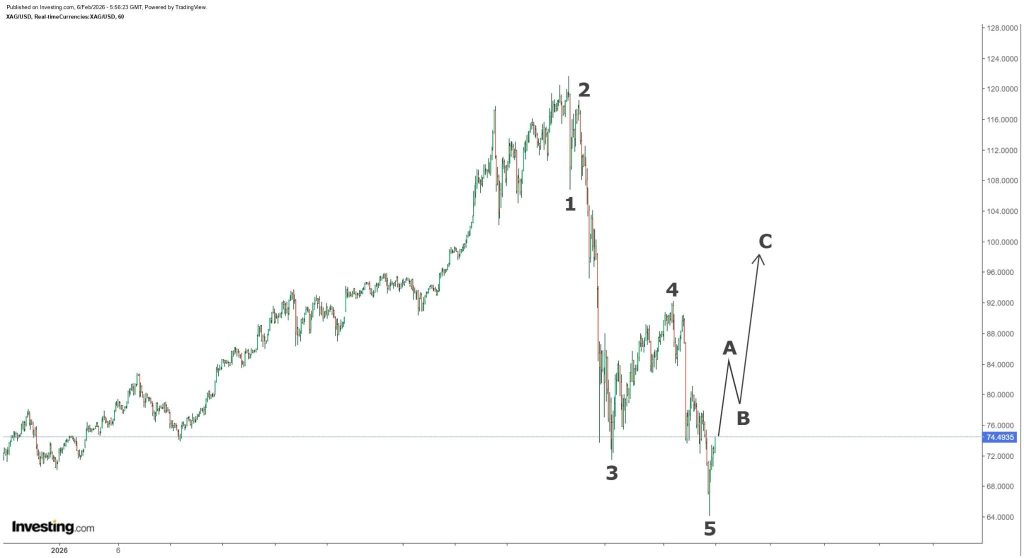
Silver Price Crash Is Over “For Real This Time,” Analyst Predicts a Surge Back Above $90

Silver Price Crash Is Over “For Real This Time,” Analyst Predicts a Surge Back Above $90

Silver has been taking a beating lately, and the Silver price hasn’t exactly been acting like a safe haven. After running up into the highs, the whole move reversed
Share
Captainaltcoin2026/02/07 03:15