While the British are arguing about immigration as if the numbers are rising, the reality is exactly the opposite.Entry routes have narrowed, salary thresholds While the British are arguing about immigration as if the numbers are rising, the reality is exactly the opposite.Entry routes have narrowed, salary thresholds

Τhe UK economy doesn’t have an immigration problem, but it’s people do

2026/02/16 14:10
5 min read

While the British are arguing about immigration as if the numbers are rising, the reality is exactly the opposite.

Entry routes have narrowed, salary thresholds have climbed and visa approvals have fallen sharply. Employers are recalculating hiring plans. Universities are revising budgets. The political heat remains high, but the underlying numbers are moving in the opposite direction.

Every developed economy requires a healthy level of immigration, so what needs to be asked is whether the UK economy can carry the weight on its own.

How big was the surge and how sharp is the reversal?

The scale of the move is hard to overstate. From June 2021 to June 2025, total immigration reached 5.6 million and net migration 2.7 million. 

Source: The Guardian

The post pandemic period saw inflows accelerate as labour shortages intensified and visa rules were loosened.

Under Boris Johnson’s government, skilled worker routes expanded, and care providers recruited heavily from abroad.

By 2023, net migration reached 944,000 in the year to March. But policy has tightened a lot since then. 

Salary thresholds for skilled worker visas rose from £26,200 to £38,700. Work and family visa thresholds increased to £33,400.

Care workers were banned from bringing dependents. Most postgraduate students were barred from bringing family members. 

The result is obvious in the numbers as non-EU inflows are expected to drop below 550,000 in 2026, while emigration rises as temporary visa holders leave.

If forecasts prove accurate, net migration could fall to around minus 60,000 this year. That would be the first negative reading since 1993.

Did the population really explode?

Public debate has often relied on exaggerated numbers. The UK population was 66.7 million in mid 2020 and is provisionally estimated at about 69.5 million in mid 2025. The increase is roughly 2.7 million and not 12 million as some high-profile figures like Sir Jim Ratcliffe have claimed.

However, migration drove almost all of that growth. Analysis by the Migration Observatory at the University of Oxford shows that between 2020 and 2023, net migration accounted for 98% of population growth. Births contributed little.

For investors, the key point is demographic. The UK has relied on migration to stabilise its working-age population. Remove that inflow, and labour force growth slows.

The demographic arithmetic changes quickly.

Why does public concern remain so high?

A 2025 global survey by Gallup found that 21% of Britons name immigration as the country’s top problem. For comparison, the global median is 1%. No other country ranks it first.

Source: Gallup

Supporters of Reform UK show the strongest intensity, with 48% citing immigration as the main issue. Yet surveys also show that around 80% of Britons view immigrants as a good thing and are comfortable with them as neighbours.

Concern appears tied less to migrant share, which stands at around 17% of the population, and more to politics and perception.

Even as net migration has fallen by roughly 78% from its peak, anxiety has not faded at the same pace.

This creates tension for policymakers. While the political reward for reducing migration is immediate, the economic cost emerges later.

What does zero migration mean for growth?

The National Institute of Economic and Social Research modelled a scenario in which net migration falls to zero. By 2040, it estimates GDP would be 3.6-3.7% lower than under current projections.

Public borrowing would be £37 billion higher in today’s prices. Trend growth would fall by 0.2% points a year.

The mechanism is straightforward. A smaller workforce reduces employment growth. Tax receipts decline. Age-related spending pressures remain. Over time, the deficit widens.

The nuance is that although in the short term, fewer workers can push real wages higher and lift GDP per capita, the long-term aggregate output falls.

For debt sustainability, total GDP matters more than per capita figures.

The Office for Budget Responsibility has previously estimated that Brexit will leave the economy around 4% smaller in the long run.

The magnitude of a zero migration scenario is comparable.

Where is the squeeze already visible?

Universities provide an early signal. Some international students are now paying more than £30,000 for a one-year master’s degree. 

Restrictions on dependents and higher salary thresholds for post-study work have reduced applications. Financial strain is emerging, with institutions exploring mergers and cost-cutting.

Health trusts and care homes, which relied heavily on overseas recruitment, face a tighter labour supply.

Construction firms report similar constraints. Surveys note that only 13% of firms use the immigration system, yet for those that do, it fills urgent vacancies.

Fiscal implications follow. If net migration undershoots official forecasts by around 200,000 people in a given year, economists estimate a £6-8 billion shortfall in public finances. 

Recent migrants tend to be of working age and, according to HMRC data, often earn above-average wages.

Restricting skilled visas reduces the number of high earners contributing to the tax base.

Is this permanent or a temporary dip?

The Migration Observatory expects net migration to fall sharply in the short term, perhaps to around 250,000, before recovering toward 340,000 later in the decade. 

Many migrants currently on temporary visas may remain. Labour demand may strengthen. Demographic pressures do not disappear.

International comparison is instructive. Germany is expanding routes for foreign apprentices and workers to offset an ageing population.

The UK is moving toward a more restrictive model with fewer paths to permanence. 

Both approaches carry political risk, but only one increases the working-age population.

What remains to be seen is whether a lower inflow can coexist with modest growth, tight public finances, and an ageing society. 

Britain has already delivered one of the fastest migration reversals in the developed world.

The next few years will show whether that correction leaves a smaller economy behind or simply a different one.

The post Τhe UK economy doesn't have an immigration problem, but it's people do appeared first on Invezz

Market Opportunity
PUBLIC Logo
PUBLIC Price(PUBLIC)
$0.01493
$0.01493$0.01493
+0.47%
USD
PUBLIC (PUBLIC) Live Price Chart
Disclaimer: The articles reposted on this site are sourced from public platforms and are provided for informational purposes only. They do not necessarily reflect the views of MEXC. All rights remain with the original authors. If you believe any content infringes on third-party rights, please contact service@support.mexc.com for removal. MEXC makes no guarantees regarding the accuracy, completeness, or timeliness of the content and is not responsible for any actions taken based on the information provided. The content does not constitute financial, legal, or other professional advice, nor should it be considered a recommendation or endorsement by MEXC.

You May Also Like

Bitcoin Hyper Not Far from $20M, Whales Keep Buying: See What This $BTC Layer-2 Plans
Bitcoin Hyper Not Far from $20M, Whales Keep Buying: See What This $BTC Layer-2 Plans

To the uninitiated, Bitcoin and crypto are synonymous – and it’s only fair, given that the granddaddy of all crypto has been the face of the industry ever since it burst onto the scene a few years back. Since 2020, Bitcoin has generated over 1,500% in returns. Basically, crypto is so much about Bitcoin. All […]
Share
Bitcoinist2025/09/22 16:37
ECB-president hernieuwt aanval op Bitcoin terwijl euro daalt

ECB-president hernieuwt aanval op Bitcoin terwijl euro daalt

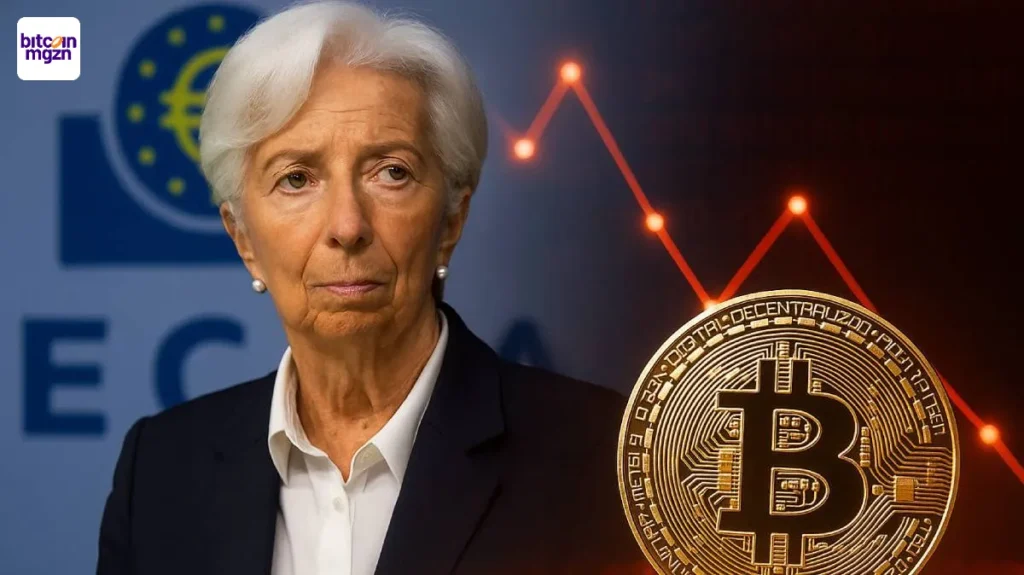
Snelle crypto updates? Connect op Instagram! Check onze Instagram   ECB-president Christine Lagarde noemt Bitcoin waardeloos en waarschuwt voor zijn speculatieve aard. Haar uitspraken komen op een moment dat DeFi groeit en de euro onder druk staat, wat de discussie over geld en controle opnieuw tot leven brengt. ECB houdt vast aan kritiek op Bitcoin en DeFi De Europese Centrale Bank (ECB) blijft vasthouden aan haar scherpe toon over Bitcoin. Volgens president Christine Lagarde ontbreekt de munt het fundament dat echt geld kenmerkt. Ze noemt het een speculatief middel zonder onderliggende waarde, en benadrukt dat de ECB het publieke vertrouwen in geld moet beschermen. Terwijl de digitale economie zich steeds meer richting decentralisatie beweegt, probeert de bank haar rol als stabiele pijler te behouden. ECB (European Central Bank) De European Central Bank (ECB) is de centrale bank van de eurozone en bepaalt samen met de nationale banken het monetaire beleid voor de euro. Ze houdt de inflatie in de gaten, bepaalt de rente en zorgt voor stabiliteit van het financiële systeem. In de cryptowereld speelt de ECB vooral een rol met het onderzoek en de voorbereidingen voor een digitale euro, een eigen centrale bank digitale munt (CBDC). Daarmee wil de bank inspelen op de groei van digitaal geld en alternatieven zoals stablecoins. Voor de crypto-industrie is dit belangrijk omdat een digitale euro de concurrentie en het speelveld voor private stablecoins kan veranderen. De waarschuwing van Lagarde past in een bredere strategie van de ECB. De opkomst van decentrale financiële systemen (DeFi) wordt gezien als een uitdaging voor de invloed van centrale banken. In die waarschuwing lijkt ook iets van zelfbescherming door te klinken: het behoud van macht over monetair beleid. Voorstanders van Bitcoin wijzen juist op de kracht van schaarste, transparantie en onafhankelijkheid; eigenschappen die fiatgeld in hun ogen steeds meer verliest. “How many bitcoin do you own?” That’s how it starts, a stupid question from the host. From there, it goes downhill fast. Christine Lagarde repeats every tired anti-bitcoin cliché the ECB has ever pushed. Let’s go… 1️⃣ “Bitcoin has no intrinsic value.” Neither does fiat.… pic.twitter.com/uMqtEHvkD0 — Eli Nagar (@EliNagarBrr) October 7, 2025 De euro verzwakt terwijl crypto aan invloed wint Ondertussen verliest de euro langzaam maar zeker aan koopkracht. Sinds de invoering in 2002 is de munt ruim veertig procent van haar reële waarde kwijtgeraakt. Dat voedt de twijfel over de houdbaarheid van het huidige fiatstelsel en vergroot de interesse in alternatieven zoals Bitcoin en andere cryptovaluta. Binnen de Europese cryptogemeenschap worden de woorden van de ECB dan ook met de nodige scepsis onthaald. Been 22 years, physical $Euro coins and banknotes entered circulation on January 1st 2002. Since then, this fiasco lost 40% of its buying power according to “official” stats. Won’t even mention real stats, or you’d be dumping ALL your Eurobolivars for #Bitcoin right now. pic.twitter.com/Rp3KinVfPm — Vandelay ₿TC Industries ⚡ (@VandelayBTC) January 3, 2024 DeFi-platforms en stablecoins winnen terrein in Europa, juist omdat ze nieuwe mogelijkheden bieden voor rendement en autonomie. Waar Lagarde waarschuwt voor volatiliteit, zien veel gebruikers vooral vrijheid in een systeem dat zich niets aantrekt van centrale banken. De groei van DeFi laat zien dat vertrouwen niet alleen via instituties ontstaat, maar ook via technologie. Monetaire controle en vertrouwen in het digitale tijdperk De standpunten van de ECB leggen een oud spanningsveld bloot: de strijd tussen stabiliteit en vrijheid. Aan de ene kant verdedigt de bank haar rol als bewaker van orde, aan de andere kant tonen cryptomarkten dat vertrouwen ook buiten traditionele kanalen kan bestaan. Terwijl de ECB pleit voor zekerheid en voorspelbaarheid, zoeken investeerders steeds vaker transparantie en zelfbeschikking. Lagarde’s uitspraken passen in een wereldwijde trend waarin centrale banken proberen hun gezag te behouden in een economie die snel verandert. Toch klinkt steeds luider de vraag of die vorm van controle nog houdbaar is. Nieuwe technologieën maken directe waardeoverdracht mogelijk,zonder tussenkomst van banken. Dat idee wringt natuurlijk met de kern van het bestaande financiële systeem. Exactly. It was narrative management. They feel threatened. That’s why real questions about monetary policy, inflation, and accountability never make it to the script. — Eli Nagar (@EliNagarBrr) October 8, 2025 De toekomst van waarde: centraal of gedecentraliseerd? De discussie tussen de ECB en de cryptowereld draait om meer dan geld. Het gaat om vertrouwen, transparantie en macht over waarde. Zolang de euro verder verzwakt en decentrale technologieën blijven groeien, lijkt de kloof tussen centrale banken en de cryptosector alleen maar groter te worden. Hoeveel invloed de ECB kan behouden, hangt af van haar vermogen zich aan te passen aan dit nieuwe tijdperk. De strijd om waarde is niet enkel economisch, maar ook ideologisch. In dat licht voelt de opkomst van Bitcoin minder als een bedreiging, en meer als een logisch gevolg van de zoektocht naar onafhankelijkheid in geld. Koop je Bitcoin via Best Wallet Best wallet is een topklasse crypto wallet waarmee je anoniem crypto kan kopen. Met meer dan 60 chains gesupport kan je al je main crypto coins aanschaffen via Best Wallet. Best wallet - betrouwbare en anonieme wallet Best wallet - betrouwbare en anonieme wallet Meer dan 60 chains beschikbaar voor alle crypto Vroege toegang tot nieuwe projecten Hoge staking belongingen Lage transactiekosten Best wallet review Koop nu via Best Wallet Let op: cryptocurrency is een zeer volatiele en ongereguleerde investering. Doe je eigen onderzoek. Het bericht ECB-president hernieuwt aanval op Bitcoin terwijl euro daalt is geschreven door Sebastiaan Krijnen en verscheen als eerst op Bitcoinmagazine.nl.
Share
Coinstats2025/10/11 03:16
What SBI Really Owns in Ripple May Surprise XRP Investors

What SBI Really Owns in Ripple May Surprise XRP Investors

The post What SBI Really Owns in Ripple May Surprise XRP Investors appeared on BitcoinEthereumNews.com. SBI Holdings Chairman Yoshitaka Kitao has confirmed that
Share
BitcoinEthereumNews2026/02/16 16:14