The post Solana Company stock surges over 14% as firm enables borrowing against staked SOL appeared on BitcoinEthereumNews.com. Solana Company shares have jumpedThe post Solana Company stock surges over 14% as firm enables borrowing against staked SOL appeared on BitcoinEthereumNews.com. Solana Company shares have jumped

Solana Company stock surges over 14% as firm enables borrowing against staked SOL

Solana Company shares have jumped 14.51% (+0.28) as the firm rolls out institutional borrowing against natively staked SOL in qualified custody. The model allows institutions to hold their assets on the Anchorage Digital platform while using them as collateral to access liquidity on Kamino Finance.

Solana Co. stock (Nasdaq: HSDT) climbed after the company partnered with Anchorage Digital and Kamino Finance, enabling institutions to simultaneously earn native staking yield on SOL while unlocking liquidity for borrowing and lending. The institutions can borrow funds without having to unstake or liquidate their holdings. 

The announcement had an immediate impact on Solana Co.’s stock price as shares jumped to $2.34, a significant rebound from the recent all-time low of $1.80 earlier this week. However, despite the positive shift, the company’s stock remains down nearly 90% since its shift toward a Solana-focused treasury strategy in September 2025. 

On the other hand, while Solana Co. stock has seen a temporary lift, the company is still under pressure from volatility in SOL prices. SOL’s value had fallen from $245 per token in September 2025 to nearly $70 earlier this year before recovering toward the mid-$80 range last week. The company’s $200 million in treasury holdings has also been affected by these market fluctuations.  

Kamino executive says partnership unlocks institutional borrowing demand

Cheryl Chan, the head of strategy at Kamino, said the collaboration unlocks meaningful demand for institutions to borrow against assets held in qualified custody. Chan added that by partnering with Anchorage Digital, Kamino will enable institutions to access on-chain liquidity and yield on SOL while continuing to custody assets within their existing regulated framework. 

McCauley also disclosed that Atlas collateral management allows institutions to keep natively staked SOL held with a qualified custodian while using it productively, bringing institutional-grade risk management to Solana’s lending markets.

Anchorage Digital will act as the collateral manager for natively staked SOL, enabling institutions to earn staking rewards while unlocking borrowing power on Kamino. 

Meanwhile, all collateral will remain held in the borrower’s segregated account at Anchorage Digital Bank. That will ensure all assets remain in custody even as Kamino’s lending markets track their economic value. 

Scalable model serves as treasury companies’ blueprint

Cosmo Jiang, a board director at Solana Company, said the new model demonstrates how institutional-grade infrastructure can unlock deeper participation on the Solana network. Jiang, also a general partner at Pantera Capital Management, believes this scalable model will serve as the blueprint that other treasury firms will follow and institutional investors will demand. 

Simply put, this new model is a strong example of how regulated custody and on-chain lending and borrowing can collaborate within the Solana ecosystem. Solana Co. will collaborate to bring institutional capital to Solana’s DeFi ecosystem through a tri-party custody model. The company is currently the second-largest publicly traded holder of SOL, with nearly 2.3 million tokens on its balance sheet.

Meanwhile, several peers are also moving in similar directions, pushing firms to rely more on staking income and alternative yield strategies rather than on price appreciation alone.

SOL Strategy launched a liquid staking token backed by over 500,000 SOL last month. The company added a fee-generating product alongside its validator and treasury operations.

Sharps Technology also disclosed that its treasury is earning an annualized staking yield of approximately 7% while expanding validator operations.

Meanwhile, Upexi said staking income now accounts for the majority of its revenue, even as lower SOL prices drove a $179 million quarterly loss. The loss was primarily tied to accounting revaluations. 

Source: https://www.cryptopolitan.com/solana-company-stock-surges-over-14/

Market Opportunity
Solana Logo
Solana Price(SOL)
$88.14
$88.14$88.14
+0.81%
USD
Solana (SOL) Live Price Chart
Disclaimer: The articles reposted on this site are sourced from public platforms and are provided for informational purposes only. They do not necessarily reflect the views of MEXC. All rights remain with the original authors. If you believe any content infringes on third-party rights, please contact service@support.mexc.com for removal. MEXC makes no guarantees regarding the accuracy, completeness, or timeliness of the content and is not responsible for any actions taken based on the information provided. The content does not constitute financial, legal, or other professional advice, nor should it be considered a recommendation or endorsement by MEXC.

You May Also Like

X Üst Düzey Yetkilisi, Platformda Kripto Paralar İçin Müjdeyi Verdi! Ancak Bazı Altcoinler İçin Kötü Haber Olabilir

X Üst Düzey Yetkilisi, Platformda Kripto Paralar İçin Müjdeyi Verdi! Ancak Bazı Altcoinler İçin Kötü Haber Olabilir

X Ürün Lideri ve Solana ekosistem danışmanı Nikita Bier, sosyal medya platformu X’te kripto para kullanımının artmasını desteklediğini ancak spam ve tacizi teşvik
Share
Coinstats2026/02/14 23:11
China Blocks Nvidia’s RTX Pro 6000D as Local Chips Rise

China Blocks Nvidia’s RTX Pro 6000D as Local Chips Rise

The post China Blocks Nvidia’s RTX Pro 6000D as Local Chips Rise appeared on BitcoinEthereumNews.com. China Blocks Nvidia’s RTX Pro 6000D as Local Chips Rise China’s internet regulator has ordered the country’s biggest technology firms, including Alibaba and ByteDance, to stop purchasing Nvidia’s RTX Pro 6000D GPUs. According to the Financial Times, the move shuts down the last major channel for mass supplies of American chips to the Chinese market. Why Beijing Halted Nvidia Purchases Chinese companies had planned to buy tens of thousands of RTX Pro 6000D accelerators and had already begun testing them in servers. But regulators intervened, halting the purchases and signaling stricter controls than earlier measures placed on Nvidia’s H20 chip. Image: Nvidia An audit compared Huawei and Cambricon processors, along with chips developed by Alibaba and Baidu, against Nvidia’s export-approved products. Regulators concluded that Chinese chips had reached performance levels comparable to the restricted U.S. models. This assessment pushed authorities to advise firms to rely more heavily on domestic processors, further tightening Nvidia’s already limited position in China. China’s Drive Toward Tech Independence The decision highlights Beijing’s focus on import substitution — developing self-sufficient chip production to reduce reliance on U.S. supplies. “The signal is now clear: all attention is focused on building a domestic ecosystem,” said a representative of a leading Chinese tech company. Nvidia had unveiled the RTX Pro 6000D in July 2025 during CEO Jensen Huang’s visit to Beijing, in an attempt to keep a foothold in China after Washington restricted exports of its most advanced chips. But momentum is shifting. Industry sources told the Financial Times that Chinese manufacturers plan to triple AI chip production next year to meet growing demand. They believe “domestic supply will now be sufficient without Nvidia.” What It Means for the Future With Huawei, Cambricon, Alibaba, and Baidu stepping up, China is positioning itself for long-term technological independence. Nvidia, meanwhile, faces…
Share
BitcoinEthereumNews2025/09/18 01:37
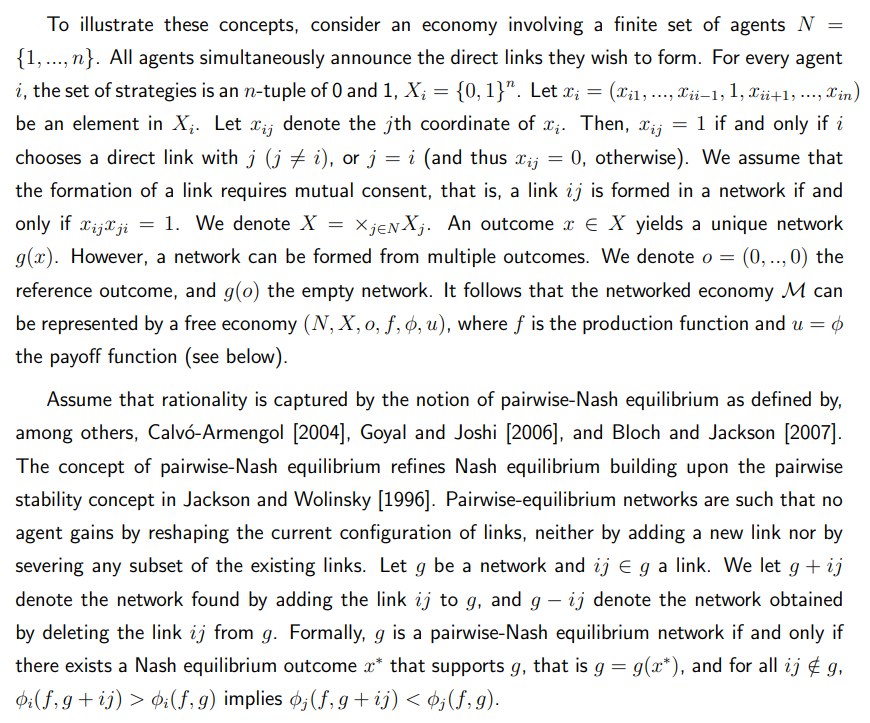
The Economics of Self-Isolation: A Game-Theoretic Analysis of Contagion in a Free Economy

The Economics of Self-Isolation: A Game-Theoretic Analysis of Contagion in a Free Economy

Exploring how the costs of a pandemic can lead to a self-enforcing lockdown in a networked economy, analyzing the resulting changes in network structure and the existence of stable equilibria.
Share
Hackernoon2025/09/17 23:00