Bitcoin extended its sharp weekly decline after more than $1.5 billion in leveraged long positions were liquidated, triggering a liquidity squeeze that pushed pricesBitcoin extended its sharp weekly decline after more than $1.5 billion in leveraged long positions were liquidated, triggering a liquidity squeeze that pushed prices

$1.5B liquidated as Bitcoin drops 13% and market liquidity, attention pull back

4 min read

Bitcoin extended its sharp weekly decline after more than $1.5 billion in leveraged long positions were liquidated, triggering a liquidity squeeze that pushed prices down over 13% and dragged institutional flows, market participation, and media attention lower across the crypto sector.

Summary
  • More than $1.5 billion in leveraged long positions were liquidated in late January, accelerating Bitcoin’s decline and deepening short-term market stress.
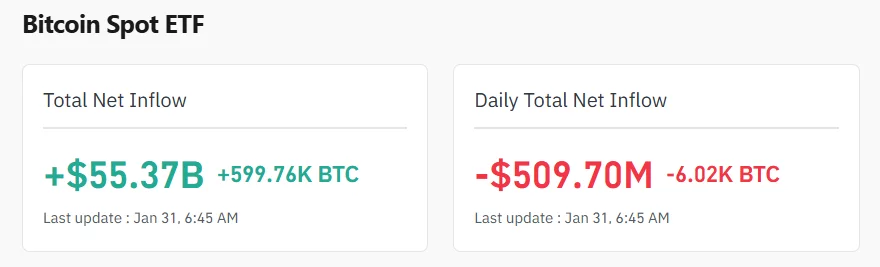
  • Spot Bitcoin ETFs recorded roughly $509 million in net outflows, signaling a temporary pullback by institutional investors amid risk-off conditions.
  • Prolonged drawdowns tend to reduce public interest and media engagement, making visibility and disciplined communication harder for crypto projects during downturns.

Bitcoin extended its sharp selloff this week, falling more than 13% over seven days as a wave of forced liquidations, ETF outflows, and declining leverage drained liquidity from crypto markets. The market is witnessing the most severe short-term drawdowns since late 2025.

Liquidations drive the selloff

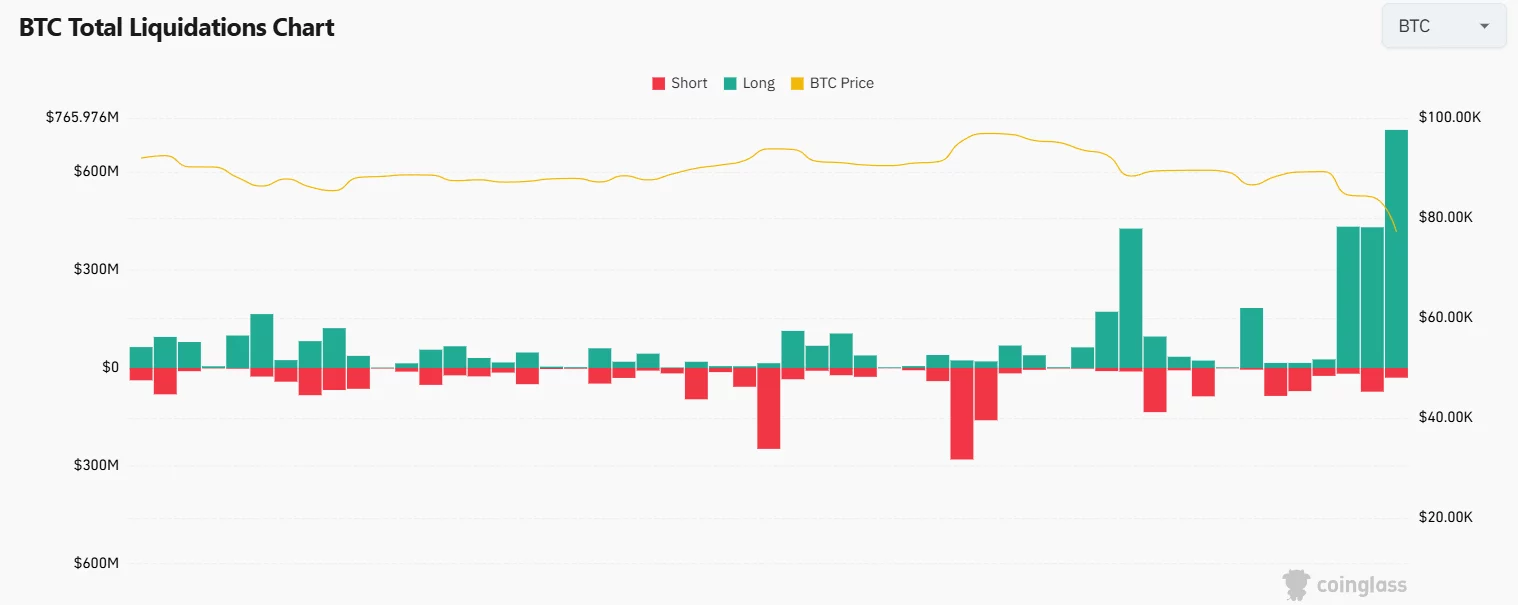
At the center of the decline was a cascade of long liquidations. Between January 29 and 31, more than $1.5 billion in leveraged long positions were wiped out, according to Coinglass data, marking the largest single-day liquidation event since November 2025. The forced selling amplified downside momentum as stop-losses were triggered and margin calls accelerated the drop.
$1.5B liquidated as Bitcoin drops 13% and market liquidity, attention pull back - 2

Once key support levels break, leveraged positions are automatically closed, pushing prices lower regardless of broader market conviction. This dynamic helps explain the speed and depth of the decline, which outpaced typical spot-driven corrections.

Institutional flows turn negative

Pressure on Bitcoin intensified as institutional capital retreated from regulated crypto exposure. Spot Bitcoin exchange-traded funds recorded net outflows of approximately $509 million on January 31, signaling a shift toward risk reduction among asset managers and allocators.
$1.5B liquidated as Bitcoin drops 13% and market liquidity, attention pull back - 3

The recent outflows suggest that institutional participants are rotating capital away from Bitcoin, at least temporarily, amid broader risk-off sentiment and deteriorating technical conditions.

Bear markets weigh on crypto visibility and media attention

Beyond price action, prolonged drawdowns tend to reshape the broader crypto information landscape. During risk-off phases, declining prices are often accompanied by falling public interest, reduced search activity, and weaker traffic across crypto-focused media.

According to the latest Outset Data Pulse report on US crypto media traffic, Outset PR identified a direct correlation between Bitcoin price dynamics and readership trends across major crypto publications. As BTC enters sustained downturns, overall traffic consistently contracts, reflecting reduced retail engagement and lower speculative appetite.

This drop in attention creates a secondary challenge for the industry: visibility becomes harder to maintain precisely when clarity matters most.

Strategic communication as a defensive asset

In this environment, communication strategy becomes less about amplification and more about discipline. With fewer active market participants and shrinking media bandwidth, messaging that lacks structure or continuity is more likely to be ignored.

Outset PR highlights that during bear-market conditions, projects that maintain consistent narrative frameworks and substance-driven content rather than relying on hype tend to preserve mindshare more effectively. 

As crypto markets continue to digest the recent deleveraging cycle, visibility risks are likely to persist alongside price volatility. For Web3 projects, the ability to sustain a clear narrative through downturns may prove as important as product execution itself.

BTC technical structure remains fragile

From a technical perspective, Bitcoin sits below its 100-day moving average at 93,937, which can signal counter-trend moves rather than confirmed reversals. The Momentum indicator remains deeply negative at −12,152, and the MACD at −2,120 continues to signal sell conditions, suggesting that bearish pressure has not yet fully exhausted itself.

Oversold readings can precede short-term bounces, but without a decisive reclaim of key moving averages accompanied by rising volume and improving market breadth, upside moves are likely to be corrective rather than structural.

A market in reset mode

The current environment reflects a broader reset mode. Markets tend to stabilize once forced selling subsides, but sustained recoveries typically emerge only after leverage rebuilds under more conservative positioning and spot demand returns.

For now, Bitcoin appears caught between the aftershocks of a leverage-driven unwind and the absence of new capital willing to step in aggressively. Until participation recovers, volatility may remain elevated and rallies vulnerable.

Disclaimer: The articles reposted on this site are sourced from public platforms and are provided for informational purposes only. They do not necessarily reflect the views of MEXC. All rights remain with the original authors. If you believe any content infringes on third-party rights, please contact service@support.mexc.com for removal. MEXC makes no guarantees regarding the accuracy, completeness, or timeliness of the content and is not responsible for any actions taken based on the information provided. The content does not constitute financial, legal, or other professional advice, nor should it be considered a recommendation or endorsement by MEXC.

You May Also Like

Over 60% of crypto press releases linked to high-risk or scam projects: Report

Over 60% of crypto press releases linked to high-risk or scam projects: Report

A data analysis shows crypto press release wires are dominated by scam-linked projects, hype-driven content and low-impact announcements, raising concerns about
Share
Crypto.news2026/02/04 22:02
ArtGis Finance Partners with MetaXR to Expand its DeFi Offerings in the Metaverse

ArtGis Finance Partners with MetaXR to Expand its DeFi Offerings in the Metaverse

By using this collaboration, ArtGis utilizes MetaXR’s infrastructure to widen access to its assets and enable its customers to interact with the metaverse.
Share
Blockchainreporter2025/09/18 00:07
Crucial US Stock Market Update: What Wednesday’s Mixed Close Reveals

Crucial US Stock Market Update: What Wednesday’s Mixed Close Reveals

BitcoinWorld Crucial US Stock Market Update: What Wednesday’s Mixed Close Reveals The financial world often keeps us on our toes, and Wednesday was no exception. Investors watched closely as the US stock market concluded the day with a mixed performance across its major indexes. This snapshot offers a crucial glimpse into current investor sentiment and economic undercurrents, prompting many to ask: what exactly happened? Understanding the Latest US Stock Market Movements On Wednesday, the closing bell brought a varied picture for the US stock market. While some indexes celebrated gains, others registered slight declines, creating a truly mixed bag for investors. The Dow Jones Industrial Average showed resilience, climbing by a notable 0.57%. This positive movement suggests strength in some of the larger, more established companies. Conversely, the S&P 500, a broader benchmark often seen as a barometer for the overall market, experienced a modest dip of 0.1%. The technology-heavy Nasdaq Composite also saw a slight retreat, sliding by 0.33%. This particular index often reflects investor sentiment towards growth stocks and the tech sector. These divergent outcomes highlight the complex dynamics currently at play within the American economy. It’s not simply a matter of “up” or “down” for the entire US stock market; rather, it’s a nuanced landscape where different sectors and company types are responding to unique pressures and opportunities. Why Did the US Stock Market See Mixed Results? When the US stock market delivers a mixed performance, it often points to a tug-of-war between various economic factors. Several elements could have contributed to Wednesday’s varied closings. For instance, positive corporate earnings reports from certain industries might have bolstered the Dow. At the same time, concerns over inflation, interest rate policies by the Federal Reserve, or even global economic uncertainties could have pressured growth stocks, affecting the S&P 500 and Nasdaq. Key considerations often include: Economic Data: Recent reports on employment, manufacturing, or consumer spending can sway market sentiment. Corporate Announcements: Strong or weak earnings forecasts from influential companies can significantly impact their respective sectors. Interest Rate Expectations: The prospect of higher or lower interest rates directly influences borrowing costs for businesses and consumer spending, affecting future profitability. Geopolitical Events: Global tensions or trade policies can introduce uncertainty, causing investors to become more cautious. Understanding these underlying drivers is crucial for anyone trying to make sense of daily market fluctuations in the US stock market. Navigating Volatility in the US Stock Market A mixed close, while not a dramatic downturn, serves as a reminder that market volatility is a constant companion for investors. For those involved in the US stock market, particularly individuals managing their portfolios, these days underscore the importance of a well-thought-out strategy. It’s important not to react impulsively to daily movements. Instead, consider these actionable insights: Diversification: Spreading investments across different sectors and asset classes can help mitigate risk when one area underperforms. Long-Term Perspective: Focusing on long-term financial goals rather than short-term gains can help weather daily market swings. Stay Informed: Keeping abreast of economic news and company fundamentals provides context for market behavior. Consult Experts: Financial advisors can offer personalized guidance based on individual risk tolerance and objectives. Even small movements in major indexes can signal shifts that require attention, guiding future investment decisions within the dynamic US stock market. What’s Next for the US Stock Market? Looking ahead, investors will be keenly watching for further economic indicators and corporate announcements to gauge the direction of the US stock market. Upcoming inflation data, statements from the Federal Reserve, and quarterly earnings reports will likely provide more clarity. The interplay of these factors will continue to shape investor confidence and, consequently, the performance of the Dow, S&P 500, and Nasdaq. Remaining informed and adaptive will be key to understanding the market’s trajectory. Conclusion: Wednesday’s mixed close in the US stock market highlights the intricate balance of forces influencing financial markets. While the Dow showed strength, the S&P 500 and Nasdaq experienced slight declines, reflecting a nuanced economic landscape. This reminds us that understanding the ‘why’ behind these movements is as important as the movements themselves. As always, a thoughtful, informed approach remains the best strategy for navigating the complexities of the market. Frequently Asked Questions (FAQs) Q1: What does a “mixed close” mean for the US stock market? A1: A mixed close indicates that while some major stock indexes advanced, others declined. It suggests that different sectors or types of companies within the US stock market are experiencing varying influences, rather than a uniform market movement. Q2: Which major indexes were affected on Wednesday? A2: On Wednesday, the Dow Jones Industrial Average gained 0.57%, while the S&P 500 edged down 0.1%, and the Nasdaq Composite slid 0.33%, illustrating the mixed performance across the US stock market. Q3: What factors contribute to a mixed stock market performance? A3: Mixed performances in the US stock market can be influenced by various factors, including specific corporate earnings, economic data releases, shifts in interest rate expectations, and broader geopolitical events that affect different market segments uniquely. Q4: How should investors react to mixed market signals? A4: Investors are generally advised to maintain a long-term perspective, diversify their portfolios, stay informed about economic news, and avoid impulsive decisions. Consulting a financial advisor can also provide personalized guidance for navigating the US stock market. Q5: What indicators should investors watch for future US stock market trends? A5: Key indicators to watch include upcoming inflation reports, statements from the Federal Reserve regarding monetary policy, and quarterly corporate earnings reports. These will offer insights into the future direction of the US stock market. Did you find this analysis of the US stock market helpful? Share this article with your network on social media to help others understand the nuances of current financial trends! To learn more about the latest stock market trends, explore our article on key developments shaping the US stock market‘s future performance. This post Crucial US Stock Market Update: What Wednesday’s Mixed Close Reveals first appeared on BitcoinWorld.
Share
Coinstats2025/09/18 05:30