The Euro (EUR) edges higher against the US Dollar (USD) on Tuesday, trading at 1.1815 at the time of writing after bottoming at 1.1776 the previous day. Strong manufacturing data in the US and news of a trade deal between the US and India provided additional support to the US Dollar on Monday and eased concerns about a partial US government shutdown.
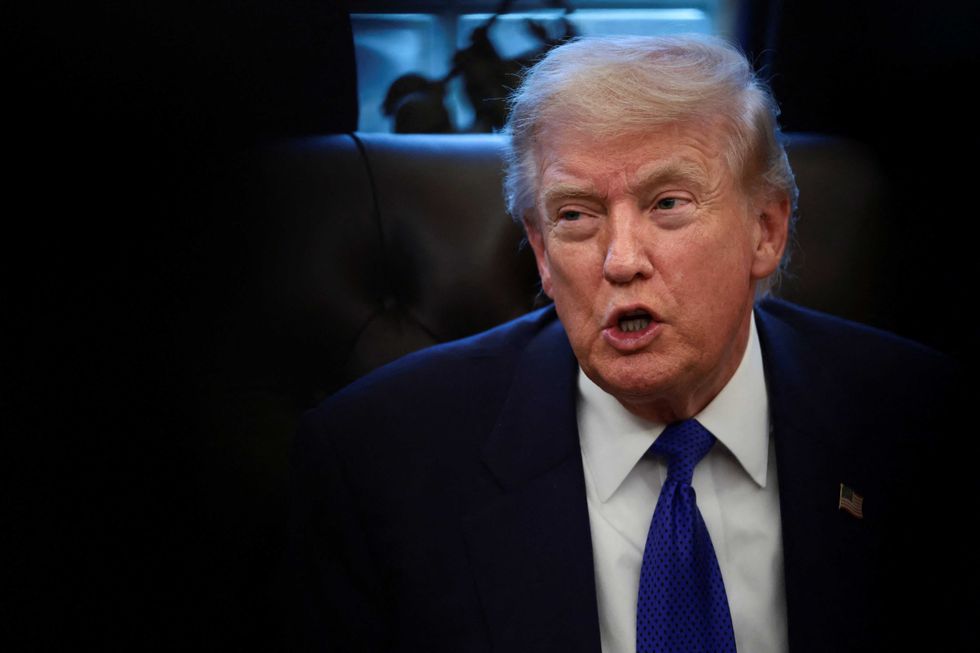
US President Donald Trump announced a deal with India that will reduce tariffs on Indian products to 18% from the current 50%. Beyond that, Iran’s president, Masoud Pezeshkian, said on Tuesday that Tehran will start nuclear negotiations with the US, which has contributed to easing tensions in the region, and provided additional support to the Greenback.
Macroeconomic data was also US Dollar supportive on Monday. The US ISM Manufacturing Purchasing Managers’ Index (PMI) improved beyond expectations, offsetting concerns about a partial government shutdown that will delay Friday’s Nonfarm Payrolls (NFP) report.
In the economic calendar on Tuesday, the European Central Bank (ECB) Lending Survey will provide further insight about credit conditions in the Eurozone, while in the US, the focus will be on the Federal Reserve (Fed) Governor Michelle Bowman’s speech.
Euro Price Today
The table below shows the percentage change of Euro (EUR) against listed major currencies today. Euro was the strongest against the US Dollar.
| USD | EUR | GBP | JPY | CAD | AUD | NZD | CHF | |
|---|---|---|---|---|---|---|---|---|
| USD | -0.20% | -0.21% | -0.08% | -0.10% | -1.05% | -0.68% | -0.23% | |
| EUR | 0.20% | -0.01% | 0.13% | 0.10% | -0.86% | -0.49% | -0.03% | |
| GBP | 0.21% | 0.01% | 0.15% | 0.11% | -0.84% | -0.47% | -0.01% | |
| JPY | 0.08% | -0.13% | -0.15% | -0.02% | -0.97% | -0.61% | -0.15% | |
| CAD | 0.10% | -0.10% | -0.11% | 0.02% | -0.95% | -0.59% | -0.13% | |
| AUD | 1.05% | 0.86% | 0.84% | 0.97% | 0.95% | 0.38% | 0.83% | |
| NZD | 0.68% | 0.49% | 0.47% | 0.61% | 0.59% | -0.38% | 0.46% | |
| CHF | 0.23% | 0.03% | 0.01% | 0.15% | 0.13% | -0.83% | -0.46% |
The heat map shows percentage changes of major currencies against each other. The base currency is picked from the left column, while the quote currency is picked from the top row. For example, if you pick the Euro from the left column and move along the horizontal line to the US Dollar, the percentage change displayed in the box will represent EUR (base)/USD (quote).
Daily Digest market Movers: The Dollar strengthens further on upbeat US data
- A firmer US Dollar drew additional support from factory data released on Monday. The US ISM Manufacturing PMI rose to 52.6 in January, its best reading in more than three years, from 47.9 in December and beating expectations of a 48.5 reading.
- Likewise, the US S&P Global Manufacturing PMI was revised up to 52.4 in January from the 51.9 reading released by preliminary estimations.
- Also on Monday, Trump announced a trade deal with China, by which the Asian country commits to buy US Oil, defence goods, and aircraft, and partially open its agriculture sector to US products in exchange for reduced trade tariffs.
- Investors have shrugged off a partial government shutdown after Congress failed to approve funding for some of the federal agencies. The Senate has approved the bill to reopen these agencies, which now heads to the House of Representatives, which is expected to vote on Tuesday. Labour data for this week, including JOTLS Job Openings and the Nonfarm Payrolls reports, will be delayed.
Technical Analysis: EUR/USD remains weak with 1.1770 support in play
The EUR/USD has bounced up from lows, but the immediate trend remains bearish. The Relative Strength Index (RSI) in the 4-hour chart is pointing upwards around 40, highlighting a fading bearish momentum. In the same line, the Moving Average Convergence Divergence (MACD) histogram is showing contracting red bars, which suggests that selling pressure has eased somewhat.
The pair has found some footing, although bulls are likely to be challenged at Monday’s high of 1.1875. Further up, the target is the January 30 high near 1.1975, ahead of the 1.2000 round level.
On the downside, support at the 1.1770 area (January 20 high) remains on the bears’ focus. A confirmation below that level would add pressure towards the January 21, 22 lows near the 1.1665 area.
Tariffs FAQs
Tariffs are customs duties levied on certain merchandise imports or a category of products. Tariffs are designed to help local producers and manufacturers be more competitive in the market by providing a price advantage over similar goods that can be imported. Tariffs are widely used as tools of protectionism, along with trade barriers and import quotas.
Although tariffs and taxes both generate government revenue to fund public goods and services, they have several distinctions. Tariffs are prepaid at the port of entry, while taxes are paid at the time of purchase. Taxes are imposed on individual taxpayers and businesses, while tariffs are paid by importers.
There are two schools of thought among economists regarding the usage of tariffs. While some argue that tariffs are necessary to protect domestic industries and address trade imbalances, others see them as a harmful tool that could potentially drive prices higher over the long term and lead to a damaging trade war by encouraging tit-for-tat tariffs.
During the run-up to the presidential election in November 2024, Donald Trump made it clear that he intends to use tariffs to support the US economy and American producers. In 2024, Mexico, China and Canada accounted for 42% of total US imports. In this period, Mexico stood out as the top exporter with $466.6 billion, according to the US Census Bureau. Hence, Trump wants to focus on these three nations when imposing tariffs. He also plans to use the revenue generated through tariffs to lower personal income taxes.
Source: https://www.fxstreet.com/news/eur-usd-ticks-up-amid-strong-us-economic-data-easing-tensions-202602030829