The post Vitalik cashed $70K betting against crazy Polymarket predictions appeared on BitcoinEthereumNews.com. Vitalik Buterin, the co-founder of Ethereum and aThe post Vitalik cashed $70K betting against crazy Polymarket predictions appeared on BitcoinEthereumNews.com. Vitalik Buterin, the co-founder of Ethereum and a

Vitalik cashed $70K betting against crazy Polymarket predictions

3 min read

Vitalik Buterin, the co-founder of Ethereum and a prominent figure in the blockchain space, recently shared his approach to navigating the prediction market Polymarket in an interview with Foresight News.

At this time, he outlined that he begins by identifying markets during a phase he refers to as “crazy mode,” where he bets that extreme scenarios will not occur.

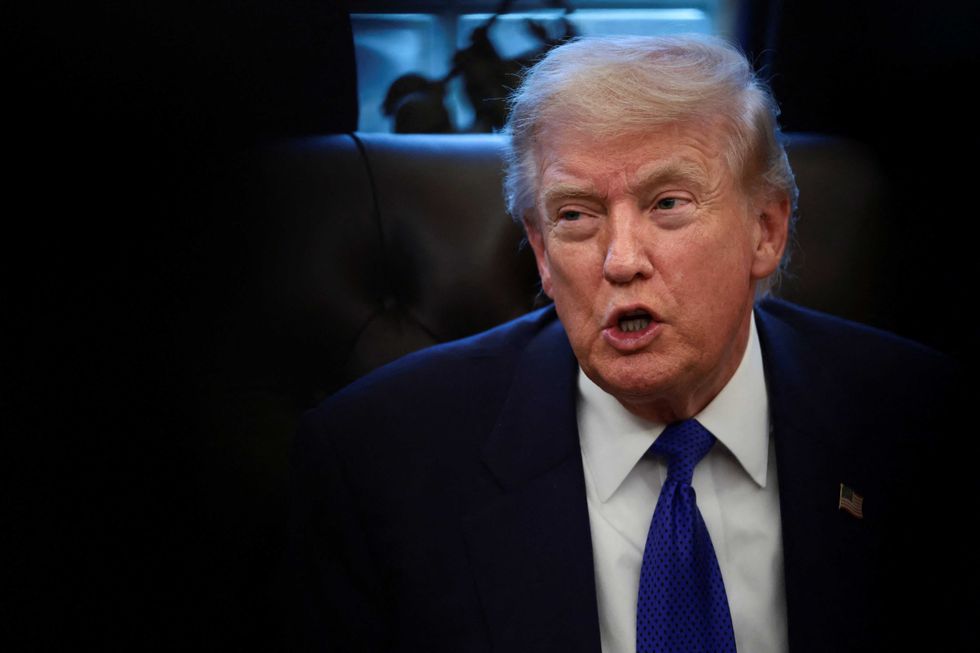
To further elaborate on this point for better understanding, the co-founder gave an example of a recent market bet that suggests whether US President Donald Trump will receive the Nobel Peace Prize. Buterin also mentioned that market speculation holds that the dollar could hit zero in 2027 during periods of heightened anxiety.

Buterin illustrates the crucial value of prediction markets

Buterin stated that he had invested around $440,000 in Polymarket. After placing a bet on the prediction market in 2025, he generated $70,000 in profit, representing a 16% return.  Concerning this profit, the industry executive argued that betting against market hype often proves profitable for him. Therefore, according to his argument, bettors target markets driven by extreme, irrational sentiment to maximize their earnings.

Responding to the Ethereum co-founder’s statement, Loxley Fernandes, a prominent Web3 entrepreneur and fintech innovator, and Dastan, CEO of Dastan company, expressed his belief that Buterin’s success stemmed from identifying and profiting from obviously flawed assumptions, demonstrating the significant value of prediction markets.

“When emotional extremes and irrational feelings affect markets, rational players not only make money but also help bring prices back to reality,” he said, further adding that, “ this is exactly what prediction markets are meant to do: provide clear signals amid all the noise.”

However, as with other marketplaces, Buterin disclosed that betting platforms such as Polymarket face key challenges, particularly regarding how oracles operate. Notably, oracles are decentralized third-party services that bridge real-world event outcomes to the blockchain, automatically and securely resolving market bets. 

To outline some of the challenges faced, the industry executive highlighted an example of a prediction market connected to the Russia-Ukraine conflict. In this prediction market, individuals bet on whether the Russian army would seize control of Myrnohrad, a city in Ukraine. Here, the Oracle for this prediction market used maps retrieved from the Institute for the Study of War (ISW), a nonpartisan, nonprofit Washington, D.C.-based think tank.

Buterin raises concerns about prediction market oracles’ security measures

Regarding the ISW-sourced maps, Buterin mentioned that they were shared on the social media platform X. In the Russia-Ukraine conflict, an industry executive noted that the prediction market determined “control” based on which army controlled the city’s train station.

Upon the breach of the ISW’s X account, the think tank’s maps were swiftly updated to show that Russian forces controlled the train station. The following day, the Institute apologized and removed the incorrect information.

In the meantime, the precise payout figures were not officially disclosed. Still, local media in Ukraine reported that some participants in this bet may have received returns exceeding 33,000%, with trading volume of approximately $1.3 million. 

At this moment, reports noted that Buterin shared such examples to demonstrate that the security measures of prediction market oracles are inadequate. “They never thought that one message they shared would decide who owned $1 million on the blockchain,” he said.

The smartest crypto minds already read our newsletter. Want in? Join them.

Source: https://www.cryptopolitan.com/vitalik-cashed-70k-from-crazy-predictions/

Disclaimer: The articles reposted on this site are sourced from public platforms and are provided for informational purposes only. They do not necessarily reflect the views of MEXC. All rights remain with the original authors. If you believe any content infringes on third-party rights, please contact service@support.mexc.com for removal. MEXC makes no guarantees regarding the accuracy, completeness, or timeliness of the content and is not responsible for any actions taken based on the information provided. The content does not constitute financial, legal, or other professional advice, nor should it be considered a recommendation or endorsement by MEXC.
Tags:

You May Also Like

FCA komt in 2026 met aangepaste cryptoregels voor Britse markt

FCA komt in 2026 met aangepaste cryptoregels voor Britse markt

De Britse financiële waakhond, de FCA, komt in 2026 met nieuwe regels speciaal voor crypto bedrijven. Wat direct opvalt: de toezichthouder laat enkele klassieke financiële verplichtingen los om beter aan te sluiten op de snelle en grillige wereld van digitale activa. Tegelijkertijd wordt er extra nadruk gelegd op digitale beveiliging,... Het bericht FCA komt in 2026 met aangepaste cryptoregels voor Britse markt verscheen het eerst op Blockchain Stories.
Share
Coinstats2025/09/18 00:33
Cashing In On University Patents Means Giving Up On Our Innovation Future

Cashing In On University Patents Means Giving Up On Our Innovation Future

The post Cashing In On University Patents Means Giving Up On Our Innovation Future appeared on BitcoinEthereumNews.com. “It’s a raid on American innovation that would deliver pennies to the Treasury while kneecapping the very engine of our economic and medical progress,” writes Pipes. Getty Images Washington is addicted to taxing success. Now, Commerce Secretary Howard Lutnick is floating a plan to skim half the patent earnings from inventions developed at universities with federal funding. It’s being sold as a way to shore up programs like Social Security. In reality, it’s a raid on American innovation that would deliver pennies to the Treasury while kneecapping the very engine of our economic and medical progress. Yes, taxpayer dollars support early-stage research. But the real payoff comes later—in the jobs created, cures discovered, and industries launched when universities and private industry turn those discoveries into real products. By comparison, the sums at stake in patent licensing are trivial. Universities collectively earn only about $3.6 billion annually in patent income—less than the federal government spends on Social Security in a single day. Even confiscating half would barely register against a $6 trillion federal budget. And yet the damage from such a policy would be anything but trivial. The true return on taxpayer investment isn’t in licensing checks sent to Washington, but in the downstream economic activity that federally supported research unleashes. Thanks to the bipartisan Bayh-Dole Act of 1980, universities and private industry have powerful incentives to translate early-stage discoveries into real-world products. Before Bayh-Dole, the government hoarded patents from federally funded research, and fewer than 5% were ever licensed. Once universities could own and license their own inventions, innovation exploded. The result has been one of the best returns on investment in government history. Since 1996, university research has added nearly $2 trillion to U.S. industrial output, supported 6.5 million jobs, and launched more than 19,000 startups. Those companies pay…
Share
BitcoinEthereumNews2025/09/18 03:26
Trump foe devises plan to starve him of what he 'craves' most

Trump foe devises plan to starve him of what he 'craves' most

A longtime adversary of President Donald Trump has a plan for a key group to take away what Trump craves the most — attention. EX-CNN journalist Jim Acosta, who
Share
Rawstory2026/02/04 01:19