The post SUI Technical Analysis Feb 1 appeared on BitcoinEthereumNews.com. SUI’s 24-hour trading volume reached 990 million dollars, showing high participation The post SUI Technical Analysis Feb 1 appeared on BitcoinEthereumNews.com. SUI’s 24-hour trading volume reached 990 million dollars, showing high participation

SUI Technical Analysis Feb 1

4 min read

SUI’s 24-hour trading volume reached 990 million dollars, showing high participation in the recent decline, which indicates strong selling pressure. Volume is giving distribution signals despite the price entering the oversold region, and market sentiment is bearish.

Volume Profile and Market Participation

SUI’s current volume profile stands out with a trading volume of 990.41 million dollars in the last 24 hours. This level shows an increase of over 150% compared to recent weekly averages, and high volume participation during the downtrend reveals that market participants are aggressive in the selling direction. In volume profile analysis, as the price retreats to the $1.15 level, volume nodes (high volume nodes) are concentrating in the $1.20-$1.30 band; this region functions as a strong resistance. Unlike low-volume rises, today’s 6.88% decline is supported by high volume, which reflects healthy bear market participation. In terms of market participation, it is becoming difficult to distinguish between retail traders’ panic sales and big players’ position closures, but the volume increase is more pronounced in down moves. This indicates that the overall market sentiment is bearish and increases the risk of testing the $1.0328 support level.

Accumulation or Distribution?

Accumulation Signals

Accumulation signals are limited; although RSI is at 23.16 in the oversold region, volume remains high on declines, which prevents the low-volume base formation ideal for healthy accumulation. In multi-timeframe (MTF) volume context, the 1S/3R and 2S/1R levels on 1D and 3D timeframes point to potential accumulation zones around $1.0328, but the weekly 2S/4R balance is resistance-weighted. If volume decreases here and price stabilizes, institutional accumulation may begin – for example, look for quiet buying traces at value area low (VAL) levels in the volume profile.

Distribution Risks

Distribution warnings dominate: High-volume down candles, especially below EMA20 ($1.44), show smart money selling. Combined with Supertrend bearish and MACD negative histogram, the rejection from $1.1534 resistance confirms distribution. Among the last 11 strong MTF volume levels, the abundance of resistances (total 8R) implies that big players are extinguishing volume on upside tests. This pattern resembles the classic Wyckoff distribution phase; if volume decreases as price climbs, selling pressure may increase.

Price-Volume Confirmation

Price action is perfectly confirmed by volume: The 6.88% decline occurred with 1.5 times average volume, reinforcing bear market dominance over weak rally attempts (low volume). Healthy volume should increase on up moves and decrease on downs; here the opposite is observed – no divergence, pure bearish confirmation. Despite RSI being oversold, volume isn’t dropping, meaning capitulation hasn’t completed yet. Look for volume spikes at $1.2251 resistance confirming distribution, and potential volume gap (low volume gap) at $1.0328 support; if broken, it opens bearish target to $0.5740.

Big Player Activity

Big player patterns are evident on the high-volume down day: Whales are likely closing positions from the $1.46 Supertrend resistance, as MTF resistance levels (69/100 score) were tested with volume. Institutional activity is visible in volume profile upper tails (high-volume rejections); this signals distribution of long positions. For healthy institutional buying, low-volume sideways consolidation followed by up breakout volume is required – current high volume selling requires caution. Monitor whale wallet movements, but volume spikes appear synchronized in spot and futures. Check detailed data in SUI Spot Analysis and SUI Futures Analysis.

Bitcoin Correlation

BTC at $78,338 with a 5.89% decline in downtrend, Supertrend bearish – risky for altcoins like SUI. If BTC supports at $77,897 and $75,720 break, SUI’s correlation beta (about 1.5x) will test $1.0328 support. If BTC stabilizes above $80,285 resistance, altcoins may see relief, but rising dominance is suppressing SUI volume. Key BTC levels: Support breakdown triggers SUI bear target ($0.5740), resistance break opens $1.6962 bullish target.

Volume-Based Outlook

Volume-based outlook is bearish but with oversold RSI, capitulation is near: High volume declines confirm distribution, expect volume dry-up at $1.0328 – if it holds, accumulation begins. Short-term short bias, longs need $1.1534 break + volume confirmation. Overall, volume price analysis is bearish without divergence; market participation is sales-focused, institutional recovery requires BTC stabilization. Note: 11 MTF volume levels are resistance-weighted, limiting upside.

This analysis uses Chief Analyst Devrim Cacal’s market views and methodology.

Trading Analyst: Emily Watson

Short-term trading strategies expert

This analysis is not investment advice. Do your own research.

Source: https://en.coinotag.com/analysis/sui-technical-analysis-february-1-2026-volume-and-accumulation

Disclaimer: The articles reposted on this site are sourced from public platforms and are provided for informational purposes only. They do not necessarily reflect the views of MEXC. All rights remain with the original authors. If you believe any content infringes on third-party rights, please contact service@support.mexc.com for removal. MEXC makes no guarantees regarding the accuracy, completeness, or timeliness of the content and is not responsible for any actions taken based on the information provided. The content does not constitute financial, legal, or other professional advice, nor should it be considered a recommendation or endorsement by MEXC.

You May Also Like

Three dormant wallets, suspected to belong to the same entity, purchased 5,970 ETH eight hours ago.

Three dormant wallets, suspected to belong to the same entity, purchased 5,970 ETH eight hours ago.

PANews reported on February 4 that, according to Lookonchain monitoring, three wallets that had been dormant for four years (likely controlled by the same entity
Share
PANews2026/02/04 11:36
NVIDIA Stock Price Analysis as OpenAI Issues Concerns About its Chips

NVIDIA Stock Price Analysis as OpenAI Issues Concerns About its Chips

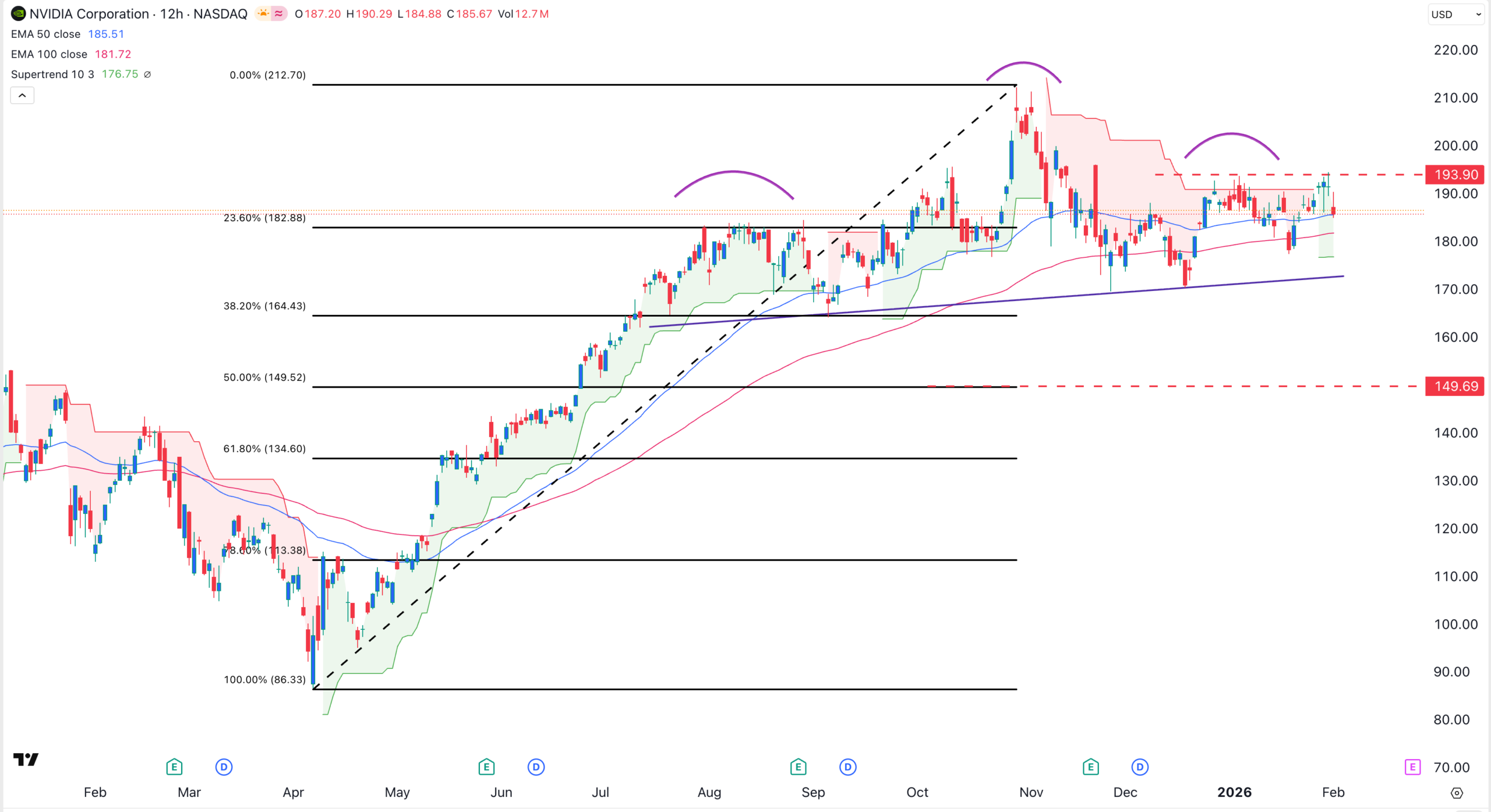
Key Insights NVIDIA stock started the week in the red. It crashed by over 2%. Meanwhile, the S&P 500, Dow Jones, and Nasdaq 100 moved close to their all-time highs
Share
Themarketperiodical2026/02/04 11:27
Ondo Finance Launches USDY Yieldcoin on Stellar, Bringing Tokenized U.S. Treasuries to Users

Ondo Finance Launches USDY Yieldcoin on Stellar, Bringing Tokenized U.S. Treasuries to Users

Ondo Finance, a U.S.-based digital asset firm specializing in bringing traditional financial products on-chain through tokenization, is expanding its yieldcoin USDY to the Stellar network. This lates update marks a step forward in merging tokenized real-world assets with a global payments infrastructure, unlocking new opportunities for users worldwide. The announcement was made at the Stellar Meridian event in Copacabana, Rio de Janeiro, on September 17. USDY Joins the Stellar Ecosystem Ondo Finance, a recognized leader in tokenized real-world assets, announced the deployment of United States Dollar Yield (USDY) on Stellar, the payments-focused blockchain known for speed and low transaction costs. USDY is the most widely available “yieldcoin,” offering investors access to onchain assets backed by U.S. Treasuries. This launch allows Stellar’s global user base to tap into permissionless, yield-bearing assets tied to one of the safest financial instruments in the world. It also aligns with Stellar’s mission of driving fast, affordable cross-border payments. Combining Yield with Payments Infrastructure “Stablecoins unlocked global access to the U.S. dollar. With USDY, we’re taking the next step by bringing U.S. Treasuries onchain in a form that combines stability, liquidity, and yield,” said Ian De Bode, Chief Strategy Officer at Ondo Finance. “Fast, affordable cross-border payments are at the center of what Stellar was designed to do. The global reach of the Stellar ecosystem combined with a yield-bearing asset like USDY levels up what is possible onchain, allowing wallets and businesses to offer yield opportunities to their users,” said Denelle Dixon, CEO of the Stellar Development Foundation. Ondo claims by pairing USDY with Stellar’s infrastructure, new possibilities open up in treasury management, collateralization, and everyday financial applications. Unlocking Institutional and Retail Use Cases USDY currently manages over $650 million in total value locked (TVL) across nine blockchains and offers a 5.3% APY. By launching on Stellar, Ondo Finance extends these benefits to global retail and institutional users. The firm explains balances on Stellar can now become productive, supporting use cases such as onchain savings, institutional treasury strategies, cost-efficient collateral for DeFi protocols, and remittance flows that carry yield rather than remaining static. A Milestone for Tokenized Treasuries With the integration of USDY, Stellar users gain more than just access to stable-value assets—they gain access to institutional-grade yield. For investors outside the U.S., the launch represents a new way to combine the safety of Treasuries with the accessibility of blockchain technology. As tokenization accelerates globally, Ondo Finance’s decision to deploy USDY on Stellar reinforces the narrative that blockchain is not just about speculation, but about reimagining the global financial system through secure, yield-bearing digital assets
Share
CryptoNews2025/09/18 00:46