Hyperunit whale exits Ether position with $250 million loss, highlighting leverage risks after volatile crypto market liquidation wave. The crypto trader known Hyperunit whale exits Ether position with $250 million loss, highlighting leverage risks after volatile crypto market liquidation wave. The crypto trader known

Hyperunit Whale Wiped Out as $250M Ether Bet Collapses on Hyperliquid

3 min read

Hyperunit whale exits Ether position with $250 million loss, highlighting leverage risks after volatile crypto market liquidation wave.

The crypto trader known as the Hyperunit whale has suffered a dramatic reversal after exiting a massive Ether position. The trader, who was associated with Garrett Jin, suffered a total loss of almost $250 million. As a result, the account balance in the Hyperliquid has been reduced to only $53.

Hyperunit Whale’s Rise and Sudden Collapse Shock Markets

The Hyperunit whale became widely known in the period of October 2025 in the scenario of extreme volatility in the crypto market. At the time, the trader allegedly made $200 million by shorting Bitcoin and Ether. Those trades came right before President Trump’s tariff announcement sent the markets on a sharp crash.

Following that success, the trader changed strategy and made an aggressive long position. By the middle of January 2026, Arkham Intelligence data revealed the Ether long position was at more than $730 million. Meanwhile, combined exposure across Ether, Solana and Bitcoin topped $900 million.

Related Reading: BTC Crashes to $78K as Market Hits Fresh Yearly Low | Live Bitcoin News

However, market conditions turned against the leveraged position quickly. In late January 2026, the price of Ether dropped about 10% in 24 hours. As a result, Ether plunged towards $2,400, putting more liquidation pressure on leveraged trading platforms.

As the volatility increased, the long exposure of the Hyperunit whale became increasingly fragile. Data later showed that the trader fully exited the Ether position on Hyperliquid. Therefore, the whole position was closed at a loss of nearly $250 million.

On-chain analysis associates the wallet with Garrett Jin by using ENS domains, such as garrettjin.eth. Jin has admitted that they know the trader behind the wallet activity. However, he earlier claimed the money is for clients and not for himself personally.

The liquidation wiped out months of gains accumulated from the previous successful trades. As a result, the account, which was once very profitable, only contains $53.

Broader Holdings Remain Despite Leveraged Trade Wipeout

Despite that loss on this particular trade, Arkham data shows that the broader entity remains quite well endowed in its wider investments. According to the dashboard, about $2.7 billion worth of cryptocurrency is still held in other wallets.

Analysts say that leveraged positions increase the gain but also the losses during volatile conditions. Consequently, sharp price movements can easily flood out even experienced traders. This event highlights the risks of concentrated exposure in the case of sudden market downturn.

The Hyperunit whale episode has brought discussion about leverage management back into the spotlight within the crypto markets. Similar wipeouts have occurred in previous liquidation cascades.

Hyperliquid, like other derivatives platforms, saw an increase in liquidation activity during the downturn. As the price of Ether declined, margin requirements were quickly tightened.

Market sentiment is cautious after the incident. Traders are keenly observing the liquidity conditions and funding rates in major assets. Meanwhile, volatility expectations have been high due to continued macroeconomic uncertainty.

The collapse also underscores the speed with which fortunes can turn in digital asset markets. Earlier success did not ensure later losses under changing circumstances. As a result, the episode becomes a cautionary example for the use of aggressive trading strategies.

Ultimately, the Hyperunit whale wipeout underscores the risks inherent in high-leverage crypto trading environments.

The post Hyperunit Whale Wiped Out as $250M Ether Bet Collapses on Hyperliquid appeared first on Live Bitcoin News.

Disclaimer: The articles reposted on this site are sourced from public platforms and are provided for informational purposes only. They do not necessarily reflect the views of MEXC. All rights remain with the original authors. If you believe any content infringes on third-party rights, please contact service@support.mexc.com for removal. MEXC makes no guarantees regarding the accuracy, completeness, or timeliness of the content and is not responsible for any actions taken based on the information provided. The content does not constitute financial, legal, or other professional advice, nor should it be considered a recommendation or endorsement by MEXC.

You May Also Like

Three dormant wallets, suspected to belong to the same entity, purchased 5,970 ETH eight hours ago.
Three dormant wallets, suspected to belong to the same entity, purchased 5,970 ETH eight hours ago.

PANews reported on February 4 that, according to Lookonchain monitoring, three wallets that had been dormant for four years (likely controlled by the same entity
Share
PANews2026/02/04 11:36
NVIDIA Stock Price Analysis as OpenAI Issues Concerns About its Chips

NVIDIA Stock Price Analysis as OpenAI Issues Concerns About its Chips

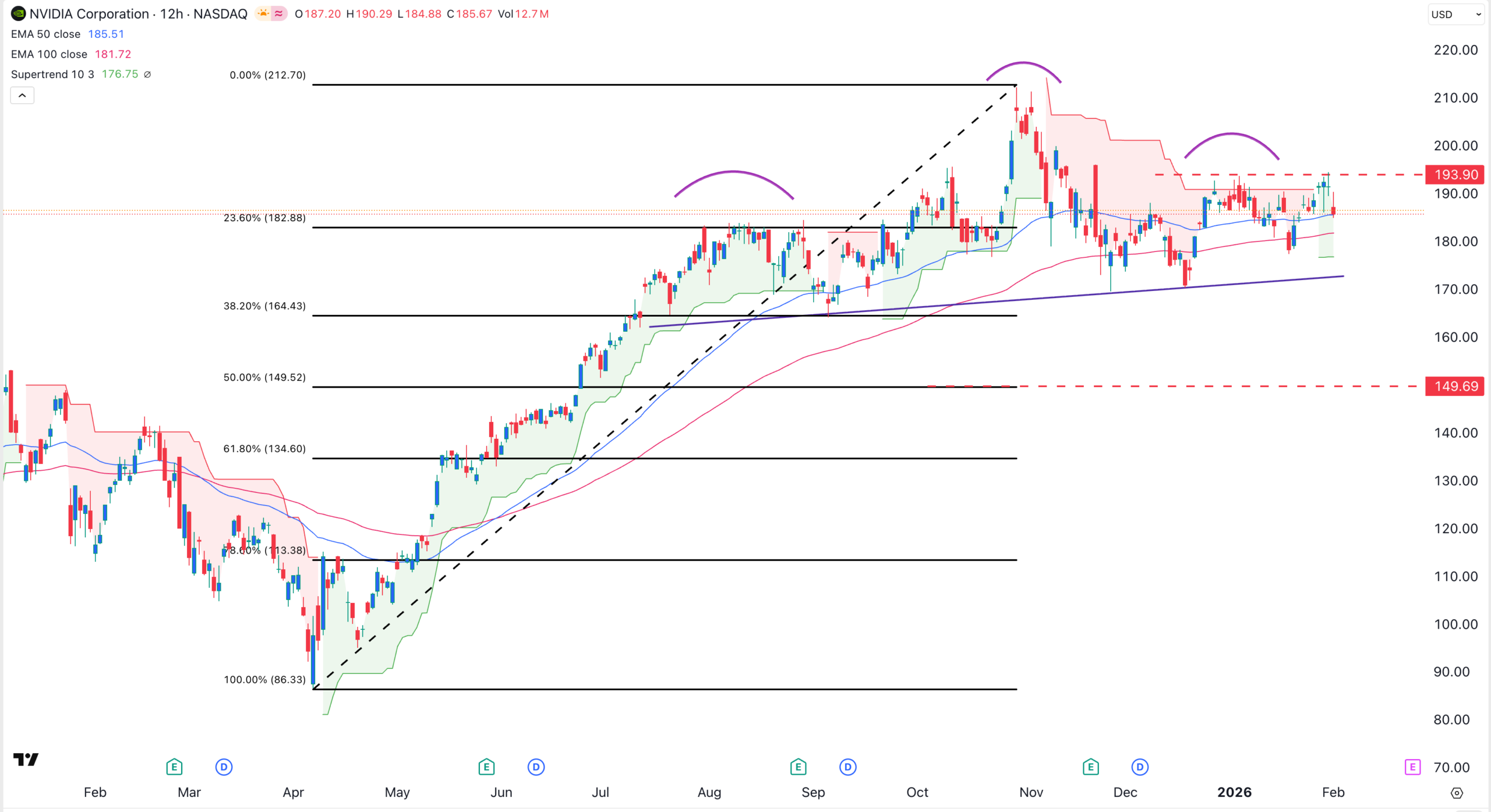
Key Insights NVIDIA stock started the week in the red. It crashed by over 2%. Meanwhile, the S&P 500, Dow Jones, and Nasdaq 100 moved close to their all-time highs
Share
Themarketperiodical2026/02/04 11:27
Ondo Finance Launches USDY Yieldcoin on Stellar, Bringing Tokenized U.S. Treasuries to Users

Ondo Finance Launches USDY Yieldcoin on Stellar, Bringing Tokenized U.S. Treasuries to Users

Ondo Finance, a U.S.-based digital asset firm specializing in bringing traditional financial products on-chain through tokenization, is expanding its yieldcoin USDY to the Stellar network. This lates update marks a step forward in merging tokenized real-world assets with a global payments infrastructure, unlocking new opportunities for users worldwide. The announcement was made at the Stellar Meridian event in Copacabana, Rio de Janeiro, on September 17. USDY Joins the Stellar Ecosystem Ondo Finance, a recognized leader in tokenized real-world assets, announced the deployment of United States Dollar Yield (USDY) on Stellar, the payments-focused blockchain known for speed and low transaction costs. USDY is the most widely available “yieldcoin,” offering investors access to onchain assets backed by U.S. Treasuries. This launch allows Stellar’s global user base to tap into permissionless, yield-bearing assets tied to one of the safest financial instruments in the world. It also aligns with Stellar’s mission of driving fast, affordable cross-border payments. Combining Yield with Payments Infrastructure “Stablecoins unlocked global access to the U.S. dollar. With USDY, we’re taking the next step by bringing U.S. Treasuries onchain in a form that combines stability, liquidity, and yield,” said Ian De Bode, Chief Strategy Officer at Ondo Finance. “Fast, affordable cross-border payments are at the center of what Stellar was designed to do. The global reach of the Stellar ecosystem combined with a yield-bearing asset like USDY levels up what is possible onchain, allowing wallets and businesses to offer yield opportunities to their users,” said Denelle Dixon, CEO of the Stellar Development Foundation. Ondo claims by pairing USDY with Stellar’s infrastructure, new possibilities open up in treasury management, collateralization, and everyday financial applications. Unlocking Institutional and Retail Use Cases USDY currently manages over $650 million in total value locked (TVL) across nine blockchains and offers a 5.3% APY. By launching on Stellar, Ondo Finance extends these benefits to global retail and institutional users. The firm explains balances on Stellar can now become productive, supporting use cases such as onchain savings, institutional treasury strategies, cost-efficient collateral for DeFi protocols, and remittance flows that carry yield rather than remaining static. A Milestone for Tokenized Treasuries With the integration of USDY, Stellar users gain more than just access to stable-value assets—they gain access to institutional-grade yield. For investors outside the U.S., the launch represents a new way to combine the safety of Treasuries with the accessibility of blockchain technology. As tokenization accelerates globally, Ondo Finance’s decision to deploy USDY on Stellar reinforces the narrative that blockchain is not just about speculation, but about reimagining the global financial system through secure, yield-bearing digital assets
Share
CryptoNews2025/09/18 00:46
