The post SEC Warning Puts Tokenized Securities and Alpaca Under the Microscope appeared on BitcoinEthereumNews.com. Key Insights Tokenized securities remain subjectThe post SEC Warning Puts Tokenized Securities and Alpaca Under the Microscope appeared on BitcoinEthereumNews.com. Key Insights Tokenized securities remain subject

SEC Warning Puts Tokenized Securities and Alpaca Under the Microscope

4 min read

Key Insights

  • Tokenized securities remain subject to US securities laws, with the SEC making clear that blockchain use does not change legal ownership or compliance duties.
  • Most tokenized stock products rely on third-party structures, where investors may not hold direct ownership and instead depend on intermediaries.
  • Alpaca’s central role highlights concentration risk, showing how much on-chain stock trading still depends on a single off-chain broker.

Tokenized securities are often described as a cleaner, faster way to trade real-world assets on the blockchain. But new guidance from the US Securities and Exchange Commission brings the discussion back to basics.

The message is simple. Putting a security on a blockchain does not change what it is. The rules still apply, and the structure behind many tokenized stock products now looks more exposed than many assumed.

SEC Is Saying This About Tokenized Securities

In its joint staff statement, the SEC made one point clear. A tokenized security is still a security. Using blockchain technology does not change ownership rights, disclosure duties, or investor protections.

The SEC described tokenized securities as a form of recordkeeping. In simple terms, the blockchain can be used to track ownership, but it does not replace the legal structure behind a stock or bond.

If a product represents a security, it must follow securities law, regardless of how it is issued or traded.

SEC’s Statement On Tokenized Securities | Source: Official Website

This framing pushes back against the idea that on-chain assets sit outside traditional rules. The SEC is saying that technology changes the format, not the obligation.

Two Models With Very Different Levels of Risk

The SEC also split tokenized securities into two clear groups, highlighted by the earlier discussion.

The first group is issuer-sponsored tokenization. In this model, the company or issuer is directly involved. Ownership records connect to the issuer’s official books, and investors hold rights similar to traditional shareholders. These products follow established rules around disclosures and reporting.

The second group is third-party tokenization. Here, a separate platform creates tokens that track the value of a stock without being issued by the company itself. In many cases, holders may not own the actual shares. Instead, they rely on contracts set up by the platform.

The SEC warned that these third-party products can carry additional risks. Some may be treated like security-based swaps rather than direct ownership. That changes how they are regulated and what protections investors actually receive.

Most Tokenized Securities Sit at Risk Today

Most tokenized stock products currently fall into the second category. Platforms such as Ondo

Finance, Kraken’s xStocks, and Dinari do not issue shares themselves. Instead, they rely on third-party structures that mirror stock prices while holding shares through traditional brokers.

This design allowed tokenized stocks to launch quickly, but it also places distance between token holders and direct ownership. Investors depend on the platform, the broker, and the agreements connecting them.

The SEC’s statement puts attention on that gap. It does not shut these products down, but it makes clear they do not receive different treatment simply because they operate on a blockchain.

Alpaca Sits at the Center of the Market

Behind many tokenized stock platforms sits Alpaca, a regulated broker that executes trades and holds the underlying shares. Because few brokers are willing to sell shares to tokenization firms, Alpaca has become the main route for execution.

As a result, a large part of the tokenized securities market depends on one off-chain intermediary. If access tightens or relationships change, several platforms could feel the impact at the same time.

Alpaca Is Now The Talk Of The Town | Source: X

The SEC did not single out Alpaca by name. But its statement makes this reliance easier to see. Tokenized securities may look decentralized on the surface, but much of the risk still sits inside traditional market plumbing.

The SEC’s position does not end with tokenized securities. It changes expectations.

Issuer-backed models now appear clearer from a legal standpoint, but they are slower and harder to build. Third-party models can still operate, but investors need to understand that they come with extra layers of structure and dependency (risks).

For builders, progress likely means closer coordination with issuers or regulators. For investors, the takeaway is clear.

Tokenized securities are not separate from traditional markets. They carry familiar risks, along with new ones tied to custody, contracts, and intermediaries.

Source: https://www.thecoinrepublic.com/2026/01/29/sec-warning-puts-tokenized-securities-and-alpaca-under-the-microscope/

Disclaimer: The articles reposted on this site are sourced from public platforms and are provided for informational purposes only. They do not necessarily reflect the views of MEXC. All rights remain with the original authors. If you believe any content infringes on third-party rights, please contact service@support.mexc.com for removal. MEXC makes no guarantees regarding the accuracy, completeness, or timeliness of the content and is not responsible for any actions taken based on the information provided. The content does not constitute financial, legal, or other professional advice, nor should it be considered a recommendation or endorsement by MEXC.

You May Also Like

Three dormant wallets, suspected to belong to the same entity, purchased 5,970 ETH eight hours ago.

Three dormant wallets, suspected to belong to the same entity, purchased 5,970 ETH eight hours ago.

PANews reported on February 4 that, according to Lookonchain monitoring, three wallets that had been dormant for four years (likely controlled by the same entity
Share
PANews2026/02/04 11:36
NVIDIA Stock Price Analysis as OpenAI Issues Concerns About its Chips

NVIDIA Stock Price Analysis as OpenAI Issues Concerns About its Chips

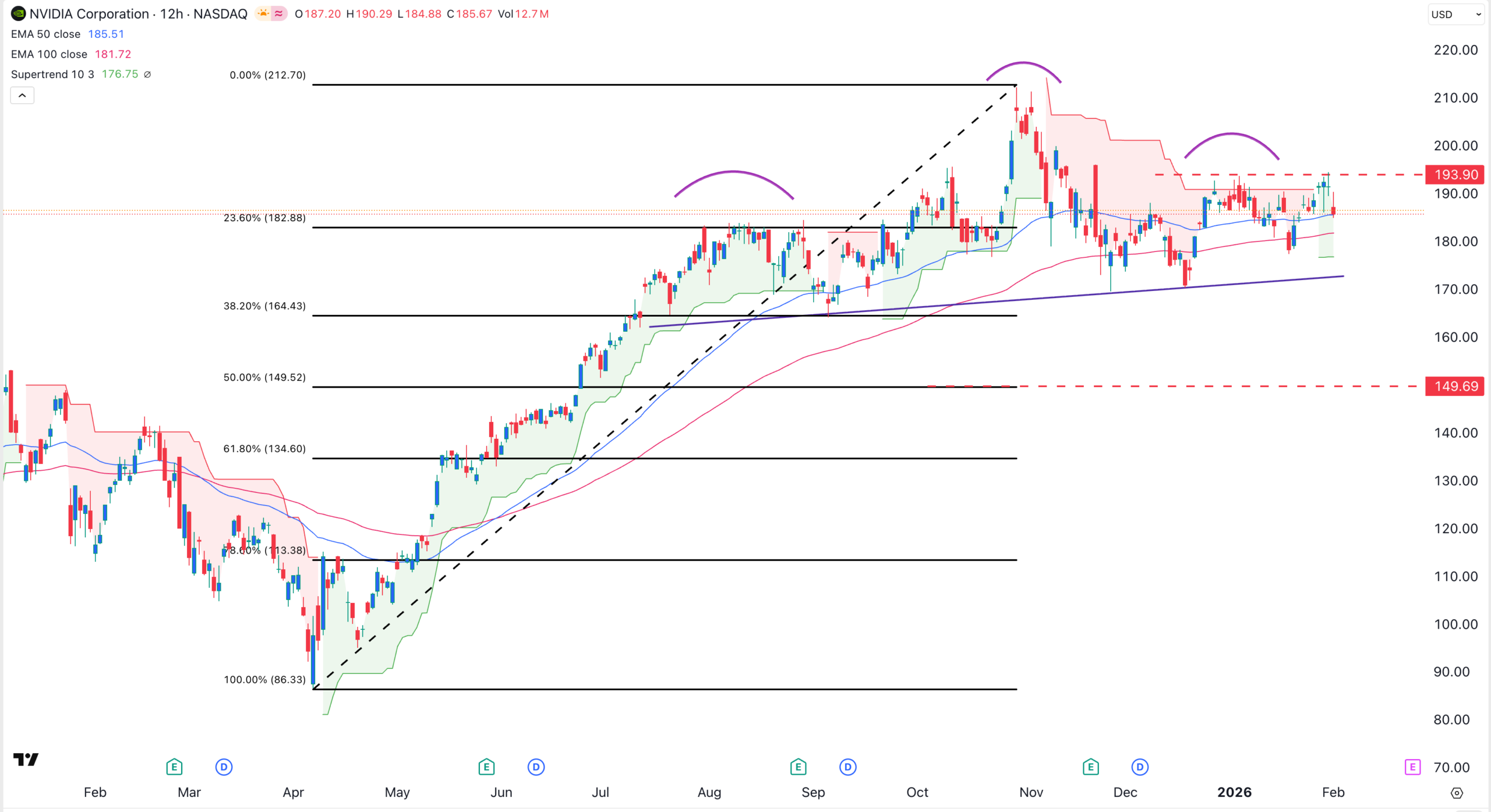
Key Insights NVIDIA stock started the week in the red. It crashed by over 2%. Meanwhile, the S&P 500, Dow Jones, and Nasdaq 100 moved close to their all-time highs
Share
Themarketperiodical2026/02/04 11:27
Ondo Finance Launches USDY Yieldcoin on Stellar, Bringing Tokenized U.S. Treasuries to Users

Ondo Finance Launches USDY Yieldcoin on Stellar, Bringing Tokenized U.S. Treasuries to Users

Ondo Finance, a U.S.-based digital asset firm specializing in bringing traditional financial products on-chain through tokenization, is expanding its yieldcoin USDY to the Stellar network. This lates update marks a step forward in merging tokenized real-world assets with a global payments infrastructure, unlocking new opportunities for users worldwide. The announcement was made at the Stellar Meridian event in Copacabana, Rio de Janeiro, on September 17. USDY Joins the Stellar Ecosystem Ondo Finance, a recognized leader in tokenized real-world assets, announced the deployment of United States Dollar Yield (USDY) on Stellar, the payments-focused blockchain known for speed and low transaction costs. USDY is the most widely available “yieldcoin,” offering investors access to onchain assets backed by U.S. Treasuries. This launch allows Stellar’s global user base to tap into permissionless, yield-bearing assets tied to one of the safest financial instruments in the world. It also aligns with Stellar’s mission of driving fast, affordable cross-border payments. Combining Yield with Payments Infrastructure “Stablecoins unlocked global access to the U.S. dollar. With USDY, we’re taking the next step by bringing U.S. Treasuries onchain in a form that combines stability, liquidity, and yield,” said Ian De Bode, Chief Strategy Officer at Ondo Finance. “Fast, affordable cross-border payments are at the center of what Stellar was designed to do. The global reach of the Stellar ecosystem combined with a yield-bearing asset like USDY levels up what is possible onchain, allowing wallets and businesses to offer yield opportunities to their users,” said Denelle Dixon, CEO of the Stellar Development Foundation. Ondo claims by pairing USDY with Stellar’s infrastructure, new possibilities open up in treasury management, collateralization, and everyday financial applications. Unlocking Institutional and Retail Use Cases USDY currently manages over $650 million in total value locked (TVL) across nine blockchains and offers a 5.3% APY. By launching on Stellar, Ondo Finance extends these benefits to global retail and institutional users. The firm explains balances on Stellar can now become productive, supporting use cases such as onchain savings, institutional treasury strategies, cost-efficient collateral for DeFi protocols, and remittance flows that carry yield rather than remaining static. A Milestone for Tokenized Treasuries With the integration of USDY, Stellar users gain more than just access to stable-value assets—they gain access to institutional-grade yield. For investors outside the U.S., the launch represents a new way to combine the safety of Treasuries with the accessibility of blockchain technology. As tokenization accelerates globally, Ondo Finance’s decision to deploy USDY on Stellar reinforces the narrative that blockchain is not just about speculation, but about reimagining the global financial system through secure, yield-bearing digital assets
Share
CryptoNews2025/09/18 00:46