Urmila Shukla lives in Bagrahiya village of Shravasti district, where her workday begins early and often stretches late into the night.Urmila Shukla lives in Bagrahiya village of Shravasti district, where her workday begins early and often stretches late into the night.

How consistent stitching built a small business in Shravasti district

3 min read

Urmila Shukla lives in Bagruiya village of Shravasti district, where her workday begins early and often stretches late into the night. Today, she runs a small tailoring shop called Kirti Silai Centre, but the path to a stable storefront was gradual, shaped by years of learning, domestic responsibilities, and cautious decisions taken at different stages of her life.

Shukla learned stitching as a teenager while she was still studying. Training outside her village, before marriage brought her to Shravasti. Formal education was halted after the shift, but the skill stayed with her. For years, she worked from home, using a single machine to stitch clothes for neighbours and acquaintances who came with small, routine requests. At the time, the work was modest and fitted around household duties, with no clear plan to turn it into a business.

Over time, word spread beyond the village. Clothes began arriving from nearby localities and the volume of work grew enough for her to consider a separate space. The decision to move out of the house was not immediate. Her husband was away working and the family weighed the risk of rent against uncertain income. Eventually, a small shop was rented, and she began by offering stitching services, enough to cover basic expenses and keep the space running.

Turning skill into a livelihood

The shop became a turning point. As more customers flocked in from five or six neighbouring villages, Shukla found that a dedicated workspace allowed her to manage larger orders and tighter timelines. She stitches women’s garments, including salwar suits, blouses, petticoats, and trousers, handling the work herself and setting her own hours based on demand. Trust, she says, became the defining factor. Customers returned because orders were completed on time, often without regard to her own schedule.

Early doubters suggested the shop would not last. The first few months were financially tight, with rent payments a constant worry. Still, she persevered, testing designs on her own clothes before accepting unfamiliar patterns and gradually built confidence with each completed order. “I kept thinking that if I don’t stop now, the work will slowly find its way,” she said.

Support came later through the Mukhyamantri Yuva Udyami Vikas Abhiyan (CM YUVA) Yojana, which helped her improve the shop’s setup and add basic inventory alongside tailoring. Under the CM Yuva Yojana, the assistance was used to strengthen what already existed rather than start afresh, enabling her to better respond to customer needs and manage the growing workload.

Stability built stitch by stitch

Four years into running the shop, Shukla’s days are long but predictable. She opens early, often works past midnight during peak periods, and handles all orders herself. Customers now come from farther away, including migrants living nearby, who rely on her for dependable work. The shop has become a well-established stop in the area, not because it expanded quickly, but because it remained consistent.

Looking back, the transition from a single machine at home to a functioning shop feels less like a leap and more like a series of small, steady steps. The early uncertainty, the pressure of rent, and the careful use of support have settled into a routine that sustains both the business and the household, offering a sense of continuity rooted in skill and persistence, rather than sudden change.

Disclaimer: The articles reposted on this site are sourced from public platforms and are provided for informational purposes only. They do not necessarily reflect the views of MEXC. All rights remain with the original authors. If you believe any content infringes on third-party rights, please contact service@support.mexc.com for removal. MEXC makes no guarantees regarding the accuracy, completeness, or timeliness of the content and is not responsible for any actions taken based on the information provided. The content does not constitute financial, legal, or other professional advice, nor should it be considered a recommendation or endorsement by MEXC.
Tags:

You May Also Like

Three dormant wallets, suspected to belong to the same entity, purchased 5,970 ETH eight hours ago.

Three dormant wallets, suspected to belong to the same entity, purchased 5,970 ETH eight hours ago.

PANews reported on February 4 that, according to Lookonchain monitoring, three wallets that had been dormant for four years (likely controlled by the same entity
Share
PANews2026/02/04 11:36
BlackRock Increases U.S. Stock Exposure Amid AI Surge
BlackRock Increases U.S. Stock Exposure Amid AI Surge

The post BlackRock Increases U.S. Stock Exposure Amid AI Surge appeared on BitcoinEthereumNews.com. Key Points: BlackRock significantly increased U.S. stock exposure. AI sector driven gains boost S&P 500 to historic highs. Shift may set a precedent for other major asset managers. BlackRock, the largest asset manager, significantly increased U.S. stock and AI sector exposure, adjusting its $185 billion investment portfolios, according to a recent investment outlook report.. This strategic shift signals strong confidence in U.S. market growth, driven by AI and anticipated Federal Reserve moves, influencing significant fund flows into BlackRock’s ETFs. The reallocation increases U.S. stocks by 2% while reducing holdings in international developed markets. BlackRock’s move reflects confidence in the U.S. stock market’s trajectory, driven by robust earnings and the anticipation of Federal Reserve rate cuts. As a result, billions of dollars have flowed into BlackRock’s ETFs following the portfolio adjustment. “Our increased allocation to U.S. stocks, particularly in the AI sector, is a testament to our confidence in the growth potential of these technologies.” — Larry Fink, CEO, BlackRock The financial markets have responded favorably to this adjustment. The S&P 500 Index recently reached a historic high this year, supported by AI-driven investment enthusiasm. BlackRock’s decision aligns with widespread market speculation on the Federal Reserve’s next moves, further amplifying investor interest and confidence. AI Surge Propels S&P 500 to Historic Highs At no other time in history has the S&P 500 seen such dramatic gains driven by a single sector as the recent surge spurred by AI investments in 2023. Experts suggest that the strategic increase in U.S. stock exposure by BlackRock may set a precedent for other major asset managers. Historically, shifts of this magnitude have influenced broader market behaviors as others follow suit. Market analysts point to the favorable economic environment and technological advancements that are propelling the AI sector’s momentum. The continued growth of AI technologies is…
Share
BitcoinEthereumNews2025/09/18 02:49
NVIDIA Stock Price Analysis as OpenAI Issues Concerns About its Chips

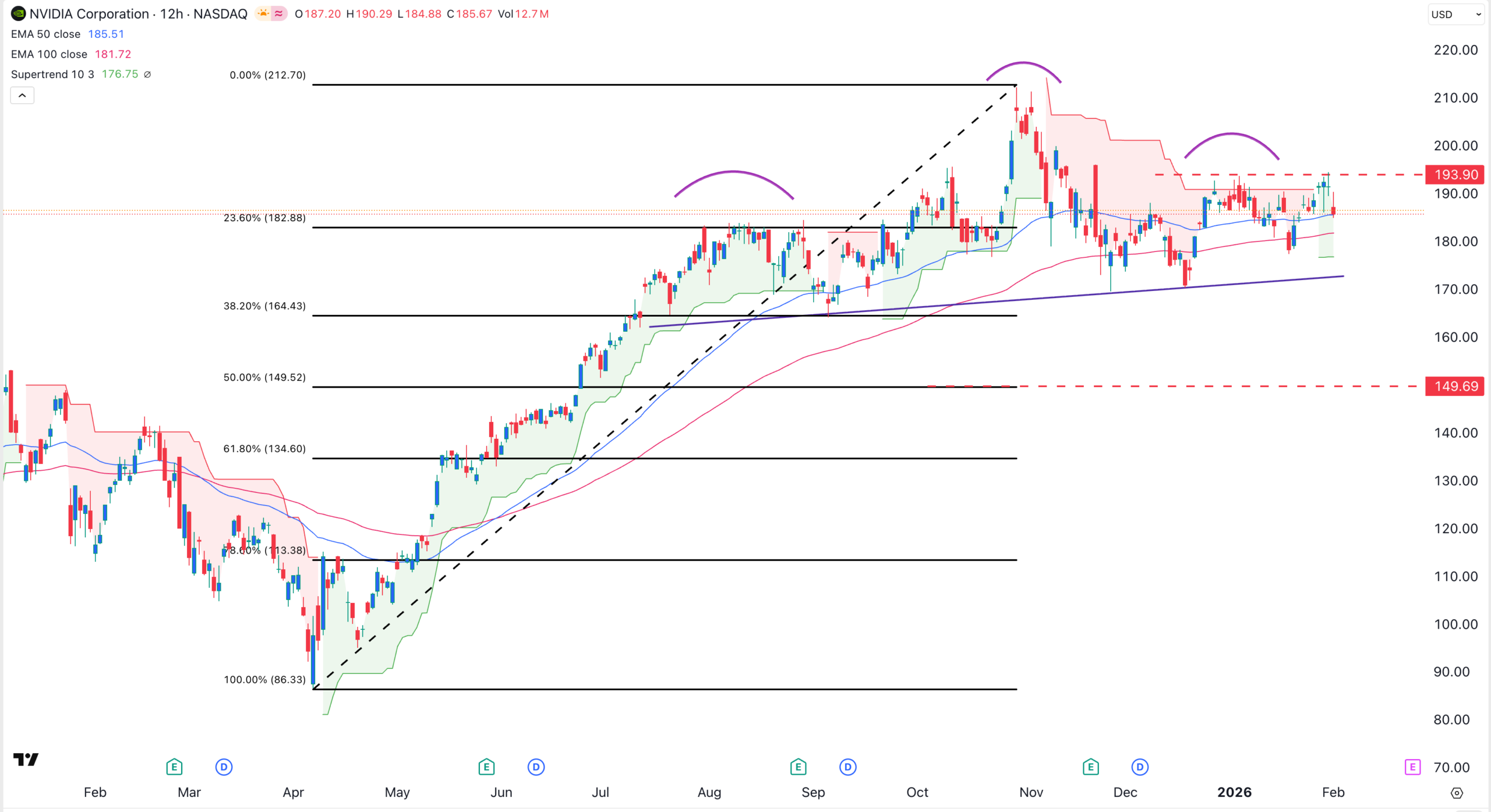
NVIDIA Stock Price Analysis as OpenAI Issues Concerns About its Chips

Key Insights NVIDIA stock started the week in the red. It crashed by over 2%. Meanwhile, the S&P 500, Dow Jones, and Nasdaq 100 moved close to their all-time highs
Share
Themarketperiodical2026/02/04 11:27
