

Like Australia, should Nigeria ban social media for under-16s? Experts share opinion
Recently, Australia implemented a law banning under-16s (minors) from accessing social media platforms such as Instagram, TikTok, Facebook and YouTube. This means that, effective from December 10, children in this age group can no longer have social media accounts.
For Australia, the move is part of the process to protect youths’ mental health from cyberbullying, online attacks from strangers, and harmful content. The actions come amid the recent tagging of social media platforms as a key driver of peer pressure and anxiety, and also a medium for scammers who mostly target minors with their online attacks.
While social media has become an essential tool to access information and forms a major part of global connections, negatives abound from its usage. Issues with low productivity associated with addiction, the spread of misinformation, cyberbullying, and privacy risks have raised questions about its usage by minors.
Amid the implementation, it expectedly generated mixed reactions. While social media platforms are against the ban, parents and guardians see it as a significant measure to control what their child does on social media platforms.
In fact, countries including Denmark, Malaysia, and some US states are already considering implementing something similar in 2026.

And, Nigeria is not exempt. Nigeria has a high record of young population, with approximately 105 million children and adolescents (aged 0-17 years) and around 95 million young people (aged 15-34 years.
Like other countries, underage individuals (minors) in Nigeria are active on social media with a primary focus on socialisation, information gathering, and entertainment, which exposes them to both positive and negative consequences. In addition, the usage has recently been abused, receiving less control from parents and exposure to online attacks.
To address these concerns, this article examines whether the Nigerian government should also implement social media restrictions for underage individuals. In addition, experts also submitted their views on this discussion, as well as its associated implications.
Should Nigeria restrict under-16s from social media?
In a conversation with Tunde Ogunyale, a Peace Advocate and Founder of Peacepace Initiative, he praised Australia for championing the implementation of an age restriction law on social media to protect them from harmful content and exposure to cyberbullying.
While he tagged it as ‘acceptable’ and ‘reasonable,’ he noted that the law helps parents to prevent their minors from accessing sensitive materials.
The expert believed that access to social media has made many young people emotionally unstable with access to illicit content, and sees it as a policy every government should adopt.
“While the Australian government has just placed an age restriction, the first in the world, on the use of social media, anyone below 16 or anyone under 16 generally in Australia today cannot legally hold a social media account. I personally believe that this is good, and every government in the world, if possible, should follow this particular precedent,” he said.
 Tunde Ogunyale, Founder of Peacepace Initiative
Although no data shows how many Nigerian underage population has suffered mentally or emotionally from illicit content and exposure to social media. However, Tunde Ogunyale believes that there are several underage Nigerians currently suffering from cyberbullying who, in turn, have no emotional maturity and mental capacity to tackle such challenges.
“Imagine how many of them will have sent their nude photos to people across the world. That’s because they don’t know how to really relate online yet and don’t have the necessary digital scale social skills to interact online. These are the reasons I believe that governments should be able to place age restrictions,” he said.
For him, the restriction is not a life ban; it’s a learning process for minors to learn skills that help them cope with online usage.
Amid the debate of the restriction preventing minors from accessing online information, Tunde Ogunyale said any vital information necessary for their usage can be learnt in the classroom and at home. He pointed out that underage people don’t necessarily need to have social media accounts before they can learn ethical ways of conduct.
Meanwhile, the implementation phase can be complicated.
Currently, Australia is facing issues with implementation, where some minors are reportedly using VPNs to bypass the law and create social media accounts. Tunde Ogunyale also noted that Nigeria will have issues with implementation, as usual.
“I believe the Nigerian government has the capacity to implement the law. We have many laws in Nigeria. So, like every other law, like every other legislation, the Nigerian government has the capacity to make the law. However, where it gets dicey is the implementation phase. It’s the same problem we’ve been having before now in Nigeria,” he said.
But he claimed that a coordinated effort by the government and parents can help see through the implementation phase. If the majority of the general public is in support, Tunde noted that the implementation process will be less rigid.

We shouldn’t lock them out
While there are no current laws in Nigeria restricting underages from social media usage, part of the Nigerian Data Protection Act of 2020 makes provision that captures online safety and data protection. Some of these tend to curtail the kind of information minors can access online.
However, from a legal perspective, Agbo Obinnaya, CEO and Co-founder of Case Radar, explained that instead of implementing a law that restricts social media access, Nigeria should work on laws that protect minors from accessing illicit online platforms.
“If we are to enact laws that will ban minors from accessing social media, we have to look at it from an angle that ensures that we do not block them out from important information that is supposed to aid their growth,” he said.
He added that “what we should be trying to avoid is giving them access to talk with strangers that can manipulate them into getting into unethical activities and preventing them from accessing or exposing them to certain information that shouldn’t be within their reach.”
 Co-founder and CEO of Case Radar, Agbo Obinnaya
To Agbo, Nigeria has enough laws that are yet to be fully implemented. What should be done is not to introduce another law but to implement measures that prevent access to negative content online.
On another thought, the legal practitioner explained that the Nigerian government doesn’t necessarily need to be involved in the plan. According to him, parents should be able to handle what their minors access with their phones and control their usage.
“The government shouldn’t be handling everything. The family, which is like the foundation, should be able to guide its parents. Some families buy gadgets for their children but then introduce restrictive measures where they only access certain apps and certain programs on the device,” he added.
Moves to restrict minors on social media
Recent claims clamouring for the dangers of social media exposure to minors have seen increasing restrictions and a push to streamline accessibility.
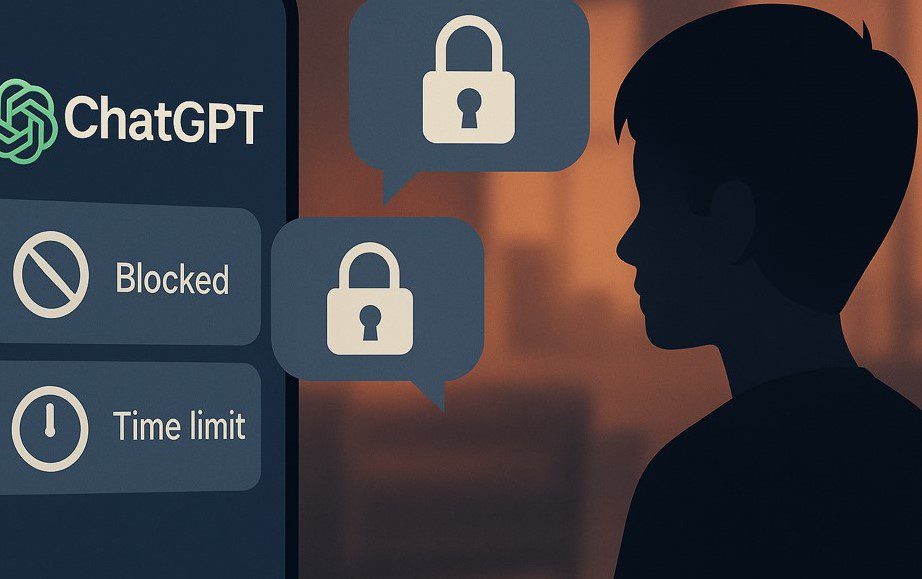
For instance, OpenAI has introduced parental controls on ChatGPT after concerns about its abusive use by teenagers. This comes after the demise of 16-year-old Adam Raine, who was allegedly guided by the chatbot to commit suicide. The feature allows parents to monitor their kids’ chat history, manage how the chatbot responds and get notified upon detection of red flags during use.
See how to activate it here.
Meta Platforms (Instagram, Facebook, Meta AI) uses content filters and parental controls to limit what users under age 18 can see. The company has also changed how its AI chatbot responds to children.
Also, Meta launched special Teen Accounts for users of Facebook and Messenger. The feature integrates closer privacy controls, parental limits, and age verification with artificial intelligence. The accounts limit who can message them, see their stories, or tag/mention them by reducing exposure to unwanted material contact.
As the measures are necessary to control social media usage by minors, more restrictions are expected to follow in the coming months.
The post Like Australia, should Nigeria ban social media for under-16s? Experts share opinion first appeared on Technext.
You May Also Like

The Critical $1 Milestone And Future Trajectory

Sui Network confirms upcoming launch of private transactions on $SUI
