Small DC electric motors drive innovation in modern technology, powering everything from smartphones to robotic arms. These compact powerhouses offer safe low-voltageSmall DC electric motors drive innovation in modern technology, powering everything from smartphones to robotic arms. These compact powerhouses offer safe low-voltage

What Are Small DC Electric Motors? A Complete Guide to Types and Uses

Small DC electric motors drive innovation in modern technology, powering everything from smartphones to robotic arms. These compact powerhouses offer safe low-voltage operation and precise control for space-constrained applications. This guide explores the various types, key specifications, and how to select the right motor for your specific engineering needs.

Types of Small DC Electric Motors 

1.Brushed DC Motors

The brushed DC motor is the most traditional and widely used type due to its simplicity and cost-effectiveness. It relies on mechanical commutation, where carbon brushes conduct current to a spinning commutator. 

Inside this category, the permanent magnet DC (PMDC) motor is common for “small” applications. The key to their compact size lies in replacing bulky copper field windings with high-strength permanent magnets on the stator. 

This design choice significantly reduces the motor’s diameter and weight while maintaining efficiency. While they are affordable, the friction from the brushes limits their lifespan, making them ideal for intermittent-duty applications such as power tools and toys.

12V small AMT motor

2.Brushless DC Motors (BLDC)

For applications demanding longevity and high efficiency, brushless DC motors are the superior choice. As the name implies, they eliminate physical brushes, using electronic commutation instead. 

By removing the mechanical commutator and brush assembly—which consume valuable axial space in brushed motors—BLDC motors can be designed with a much shorter body length. 

This high power density allows for smaller frame sizes that deliver equivalent or greater power than their brushed counterparts. They are indispensable in critical equipment like drones and medical pumps, where reliability and minimal weight are non-negotiable.

3.Geared DC Motors

Raw motor speed can be too high for direct application. This is where the small high-torque electric motor comes into play. A geared DC motor combines a standard motor with an integrated gearbox. 

To maintain the “small” characteristic, these motors often utilize planetary gearboxes. Unlike offset spur gears, planetary gears are arranged coaxially, ensuring the gearhead diameter remains the same as the motor body. 

This allows engineers to achieve massive torque multiplication within a slender, cylindrical profile, perfect for tight spaces like automatic door locks and robotic joints.

12V car tailgate lift gear motor

4.Coreless DC Motors

Coreless motors represent significant miniaturization. They are often a specialized variant of the brushed motor that completely removes the heavy iron core from the rotor, utilizing a self-supporting, basket-shaped winding instead. 

Eliminating the iron core drastically reduces the motor’s mass and volume, allowing for ultra-thin diameters (can be under 6 mm). This architecture not only reduces inertia for fast acceleration but also enables the motor to fit into extremely confined spaces, such as inside portable insulin pumps or handheld surgical instruments.

Key Specifications about Small DC Motors to Understand

Selecting a motor is not just about size; it requires matching the electrical inputs to the mechanical outputs.

  1. Voltage: This determines the motor’s operating range. Small 12-volt DC electric motors are an industry standard, balancing safety with sufficient power delivery for automotive and industrial automation components.
  2. Speed (RPM): Revolutions per minute indicates how fast the shaft spins at a given voltage with no load.
  3. Torque: Measured in Newton-meters (Nm) or gram-centimeters (g-cm), this is the rotational force the motor can exert. It is the most critical parameter for moving heavy loads.
  4. Current (Amps): This indicates power consumption. Understanding the stall current (max draw) is vital for sizing your power supply and preventing burnout.
  5. Shaft Size: The diameter and shape (D-cut, round, or splined) of the output shaft must mechanically interface perfectly with your gear, pulley, or fan.

Common Applications of Small DC Electric Motors

The versatility of DC motors allows them to power a vast array of sectors:

  • Robotics & Automation: Stepper and geared motors provide the precise positioning required for tasks such as 3D printer extrusion and driving industrial robotic grippers.
  • Automotive: Modern vehicles utilize dozens of motors for auxiliary functions, including windshield wipers, electronic parking brakes, and seat adjusters.
  • Consumer Electronics: From the haptic feedback vibration in game controllers to the high-speed fans in gaming PCs, these motors enhance user experience.
  • Medical Devices: Coreless and BLDC motors drive critical equipment like insulin pumps and surgical tools where failure is not an option.

How to Choose the Right Motor

Finding the perfect motor involves a systematic approach to ensure compatibility with your specific application.

Step 1: Determine the Load

Calculate the torque required to move your load. Are you lifting a weight or spinning a fan? If you need substantial force at low speeds, prioritize a geared motor solution.

Step 2: Define the Speed

How fast does the application need to operate? A dental drill requires high RPMs (often necessitating a coreless or BLDC motor), whereas an automated window blind requires slow, controlled movement.

Step 3: Check Power Source

Match the motor to your available power. If you are designing a portable device powered by a battery pack, small 12-volt DC electric motors or lower voltage variants (3V-6V) are likely your constraints. Ensure your battery can handle the motor’s peak current draw.

Step 4: Size Constraints

Finally, ensure the motor fits within your product’s housing. In miniaturized electronics, every millimeter counts, which may force you to look at flat coin motors or compact coreless designs.

Where to Buy Reliable Small Electric Motors

The role of small DC electric motors is critical, making an experienced partner essential for your product success. A Chinese electric motor manufacturer, Power Motor, stands out in this market. 

Since 2001, this brand has specialized in the R&D and manufacturing of different small electric motors for global OEMs, producing over 30 million motors annually.

Whether you require a small high-torque electric motor for a rugged automotive application or a high-efficiency BLDC motor for a smart home appliance, Power Motor offers a diverse portfolio, including AC/DC, brushless, geared, and stepper motors.

By leveraging advanced manufacturing capabilities backed by certifications like ISO, CE, and IATF 16949:2016, Power Motor helps engineers bridge the gap between concept and reality, delivering reliable motion that powers the world forward! 

Conclusion

Small DC electric motors are essential to modern product design, delivering precise, efficient motion in compact systems across industries. Choosing the right motor directly impacts performance, reliability, and lifespan. 

For engineers and buyers seeking stable quality and proven manufacturing capability, Power Motor offers a comprehensive range of solutions and welcomes inquiries for technical support and long-term collaboration.

Comments
Market Opportunity
Dogechain Logo
Dogechain Price(DC)
$0.00000651
$0.00000651$0.00000651
+2.06%
USD
Dogechain (DC) Live Price Chart
Disclaimer: The articles reposted on this site are sourced from public platforms and are provided for informational purposes only. They do not necessarily reflect the views of MEXC. All rights remain with the original authors. If you believe any content infringes on third-party rights, please contact service@support.mexc.com for removal. MEXC makes no guarantees regarding the accuracy, completeness, or timeliness of the content and is not responsible for any actions taken based on the information provided. The content does not constitute financial, legal, or other professional advice, nor should it be considered a recommendation or endorsement by MEXC.

You May Also Like

Crucial ETH Unstaking Period: Vitalik Buterin’s Unwavering Defense for Network Security

Crucial ETH Unstaking Period: Vitalik Buterin’s Unwavering Defense for Network Security

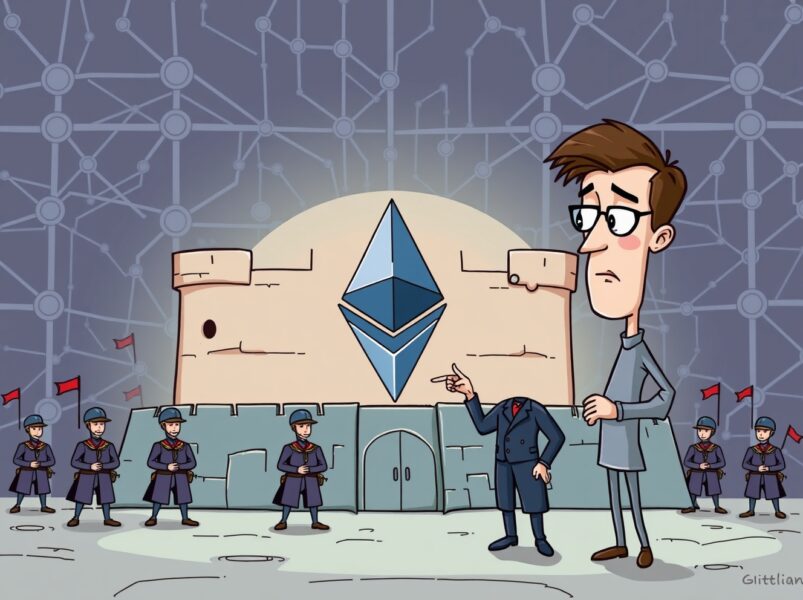
BitcoinWorld Crucial ETH Unstaking Period: Vitalik Buterin’s Unwavering Defense for Network Security Ever wondered why withdrawing your staked Ethereum (ETH) isn’t an instant process? It’s a question that often sparks debate within the crypto community. Ethereum founder Vitalik Buterin recently stepped forward to defend the network’s approximately 45-day ETH unstaking period, asserting its crucial role in safeguarding the network’s integrity. This lengthy waiting time, while sometimes seen as an inconvenience, is a deliberate design choice with profound implications for security. Why is the ETH Unstaking Period a Vital Security Measure? Vitalik Buterin’s defense comes amidst comparisons to other networks, like Solana, which boast significantly shorter unstaking times. He drew a compelling parallel to military operations, explaining that an army cannot function effectively if its soldiers can simply abandon their posts at a moment’s notice. Similarly, a blockchain network requires a stable and committed validator set to maintain its security. The current ETH unstaking period isn’t merely an arbitrary delay. It acts as a critical buffer, providing the network with sufficient time to detect and respond to potential malicious activities. If validators could instantly exit, it would open doors for sophisticated attacks, jeopardizing the entire system. Currently, Ethereum boasts over one million active validators, collectively staking approximately 35.6 million ETH, representing about 30% of the total supply. This massive commitment underpins the network’s robust security model, and the unstaking period helps preserve this stability. Network Security: Ethereum’s Paramount Concern A shorter ETH unstaking period might seem appealing for liquidity, but it introduces significant risks. Imagine a scenario where a large number of validators, potentially colluding, could quickly withdraw their stake after committing a malicious act. Without a substantial delay, the network would have limited time to penalize them or mitigate the damage. This “exit queue” mechanism is designed to prevent sudden validator exodus, which could lead to: Reduced decentralization: A rapid drop in active validators could concentrate power among fewer participants. Increased vulnerability to attacks: A smaller, less stable validator set is easier to compromise. Network instability: Frequent and unpredictable changes in validator numbers can lead to performance issues and consensus failures. Therefore, the extended period is not a bug; it’s a feature. It’s a calculated trade-off between immediate liquidity for stakers and the foundational security of the entire Ethereum ecosystem. Ethereum vs. Solana: Different Approaches to Unstaking When discussing the ETH unstaking period, many point to networks like Solana, which offers a much quicker two-day unstaking process. While this might seem like an advantage for stakers seeking rapid access to their funds, it reflects fundamental differences in network architecture and security philosophies. Solana’s design prioritizes speed and immediate liquidity, often relying on different consensus mechanisms and validator economics to manage security risks. Ethereum, on the other hand, with its proof-of-stake evolution from proof-of-work, has adopted a more cautious approach to ensure its transition and long-term stability are uncompromised. Each network makes design choices based on its unique goals and threat models. Ethereum’s substantial value and its role as a foundational layer for countless dApps necessitate an extremely robust security posture, making the current unstaking duration a deliberate and necessary component. What Does the ETH Unstaking Period Mean for Stakers? For individuals and institutions staking ETH, understanding the ETH unstaking period is crucial for managing expectations and investment strategies. It means that while staking offers attractive rewards, it also comes with a commitment to the network’s long-term health. Here are key considerations for stakers: Liquidity Planning: Stakers should view their staked ETH as a longer-term commitment, not immediately liquid capital. Risk Management: The delay inherently reduces the ability to react quickly to market volatility with staked assets. Network Contribution: By participating, stakers contribute directly to the security and decentralization of Ethereum, reinforcing its value proposition. While the current waiting period may not be “optimal” in every sense, as Buterin acknowledged, simply shortening it without addressing the underlying security implications would be a dangerous gamble for the network’s reliability. In conclusion, Vitalik Buterin’s defense of the lengthy ETH unstaking period underscores a fundamental principle: network security cannot be compromised for the sake of convenience. It is a vital mechanism that protects Ethereum’s integrity, ensuring its stability and trustworthiness as a leading blockchain platform. This deliberate design choice, while requiring patience from stakers, ultimately fortifies the entire ecosystem against potential threats, paving the way for a more secure and reliable decentralized future. Frequently Asked Questions (FAQs) Q1: What is the main reason for Ethereum’s long unstaking period? A1: The primary reason is network security. A lengthy ETH unstaking period prevents malicious actors from quickly withdrawing their stake after an attack, giving the network time to detect and penalize them, thus maintaining stability and integrity. Q2: How long is the current ETH unstaking period? A2: The current ETH unstaking period is approximately 45 days. This duration can fluctuate based on network conditions and the number of validators in the exit queue. Q3: How does Ethereum’s unstaking period compare to other blockchains? A3: Ethereum’s unstaking period is notably longer than some other networks, such as Solana, which has a two-day period. This difference reflects varying network architectures and security priorities. Q4: Does the unstaking period affect ETH stakers? A4: Yes, it means stakers need to plan their liquidity carefully, as their staked ETH is not immediately accessible. It encourages a longer-term commitment to the network, aligning staker interests with Ethereum’s stability. Q5: Could the ETH unstaking period be shortened in the future? A5: While Vitalik Buterin acknowledged the current period might not be “optimal,” any significant shortening would likely require extensive research and network upgrades to ensure security isn’t compromised. For now, the focus remains on maintaining robust network defenses. Found this article insightful? Share it with your friends and fellow crypto enthusiasts on social media to spread awareness about the critical role of the ETH unstaking period in Ethereum’s security! To learn more about the latest Ethereum trends, explore our article on key developments shaping Ethereum’s institutional adoption. This post Crucial ETH Unstaking Period: Vitalik Buterin’s Unwavering Defense for Network Security first appeared on BitcoinWorld.
Share
Coinstats2025/09/18 15:30
Shiba Inu Price Forecast: Why This New Trending Meme Coin Is Being Dubbed The New PEPE After Record Presale

Shiba Inu Price Forecast: Why This New Trending Meme Coin Is Being Dubbed The New PEPE After Record Presale

While Shiba Inu (SHIB) continues to build its ecosystem and PEPE holds onto its viral roots, a new contender, Layer […] The post Shiba Inu Price Forecast: Why This New Trending Meme Coin Is Being Dubbed The New PEPE After Record Presale appeared first on Coindoo.
Share
Coindoo2025/09/18 01:13
The U.S. Financial Accounting Standards Board plans to study in 2026 whether crypto assets such as stablecoins can be classified as cash equivalents.

The U.S. Financial Accounting Standards Board plans to study in 2026 whether crypto assets such as stablecoins can be classified as cash equivalents.

PANews reported on December 31 that the Financial Accounting Standards Board (FASB) plans to study in 2026 whether certain crypto assets can be classified as cash
Share
PANews2025/12/31 16:50