The post DOGEBALL Gets Compared With Shiba Inu as Traders Look for the Best Meme Coin to Invest In appeared on BitcoinEthereumNews.com. A cartoon dog with zero The post DOGEBALL Gets Compared With Shiba Inu as Traders Look for the Best Meme Coin to Invest In appeared on BitcoinEthereumNews.com. A cartoon dog with zero

DOGEBALL Gets Compared With Shiba Inu as Traders Look for the Best Meme Coin to Invest In

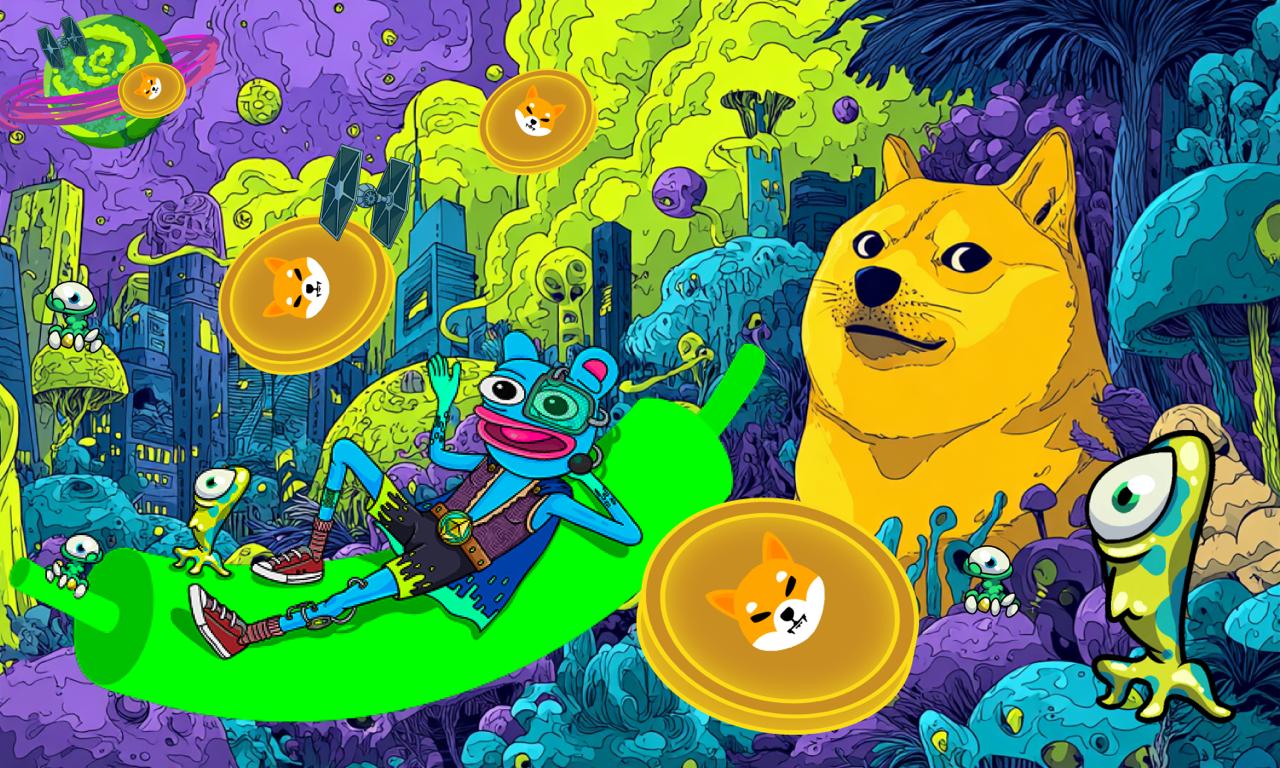
A cartoon dog with zero utility once turned into a multi-billion-dollar phenomenon, and that story still shapes how meme coins are judged today. Shiba Inu proved that culture, timing, and community can turn jokes into serious market narratives. As conversations around the best meme coin to invest in continue heading into 2026, comparisons are naturally forming between legacy meme giants like Shiba Inu and newer, utility-driven contenders entering the spotlight.

That spotlight is increasingly landing on DOGEBALL, a gaming-first meme coin preparing for its early 2026 debut. With its whitelist already live and a tightly structured presale set for January 2, DOGEBALL is gaining attention for mixing DOGE-inspired culture with playable utility. Early access matters here, and those watching the best meme coin to invest in narrative are starting to notice the timing.

DOGEBALL Whitelist Signals a New Kind of Meme Coin

The DOGEBALL whitelist is already open, with the DOGEBALL presale scheduled to begin on January 2, 2026, and run for just four months. That short window heading into Q1 2026 is part of the appeal, creating a sense of urgency without leaning on hype alone. As an upcoming crypto presale, DOGEBALL positions itself around early access and momentum rather than long, drawn-out fundraising cycles.

What sets DOGEBALL apart is that the utility is already visible. A custom-built ETH Layer-2 blockchain, DOGECHAIN, can be tested directly through the presale platform, offering transparency that many meme launches lack. Paired with a real, playable online DOGEBALL game across mobile, tablet, and PC, the project leans into gaming infrastructure and community competition rather than empty promises, reshaping expectations for the best meme coin to invest in.

Built Early, Played Early, Positioned Early

Timing has always played a quiet but powerful role in crypto presales, especially heading into major market cycles. With DOGEBALL’s whitelist live and its early 2026 presale approaching fast, the project taps into that window where positioning matters more than perfection. Is it better to watch from the sidelines, or to secure early access while the structure is still forming?

DOGEBALL leans into that question by offering a limited presale window, capped token supply, and active community engagement across Telegram and X. The combination of a gaming meme coin narrative and visible infrastructure makes early participation feel intentional rather than speculative. For those scanning the best meme coin to invest in, DOGEBALL’s timing feels aligned with curiosity, momentum, and opportunity.

Shiba Inu and the Legacy of Meme Coin Culture

Shiba Inu remains one of the most recognizable names in crypto, with a massive global community and real-world payment adoption across hundreds of platforms. Launched in 2020 on Ethereum, SHIB showed how decentralized communities can turn internet culture into long-lasting relevance. Its growth helped define what success looks like for meme coins, especially during earlier market cycles.

However, Shiba Inu’s journey also reflects a different era of meme coins, one driven primarily by community energy rather than built-in utility from day one. While SHIB continues to evolve within its ecosystem, newer projects like DOGEBALL are entering the conversation with gameplay, infrastructure, and use cases already live. That contrast fuels ongoing debates about the best meme coin to invest in moving forward.

Final Thoughts on Timing, Utility, and Early Access

As 2026 approaches, the meme coin conversation is shifting from jokes alone to projects that blend culture with functionality. Shiba Inu represents what meme momentum can achieve at scale, while DOGEBALL highlights where the next chapter may be heading. Utility, gaming, and infrastructure are becoming part of the narrative.

For those exploring the best meme coin to invest in, early access often defines the experience. With the DOGEBALL whitelist open ahead of the January 2 presale, the window is already moving. Join the DOGEBALL whitelist now to secure early positioning and avoid watching this one unfold from the outside.

Find Out More Information Here:

Website: https://dogeballtoken.com/  

X: https://x.com/dogeballtoken 

Telegram Chat: https://t.me/dogeballtoken

This article is not intended as financial advice. Educational purposes only.

Source: https://blockchainreporter.net/dogeball-gets-compared-with-shiba-inu-as-traders-look-for-the-best-meme-coin-to-invest-in/
Market Opportunity
BitShiba Logo
BitShiba Price(SHIBA)
$0,0000000004275
$0,0000000004275$0,0000000004275
-0,83%
USD
BitShiba (SHIBA) Live Price Chart
Disclaimer: The articles reposted on this site are sourced from public platforms and are provided for informational purposes only. They do not necessarily reflect the views of MEXC. All rights remain with the original authors. If you believe any content infringes on third-party rights, please contact service@support.mexc.com for removal. MEXC makes no guarantees regarding the accuracy, completeness, or timeliness of the content and is not responsible for any actions taken based on the information provided. The content does not constitute financial, legal, or other professional advice, nor should it be considered a recommendation or endorsement by MEXC.

You May Also Like

Crucial ETH Unstaking Period: Vitalik Buterin’s Unwavering Defense for Network Security

Crucial ETH Unstaking Period: Vitalik Buterin’s Unwavering Defense for Network Security

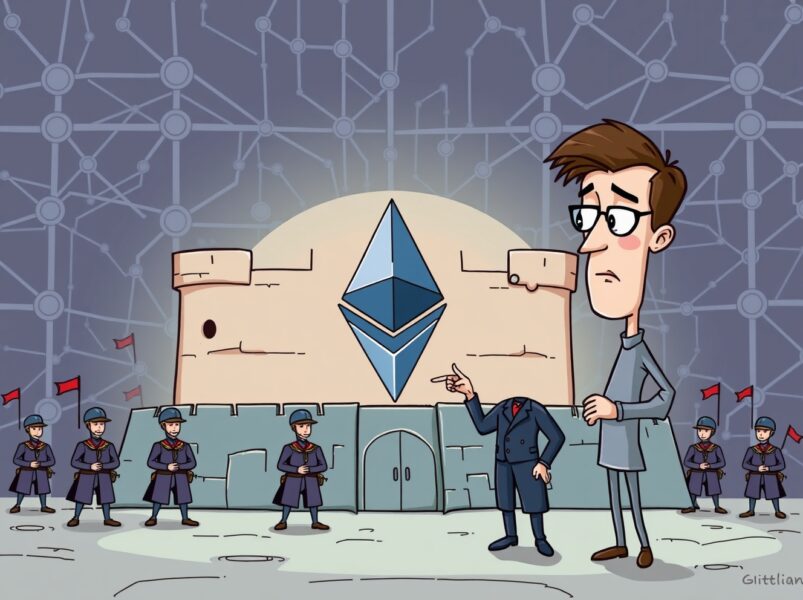
BitcoinWorld Crucial ETH Unstaking Period: Vitalik Buterin’s Unwavering Defense for Network Security Ever wondered why withdrawing your staked Ethereum (ETH) isn’t an instant process? It’s a question that often sparks debate within the crypto community. Ethereum founder Vitalik Buterin recently stepped forward to defend the network’s approximately 45-day ETH unstaking period, asserting its crucial role in safeguarding the network’s integrity. This lengthy waiting time, while sometimes seen as an inconvenience, is a deliberate design choice with profound implications for security. Why is the ETH Unstaking Period a Vital Security Measure? Vitalik Buterin’s defense comes amidst comparisons to other networks, like Solana, which boast significantly shorter unstaking times. He drew a compelling parallel to military operations, explaining that an army cannot function effectively if its soldiers can simply abandon their posts at a moment’s notice. Similarly, a blockchain network requires a stable and committed validator set to maintain its security. The current ETH unstaking period isn’t merely an arbitrary delay. It acts as a critical buffer, providing the network with sufficient time to detect and respond to potential malicious activities. If validators could instantly exit, it would open doors for sophisticated attacks, jeopardizing the entire system. Currently, Ethereum boasts over one million active validators, collectively staking approximately 35.6 million ETH, representing about 30% of the total supply. This massive commitment underpins the network’s robust security model, and the unstaking period helps preserve this stability. Network Security: Ethereum’s Paramount Concern A shorter ETH unstaking period might seem appealing for liquidity, but it introduces significant risks. Imagine a scenario where a large number of validators, potentially colluding, could quickly withdraw their stake after committing a malicious act. Without a substantial delay, the network would have limited time to penalize them or mitigate the damage. This “exit queue” mechanism is designed to prevent sudden validator exodus, which could lead to: Reduced decentralization: A rapid drop in active validators could concentrate power among fewer participants. Increased vulnerability to attacks: A smaller, less stable validator set is easier to compromise. Network instability: Frequent and unpredictable changes in validator numbers can lead to performance issues and consensus failures. Therefore, the extended period is not a bug; it’s a feature. It’s a calculated trade-off between immediate liquidity for stakers and the foundational security of the entire Ethereum ecosystem. Ethereum vs. Solana: Different Approaches to Unstaking When discussing the ETH unstaking period, many point to networks like Solana, which offers a much quicker two-day unstaking process. While this might seem like an advantage for stakers seeking rapid access to their funds, it reflects fundamental differences in network architecture and security philosophies. Solana’s design prioritizes speed and immediate liquidity, often relying on different consensus mechanisms and validator economics to manage security risks. Ethereum, on the other hand, with its proof-of-stake evolution from proof-of-work, has adopted a more cautious approach to ensure its transition and long-term stability are uncompromised. Each network makes design choices based on its unique goals and threat models. Ethereum’s substantial value and its role as a foundational layer for countless dApps necessitate an extremely robust security posture, making the current unstaking duration a deliberate and necessary component. What Does the ETH Unstaking Period Mean for Stakers? For individuals and institutions staking ETH, understanding the ETH unstaking period is crucial for managing expectations and investment strategies. It means that while staking offers attractive rewards, it also comes with a commitment to the network’s long-term health. Here are key considerations for stakers: Liquidity Planning: Stakers should view their staked ETH as a longer-term commitment, not immediately liquid capital. Risk Management: The delay inherently reduces the ability to react quickly to market volatility with staked assets. Network Contribution: By participating, stakers contribute directly to the security and decentralization of Ethereum, reinforcing its value proposition. While the current waiting period may not be “optimal” in every sense, as Buterin acknowledged, simply shortening it without addressing the underlying security implications would be a dangerous gamble for the network’s reliability. In conclusion, Vitalik Buterin’s defense of the lengthy ETH unstaking period underscores a fundamental principle: network security cannot be compromised for the sake of convenience. It is a vital mechanism that protects Ethereum’s integrity, ensuring its stability and trustworthiness as a leading blockchain platform. This deliberate design choice, while requiring patience from stakers, ultimately fortifies the entire ecosystem against potential threats, paving the way for a more secure and reliable decentralized future. Frequently Asked Questions (FAQs) Q1: What is the main reason for Ethereum’s long unstaking period? A1: The primary reason is network security. A lengthy ETH unstaking period prevents malicious actors from quickly withdrawing their stake after an attack, giving the network time to detect and penalize them, thus maintaining stability and integrity. Q2: How long is the current ETH unstaking period? A2: The current ETH unstaking period is approximately 45 days. This duration can fluctuate based on network conditions and the number of validators in the exit queue. Q3: How does Ethereum’s unstaking period compare to other blockchains? A3: Ethereum’s unstaking period is notably longer than some other networks, such as Solana, which has a two-day period. This difference reflects varying network architectures and security priorities. Q4: Does the unstaking period affect ETH stakers? A4: Yes, it means stakers need to plan their liquidity carefully, as their staked ETH is not immediately accessible. It encourages a longer-term commitment to the network, aligning staker interests with Ethereum’s stability. Q5: Could the ETH unstaking period be shortened in the future? A5: While Vitalik Buterin acknowledged the current period might not be “optimal,” any significant shortening would likely require extensive research and network upgrades to ensure security isn’t compromised. For now, the focus remains on maintaining robust network defenses. Found this article insightful? Share it with your friends and fellow crypto enthusiasts on social media to spread awareness about the critical role of the ETH unstaking period in Ethereum’s security! To learn more about the latest Ethereum trends, explore our article on key developments shaping Ethereum’s institutional adoption. This post Crucial ETH Unstaking Period: Vitalik Buterin’s Unwavering Defense for Network Security first appeared on BitcoinWorld.
Share
Coinstats2025/09/18 15:30
Shiba Inu Price Forecast: Why This New Trending Meme Coin Is Being Dubbed The New PEPE After Record Presale

Shiba Inu Price Forecast: Why This New Trending Meme Coin Is Being Dubbed The New PEPE After Record Presale

While Shiba Inu (SHIB) continues to build its ecosystem and PEPE holds onto its viral roots, a new contender, Layer […] The post Shiba Inu Price Forecast: Why This New Trending Meme Coin Is Being Dubbed The New PEPE After Record Presale appeared first on Coindoo.
Share
Coindoo2025/09/18 01:13
The U.S. Financial Accounting Standards Board plans to study in 2026 whether crypto assets such as stablecoins can be classified as cash equivalents.

The U.S. Financial Accounting Standards Board plans to study in 2026 whether crypto assets such as stablecoins can be classified as cash equivalents.

PANews reported on December 31 that the Financial Accounting Standards Board (FASB) plans to study in 2026 whether certain crypto assets can be classified as cash
Share
PANews2025/12/31 16:50