Ripple has filed an application for a national banking license with the U.S. Office of the Comptroller of the Currency (OCC), according to a report by The Wall Street Journal. The move indicates Ripple’s intention to bring its dollar-backed stablecoin, RLUSD, under federal supervision and expand its crypto-related financial services in the United States. Ripple Seeks OCC Charter in Bid to Become a Federally Regulated Stablecoin Issuer The filing was made on Wednesday and, if approved, would place Ripple under dual regulatory oversight, both at the state level through the New York Department of Financial Services (NYDFS) and now federally through the OCC. Ripple CEO Brad Garlinghouse confirmed the application in a post on X, calling it a continuation of the company’s “long-standing compliance roots.” “If approved, we would have both state (via NYDFS) and federal oversight,” Garlinghouse wrote. “A new (and unique!) benchmark for trust in the stablecoin market.” True to our long-standing compliance roots, @Ripple is applying for a national bank charter from the OCC. If approved, we would have both state (via NYDFS) and federal oversight, a new (and unique!) benchmark for trust in the stablecoin market. Earlier in the week via… https://t.co/IdiR7x3eWZ — Brad Garlinghouse (@bgarlinghouse) July 2, 2025 The national charter would give Ripple the ability to streamline settlements by removing the need for intermediary banks. It would also allow the firm to offer additional crypto-related financial services under a regulatory structure long associated with traditional banks. Ripple is also seeking a Federal Reserve master account. That account would give the firm direct access to the Fed’s payment rails and allow it to hold stablecoin reserves at the central bank. RLUSD, Ripple’s dollar-backed stablecoin, was launched in December 2024 and currently has a market capitalization of around $470 million, according to CoinMarketCap. Though far smaller than market leaders Tether and Circle’s USDC, RLUSD is among the larger stablecoins in circulation. The timing of Ripple’s application comes just days after Circle Internet Group, the issuer of USDC, filed for its own national banking license . Circle is looking to launch a federally regulated entity named First National Digital Currency Bank, which would allow it to offer digital asset custody and other services. That application followed Circle’s public listing earlier this year , which valued the firm at nearly $18 billion. The rush comes as lawmakers in Washington are advancing a legal framework for stablecoins. Earlier this month, the Senate passed the GENIUS Act , which would require issuers to maintain full dollar reserves and publish monthly disclosures. The bill is awaiting a vote in the House, with support from President Trump. 📝 The U.S. Senate has passed the GENIUS Act in a 68–30 vote, marking the first major digital asset legislation and drawing praise from industry leaders. #regulation #stablecoins https://t.co/OSjotzTnUa — Cryptonews.com (@cryptonews) June 18, 2025 A report from Grayscale noted that the bill could give stablecoins a clearer path to mainstream acceptance. “The GENIUS Act will likely support stablecoin adoption in the U.S. while incorporating sensible safeguards for consumer protection and financial stability,” Grayscale’s research team wrote. For Ripple, gaining OCC approval would mark a major shift in how stablecoins are supervised in the U.S., potentially making RLUSD one of the most regulated stablecoins on the market. While the outcome of the application is still pending, Ripple’s pursuit of a national charter reflects a growing trend among crypto firms seeking legitimacy and longevity within the U.S. financial system. Ripple’s Legal Setback Clouds Stablecoin Ambitions as Tech Upgrades Forge Ahead As Ripple seeks a U.S. banking license and works to expand its RLUSD stablecoin, the company faces renewed regulatory friction that could complicate its path forward. On June 26, Judge Analisa Torres rejected a proposed $50 million settlement between Ripple and the U.S. Securities and Exchange Commission, which would have dissolved the standing injunction on institutional XRP sales. ⚖️ Judge Torres rejects Ripple's $50 million SEC settlement, maintaining permanent injunction blocking $XRP institutional sales despite both parties agreeing to penalty reduction. #Ripple #SEC #XRP https://t.co/KChkLc5Mdw — Cryptonews.com (@cryptonews) June 26, 2025 Despite both sides agreeing to reduce the original $125 million penalty by 60%, the court found no “exceptional circumstances” to justify altering a final judgment. The decision leaves Ripple restricted from offering XRP to institutional clients, though retail trading remains unaffected. The legal standoff stems from the SEC’s 2020 lawsuit, which alleged Ripple raised $1.3 billion through unregistered XRP sales. Following the ruling, Ripple CEO Brad Garlinghouse announced the company would drop its cross-appeal, adding that the SEC is also expected to withdraw its appeal. 📈 XRP rallied on Friday after Ripple Labs CEO Brad Garlinghouse announced the company is dropping its cross-appeal against the SEC. #XRP #SEC https://t.co/fXl2YbYWrt — Cryptonews.com (@cryptonews) June 28, 2025 With litigation winding down, Ripple is turning its attention back to development. RippleX, the company’s tech arm, recently released XRP Ledger v2.5.0 , introducing upgrades designed for institutional use, including support for escrowed stablecoins (XLS-85) and complex transaction bundling (XLS-56). Daily active addresses on the network have surged from 35,000 to over 295,000 . Meanwhile, Ripple integrated Wormhole to connect its ecosystem with more than 35 blockchains, enhancing interoperability ahead of RLUSD’s debut.Ripple has filed an application for a national banking license with the U.S. Office of the Comptroller of the Currency (OCC), according to a report by The Wall Street Journal. The move indicates Ripple’s intention to bring its dollar-backed stablecoin, RLUSD, under federal supervision and expand its crypto-related financial services in the United States. Ripple Seeks OCC Charter in Bid to Become a Federally Regulated Stablecoin Issuer The filing was made on Wednesday and, if approved, would place Ripple under dual regulatory oversight, both at the state level through the New York Department of Financial Services (NYDFS) and now federally through the OCC. Ripple CEO Brad Garlinghouse confirmed the application in a post on X, calling it a continuation of the company’s “long-standing compliance roots.” “If approved, we would have both state (via NYDFS) and federal oversight,” Garlinghouse wrote. “A new (and unique!) benchmark for trust in the stablecoin market.” True to our long-standing compliance roots, @Ripple is applying for a national bank charter from the OCC. If approved, we would have both state (via NYDFS) and federal oversight, a new (and unique!) benchmark for trust in the stablecoin market. Earlier in the week via… https://t.co/IdiR7x3eWZ — Brad Garlinghouse (@bgarlinghouse) July 2, 2025 The national charter would give Ripple the ability to streamline settlements by removing the need for intermediary banks. It would also allow the firm to offer additional crypto-related financial services under a regulatory structure long associated with traditional banks. Ripple is also seeking a Federal Reserve master account. That account would give the firm direct access to the Fed’s payment rails and allow it to hold stablecoin reserves at the central bank. RLUSD, Ripple’s dollar-backed stablecoin, was launched in December 2024 and currently has a market capitalization of around $470 million, according to CoinMarketCap. Though far smaller than market leaders Tether and Circle’s USDC, RLUSD is among the larger stablecoins in circulation. The timing of Ripple’s application comes just days after Circle Internet Group, the issuer of USDC, filed for its own national banking license . Circle is looking to launch a federally regulated entity named First National Digital Currency Bank, which would allow it to offer digital asset custody and other services. That application followed Circle’s public listing earlier this year , which valued the firm at nearly $18 billion. The rush comes as lawmakers in Washington are advancing a legal framework for stablecoins. Earlier this month, the Senate passed the GENIUS Act , which would require issuers to maintain full dollar reserves and publish monthly disclosures. The bill is awaiting a vote in the House, with support from President Trump. 📝 The U.S. Senate has passed the GENIUS Act in a 68–30 vote, marking the first major digital asset legislation and drawing praise from industry leaders. #regulation #stablecoins https://t.co/OSjotzTnUa — Cryptonews.com (@cryptonews) June 18, 2025 A report from Grayscale noted that the bill could give stablecoins a clearer path to mainstream acceptance. “The GENIUS Act will likely support stablecoin adoption in the U.S. while incorporating sensible safeguards for consumer protection and financial stability,” Grayscale’s research team wrote. For Ripple, gaining OCC approval would mark a major shift in how stablecoins are supervised in the U.S., potentially making RLUSD one of the most regulated stablecoins on the market. While the outcome of the application is still pending, Ripple’s pursuit of a national charter reflects a growing trend among crypto firms seeking legitimacy and longevity within the U.S. financial system. Ripple’s Legal Setback Clouds Stablecoin Ambitions as Tech Upgrades Forge Ahead As Ripple seeks a U.S. banking license and works to expand its RLUSD stablecoin, the company faces renewed regulatory friction that could complicate its path forward. On June 26, Judge Analisa Torres rejected a proposed $50 million settlement between Ripple and the U.S. Securities and Exchange Commission, which would have dissolved the standing injunction on institutional XRP sales. ⚖️ Judge Torres rejects Ripple's $50 million SEC settlement, maintaining permanent injunction blocking $XRP institutional sales despite both parties agreeing to penalty reduction. #Ripple #SEC #XRP https://t.co/KChkLc5Mdw — Cryptonews.com (@cryptonews) June 26, 2025 Despite both sides agreeing to reduce the original $125 million penalty by 60%, the court found no “exceptional circumstances” to justify altering a final judgment. The decision leaves Ripple restricted from offering XRP to institutional clients, though retail trading remains unaffected. The legal standoff stems from the SEC’s 2020 lawsuit, which alleged Ripple raised $1.3 billion through unregistered XRP sales. Following the ruling, Ripple CEO Brad Garlinghouse announced the company would drop its cross-appeal, adding that the SEC is also expected to withdraw its appeal. 📈 XRP rallied on Friday after Ripple Labs CEO Brad Garlinghouse announced the company is dropping its cross-appeal against the SEC. #XRP #SEC https://t.co/fXl2YbYWrt — Cryptonews.com (@cryptonews) June 28, 2025 With litigation winding down, Ripple is turning its attention back to development. RippleX, the company’s tech arm, recently released XRP Ledger v2.5.0 , introducing upgrades designed for institutional use, including support for escrowed stablecoins (XLS-85) and complex transaction bundling (XLS-56). Daily active addresses on the network have surged from 35,000 to over 295,000 . Meanwhile, Ripple integrated Wormhole to connect its ecosystem with more than 35 blockchains, enhancing interoperability ahead of RLUSD’s debut.

Ripple Applies for US Banking License – Could Federal Oversight Supercharge Its Stablecoin RLUSD?

4 min read

Ripple has filed an application for a national banking license with the U.S. Office of the Comptroller of the Currency (OCC), according to a report by The Wall Street Journal.

The move indicates Ripple’s intention to bring its dollar-backed stablecoin, RLUSD, under federal supervision and expand its crypto-related financial services in the United States.

Ripple Seeks OCC Charter in Bid to Become a Federally Regulated Stablecoin Issuer

The filing was made on Wednesday and, if approved, would place Ripple under dual regulatory oversight, both at the state level through the New York Department of Financial Services (NYDFS) and now federally through the OCC.

Ripple CEO Brad Garlinghouse confirmed the application in a post on X, calling it a continuation of the company’s “long-standing compliance roots.”

“If approved, we would have both state (via NYDFS) and federal oversight,” Garlinghouse wrote. “A new (and unique!) benchmark for trust in the stablecoin market.”

The national charter would give Ripple the ability to streamline settlements by removing the need for intermediary banks.

It would also allow the firm to offer additional crypto-related financial services under a regulatory structure long associated with traditional banks.

Ripple is also seeking a Federal Reserve master account. That account would give the firm direct access to the Fed’s payment rails and allow it to hold stablecoin reserves at the central bank.

RLUSD, Ripple’s dollar-backed stablecoin, was launched in December 2024 and currently has a market capitalization of around $470 million, according to CoinMarketCap.

Though far smaller than market leaders Tether and Circle’s USDC, RLUSD is among the larger stablecoins in circulation.

The timing of Ripple’s application comes just days after Circle Internet Group, the issuer of USDC, filed for its own national banking license.

Circle is looking to launch a federally regulated entity named First National Digital Currency Bank, which would allow it to offer digital asset custody and other services.

That application followed Circle’s public listing earlier this year, which valued the firm at nearly $18 billion.

The rush comes as lawmakers in Washington are advancing a legal framework for stablecoins.

Earlier this month, the Senate passed the GENIUS Act, which would require issuers to maintain full dollar reserves and publish monthly disclosures. The bill is awaiting a vote in the House, with support from President Trump.

A report from Grayscale noted that the bill could give stablecoins a clearer path to mainstream acceptance.

“The GENIUS Act will likely support stablecoin adoption in the U.S. while incorporating sensible safeguards for consumer protection and financial stability,” Grayscale’s research team wrote.

For Ripple, gaining OCC approval would mark a major shift in how stablecoins are supervised in the U.S., potentially making RLUSD one of the most regulated stablecoins on the market.

While the outcome of the application is still pending, Ripple’s pursuit of a national charter reflects a growing trend among crypto firms seeking legitimacy and longevity within the U.S. financial system.

As Ripple seeks a U.S. banking license and works to expand its RLUSD stablecoin, the company faces renewed regulatory friction that could complicate its path forward.

On June 26, Judge Analisa Torres rejected a proposed $50 million settlement between Ripple and the U.S. Securities and Exchange Commission, which would have dissolved the standing injunction on institutional XRP sales.

Despite both sides agreeing to reduce the original $125 million penalty by 60%, the court found no “exceptional circumstances” to justify altering a final judgment.

The decision leaves Ripple restricted from offering XRP to institutional clients, though retail trading remains unaffected.

The legal standoff stems from the SEC’s 2020 lawsuit, which alleged Ripple raised $1.3 billion through unregistered XRP sales.

Following the ruling, Ripple CEO Brad Garlinghouse announced the company would drop its cross-appeal, adding that the SEC is also expected to withdraw its appeal.

With litigation winding down, Ripple is turning its attention back to development.

RippleX, the company’s tech arm, recently released XRP Ledger v2.5.0, introducing upgrades designed for institutional use, including support for escrowed stablecoins (XLS-85) and complex transaction bundling (XLS-56).

Daily active addresses on the network have surged from 35,000 to over 295,000.

Meanwhile, Ripple integrated Wormhole to connect its ecosystem with more than 35 blockchains, enhancing interoperability ahead of RLUSD’s debut.

Market Opportunity
Threshold Logo
Threshold Price(T)
$0.008121
$0.008121$0.008121
-0.15%
USD
Threshold (T) Live Price Chart
Disclaimer: The articles reposted on this site are sourced from public platforms and are provided for informational purposes only. They do not necessarily reflect the views of MEXC. All rights remain with the original authors. If you believe any content infringes on third-party rights, please contact service@support.mexc.com for removal. MEXC makes no guarantees regarding the accuracy, completeness, or timeliness of the content and is not responsible for any actions taken based on the information provided. The content does not constitute financial, legal, or other professional advice, nor should it be considered a recommendation or endorsement by MEXC.

You May Also Like

Three dormant wallets, suspected to belong to the same entity, purchased 5,970 ETH eight hours ago.
Three dormant wallets, suspected to belong to the same entity, purchased 5,970 ETH eight hours ago.

PANews reported on February 4 that, according to Lookonchain monitoring, three wallets that had been dormant for four years (likely controlled by the same entity
Share
PANews2026/02/04 11:36
NVIDIA Stock Price Analysis as OpenAI Issues Concerns About its Chips

NVIDIA Stock Price Analysis as OpenAI Issues Concerns About its Chips

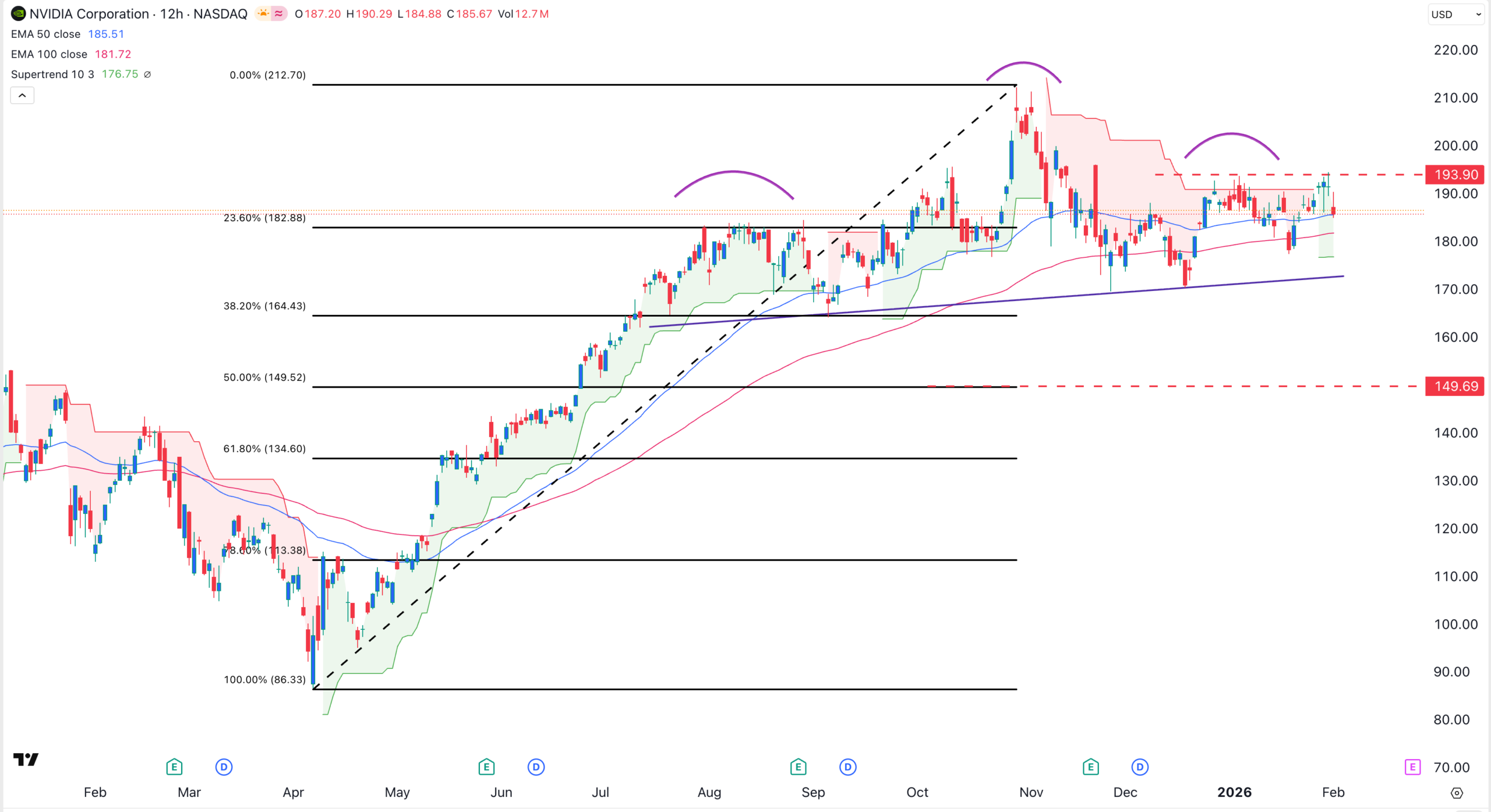
Key Insights NVIDIA stock started the week in the red. It crashed by over 2%. Meanwhile, the S&P 500, Dow Jones, and Nasdaq 100 moved close to their all-time highs
Share
Themarketperiodical2026/02/04 11:27
Ondo Finance Launches USDY Yieldcoin on Stellar, Bringing Tokenized U.S. Treasuries to Users

Ondo Finance Launches USDY Yieldcoin on Stellar, Bringing Tokenized U.S. Treasuries to Users

Ondo Finance, a U.S.-based digital asset firm specializing in bringing traditional financial products on-chain through tokenization, is expanding its yieldcoin USDY to the Stellar network. This lates update marks a step forward in merging tokenized real-world assets with a global payments infrastructure, unlocking new opportunities for users worldwide. The announcement was made at the Stellar Meridian event in Copacabana, Rio de Janeiro, on September 17. USDY Joins the Stellar Ecosystem Ondo Finance, a recognized leader in tokenized real-world assets, announced the deployment of United States Dollar Yield (USDY) on Stellar, the payments-focused blockchain known for speed and low transaction costs. USDY is the most widely available “yieldcoin,” offering investors access to onchain assets backed by U.S. Treasuries. This launch allows Stellar’s global user base to tap into permissionless, yield-bearing assets tied to one of the safest financial instruments in the world. It also aligns with Stellar’s mission of driving fast, affordable cross-border payments. Combining Yield with Payments Infrastructure “Stablecoins unlocked global access to the U.S. dollar. With USDY, we’re taking the next step by bringing U.S. Treasuries onchain in a form that combines stability, liquidity, and yield,” said Ian De Bode, Chief Strategy Officer at Ondo Finance. “Fast, affordable cross-border payments are at the center of what Stellar was designed to do. The global reach of the Stellar ecosystem combined with a yield-bearing asset like USDY levels up what is possible onchain, allowing wallets and businesses to offer yield opportunities to their users,” said Denelle Dixon, CEO of the Stellar Development Foundation. Ondo claims by pairing USDY with Stellar’s infrastructure, new possibilities open up in treasury management, collateralization, and everyday financial applications. Unlocking Institutional and Retail Use Cases USDY currently manages over $650 million in total value locked (TVL) across nine blockchains and offers a 5.3% APY. By launching on Stellar, Ondo Finance extends these benefits to global retail and institutional users. The firm explains balances on Stellar can now become productive, supporting use cases such as onchain savings, institutional treasury strategies, cost-efficient collateral for DeFi protocols, and remittance flows that carry yield rather than remaining static. A Milestone for Tokenized Treasuries With the integration of USDY, Stellar users gain more than just access to stable-value assets—they gain access to institutional-grade yield. For investors outside the U.S., the launch represents a new way to combine the safety of Treasuries with the accessibility of blockchain technology. As tokenization accelerates globally, Ondo Finance’s decision to deploy USDY on Stellar reinforces the narrative that blockchain is not just about speculation, but about reimagining the global financial system through secure, yield-bearing digital assets
Share
CryptoNews2025/09/18 00:46
