The post The double-edged future: Bringing fintech onchain appeared on BitcoinEthereumNews.com. Disclosure: The views and opinions expressed here belong solely The post The double-edged future: Bringing fintech onchain appeared on BitcoinEthereumNews.com. Disclosure: The views and opinions expressed here belong solely

The double-edged future: Bringing fintech onchain

6 min read

Disclosure: The views and opinions expressed here belong solely to the author and do not represent the views and opinions of crypto.news’ editorial.

For years, crypto promised to democratize finance, to bank the unbanked, to make finance more inclusive. But if we’re honest, that promise has largely remained rhetorical. Blockchain technology revolutionized settlement and ownership, yet most of the world still banks, invests, and trades in the same systems it always has. The divide between the crypto economy and capital markets persists, and it is not because of a lack of interest but because of a missing bridge.

Summary

  • Crypto’s promise stalled due to a missing bridge: Finance hasn’t gone onchain at scale because capital markets and blockchain remained disconnected, not from lack of interest.
  • Adoption hinges on trust and usability: Seamless fintech UX, regulatory clarity, and hybrid onchain models are essential to expand access without increasing risk.
  • The future is onchain, not “crypto”: Finance will quietly merge into one programmable, compliant system where the TradFi–crypto divide disappears.

That bridge is beginning to take shape. We’re entering an era where fintech meets blockchain — where finance goes onchain. The question is not whether this convergence will happen, but how. And whether it will truly make capital markets more accessible or simply reproduce their inequalities under a new digital flag.

The promise: Capital markets without gatekeepers

The fundamental logic of blockchain aligns with what fintech has been chasing for decades: efficiency, transparency, and accessibility. Moving capital markets onchain could, in theory, deliver all three at once.

Tokenization of real-world assets allows anything from bonds to real estate to be fractionalized and traded with the same ease as digital tokens. Settlement could become instantaneous. Custody could be simplified. Compliance, if built correctly, could become programmable.

For retail users, this could mean genuine participation in markets previously closed to them: access to credit, yield, and diversified assets without intermediaries taking most of the margin. For institutions, it could mean cost reduction, global liquidity, and composable financial products that settle in seconds instead of days.

That’s the dream: an open, transparent, programmable capital market that runs on blockchain rails but speaks the language of finance.

Retail adoption: Access without chaos

But accessibility isn’t just about technology — it’s about experience. For most retail users, finance is already digitized through fintech apps like Revolut, Robinhood, or Cash App. The next leap is not making these platforms “more digital,” but making them natively interoperable with blockchain infrastructure, allowing users to move seamlessly between fiat and onchain assets without needing to understand gas fees, seed phrases, or chain IDs.

This is where fintech has a head start. It has mastered UX as trust. Users don’t care about what database holds their money; they care about seeing their balance, clicking once, and knowing it works. Data shows that 73% of users switch banks for a better user experience, while crypto UX is in a deep crisis.

Bringing fintech onchain must preserve that psychological contract. The onboarding needs to be invisible. The regulatory clarity needs to be visible. When the average user can buy tokenized Treasury bills from their regular fintech app, see yield accrue transparently, and trust that the same investor protections apply as in traditional markets — that’s when onchain adoption will no longer be speculative. It will be habitual.

Institutional adoption: The quiet revolution

Institutional players, meanwhile, have moved from skepticism to cautious experimentation. BlackRock’s tokenized funds, JPMorgan’s Onyx network, and Franklin Templeton’s blockchain funds are early signs of a broader shift: the world’s biggest financial engines quietly testing how much of their operations can be brought onchain without regulatory blowback or operational risk.

For them, the appeal isn’t ideology. It’s efficiency. Blockchain infrastructure can reduce reconciliation costs, improve settlement speed, and unlock new liquidity models. But institutions don’t move for ideals; they move for compliance and yield.

To bring fintech fully onchain, institutions need assurance that the benefits of TradFi — clear legal frameworks, robust custody, and recourse mechanisms — don’t vanish in translation. That’s the real double-edged sword of accessibility.

The same tools that make finance more open can make it more fragile if deployed without guardrails.

The double-edged sword: Regulation and technology

Making capital markets more accessible requires walking a tightrope between two imperatives: regulation and technology.

On one side lies regulation: the slow, necessary machinery that guarantees trust. Without it, no institution will transition onchain, and no retail user will risk their savings there. Tokenized assets need legal status. Smart contracts need enforceability. Stablecoins need backing clarity.

On the other side lies technology: the innovation that makes the transition worthwhile. If onchain infrastructure simply replicates TradFi bureaucracy with more jargon, the promise of accessibility dies in compliance paperwork.

The goal is balance: regulation that protects without suffocating, and technology that liberates without destabilizing.

This is why hybrid architectures — combining onchain transparency with off-chain controls — are gaining traction. The future isn’t decentralized anarchy; it’s programmable regulation. Compliance baked into code. Identity systems that preserve privacy while satisfying KYC. Liquidity that can flow freely but within defined perimeters.

The real barrier isn’t code — it’s culture

The hardest transition won’t be technical. It will be cultural. Finance has always run on trust, and trust is built on habit. For regulators, blockchain still feels foreign, risky, and uncontrollable. For crypto-native builders, regulation still feels like a threat to innovation. Both sides are wrong.

True accessibility will come not when we abolish TradFi, but when we integrate it, when fintech, blockchain, and regulation stop competing narratives and start forming a shared one. 

It will take new kinds of partnerships: between banks and protocols, auditors and oracles, regulators and developers. It will take language that both retail users and policymakers can understand. And it will take humility from all sides, because no one has the full map of this transition yet.

The future is onchain, but not ‘crypto’

The next evolution of fintech will not be “crypto-fied.” It will be onchain — transparent, interoperable, and composable — but built to serve human and institutional needs, not memes or hype cycles.

This future won’t look like DeFi summer. It will look like your bank, your broker, and your wallet quietly merging into one seamless interface where value moves frictionlessly across asset classes and jurisdictions.

When that happens, the distinction between fintech and crypto will dissolve. We’ll simply call it finance again — rebuilt, restructured, and running onchain.

In the end, bringing fintech onchain isn’t just a technical upgrade. It’s a philosophical one. It’s about expanding access without losing trust, innovating without abandoning regulation, and modernizing capital markets without erasing the human need for security.

That balance — between openness and order — will decide whether this next era of finance fulfills its promise or repeats the same exclusions on a shinier blockchain.

Source: https://crypto.news/double-edged-future-bringing-fintech-onchain-opinion/
Market Opportunity
FUTURECOIN Logo
FUTURECOIN Price(FUTURE)
$0.07807
$0.07807$0.07807
-5.64%
USD
FUTURECOIN (FUTURE) Live Price Chart
Disclaimer: The articles reposted on this site are sourced from public platforms and are provided for informational purposes only. They do not necessarily reflect the views of MEXC. All rights remain with the original authors. If you believe any content infringes on third-party rights, please contact service@support.mexc.com for removal. MEXC makes no guarantees regarding the accuracy, completeness, or timeliness of the content and is not responsible for any actions taken based on the information provided. The content does not constitute financial, legal, or other professional advice, nor should it be considered a recommendation or endorsement by MEXC.

You May Also Like

Unleash Potential: Flare Network’s FXRP Revolutionizes DeFi Access for XRP

Unleash Potential: Flare Network’s FXRP Revolutionizes DeFi Access for XRP

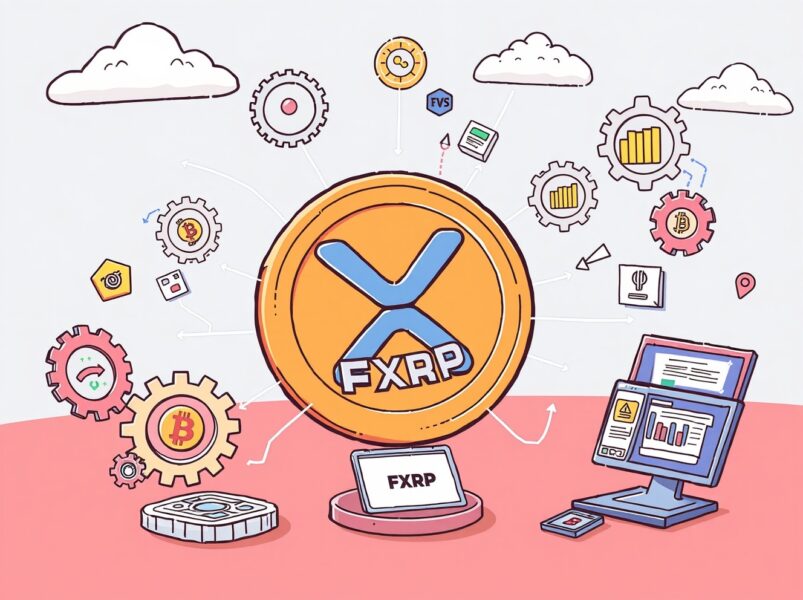
BitcoinWorld Unleash Potential: Flare Network’s FXRP Revolutionizes DeFi Access for XRP The world of decentralized finance (DeFi) is constantly evolving, and a major new development is set to excite XRP enthusiasts. Flare Network has just launched FXRP, an innovative solution designed to bring XRP directly into the heart of DeFi applications. This move opens up a wealth of new possibilities for XRP holders, allowing them to engage with lending, borrowing, and trading platforms like never before. It’s a significant step towards a more interconnected crypto ecosystem. What is FXRP and Why is it a Game-Changer for XRP? At its core, FXRP is an over-collateralized, wrapped version of XRP. Think of it as a digital twin of XRP, but one that lives on the Flare Network. This design is crucial because XRP itself doesn’t natively support smart contracts in the same way that Ethereum or other DeFi-centric blockchains do. Consequently, XRP has largely been excluded from the burgeoning DeFi sector. However, FXRP changes this narrative completely. By wrapping XRP, Flare Network creates a token that can interact with smart contracts on its own blockchain. This means XRP holders can now: Access a wider range of DeFi protocols. Participate in decentralized lending and borrowing. Engage in yield farming opportunities. Trade their XRP on decentralized exchanges. This initiative transforms XRP from a primarily transactional asset into a more versatile, programmable one within the DeFi landscape. How Can You Acquire and Utilize FXRP? Getting your hands on FXRP is straightforward, offering flexibility for users. You have two primary methods to acquire this wrapped token. First, users can mint FXRP directly on the Flare Network. This process typically involves locking up an equivalent amount of XRP as collateral, ensuring the wrapped token remains fully backed. Alternatively, if direct minting isn’t your preference, you can acquire FXRP on various decentralized exchanges (DEXs). Platforms like SparkDEX, BlazeSwap, and Enosys are among the initial venues where you can trade for FXRP. This accessibility makes it easy for existing DeFi users and new participants alike to join the Flare Network ecosystem and explore its offerings. The over-collateralization aspect adds an extra layer of security, providing confidence in the token’s backing. Expanding DeFi Horizons: The Broader Impact of FXRP The introduction of FXRP extends far beyond just enabling XRP holders to participate in DeFi. It has a much broader impact on the entire decentralized finance ecosystem. By integrating a widely adopted asset like XRP, Flare Network significantly boosts the total value locked (TVL) and liquidity available within DeFi. This influx of capital and users can lead to more robust and efficient markets. Moreover, FXRP positions Flare Network as a vital bridge between different blockchain ecosystems. It demonstrates how assets from one chain can gain new functionality and utility on another, fostering greater interoperability. This cross-chain capability is essential for the long-term growth and sustainability of decentralized finance, as it breaks down silos and encourages a more unified digital economy. The potential for future integrations with other tokens and protocols is immense, further solidifying Flare’s role. Navigating the Challenges and Future of FXRP While the launch of FXRP presents exciting opportunities, it’s also important to consider potential challenges. As with any new technology in the crypto space, security remains a paramount concern. The integrity of the wrapping mechanism and the underlying smart contracts must be rigorously maintained. Furthermore, user adoption and education will be key to the success of FXRP. New users need clear guidance on how to safely mint, acquire, and use the token in various DeFi applications. The competitive landscape also plays a role; other wrapped assets exist, and FXRP must demonstrate its unique value proposition. However, with its strong backing and the innovative approach of Flare Network, FXRP is well-positioned for growth. Its ability to unlock XRP’s potential for DeFi is a powerful differentiator, promising a vibrant future for both the token and the network. Actionable Insights: Getting Started with FXRP in DeFi If you’re an XRP holder looking to explore the new opportunities presented by FXRP, here are some actionable insights to help you get started: Do Your Research: Before engaging with any DeFi platform, thoroughly research its reputation, security audits, and user reviews. Understand how FXRP interacts with specific protocols. Understand the Risks: DeFi carries inherent risks, including smart contract vulnerabilities, impermanent loss, and market volatility. Familiarize yourself with these risks before committing funds. Start Small: Consider starting with a small amount of FXRP to familiarize yourself with the process of minting, acquiring, and using it in DeFi applications. Stay Informed: Follow official Flare Network channels and reputable crypto news sources to stay updated on new integrations, security announcements, and community developments related to FXRP. By taking these steps, you can confidently navigate the exciting new world that FXRP opens up for XRP within decentralized finance. In conclusion, the launch of FXRP by Flare Network is a monumental step forward for the XRP community and the broader DeFi ecosystem. It effectively bridges a gap, allowing one of the most widely held cryptocurrencies to participate actively in decentralized finance. This innovation not only expands the utility of XRP but also reinforces Flare Network’s commitment to building a more interconnected and functional blockchain world. As FXRP gains traction, we can expect to see a surge in innovative DeFi applications and a more vibrant, inclusive financial landscape for all. Frequently Asked Questions (FAQs) Q1: What exactly is FXRP? A1: FXRP is an over-collateralized, wrapped version of XRP, specifically designed to enable XRP holders to use their assets within decentralized finance (DeFi) applications on the Flare Network. Q2: How is FXRP different from standard XRP? A2: While FXRP is backed by XRP, its key difference is that it resides on the Flare Network and is compatible with smart contracts. This allows it to be used in DeFi protocols for lending, borrowing, and trading, which standard XRP cannot do natively. Q3: Where can I acquire FXRP? A3: You can acquire FXRP by minting it directly on the Flare Network by locking up XRP, or by purchasing it on decentralized exchanges such as SparkDEX, BlazeSwap, and Enosys. Q4: What are the main benefits of using FXRP in DeFi? A4: The primary benefits include gaining access to a wide array of DeFi services like lending, borrowing, and trading on DEXs, thereby increasing the utility and potential earning opportunities for XRP holders within the decentralized ecosystem. Q5: What is Flare Network’s role in the creation of FXRP? A5: Flare Network is the blockchain platform that hosts FXRP. It provides the smart contract functionality and infrastructure necessary to wrap XRP and enable its use in DeFi applications, acting as a bridge for XRP into the decentralized world. If you found this article insightful and believe in the potential of FXRP to revolutionize DeFi, please share it with your network! Help spread the word about how Flare Network is bridging the gap for XRP holders and expanding the possibilities within decentralized finance. Your support helps grow our community and keeps everyone informed about the latest crypto innovations. To learn more about the latest crypto market trends, explore our article on key developments shaping decentralized finance institutional adoption. This post Unleash Potential: Flare Network’s FXRP Revolutionizes DeFi Access for XRP first appeared on BitcoinWorld.
Share
Coinstats2025/09/24 22:45
Fed Lowers Rates By 25bps: How Bitcoin And Crypto Prices Responded And What’s Next

Fed Lowers Rates By 25bps: How Bitcoin And Crypto Prices Responded And What’s Next

The Federal Reserve (Fed) announced its first interest rate cut of the year, leading to an immediate reaction in the cryptocurrency market. Bitcoin (BTC) experienced a notable decline, dropping below the $115,000 threshold shortly after the announcement.  Expert Predicts Crypto Rally Fed Chair Jerome Powell addressed the current economic landscape, noting that while inflation has […]
Share
Bitcoinist2025/09/18 03:11
XRP Price Outlook As Peter Brandt Predicts BTC Price Might Crash to $42k

XRP Price Outlook As Peter Brandt Predicts BTC Price Might Crash to $42k

The post XRP Price Outlook As Peter Brandt Predicts BTC Price Might Crash to $42k appeared on BitcoinEthereumNews.com. XRP price led cryptocurrency losses on Friday
Share
BitcoinEthereumNews2026/02/06 19:06