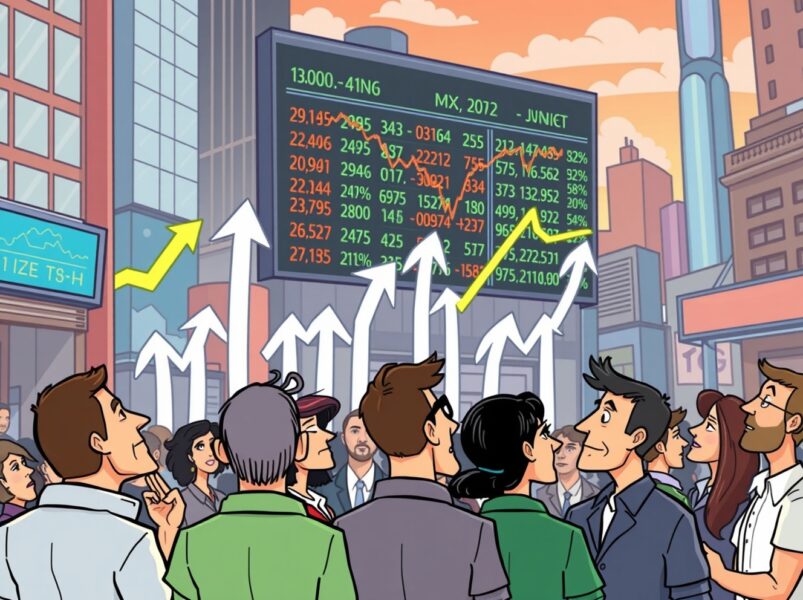
The post What Tokenized Stocks Mean and How They Work appeared on BitcoinEthereumNews.com. Introduction Cryptocurrency market is relatively new and small when compared to stock markets. This drives many crypto traders to resort to shares trading. However, there are certain limitations, due to which stock trading does not suit everyone. For example, you can trade only for a few hours of the day. You need to purchase at least one full share, which may set you back financially if you are a small trader. Blockchain brings a practical solution to these problems. The solution is tokenized stocks. What Are Tokenized Stocks? Tokenized stocks are digital versions of regular stocks but differ in that these are issued on a digital ledger, or a blockchain. They bring convenience and flexibility to traders who can carry out trades anytime they want. Anyone can gain exposure to real-world equities without owning them actually. To trade tokenized stocks, there is no need any traditional stock exchange or brokerage account. Most of the tokenized stocks have 1:1 correlation with the actual stock they represent. This becomes possible because the developer of the tokenized version of the stock has actual shares in their custody. Nevertheless, in some cases, tokenized stocks may track prices in some other way such as using financial instruments or price feeds. Types of Tokenizes Stocks Asset-Based Tokens As is evident from the term itself, these tokens are actually backed by real shares in the custody of an institution. Such tokens trade on a price that constantly correlates with the market price of the share represented by the token. Licensed financial audit firms and external accounting companies perform regular audits to verify whether the tokens have real backing of the shares claimed by the developers. Synthetic Tokens These tokens do not have actual backing of the shares. Instead, they rely on derivatives, blockchain oracles or smart contracts.… The post What Tokenized Stocks Mean and How They Work appeared on BitcoinEthereumNews.com. Introduction Cryptocurrency market is relatively new and small when compared to stock markets. This drives many crypto traders to resort to shares trading. However, there are certain limitations, due to which stock trading does not suit everyone. For example, you can trade only for a few hours of the day. You need to purchase at least one full share, which may set you back financially if you are a small trader. Blockchain brings a practical solution to these problems. The solution is tokenized stocks. What Are Tokenized Stocks? Tokenized stocks are digital versions of regular stocks but differ in that these are issued on a digital ledger, or a blockchain. They bring convenience and flexibility to traders who can carry out trades anytime they want. Anyone can gain exposure to real-world equities without owning them actually. To trade tokenized stocks, there is no need any traditional stock exchange or brokerage account. Most of the tokenized stocks have 1:1 correlation with the actual stock they represent. This becomes possible because the developer of the tokenized version of the stock has actual shares in their custody. Nevertheless, in some cases, tokenized stocks may track prices in some other way such as using financial instruments or price feeds. Types of Tokenizes Stocks Asset-Based Tokens As is evident from the term itself, these tokens are actually backed by real shares in the custody of an institution. Such tokens trade on a price that constantly correlates with the market price of the share represented by the token. Licensed financial audit firms and external accounting companies perform regular audits to verify whether the tokens have real backing of the shares claimed by the developers. Synthetic Tokens These tokens do not have actual backing of the shares. Instead, they rely on derivatives, blockchain oracles or smart contracts.…

What Tokenized Stocks Mean and How They Work

6 min read

Introduction

Cryptocurrency market is relatively new and small when compared to stock markets. This drives many crypto traders to resort to shares trading. However, there are certain limitations, due to which stock trading does not suit everyone. For example, you can trade only for a few hours of the day. You need to purchase at least one full share, which may set you back financially if you are a small trader. Blockchain brings a practical solution to these problems. The solution is tokenized stocks.

What Are Tokenized Stocks?

Tokenized stocks are digital versions of regular stocks but differ in that these are issued on a digital ledger, or a blockchain. They bring convenience and flexibility to traders who can carry out trades anytime they want. Anyone can gain exposure to real-world equities without owning them actually. To trade tokenized stocks, there is no need any traditional stock exchange or brokerage account.

Most of the tokenized stocks have 1:1 correlation with the actual stock they represent. This becomes possible because the developer of the tokenized version of the stock has actual shares in their custody. Nevertheless, in some cases, tokenized stocks may track prices in some other way such as using financial instruments or price feeds.

Types of Tokenizes Stocks

Asset-Based Tokens

As is evident from the term itself, these tokens are actually backed by real shares in the custody of an institution. Such tokens trade on a price that constantly correlates with the market price of the share represented by the token. Licensed financial audit firms and external accounting companies perform regular audits to verify whether the tokens have real backing of the shares claimed by the developers.

Synthetic Tokens

These tokens do not have actual backing of the shares. Instead, they rely on derivatives, blockchain oracles or smart contracts. Oracles bring the real share’s price from the outer world. Remember that blockchain networks cannot communicate with the outer world on their own. Oracles do this job for blockchains. On the other hand, smart contracts are programs that run a blockchain network. Smart contracts gain data from oracles and keep the token’s price on the level of share’s actual price.

How Tokenized Stocks Work

Accumulation of Supply

The process of tokenization begins with the arrangement of supply on the part of licensed financial institutions. These entities buy shares of a publicly traded stock as a backing for the token to be issued later. Custodian institutions are required to comply with securities regulations in their jurisdictions and maintain secure storage for the assets. They generally conduct regular audits and publish proof of reserves to verify that the number of tokens in circulation matches the number of shares held.

Minting

When the required supply has been secured, the issuers mint digital tokens on a blockchain and issues them to the traders officially. If the tokens are asset-based, their price matches the underlying stock. If they are synthetic, blockchain oracles like Chainlink fetch the real-time data from the stock market to tether the token price accordingly.

Trading and Burning

Since tokenized stocks exist on blockchains, you can trade them just like any other digital token. Centralized as well as decentralized exchanges offer the trading feature for the token. You can buy, sell, swap open short or long positions in the futures option of the token. Furthermore, the developers also keep burning features in the smart contracts. This helps keep the price of the tokens tethered with the underlying stock.

Merits of Tokenized Stocks

24/7 Trading

The first and foremost advantage of tokenized stocks is their availability round the clock. Stock market opens for 6-7 hours, so it does not match everyone’s working hours. Digital tokens are on blockchain which always remains accessible. 24/7 availability come in handy all the more when you get some news that can cause ripples in the prices, but the stock market is still closed. The expected pump or dump may reflect in the price of the tokenized stock even before it shows on the real market.

Fractional Ownership

Just like you trade $BTC on exchanges, you can trade fractional amount of the token. If 1 $BTC costs more than $80,000, you obviously do not need to buy a whole coin. You can invest any minimum account allowed by your exchange. Therefore, fractional ownership is a great benefit of the tokenized stocks.

Global Accessibility

Regional barriers may hinder trading your favourite stocks. It is difficult to find brokerage firms. Blockchain-based tokens are accessible globally. No extensive paperwork is needed. You do not have to rely on the local regulations. The only obstacle that can annoy you is the DeFi regulations, but they can easily by bypassed.

Transaction Time

Your transaction in the traditional market take annoyingly long time. Processing time frustrates you if you need money urgently. Also, there are 2 bank holidays that may further delay your transactions. These frustrations are non-existent on blockchain networks. In at most ten minutes, your funds are in your custody whether you want them in a digital wallet or in your bank account.

DeFi Integration

Being on blockchain networks, the tokenized assets can be used for yield farming, liquidity pool, or even as a collateral to get loans. In other words, DeFi integration is a bonus feature enjoyed by the tokenized stocks.

Risks and Challenges

Tokenized stocks can make it much more convenient to access and trade shares of traditional companies using blockchain technology, but there are important risks to keep in mind.

Regulatory Environment

The rules and regulations for these digital assets are still developing and vary greatly from one country to another, which affects how tokenized stocks are issued, traded, and who can invest in them. While holding a tokenized stock gives you exposure to the price movements of the underlying asset, it generally does not provide the same rights as owning the real stock, such as voting or participating in shareholder meetings.

Technical Glitches

These digital tokens depend on custodians, issuers, and the reliability of smart contracts to function properly, so things like bugs, poor management, or even low trading activity can undermine their stability and trustworthiness.

Low Liquidity

Since the market for tokenized stocks remains relatively small, liquidity can be an issue, making it difficult to buy or sell large amounts without delay. That is why it’s essential to carefully research your options, choose reputable platforms, and understand the relevant regulations in your area before getting involved in trading tokenized assets.

Conclusion

Tokenized stocks bridge the gap between traditional finance and blockchain, offering investors 24/7 access, fractional ownership, faster settlement, and global reach. While they unlock exciting new opportunities, they also come with regulatory uncertainty, technical dependencies, and liquidity challenges. As this emerging market continues to evolve, investors should approach tokenized stocks with careful research and choose trustworthy platforms to manage their exposure responsibly.

Short Summary

Tokenized stocks are blockchain-based versions of traditional shares, allowing 24/7 trading, fractional ownership, and global access. They work through custodians who hold real shares or synthetic models powered by oracles and smart contracts. While they offer faster transactions and DeFi integration, risks include unclear regulations, technical failures, and low liquidity. Investors should research platforms carefully before trading tokenized assets.

Source: https://blockchainreporter.net/what-tokenized-stocks-mean-and-how-they-work/

Market Opportunity
Notcoin Logo
Notcoin Price(NOT)
$0.0004417
$0.0004417$0.0004417
0.00%
USD
Notcoin (NOT) Live Price Chart
Disclaimer: The articles reposted on this site are sourced from public platforms and are provided for informational purposes only. They do not necessarily reflect the views of MEXC. All rights remain with the original authors. If you believe any content infringes on third-party rights, please contact service@support.mexc.com for removal. MEXC makes no guarantees regarding the accuracy, completeness, or timeliness of the content and is not responsible for any actions taken based on the information provided. The content does not constitute financial, legal, or other professional advice, nor should it be considered a recommendation or endorsement by MEXC.

You May Also Like

Over 60% of crypto press releases linked to high-risk or scam projects: Report

Over 60% of crypto press releases linked to high-risk or scam projects: Report

A data analysis shows crypto press release wires are dominated by scam-linked projects, hype-driven content and low-impact announcements, raising concerns about
Share
Crypto.news2026/02/04 22:02
ArtGis Finance Partners with MetaXR to Expand its DeFi Offerings in the Metaverse

ArtGis Finance Partners with MetaXR to Expand its DeFi Offerings in the Metaverse

By using this collaboration, ArtGis utilizes MetaXR’s infrastructure to widen access to its assets and enable its customers to interact with the metaverse.
Share
Blockchainreporter2025/09/18 00:07
Crucial US Stock Market Update: What Wednesday’s Mixed Close Reveals

Crucial US Stock Market Update: What Wednesday’s Mixed Close Reveals

BitcoinWorld Crucial US Stock Market Update: What Wednesday’s Mixed Close Reveals The financial world often keeps us on our toes, and Wednesday was no exception. Investors watched closely as the US stock market concluded the day with a mixed performance across its major indexes. This snapshot offers a crucial glimpse into current investor sentiment and economic undercurrents, prompting many to ask: what exactly happened? Understanding the Latest US Stock Market Movements On Wednesday, the closing bell brought a varied picture for the US stock market. While some indexes celebrated gains, others registered slight declines, creating a truly mixed bag for investors. The Dow Jones Industrial Average showed resilience, climbing by a notable 0.57%. This positive movement suggests strength in some of the larger, more established companies. Conversely, the S&P 500, a broader benchmark often seen as a barometer for the overall market, experienced a modest dip of 0.1%. The technology-heavy Nasdaq Composite also saw a slight retreat, sliding by 0.33%. This particular index often reflects investor sentiment towards growth stocks and the tech sector. These divergent outcomes highlight the complex dynamics currently at play within the American economy. It’s not simply a matter of “up” or “down” for the entire US stock market; rather, it’s a nuanced landscape where different sectors and company types are responding to unique pressures and opportunities. Why Did the US Stock Market See Mixed Results? When the US stock market delivers a mixed performance, it often points to a tug-of-war between various economic factors. Several elements could have contributed to Wednesday’s varied closings. For instance, positive corporate earnings reports from certain industries might have bolstered the Dow. At the same time, concerns over inflation, interest rate policies by the Federal Reserve, or even global economic uncertainties could have pressured growth stocks, affecting the S&P 500 and Nasdaq. Key considerations often include: Economic Data: Recent reports on employment, manufacturing, or consumer spending can sway market sentiment. Corporate Announcements: Strong or weak earnings forecasts from influential companies can significantly impact their respective sectors. Interest Rate Expectations: The prospect of higher or lower interest rates directly influences borrowing costs for businesses and consumer spending, affecting future profitability. Geopolitical Events: Global tensions or trade policies can introduce uncertainty, causing investors to become more cautious. Understanding these underlying drivers is crucial for anyone trying to make sense of daily market fluctuations in the US stock market. Navigating Volatility in the US Stock Market A mixed close, while not a dramatic downturn, serves as a reminder that market volatility is a constant companion for investors. For those involved in the US stock market, particularly individuals managing their portfolios, these days underscore the importance of a well-thought-out strategy. It’s important not to react impulsively to daily movements. Instead, consider these actionable insights: Diversification: Spreading investments across different sectors and asset classes can help mitigate risk when one area underperforms. Long-Term Perspective: Focusing on long-term financial goals rather than short-term gains can help weather daily market swings. Stay Informed: Keeping abreast of economic news and company fundamentals provides context for market behavior. Consult Experts: Financial advisors can offer personalized guidance based on individual risk tolerance and objectives. Even small movements in major indexes can signal shifts that require attention, guiding future investment decisions within the dynamic US stock market. What’s Next for the US Stock Market? Looking ahead, investors will be keenly watching for further economic indicators and corporate announcements to gauge the direction of the US stock market. Upcoming inflation data, statements from the Federal Reserve, and quarterly earnings reports will likely provide more clarity. The interplay of these factors will continue to shape investor confidence and, consequently, the performance of the Dow, S&P 500, and Nasdaq. Remaining informed and adaptive will be key to understanding the market’s trajectory. Conclusion: Wednesday’s mixed close in the US stock market highlights the intricate balance of forces influencing financial markets. While the Dow showed strength, the S&P 500 and Nasdaq experienced slight declines, reflecting a nuanced economic landscape. This reminds us that understanding the ‘why’ behind these movements is as important as the movements themselves. As always, a thoughtful, informed approach remains the best strategy for navigating the complexities of the market. Frequently Asked Questions (FAQs) Q1: What does a “mixed close” mean for the US stock market? A1: A mixed close indicates that while some major stock indexes advanced, others declined. It suggests that different sectors or types of companies within the US stock market are experiencing varying influences, rather than a uniform market movement. Q2: Which major indexes were affected on Wednesday? A2: On Wednesday, the Dow Jones Industrial Average gained 0.57%, while the S&P 500 edged down 0.1%, and the Nasdaq Composite slid 0.33%, illustrating the mixed performance across the US stock market. Q3: What factors contribute to a mixed stock market performance? A3: Mixed performances in the US stock market can be influenced by various factors, including specific corporate earnings, economic data releases, shifts in interest rate expectations, and broader geopolitical events that affect different market segments uniquely. Q4: How should investors react to mixed market signals? A4: Investors are generally advised to maintain a long-term perspective, diversify their portfolios, stay informed about economic news, and avoid impulsive decisions. Consulting a financial advisor can also provide personalized guidance for navigating the US stock market. Q5: What indicators should investors watch for future US stock market trends? A5: Key indicators to watch include upcoming inflation reports, statements from the Federal Reserve regarding monetary policy, and quarterly corporate earnings reports. These will offer insights into the future direction of the US stock market. Did you find this analysis of the US stock market helpful? Share this article with your network on social media to help others understand the nuances of current financial trends! To learn more about the latest stock market trends, explore our article on key developments shaping the US stock market‘s future performance. This post Crucial US Stock Market Update: What Wednesday’s Mixed Close Reveals first appeared on BitcoinWorld.
Share
Coinstats2025/09/18 05:30