Top Performing Utility Tokens Cryptocurrencies are not speculative digital assets anymore, but they are powering the ecosystems, applications, and business models of the decentralized economy. Among these, utility tokens have emerged as the origin of blockchain projects, which allow users to access the features, services, and decentralized networks. In a landscape often dominated by hype and volatility, utility tokens stand out for one simple reason: they do something. They represent actual value within an ecosystem, providing a gateway to functionality rather than serving purely as an investment instrument. The article describes the most promising examples of utility tokens, how they are changing the blockchain ecosystem in the modern world, and why they make them worthwhile in the long run. In the process of decentralizing applications or even transforming data infrastructure, these tokens are a prime example of how blockchain is shifting from speculation into the concept of utility. What are Utility Tokens? Utility tokens are digital tokens that are designed to give access to a product or service in a blockchain-based ecosystem. These are intended to drive participation, whether as paying transaction fees or accessing decentralized storage, voting on governance proposals, or staking to secure a network. They are placed at the intersection of innovation and usability, and allow the blockchain networks to be operational for both users and developers. With the increasing adoption of blockchain, utility tokens have taken on essential roles in real-world use cases, including digital identity and games, decentralized finance (DeFi), and infrastructure protocols. Top 5 Utility Tokens Leading the Charge The following tokens exemplify real, working use cases that extend far beyond speculation. Each of them showcases how blockchain utility is evolving into something tangible that is scalable, functional, and integrated with mainstream industries. BNB — Powering One of the Largest Blockchain Ecosystems BNB (Build and Build) functions as the native utility token of one of the most active blockchain ecosystems. It’s used for transaction fees, staking, and payments across an expanding network of applications. Its most prominent use is reducing transaction fees within the ecosystem, creating an incentive for traders and users alike. More than that, BNB can be used as fuel to support the BNB Chain, which provides smart contracts, decentralized apps (dApps), and Web3 services. The performance metrics reflect the steady increase in transactions, provided by NFT integrations, DeFi applications, and corporate partnerships. The takeaway here is clear: A robust ecosystem will inherently lead to a token demand, transforming utility into long-term value. ETH — The Foundational Utility Token Redefining DeFi The ETH of Ethereum will be the prototype of utility tokens, which will be used as gas during transactions and the execution of smart contracts. It forms the basis of decentralized finance and the overall Web3 ecosystem. Since it switched to a proof-of-stake mechanism, ETH has become more efficient and environmentally sustainable. The deflationary tokenomics of the network, where part of the ETH gets burned with each transaction, has introduced an economic dimension that strengthens the value proposition. What makes ETH the “default utility benchmark” is its adaptability. It drives innovation at scale, from decentralized exchanges to metaverse platforms, proving that real utility can coexist with mainstream adoption. SOL — Utility at the Speed of Scale The SOL token of Solana is a demonstration of efficiency. It is described by large throughput and low transaction costs, which facilitate a fast-growing ecosystem of decentralized applications, NFT platforms, and payment systems. Developers and enterprises are adopting Solana because of its ability to support thousands of transactions per second, which is a core characteristic of a Web3 world, and where scalability is a significant strength. Solana Pay and game integrations are examples of use cases that indicate how SOL is making blockchain more connected to a user-friendly digital experience. SOL demonstrates that utility isn’t just about purpose; it’s also about performance and accessibility. LINK — The Bridge Between Blockchain and the Real World Chainlink’s LINK token serves as the economic backbone of decentralized oracle networks. It is simplified as a process of introducing real-life data, such as market prices, weather news, and API data, to blockchain systems. This feature is essential to the DeFi industry, as it allows smart contracts to communicate with external data securely. The partnerships of LINK with major players in the traditional finance market and cloud services are indicative of the increased institutional trust in blockchain interoperability. It represents “utility infrastructure”, a token whose value derives from enabling others to function effectively. AR — Utility in Permanent Data Storage Arweave’s AR token introduces a new concept, which is permanent data storage. Unlike conventional cloud services, Arweave allows users to pay once to store data indefinitely on a decentralized network. This concept appeals to projects needing immutable recordkeeping from archives and legal data to digital art. The trend towards “forever data” is increasing, and AR is at the centre of the change in the world of Web3. Its real-world utility reaches into the maintenance of historical information and the support of decentralized applications that emphasize long-term transparency. Key Sectors Driving the Growth of Utility Tokens Utility tokens cover a wide range of industries, and each unlocks the various aspects of blockchain functionality: Finance and DeFi: Tokens like ETH and LINK enable decentralized trading, lending, and liquidity provisioning. Infrastructure: Tokens such as BNB and SOL drive ecosystems and developer platforms. Data Storage: AR and similar tokens create frameworks for secure and permanent storage. Gaming and Entertainment: Utility tokens fuel in-game economies and NFT marketplaces, connecting creators with users in transparent ecosystems. These categories demonstrate how utility tokens form the foundation of blockchain usability, driving adoption across diverse industries. To explore how utility tokens are built and integrated into modern blockchain ecosystems, you can refer to this detailed guide on utility token development, which explains their lifecycle from creation to deployment. What Makes a Utility Token Sustainable Not all tokens endure beyond their hype cycle. The sustainability of a utility token depends on several key factors: Strong Ecosystem Demand — Consistent real-world use cases ensure value stability. Clear Tokenomics — Transparent supply mechanisms and deflationary models help maintain price integrity. Active Development Community — Regular updates and developer engagement sustain innovation. Regulatory Clarity — Compliance helps projects scale without facing legal uncertainty. A utility token with a defined purpose, active users, and a healthy economy tends to survive and thrive through market cycles. Are Utility Tokens Safe from SEC Scrutiny? Although utility tokens are not considered to be securities, regulators tend to evaluate whether they satisfy the Howey Test of investment contracts. Projects that offer tokens on pure speculation might be subject to scrutiny. Nonetheless, tokens that have already demonstrated their functionality and integration into an ecosystem are more likely to retain their utility asset status. The key lies in transparency and aspects of use-case validation, which properly designed blockchain projects are now considering are becoming their priority to changes in regulatory frameworks. Understanding the Investment Potential Utility tokens may have long-term value to individuals who comprehend their ecosystem. It should also be focused on functionality and adoption as opposed to the price fluctuations in the short term. In assessing tokens, pay attention to such aspects as network activity, volume of transactions, and developer engagement. Also Read>>> https://cryptiecraft.com/utility-token-vs-security-token-explained/ Common Myths about Utility Tokens Myth 1: Utility tokens are just for tech experts. Reality: Many platforms now simplify interaction through user-friendly apps and wallets. Myth 2: They hold no financial value. Reality: Their value is tied to real usage and demand, not speculation alone. Myth 3: Utility tokens are all the same. Reality: Each has a distinct function depending on its ecosystem, from powering transactions to enabling governance. The Future of Utility Tokens The future of utility tokens will be interoperability across chains, the integration of AI, and the tokenization of real-world assets. With the further evolution of blockchain technology, these tokens will become the foundation of decentralized services, uniting individuals, enterprises, and governments. They are becoming instruments of access to engines of digital transformation. Upshots, Utility tokens represent the essence of blockchain innovation in a practical, scalable, and purpose-driven sense. Their real power is not in speculation but rather in their ability to increase the digital interaction, decentralization, and transparency. To entrepreneurs and developers who might want to develop their own blockchain solution, partnering with a crypto token development company can enable the process from idea to implementation in a short period of time. With the proper strategy, your token to go beyond the theory and become a real value in its ecosystem. Top Performing Utility Tokens and their Real-World Use Cases was originally published in Coinmonks on Medium, where people are continuing the conversation by highlighting and responding to this storyTop Performing Utility Tokens Cryptocurrencies are not speculative digital assets anymore, but they are powering the ecosystems, applications, and business models of the decentralized economy. Among these, utility tokens have emerged as the origin of blockchain projects, which allow users to access the features, services, and decentralized networks. In a landscape often dominated by hype and volatility, utility tokens stand out for one simple reason: they do something. They represent actual value within an ecosystem, providing a gateway to functionality rather than serving purely as an investment instrument. The article describes the most promising examples of utility tokens, how they are changing the blockchain ecosystem in the modern world, and why they make them worthwhile in the long run. In the process of decentralizing applications or even transforming data infrastructure, these tokens are a prime example of how blockchain is shifting from speculation into the concept of utility. What are Utility Tokens? Utility tokens are digital tokens that are designed to give access to a product or service in a blockchain-based ecosystem. These are intended to drive participation, whether as paying transaction fees or accessing decentralized storage, voting on governance proposals, or staking to secure a network. They are placed at the intersection of innovation and usability, and allow the blockchain networks to be operational for both users and developers. With the increasing adoption of blockchain, utility tokens have taken on essential roles in real-world use cases, including digital identity and games, decentralized finance (DeFi), and infrastructure protocols. Top 5 Utility Tokens Leading the Charge The following tokens exemplify real, working use cases that extend far beyond speculation. Each of them showcases how blockchain utility is evolving into something tangible that is scalable, functional, and integrated with mainstream industries. BNB — Powering One of the Largest Blockchain Ecosystems BNB (Build and Build) functions as the native utility token of one of the most active blockchain ecosystems. It’s used for transaction fees, staking, and payments across an expanding network of applications. Its most prominent use is reducing transaction fees within the ecosystem, creating an incentive for traders and users alike. More than that, BNB can be used as fuel to support the BNB Chain, which provides smart contracts, decentralized apps (dApps), and Web3 services. The performance metrics reflect the steady increase in transactions, provided by NFT integrations, DeFi applications, and corporate partnerships. The takeaway here is clear: A robust ecosystem will inherently lead to a token demand, transforming utility into long-term value. ETH — The Foundational Utility Token Redefining DeFi The ETH of Ethereum will be the prototype of utility tokens, which will be used as gas during transactions and the execution of smart contracts. It forms the basis of decentralized finance and the overall Web3 ecosystem. Since it switched to a proof-of-stake mechanism, ETH has become more efficient and environmentally sustainable. The deflationary tokenomics of the network, where part of the ETH gets burned with each transaction, has introduced an economic dimension that strengthens the value proposition. What makes ETH the “default utility benchmark” is its adaptability. It drives innovation at scale, from decentralized exchanges to metaverse platforms, proving that real utility can coexist with mainstream adoption. SOL — Utility at the Speed of Scale The SOL token of Solana is a demonstration of efficiency. It is described by large throughput and low transaction costs, which facilitate a fast-growing ecosystem of decentralized applications, NFT platforms, and payment systems. Developers and enterprises are adopting Solana because of its ability to support thousands of transactions per second, which is a core characteristic of a Web3 world, and where scalability is a significant strength. Solana Pay and game integrations are examples of use cases that indicate how SOL is making blockchain more connected to a user-friendly digital experience. SOL demonstrates that utility isn’t just about purpose; it’s also about performance and accessibility. LINK — The Bridge Between Blockchain and the Real World Chainlink’s LINK token serves as the economic backbone of decentralized oracle networks. It is simplified as a process of introducing real-life data, such as market prices, weather news, and API data, to blockchain systems. This feature is essential to the DeFi industry, as it allows smart contracts to communicate with external data securely. The partnerships of LINK with major players in the traditional finance market and cloud services are indicative of the increased institutional trust in blockchain interoperability. It represents “utility infrastructure”, a token whose value derives from enabling others to function effectively. AR — Utility in Permanent Data Storage Arweave’s AR token introduces a new concept, which is permanent data storage. Unlike conventional cloud services, Arweave allows users to pay once to store data indefinitely on a decentralized network. This concept appeals to projects needing immutable recordkeeping from archives and legal data to digital art. The trend towards “forever data” is increasing, and AR is at the centre of the change in the world of Web3. Its real-world utility reaches into the maintenance of historical information and the support of decentralized applications that emphasize long-term transparency. Key Sectors Driving the Growth of Utility Tokens Utility tokens cover a wide range of industries, and each unlocks the various aspects of blockchain functionality: Finance and DeFi: Tokens like ETH and LINK enable decentralized trading, lending, and liquidity provisioning. Infrastructure: Tokens such as BNB and SOL drive ecosystems and developer platforms. Data Storage: AR and similar tokens create frameworks for secure and permanent storage. Gaming and Entertainment: Utility tokens fuel in-game economies and NFT marketplaces, connecting creators with users in transparent ecosystems. These categories demonstrate how utility tokens form the foundation of blockchain usability, driving adoption across diverse industries. To explore how utility tokens are built and integrated into modern blockchain ecosystems, you can refer to this detailed guide on utility token development, which explains their lifecycle from creation to deployment. What Makes a Utility Token Sustainable Not all tokens endure beyond their hype cycle. The sustainability of a utility token depends on several key factors: Strong Ecosystem Demand — Consistent real-world use cases ensure value stability. Clear Tokenomics — Transparent supply mechanisms and deflationary models help maintain price integrity. Active Development Community — Regular updates and developer engagement sustain innovation. Regulatory Clarity — Compliance helps projects scale without facing legal uncertainty. A utility token with a defined purpose, active users, and a healthy economy tends to survive and thrive through market cycles. Are Utility Tokens Safe from SEC Scrutiny? Although utility tokens are not considered to be securities, regulators tend to evaluate whether they satisfy the Howey Test of investment contracts. Projects that offer tokens on pure speculation might be subject to scrutiny. Nonetheless, tokens that have already demonstrated their functionality and integration into an ecosystem are more likely to retain their utility asset status. The key lies in transparency and aspects of use-case validation, which properly designed blockchain projects are now considering are becoming their priority to changes in regulatory frameworks. Understanding the Investment Potential Utility tokens may have long-term value to individuals who comprehend their ecosystem. It should also be focused on functionality and adoption as opposed to the price fluctuations in the short term. In assessing tokens, pay attention to such aspects as network activity, volume of transactions, and developer engagement. Also Read>>> https://cryptiecraft.com/utility-token-vs-security-token-explained/ Common Myths about Utility Tokens Myth 1: Utility tokens are just for tech experts. Reality: Many platforms now simplify interaction through user-friendly apps and wallets. Myth 2: They hold no financial value. Reality: Their value is tied to real usage and demand, not speculation alone. Myth 3: Utility tokens are all the same. Reality: Each has a distinct function depending on its ecosystem, from powering transactions to enabling governance. The Future of Utility Tokens The future of utility tokens will be interoperability across chains, the integration of AI, and the tokenization of real-world assets. With the further evolution of blockchain technology, these tokens will become the foundation of decentralized services, uniting individuals, enterprises, and governments. They are becoming instruments of access to engines of digital transformation. Upshots, Utility tokens represent the essence of blockchain innovation in a practical, scalable, and purpose-driven sense. Their real power is not in speculation but rather in their ability to increase the digital interaction, decentralization, and transparency. To entrepreneurs and developers who might want to develop their own blockchain solution, partnering with a crypto token development company can enable the process from idea to implementation in a short period of time. With the proper strategy, your token to go beyond the theory and become a real value in its ecosystem. Top Performing Utility Tokens and their Real-World Use Cases was originally published in Coinmonks on Medium, where people are continuing the conversation by highlighting and responding to this story

Top Performing Utility Tokens and their Real-World Use Cases

2025/11/13 20:47
8 min read

Top Performing Utility Tokens

Cryptocurrencies are not speculative digital assets anymore, but they are powering the ecosystems, applications, and business models of the decentralized economy. Among these, utility tokens have emerged as the origin of blockchain projects, which allow users to access the features, services, and decentralized networks.

In a landscape often dominated by hype and volatility, utility tokens stand out for one simple reason: they do something. They represent actual value within an ecosystem, providing a gateway to functionality rather than serving purely as an investment instrument.

The article describes the most promising examples of utility tokens, how they are changing the blockchain ecosystem in the modern world, and why they make them worthwhile in the long run. In the process of decentralizing applications or even transforming data infrastructure, these tokens are a prime example of how blockchain is shifting from speculation into the concept of utility.

What are Utility Tokens?

Utility tokens are digital tokens that are designed to give access to a product or service in a blockchain-based ecosystem. These are intended to drive participation, whether as paying transaction fees or accessing decentralized storage, voting on governance proposals, or staking to secure a network. They are placed at the intersection of innovation and usability, and allow the blockchain networks to be operational for both users and developers.

With the increasing adoption of blockchain, utility tokens have taken on essential roles in real-world use cases, including digital identity and games, decentralized finance (DeFi), and infrastructure protocols.

Top 5 Utility Tokens Leading the Charge

The following tokens exemplify real, working use cases that extend far beyond speculation. Each of them showcases how blockchain utility is evolving into something tangible that is scalable, functional, and integrated with mainstream industries.

BNB — Powering One of the Largest Blockchain Ecosystems

BNB (Build and Build) functions as the native utility token of one of the most active blockchain ecosystems. It’s used for transaction fees, staking, and payments across an expanding network of applications.

Its most prominent use is reducing transaction fees within the ecosystem, creating an incentive for traders and users alike. More than that, BNB can be used as fuel to support the BNB Chain, which provides smart contracts, decentralized apps (dApps), and Web3 services.

The performance metrics reflect the steady increase in transactions, provided by NFT integrations, DeFi applications, and corporate partnerships. The takeaway here is clear: A robust ecosystem will inherently lead to a token demand, transforming utility into long-term value.

ETH — The Foundational Utility Token Redefining DeFi

The ETH of Ethereum will be the prototype of utility tokens, which will be used as gas during transactions and the execution of smart contracts. It forms the basis of decentralized finance and the overall Web3 ecosystem.

Since it switched to a proof-of-stake mechanism, ETH has become more efficient and environmentally sustainable. The deflationary tokenomics of the network, where part of the ETH gets burned with each transaction, has introduced an economic dimension that strengthens the value proposition.

What makes ETH the “default utility benchmark” is its adaptability. It drives innovation at scale, from decentralized exchanges to metaverse platforms, proving that real utility can coexist with mainstream adoption.

SOL — Utility at the Speed of Scale

The SOL token of Solana is a demonstration of efficiency. It is described by large throughput and low transaction costs, which facilitate a fast-growing ecosystem of decentralized applications, NFT platforms, and payment systems.

Developers and enterprises are adopting Solana because of its ability to support thousands of transactions per second, which is a core characteristic of a Web3 world, and where scalability is a significant strength.

Solana Pay and game integrations are examples of use cases that indicate how SOL is making blockchain more connected to a user-friendly digital experience.

SOL demonstrates that utility isn’t just about purpose; it’s also about performance and accessibility.

LINK — The Bridge Between Blockchain and the Real World

Chainlink’s LINK token serves as the economic backbone of decentralized oracle networks. It is simplified as a process of introducing real-life data, such as market prices, weather news, and API data, to blockchain systems.

This feature is essential to the DeFi industry, as it allows smart contracts to communicate with external data securely. The partnerships of LINK with major players in the traditional finance market and cloud services are indicative of the increased institutional trust in blockchain interoperability.

It represents “utility infrastructure”, a token whose value derives from enabling others to function effectively.

AR — Utility in Permanent Data Storage

Arweave’s AR token introduces a new concept, which is permanent data storage. Unlike conventional cloud services, Arweave allows users to pay once to store data indefinitely on a decentralized network.

This concept appeals to projects needing immutable recordkeeping from archives and legal data to digital art. The trend towards “forever data” is increasing, and AR is at the centre of the change in the world of Web3.

Its real-world utility reaches into the maintenance of historical information and the support of decentralized applications that emphasize long-term transparency.

Key Sectors Driving the Growth of Utility Tokens

Utility tokens cover a wide range of industries, and each unlocks the various aspects of blockchain functionality:

  • Finance and DeFi: Tokens like ETH and LINK enable decentralized trading, lending, and liquidity provisioning.
  • Infrastructure: Tokens such as BNB and SOL drive ecosystems and developer platforms.
  • Data Storage: AR and similar tokens create frameworks for secure and permanent storage.
  • Gaming and Entertainment: Utility tokens fuel in-game economies and NFT marketplaces, connecting creators with users in transparent ecosystems.

These categories demonstrate how utility tokens form the foundation of blockchain usability, driving adoption across diverse industries.

To explore how utility tokens are built and integrated into modern blockchain ecosystems, you can refer to this detailed guide on utility token development, which explains their lifecycle from creation to deployment.

What Makes a Utility Token Sustainable

Not all tokens endure beyond their hype cycle. The sustainability of a utility token depends on several key factors:

  • Strong Ecosystem Demand — Consistent real-world use cases ensure value stability.
  • Clear Tokenomics — Transparent supply mechanisms and deflationary models help maintain price integrity.
  • Active Development Community — Regular updates and developer engagement sustain innovation.
  • Regulatory Clarity — Compliance helps projects scale without facing legal uncertainty.

A utility token with a defined purpose, active users, and a healthy economy tends to survive and thrive through market cycles.

Are Utility Tokens Safe from SEC Scrutiny?

Although utility tokens are not considered to be securities, regulators tend to evaluate whether they satisfy the Howey Test of investment contracts. Projects that offer tokens on pure speculation might be subject to scrutiny.

Nonetheless, tokens that have already demonstrated their functionality and integration into an ecosystem are more likely to retain their utility asset status. The key lies in transparency and aspects of use-case validation, which properly designed blockchain projects are now considering are becoming their priority to changes in regulatory frameworks.

Understanding the Investment Potential

Utility tokens may have long-term value to individuals who comprehend their ecosystem. It should also be focused on functionality and adoption as opposed to the price fluctuations in the short term. In assessing tokens, pay attention to such aspects as network activity, volume of transactions, and developer engagement.

Also Read>>> https://cryptiecraft.com/utility-token-vs-security-token-explained/

Common Myths about Utility Tokens

Myth 1: Utility tokens are just for tech experts.

Reality: Many platforms now simplify interaction through user-friendly apps and wallets.

Myth 2: They hold no financial value.

Reality: Their value is tied to real usage and demand, not speculation alone.

Myth 3: Utility tokens are all the same.

Reality: Each has a distinct function depending on its ecosystem, from powering transactions to enabling governance.

The Future of Utility Tokens

The future of utility tokens will be interoperability across chains, the integration of AI, and the tokenization of real-world assets. With the further evolution of blockchain technology, these tokens will become the foundation of decentralized services, uniting individuals, enterprises, and governments. They are becoming instruments of access to engines of digital transformation.

Upshots,

Utility tokens represent the essence of blockchain innovation in a practical, scalable, and purpose-driven sense. Their real power is not in speculation but rather in their ability to increase the digital interaction, decentralization, and transparency.

To entrepreneurs and developers who might want to develop their own blockchain solution, partnering with a crypto token development company can enable the process from idea to implementation in a short period of time. With the proper strategy, your token to go beyond the theory and become a real value in its ecosystem.


Top Performing Utility Tokens and their Real-World Use Cases was originally published in Coinmonks on Medium, where people are continuing the conversation by highlighting and responding to this story.

Market Opportunity
TOP Network Logo
TOP Network Price(TOP)
$0.0000951
$0.0000951$0.0000951
0.00%
USD
TOP Network (TOP) Live Price Chart
Disclaimer: The articles reposted on this site are sourced from public platforms and are provided for informational purposes only. They do not necessarily reflect the views of MEXC. All rights remain with the original authors. If you believe any content infringes on third-party rights, please contact service@support.mexc.com for removal. MEXC makes no guarantees regarding the accuracy, completeness, or timeliness of the content and is not responsible for any actions taken based on the information provided. The content does not constitute financial, legal, or other professional advice, nor should it be considered a recommendation or endorsement by MEXC.

You May Also Like

Crypto News: Donald Trump-Aligned Fed Governor To Speed Up Fed Rate Cuts?
Crypto News: Donald Trump-Aligned Fed Governor To Speed Up Fed Rate Cuts?

The post Crypto News: Donald Trump-Aligned Fed Governor To Speed Up Fed Rate Cuts? appeared on BitcoinEthereumNews.com. In recent crypto news, Stephen Miran swore in as the latest Federal Reserve governor on September 16, 2025, slipping into the board’s last open spot right before the Federal Open Market Committee kicks off its two-day rate discussion. Traders are betting heavily on a 25-basis-point trim, which would bring the federal funds rate down to 4.00%-4.25%, based on CME FedWatch Tool figures from September 15, 2025. Miran, who’s been Trump’s top economic advisor and a supporter of his trade ideas, joins a seven-member board where just three governors come from Democratic picks, according to the Fed’s records updated that same day. Crypto News: Miran’s Background and Quick Path to Confirmation The Senate greenlit Miran on September 15, 2025, with a tight 48-47 vote, following his nomination on September 2, 2025, as per a recent crypto news update. His stint runs only until January 31, 2026, stepping in for Adriana D. Kugler, who stepped down in August 2025 for reasons not made public. Miran earned his economics Ph.D. from Harvard and worked at the Treasury back in Trump’s first go-around. Afterward, he moved to Hudson Bay Capital Management as an economist, then looped back to the White House in December 2024 to head the Council of Economic Advisers. There, he helped craft Trump’s “reciprocal tariffs” approach, aimed at fixing trade gaps with China and the EU. He wouldn’t quit his White House gig, which irked Senator Elizabeth Warren at the September 7, 2025, confirmation hearings. That limited time frame means Miran gets to cast a vote straight away at the FOMC session starting September 16, 2025. The full board now features Chair Jerome H. Powell (Trump pick, term ends 2026), Vice Chair Philip N. Jefferson (Biden, to 2036), and folks like Lisa D. Cook (Biden, to 2028) and Michael S. Barr…
Share
BitcoinEthereumNews2025/09/18 03:14
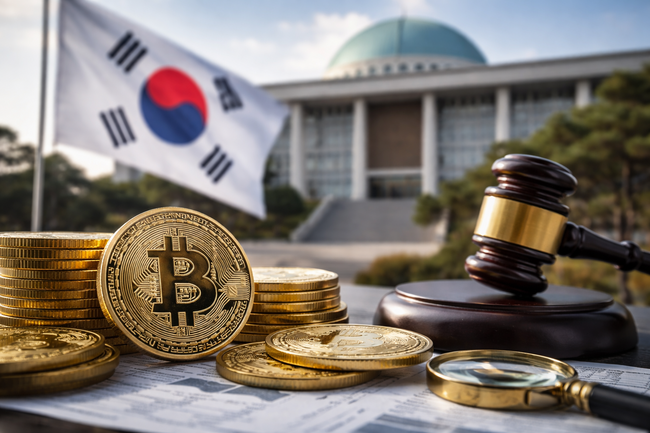
Korean Regulators Probe Bithumb After 620,000 Bitcoins Mistakenly Sent to Users

Korean Regulators Probe Bithumb After 620,000 Bitcoins Mistakenly Sent to Users

        Highlights:  Bithumb mistakenly sent 620,000 Bitcoins to 695 users during a promotion event. The exchange recovered 618,212 Bitcoins, covering almos

Share
Coinstats2026/02/07 19:18
ArtGis Finance Partners with MetaXR to Expand its DeFi Offerings in the Metaverse

ArtGis Finance Partners with MetaXR to Expand its DeFi Offerings in the Metaverse

By using this collaboration, ArtGis utilizes MetaXR’s infrastructure to widen access to its assets and enable its customers to interact with the metaverse.
Share
Blockchainreporter2025/09/18 00:07