Ethereum developers confirmed the Fusaka upgrade will activate on mainnet on December 3, 2025, following a systematic testnet rollout beginning on October 1 on Holesky. The major hard fork will implement around 11-12 Ethereum Improvement Proposals targeting scalability, node efficiency, and data availability improvements without adding new user-facing features. According to Christine Kim, the upgrade introduces a phased blob capacity expansion through Blob Parameter Only forks occurring two weeks after Fusaka activation. Initially maintaining current blob limits of 6/9 target/max, the first BPO fork will increase capacity to 10/15 blobs one week later. A second BPO fork will further expand limits to 14/21 blobs, more than doubling total capacity within two weeks. Strategic Infrastructure Overhaul Fusaka prioritizes backend protocol improvements over user-facing features, focusing on making Ethereum faster and less resource-intensive. The upgrade includes PeerDAS implementation through EIP-7594, allowing validator nodes to verify data by sampling small pieces rather than downloading entire blobs. This reduces bandwidth and storage requirements while enhancing Layer 2 rollup scalability. The upgrade builds on recent gas limit increases from 30 million to 45 million gas, with ongoing discussions for further expansion. EIP-7935 proposes increasing limits to 150 million gas, potentially enabling significantly higher transaction throughput. These improvements complement broader scalability efforts, including EIP-9698, which suggests a 100x gas limit increase over two years to reach 2,000 transactions per second. Fusaka removes the previously planned EVM Object Format redesign to reduce complexity while maintaining focus on essential infrastructure improvements. The upgrade introduces bounded base fees for blob transactions via EIP-7918, creating more predictable transaction costs for data-heavy applications. Enhanced spam resistance and security improvements strengthen network resilience against scalability bottlenecks and attacks. Technical Implementation and Testing Timeline The Fusaka rollout follows a conservative four-phase approach across Ethereum testnets before mainnet deployment. Holesky upgrade occurs October 1, followed by Sepolia on October 14 and Hoodi on October 28. Each testnet will undergo the complete BPO fork sequence to validate the blob capacity expansion mechanism. BPO forks activate automatically based on predetermined epochs rather than requiring separate hard fork processes. On mainnet, the first BPO fork launches December 17, increasing blob capacity to 10/15 target/max. The second BPO fork activates January 7, 2026, reaching the final capacity of 14/21 blobs. This automated approach enables flexible blob scaling without requiring full network upgrades. Notably, node operators face release deadlines ranging from September 25 for Holesky to November 3 for mainnet preparation. The staggered timeline, according to the developers, allows comprehensive testing while giving infrastructure providers sufficient preparation time. Speculatively, the developers use this backward-compatible approach to ensure smooth transitions with minimal disruption to existing applications. PeerDAS implementation reduces node resource demands, potentially increasing network decentralization by lowering barriers for smaller operators. The technology enables more efficient data availability sampling, crucial for supporting growing Layer 2 rollup adoption. Overall, these improvements, combined with increased gas limits, will enable Ethereum to handle higher transaction volumes while maintaining security guarantees. Addressing Network Scalability Pressures The Fusaka upgrade addresses mounting pressure for Ethereum base layer improvements amid criticism of Layer 2 fragmentation strategies. Critics argue that reliance on rollups has created isolated chains with limited interoperability, complicating user experiences. The upgrade’s focus on infrastructure improvements aims to enhance base layer capacity while supporting continued Layer 2 growth. The recent validator queue controversy particularly highlights ongoing network scalability challenges. According to a Cryptonews report covered yesterday, currently, over 2M ETH sits in exit queues facing 43-day delays, while entry queues process in just 7 days.Ethereum Validator Queue (Source: ValidatorQueue) However, Vitalik Buterin defended these delays as essential for network security, comparing validator commitments to military service requiring “friction in quitting.” The upgrade coincides with growing institutional interest in Ethereum infrastructure, with VanEck predicting that Layer 2 networks could reach $1 trillion market capitalization within six years. Fusaka’s emphasis on data availability and node efficiency supports Ethereum’s evolution toward seamless cross-chain interoperability. The upgrade complements initiatives like the Open Intents Framework, where Coinbase Payments recently joined as a core contributor. The initiative, if successful, will address the $21B surge in cross-chain crime. These coordinated efforts aim to unify the fragmented multichain experience while maintaining Ethereum’s security and decentralization principlesEthereum developers confirmed the Fusaka upgrade will activate on mainnet on December 3, 2025, following a systematic testnet rollout beginning on October 1 on Holesky. The major hard fork will implement around 11-12 Ethereum Improvement Proposals targeting scalability, node efficiency, and data availability improvements without adding new user-facing features. According to Christine Kim, the upgrade introduces a phased blob capacity expansion through Blob Parameter Only forks occurring two weeks after Fusaka activation. Initially maintaining current blob limits of 6/9 target/max, the first BPO fork will increase capacity to 10/15 blobs one week later. A second BPO fork will further expand limits to 14/21 blobs, more than doubling total capacity within two weeks. Strategic Infrastructure Overhaul Fusaka prioritizes backend protocol improvements over user-facing features, focusing on making Ethereum faster and less resource-intensive. The upgrade includes PeerDAS implementation through EIP-7594, allowing validator nodes to verify data by sampling small pieces rather than downloading entire blobs. This reduces bandwidth and storage requirements while enhancing Layer 2 rollup scalability. The upgrade builds on recent gas limit increases from 30 million to 45 million gas, with ongoing discussions for further expansion. EIP-7935 proposes increasing limits to 150 million gas, potentially enabling significantly higher transaction throughput. These improvements complement broader scalability efforts, including EIP-9698, which suggests a 100x gas limit increase over two years to reach 2,000 transactions per second. Fusaka removes the previously planned EVM Object Format redesign to reduce complexity while maintaining focus on essential infrastructure improvements. The upgrade introduces bounded base fees for blob transactions via EIP-7918, creating more predictable transaction costs for data-heavy applications. Enhanced spam resistance and security improvements strengthen network resilience against scalability bottlenecks and attacks. Technical Implementation and Testing Timeline The Fusaka rollout follows a conservative four-phase approach across Ethereum testnets before mainnet deployment. Holesky upgrade occurs October 1, followed by Sepolia on October 14 and Hoodi on October 28. Each testnet will undergo the complete BPO fork sequence to validate the blob capacity expansion mechanism. BPO forks activate automatically based on predetermined epochs rather than requiring separate hard fork processes. On mainnet, the first BPO fork launches December 17, increasing blob capacity to 10/15 target/max. The second BPO fork activates January 7, 2026, reaching the final capacity of 14/21 blobs. This automated approach enables flexible blob scaling without requiring full network upgrades. Notably, node operators face release deadlines ranging from September 25 for Holesky to November 3 for mainnet preparation. The staggered timeline, according to the developers, allows comprehensive testing while giving infrastructure providers sufficient preparation time. Speculatively, the developers use this backward-compatible approach to ensure smooth transitions with minimal disruption to existing applications. PeerDAS implementation reduces node resource demands, potentially increasing network decentralization by lowering barriers for smaller operators. The technology enables more efficient data availability sampling, crucial for supporting growing Layer 2 rollup adoption. Overall, these improvements, combined with increased gas limits, will enable Ethereum to handle higher transaction volumes while maintaining security guarantees. Addressing Network Scalability Pressures The Fusaka upgrade addresses mounting pressure for Ethereum base layer improvements amid criticism of Layer 2 fragmentation strategies. Critics argue that reliance on rollups has created isolated chains with limited interoperability, complicating user experiences. The upgrade’s focus on infrastructure improvements aims to enhance base layer capacity while supporting continued Layer 2 growth. The recent validator queue controversy particularly highlights ongoing network scalability challenges. According to a Cryptonews report covered yesterday, currently, over 2M ETH sits in exit queues facing 43-day delays, while entry queues process in just 7 days.Ethereum Validator Queue (Source: ValidatorQueue) However, Vitalik Buterin defended these delays as essential for network security, comparing validator commitments to military service requiring “friction in quitting.” The upgrade coincides with growing institutional interest in Ethereum infrastructure, with VanEck predicting that Layer 2 networks could reach $1 trillion market capitalization within six years. Fusaka’s emphasis on data availability and node efficiency supports Ethereum’s evolution toward seamless cross-chain interoperability. The upgrade complements initiatives like the Open Intents Framework, where Coinbase Payments recently joined as a core contributor. The initiative, if successful, will address the $21B surge in cross-chain crime. These coordinated efforts aim to unify the fragmented multichain experience while maintaining Ethereum’s security and decentralization principles

Ethereum Fusaka Upgrade Set for December 3 Mainnet Launch, Blob Capacity to Double

4 min read

Ethereum developers confirmed the Fusaka upgrade will activate on mainnet on December 3, 2025, following a systematic testnet rollout beginning on October 1 on Holesky.

The major hard fork will implement around 11-12 Ethereum Improvement Proposals targeting scalability, node efficiency, and data availability improvements without adding new user-facing features.

According to Christine Kim, the upgrade introduces a phased blob capacity expansion through Blob Parameter Only forks occurring two weeks after Fusaka activation.

Initially maintaining current blob limits of 6/9 target/max, the first BPO fork will increase capacity to 10/15 blobs one week later.

A second BPO fork will further expand limits to 14/21 blobs, more than doubling total capacity within two weeks.

Strategic Infrastructure Overhaul

Fusaka prioritizes backend protocol improvements over user-facing features, focusing on making Ethereum faster and less resource-intensive.

The upgrade includes PeerDAS implementation through EIP-7594, allowing validator nodes to verify data by sampling small pieces rather than downloading entire blobs.

This reduces bandwidth and storage requirements while enhancing Layer 2 rollup scalability.

The upgrade builds on recent gas limit increases from 30 million to 45 million gas, with ongoing discussions for further expansion.

EIP-7935 proposes increasing limits to 150 million gas, potentially enabling significantly higher transaction throughput.

These improvements complement broader scalability efforts, including EIP-9698, which suggests a 100x gas limit increase over two years to reach 2,000 transactions per second.

Fusaka removes the previously planned EVM Object Format redesign to reduce complexity while maintaining focus on essential infrastructure improvements.

The upgrade introduces bounded base fees for blob transactions via EIP-7918, creating more predictable transaction costs for data-heavy applications.

Enhanced spam resistance and security improvements strengthen network resilience against scalability bottlenecks and attacks.

Technical Implementation and Testing Timeline

The Fusaka rollout follows a conservative four-phase approach across Ethereum testnets before mainnet deployment.

Holesky upgrade occurs October 1, followed by Sepolia on October 14 and Hoodi on October 28.

Each testnet will undergo the complete BPO fork sequence to validate the blob capacity expansion mechanism.

BPO forks activate automatically based on predetermined epochs rather than requiring separate hard fork processes.

On mainnet, the first BPO fork launches December 17, increasing blob capacity to 10/15 target/max.

The second BPO fork activates January 7, 2026, reaching the final capacity of 14/21 blobs. This automated approach enables flexible blob scaling without requiring full network upgrades.

Notably, node operators face release deadlines ranging from September 25 for Holesky to November 3 for mainnet preparation.

The staggered timeline, according to the developers, allows comprehensive testing while giving infrastructure providers sufficient preparation time.

Speculatively, the developers use this backward-compatible approach to ensure smooth transitions with minimal disruption to existing applications.

PeerDAS implementation reduces node resource demands, potentially increasing network decentralization by lowering barriers for smaller operators.

The technology enables more efficient data availability sampling, crucial for supporting growing Layer 2 rollup adoption.

Overall, these improvements, combined with increased gas limits, will enable Ethereum to handle higher transaction volumes while maintaining security guarantees.

Addressing Network Scalability Pressures

The Fusaka upgrade addresses mounting pressure for Ethereum base layer improvements amid criticism of Layer 2 fragmentation strategies.

Critics argue that reliance on rollups has created isolated chains with limited interoperability, complicating user experiences.

The upgrade’s focus on infrastructure improvements aims to enhance base layer capacity while supporting continued Layer 2 growth.

The recent validator queue controversy particularly highlights ongoing network scalability challenges.

According to a Cryptonews report covered yesterday, currently, over 2M ETH sits in exit queues facing 43-day delays, while entry queues process in just 7 days.
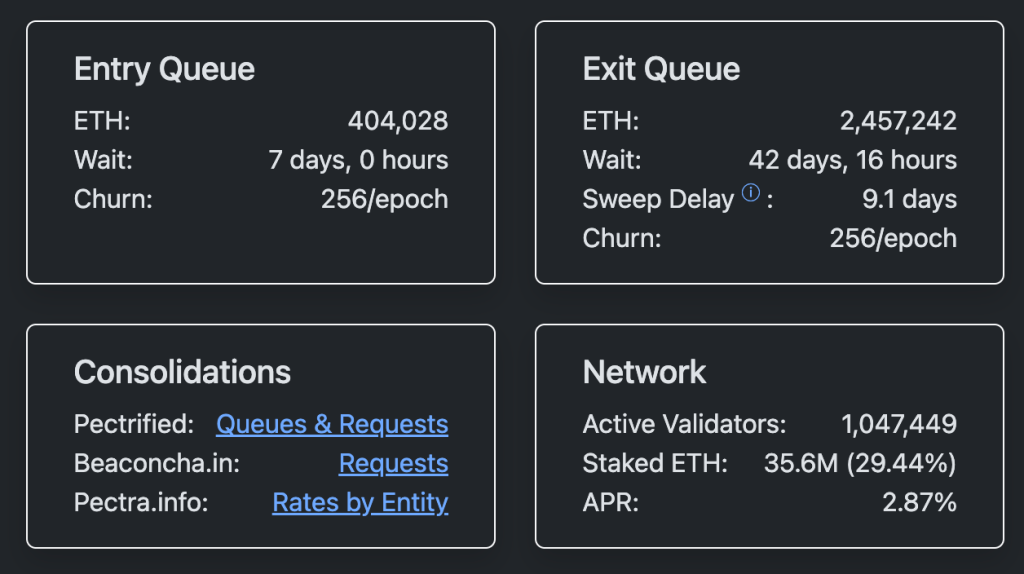
Ethereum Fusaka Upgrade Set for December 3 Mainnet Launch, Blob Capacity to DoubleEthereum Validator Queue (Source: ValidatorQueue)

However, Vitalik Buterin defended these delays as essential for network security, comparing validator commitments to military service requiring “friction in quitting.”

The upgrade coincides with growing institutional interest in Ethereum infrastructure, with VanEck predicting that Layer 2 networks could reach $1 trillion market capitalization within six years.

Fusaka’s emphasis on data availability and node efficiency supports Ethereum’s evolution toward seamless cross-chain interoperability.

The upgrade complements initiatives like the Open Intents Framework, where Coinbase Payments recently joined as a core contributor. The initiative, if successful, will address the $21B surge in cross-chain crime.

These coordinated efforts aim to unify the fragmented multichain experience while maintaining Ethereum’s security and decentralization principles.


Disclaimer: The articles reposted on this site are sourced from public platforms and are provided for informational purposes only. They do not necessarily reflect the views of MEXC. All rights remain with the original authors. If you believe any content infringes on third-party rights, please contact service@support.mexc.com for removal. MEXC makes no guarantees regarding the accuracy, completeness, or timeliness of the content and is not responsible for any actions taken based on the information provided. The content does not constitute financial, legal, or other professional advice, nor should it be considered a recommendation or endorsement by MEXC.

You May Also Like

Shocking OpenVPP Partnership Claim Draws Urgent Scrutiny

Shocking OpenVPP Partnership Claim Draws Urgent Scrutiny

The post Shocking OpenVPP Partnership Claim Draws Urgent Scrutiny appeared on BitcoinEthereumNews.com. The cryptocurrency world is buzzing with a recent controversy surrounding a bold OpenVPP partnership claim. This week, OpenVPP (OVPP) announced what it presented as a significant collaboration with the U.S. government in the innovative field of energy tokenization. However, this claim quickly drew the sharp eye of on-chain analyst ZachXBT, who highlighted a swift and official rebuttal that has sent ripples through the digital asset community. What Sparked the OpenVPP Partnership Claim Controversy? The core of the issue revolves around OpenVPP’s assertion of a U.S. government partnership. This kind of collaboration would typically be a monumental endorsement for any private cryptocurrency project, especially given the current regulatory climate. Such a partnership could signify a new era of mainstream adoption and legitimacy for energy tokenization initiatives. OpenVPP initially claimed cooperation with the U.S. government. This alleged partnership was said to be in the domain of energy tokenization. The announcement generated considerable interest and discussion online. ZachXBT, known for his diligent on-chain investigations, was quick to flag the development. He brought attention to the fact that U.S. Securities and Exchange Commission (SEC) Commissioner Hester Peirce had directly addressed the OpenVPP partnership claim. Her response, delivered within hours, was unequivocal and starkly contradicted OpenVPP’s narrative. How Did Regulatory Authorities Respond to the OpenVPP Partnership Claim? Commissioner Hester Peirce’s statement was a crucial turning point in this unfolding story. She clearly stated that the SEC, as an agency, does not engage in partnerships with private cryptocurrency projects. This response effectively dismantled the credibility of OpenVPP’s initial announcement regarding their supposed government collaboration. Peirce’s swift clarification underscores a fundamental principle of regulatory bodies: maintaining impartiality and avoiding endorsements of private entities. Her statement serves as a vital reminder to the crypto community about the official stance of government agencies concerning private ventures. Moreover, ZachXBT’s analysis…
Share
BitcoinEthereumNews2025/09/18 02:13
United States Building Permits Change dipped from previous -2.8% to -3.7% in August

United States Building Permits Change dipped from previous -2.8% to -3.7% in August

The post United States Building Permits Change dipped from previous -2.8% to -3.7% in August appeared on BitcoinEthereumNews.com. Information on these pages contains forward-looking statements that involve risks and uncertainties. Markets and instruments profiled on this page are for informational purposes only and should not in any way come across as a recommendation to buy or sell in these assets. You should do your own thorough research before making any investment decisions. FXStreet does not in any way guarantee that this information is free from mistakes, errors, or material misstatements. It also does not guarantee that this information is of a timely nature. Investing in Open Markets involves a great deal of risk, including the loss of all or a portion of your investment, as well as emotional distress. All risks, losses and costs associated with investing, including total loss of principal, are your responsibility. The views and opinions expressed in this article are those of the authors and do not necessarily reflect the official policy or position of FXStreet nor its advertisers. The author will not be held responsible for information that is found at the end of links posted on this page. If not otherwise explicitly mentioned in the body of the article, at the time of writing, the author has no position in any stock mentioned in this article and no business relationship with any company mentioned. The author has not received compensation for writing this article, other than from FXStreet. FXStreet and the author do not provide personalized recommendations. The author makes no representations as to the accuracy, completeness, or suitability of this information. FXStreet and the author will not be liable for any errors, omissions or any losses, injuries or damages arising from this information and its display or use. Errors and omissions excepted. The author and FXStreet are not registered investment advisors and nothing in this article is intended…
Share
BitcoinEthereumNews2025/09/18 02:20
CME Group to launch Solana and XRP futures options in October

CME Group to launch Solana and XRP futures options in October

The post CME Group to launch Solana and XRP futures options in October appeared on BitcoinEthereumNews.com. CME Group is preparing to launch options on SOL and XRP futures next month, giving traders new ways to manage exposure to the two assets.  The contracts are set to go live on October 13, pending regulatory approval, and will come in both standard and micro sizes with expiries offered daily, monthly and quarterly. The new listings mark a major step for CME, which first brought bitcoin futures to market in 2017 and added ether contracts in 2021. Solana and XRP futures have quickly gained traction since their debut earlier this year. CME says more than 540,000 Solana contracts (worth about $22.3 billion), and 370,000 XRP contracts (worth $16.2 billion), have already been traded. Both products hit record trading activity and open interest in August. Market makers including Cumberland and FalconX plan to support the new contracts, arguing that institutional investors want hedging tools beyond bitcoin and ether. CME’s move also highlights the growing demand for regulated ways to access a broader set of digital assets. The launch, which still needs the green light from regulators, follows the end of XRP’s years-long legal fight with the US Securities and Exchange Commission. A federal court ruling in 2023 found that institutional sales of XRP violated securities laws, but programmatic exchange sales did not. The case officially closed in August 2025 after Ripple agreed to pay a $125 million fine, removing one of the biggest uncertainties hanging over the token. This is a developing story. This article was generated with the assistance of AI and reviewed by editor Jeffrey Albus before publication. Get the news in your inbox. Explore Blockworks newsletters: Source: https://blockworks.co/news/cme-group-solana-xrp-futures
Share
BitcoinEthereumNews2025/09/17 23:55