

Trump’s Scathing Rebuke: Allies Face Criticism for Lack of Support in Iran Conflict
BitcoinWorld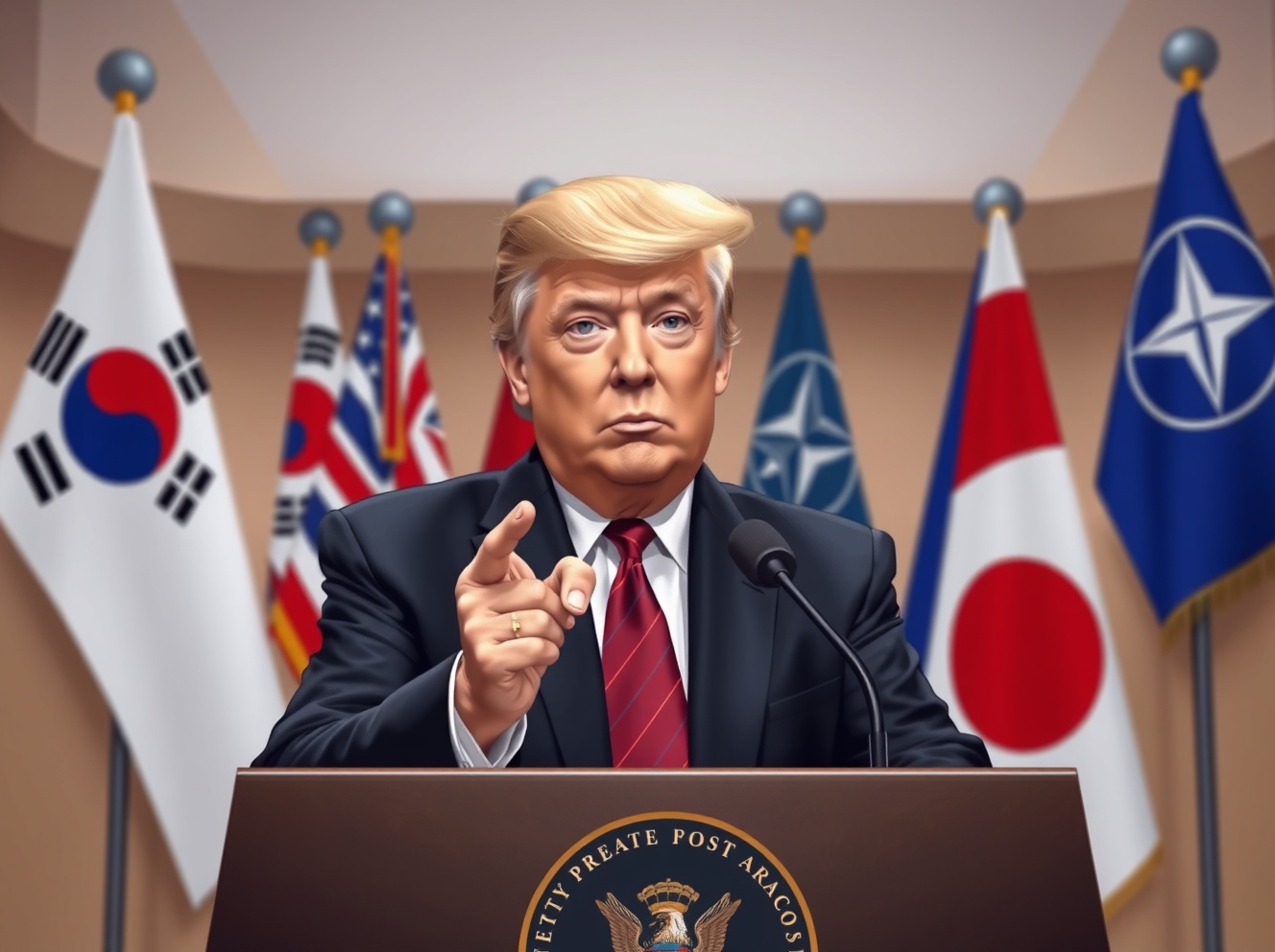
Trump’s Scathing Rebuke: Allies Face Criticism for Lack of Support in Iran Conflict
WASHINGTON, D.C. – In a significant diplomatic development, former President Donald Trump has issued a sharp critique of key U.S. allies, specifically naming South Korea, Australia, Japan, and NATO members for what he describes as a failure to provide meaningful assistance in the ongoing conflict with Iran. This criticism represents a notable escalation in rhetoric concerning allied contributions to global security operations.
Trump’s Direct Criticism of Allied Nations
During recent remarks, Trump specifically identified several nations for their perceived lack of support. He expressed particular frustration with what he characterized as insufficient military and logistical contributions from these traditional partners. Furthermore, Trump described the North Atlantic Treaty Organization as a “paper tiger,” suggesting the alliance demonstrates extreme reluctance to engage in meaningful assistance despite its stated security commitments.
This language echoes previous tensions during his administration regarding burden-sharing within NATO. The criticism comes amid complex geopolitical maneuvering in the Middle East, where Iranian activities have prompted various international responses. Analysts note that such public criticism of allies can strain diplomatic relationships and complicate coordinated security strategies.
Historical Context of U.S.-Allied Security Cooperation
The relationship between the United States and its allies in the Asia-Pacific region and Europe has evolved significantly over decades. Security agreements like the mutual defense treaties with Japan and South Korea, established in the Cold War era, form the bedrock of regional stability. Similarly, NATO’s Article 5 collective defense principle has been invoked only once—following the September 11 attacks.
However, debates about equitable burden-sharing have persisted for years. Successive U.S. administrations have urged allies to increase defense spending. The Trump administration notably intensified this pressure, resulting in increased commitments from several NATO members. The current criticism suggests ongoing dissatisfaction with the implementation and scope of these contributions, particularly regarding conflicts outside traditional treaty areas.
Expert Analysis on Alliance Dynamics
Security analysts point to several factors influencing allied responses to the Iran situation. Many European and Asian nations maintain complex economic and diplomatic relationships with Iran, often pursuing policies of engagement alongside pressure. Additionally, military involvement in Middle Eastern conflicts remains politically sensitive in several allied capitals, where public opinion favors diplomatic solutions over military escalation.
Dr. Eleanor Vance, a senior fellow at the Center for Strategic Studies, explains, “Alliance contributions are rarely straightforward. Nations weigh multiple factors: domestic politics, regional stability, economic interests, and long-term strategic goals. A perceived lack of immediate military support does not necessarily indicate abandonment of alliance principles.” This perspective highlights the intricate calculations behind international coalition building.
The ‘Paper Tiger’ Characterization and Its Implications
Trump’s description of NATO as a “paper tiger” carries substantial symbolic weight. Historically, the term implies an entity that appears powerful but lacks actual strength or resolve. This characterization challenges the alliance’s credibility at a time when it has expanded its focus to include challenges from both Russia and China.
NATO Secretary General has consistently emphasized the alliance’s unity and adaptability. In response to previous criticisms, NATO points to increased defense spending by European members and enhanced capabilities for crisis management. The alliance also highlights its training missions and partnership programs in the Middle East as forms of indirect support for regional stability.
Regional Allies: South Korea, Japan, and Australia’s Strategic Positions
The inclusion of South Korea, Japan, and Australia in the criticism reflects their status as major non-NATO allies. Each nation maintains a distinct strategic relationship with the United States and faces unique regional considerations.
- South Korea: Primarily focused on the threat from North Korea, with its military posture and resources heavily oriented toward peninsular defense. Its constitutional and legal frameworks limit overseas military deployments.
- Japan: Has gradually expanded its security role under reinterpretations of its pacifist constitution but remains cautious about involvement in Middle Eastern conflicts beyond maritime security and diplomatic efforts.
- Australia: Has been one of the most consistent contributors to U.S.-led coalitions historically but must balance commitments across the Indo-Pacific region, where it perceives primary strategic interests.
These nations have provided various forms of non-combat support, including intelligence sharing, logistical assistance, and participation in diplomatic initiatives. However, direct military involvement in Iran remains a significant political and strategic threshold.
The Putin Statement: Context and Strategic Messaging
Trump’s additional comment that “what Putin fears is the United States” introduces another layer to the discussion. This statement appears designed to emphasize American strength independently of allied support. It reinforces a narrative of unilateral capability while implicitly questioning the necessity of alliances that do not provide expected returns.
Russian leadership has historically sought to exploit divisions within Western alliances. Statements highlighting U.S. strength independent of allies could be interpreted as downplaying the strategic value of these partnerships. Security experts note that such messaging, while appealing to certain domestic audiences, can inadvertently validate Russian narratives about NATO’s irrelevance.
Impact on Diplomatic Relations and Future Cooperation
Public criticism of allies typically creates immediate diplomatic friction. Foreign ministries often issue carefully worded responses reaffirming their commitment to shared values while defending their policy decisions. Behind the scenes, such comments can complicate ongoing negotiations and intelligence sharing.
Long-term impacts depend on subsequent actions. If criticism leads to renewed negotiations about burden-sharing and clearer expectations, it could strengthen alliances. Conversely, if perceived as unilateral disparagement without constructive engagement, it may erode trust and encourage allies to diversify their security partnerships. The balance between pressure and partnership remains delicate in alliance management.
Conclusion
Trump’s criticism of South Korea, Australia, Japan, and NATO regarding the Iran conflict highlights enduring tensions in international security cooperation. The characterization of NATO as a “paper tiger” and the assertion of unilateral U.S. strength reflect deeper debates about alliance utility in contemporary geopolitics. These developments occur against a complex backdrop of regional threats, domestic political considerations, and evolving strategic calculations. The ultimate impact on the Iran conflict and broader alliance structures will depend on how these diplomatic exchanges translate into policy adjustments and operational coordination among the involved nations.
FAQs
Q1: What specifically did Trump criticize about allied nations?
Trump criticized South Korea, Australia, Japan, and NATO members for not providing what he considered sufficient assistance in the conflict with Iran, describing NATO as extremely reluctant to help and calling it a “paper tiger.”
Q2: How have the criticized nations typically supported U.S. security initiatives?
These nations have historically provided various forms of support including intelligence sharing, logistical backing, diplomatic partnership, and in some cases, troop deployments to coalition operations, though often within specific legal and political constraints.
Q3: What does the term “paper tiger” mean in this context?
In geopolitical terms, “paper tiger” describes an entity that appears formidable on paper or in rhetoric but lacks actual power, resolve, or effectiveness when challenged in reality.
Q4: How might this criticism affect future cooperation with these allies?
Public criticism can strain diplomatic relations temporarily and complicate negotiations. However, long-term effects depend on follow-up engagement; it could lead to renewed burden-sharing talks or, if mishandled, encourage allies to seek alternative partnerships.
Q5: What was the significance of Trump’s statement about Putin?
The comment that “what Putin fears is the United States” emphasizes a narrative of unilateral American strength, potentially downplaying the strategic value of alliances and reflecting a particular worldview about international power dynamics.
This post Trump’s Scathing Rebuke: Allies Face Criticism for Lack of Support in Iran Conflict first appeared on BitcoinWorld.


You May Also Like

Drift Protocol Breach Triggers Up to $285 Million Losses

Solana Price Sinks as Pepeto Tops $8.1M With Confirmed Binance Listing




