

Vent 2.0: Do these new crypto custody and payment features actually solve Nigeria’s remittance headache?
Chinedu, a Lagos-based designer, finishes a gig for a Canadian client and gets paid in cryptocurrency. A few years ago, this was a novelty; today, it’s a basic reality for the local remote workforce. But the real headache begins after the transaction clears. Moving that crypto into usable Naira without losing sleep or funds to dodgy exchange processes or convoluted peer-to-peer transactions remains unnecessarily stressful.
Vent Africa wants to fix this with Vent 2.0, an overhaul that brings new crypto custody and payment features to the Nigerian market. The pitch is simple: stop juggling apps. But does it actually streamline things, or is it just another app to clutter your home screen?
For years, the African crypto narrative has heavily favoured trading and speculation. Yet, the average remote worker or freelancer doesn’t care about market timing. They care about liquidity. Currently, receiving a digital payment often means bouncing between a wallet to receive, another platform to hold in dollars, and a third-party app to convert to local fiat. It’s a fragmented, anxiety-inducing process where a single copied address error can make the money vanish.
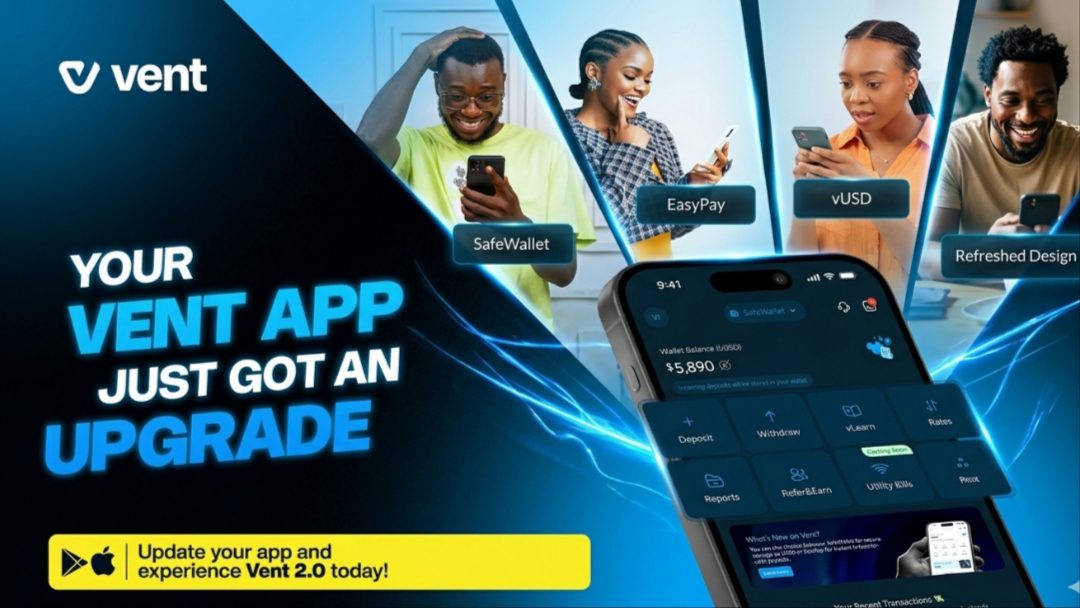 Vent 2.0
Vent launched back in 2021 to handle basic conversions, but their users quite rightly demanded more. They wanted a unified system to store, save, and spend.
Putting Vent 2.0 to the test
Vent’s latest iteration attempts to internalise this entire journey. The most notable additions among its new crypto custody and payment features are built to simplify the user experience:
SafeWallet: Holding volatile assets like Solana or Bitcoin is a great way to lose sleep. Vent’s custody solution converts inbound crypto deposits into vUSD, a stablecoin tied to the US dollar. For gig workers, this is a practical hedge against the Naira’s relentless devaluation. Rather than gambling on daily market swings, your cash sits firmly in dollars within the Vent app. You can cash out to your local bank instantly or move it to an external wallet. It promises future utility, such as settling electricity bills and buying data directly from the vUSD balance.
EasyPay: Liquidity is king. EasyPay is designed to bypass the traditional peer-to-peer drama by crediting local bank accounts directly. You sell your tokens, be it USDT, BNB, or USDC, and the Naira drops directly into your bank account. No navigating complex order books. Just a straight, fast swap. For freelancers paying rent or businesses settling invoices, speed isn’t a luxury, it’s the entire product. Vent claims this crypto-to-cash process handles the conversion quickly, removing unnecessary delays.
 Vent 2.0
The launch of Vent 2.0 reflects a broader, much-needed shift in the crypto ecosystem. By focusing on practical use over speculation, Vent is building for everyday Nigerian customers. The promise of unified control is an attractive one. However, in fintech, execution beats marketing every time. If Vent can maintain instant liquidity at scale without the platform buckling, they might just own the remittance pipeline for Nigeria’s remote workforce.
If the rails falter, it’s just another app to delete.
Also read: Flutterwave partner Kulipa secures $6.2 million to bring Stablecoin-funded payment cards to Nigeria
The post Vent 2.0: Do these new crypto custody and payment features actually solve Nigeria’s remittance headache? first appeared on Technext.


You May Also Like

Critical USDT0 Response to Drift Hack Exposes Stark Contrast in Stablecoin Security Protocols

XRP supply in profit crashes to 43.4%, the lowest since July 2024




