

Vitalik Buterin Outlines Ethereum’s AI Framework, Pushes Back Against Solana’s Acceleration Thesis
- However, Ethereum co-founder Vitalik Buterin pushed back against the Solana thesis of AGI acceleration.
- Buterin identified four main areas of AI incorporation for Ethereum, which comprise trustless privacy and autonomous economic coordination.
Ethereum co-founder Vitalik Buterin has reacted to Solana’s artificial general intelligence acceleration initiative. He did this through the establishment of his self-sovereign artificial intelligence framework. Speaking on the future of artificial intelligence, Buterin stressed the importance of direction and purpose rather than speed alone. The remarks came in response to reflections posted on X by Solana co-founder Anatoly Yakovenko. The stance reflects Ethereum’s long-standing focus on human-centric technological progress.
Buterin has also outlined four areas in which Ethereum technology could interact with AI systems, while, more importantly, not compromising any level of decentralisation. The first of these areas Buterin mentioned was in trustless privacy through the use of zero-knowledge proofs. In which a user can interface with an AI system while maintaining a level of privacy. Buterin also mentioned a role for blockchain standards such as ERC-8004, which could involve managing reputation and security deposits in the form of economic coordination. He also mentioned a verification role for blockchain systems, in which a user could work with AI in relation to smart contract verification.
Lastly, he spoke about governance, where large language models help in processes such as quadratic voting and prediction markets. Buterin used a “survive versus thrive” framework for these entire priorities. His “survive” quadrant was based on the infrastructure for trustless and private AI interactions, with the “thrive” quadrant being the economic layers and AI-scaled governance tools.
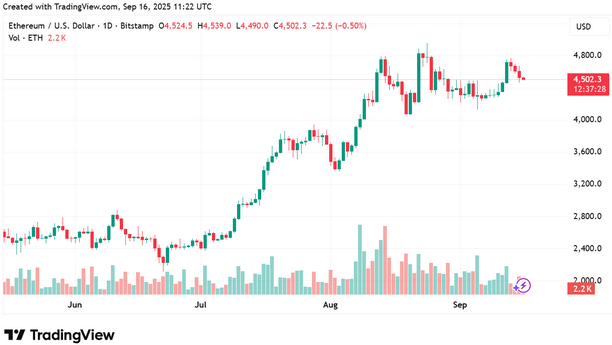
Buterin’s self-sovereign perspective pulls from years of writings on P2P tech and defensivism accelerationism. He emphasised that future development should be in service to pluralism, human agency, and decentralisation. Buterin concluded, saying, “Let’s build the future out of Ethereum and out of zero-knowledge proofs.” Ethereum’s price moved only marginally in the wake of his remarks, still trading within regular ranges at the time of reporting.
Strategic Framework for Blockchain-Enabled AI
Buterin’s retort is part of a larger conversation in both tech and crypto spaces about the pace and direction of AI. He offered a distinction between “d/acc” – “defensive, decentralised, democratic differential acceleration” – and conventional “accelerationism,” emphasising empowerment. Buterin’s first element of his framework, “trustless privacy,” could help change data processing in AI systems. In Buterin’s view, economic coordination could create a decentralised marketplace of autonomous agents.
Such as Verification Layers, which can help reduce the need to rely on central auditors for complex blockchain-based interactions. AI-related applications involve governance using decentralised decision-making systems assisted by AI. These priorities indicate an increased interest in decentralised infrastructure, which can be effective in the long term to test different AI-related use cases. Buterin’s suggestions place Ethereum’s roadmap in the overall context of human-centric technological advancement. This marks a significant change in discussions that have focused on AI speed or singularity.
Highlighted Crypto News:
Ripple Expands Institutional Custody Services With New Security and Staking Tools
You May Also Like

Crypto execs met with US lawmakers to discuss Bitcoin reserve, market structure bills
Lawmakers in the US House of Representatives and Senate met with cryptocurrency industry leaders in three separate roundtable events this week. Members of the US Congress met with key figures in the cryptocurrency industry to discuss issues and potential laws related to the establishment of a strategic Bitcoin reserve and a market structure.On Tuesday, a group of lawmakers that included Alaska Representative Nick Begich and Ohio Senator Bernie Moreno met with Strategy co-founder Michael Saylor and others in a roundtable event regarding the BITCOIN Act, a bill to establish a strategic Bitcoin (BTC) reserve. The discussion was hosted by the advocacy organization Digital Chamber and its affiliates, the Digital Power Network and Bitcoin Treasury Council.“Legislators and the executives at yesterday’s roundtable agree, there is a need [for] a Strategic Bitcoin Reserve law to ensure its longevity for America’s financial future,” Hailey Miller, director of government affairs and public policy at Digital Power Network, told Cointelegraph. “Most attendees are looking for next steps, which may mean including the SBR within the broader policy frameworks already advancing.“Read more
Ethereum Price Prediction: ETH Targets $10,000 In 2026 But Layer Brett Could Reach $1 From $0.0058
