

MoneySense is an award-winning magazine, helping Canadians navigate money matters since 1999. Our editorial team of trained journalists works closely with leading personal finance experts in Canada. To help you find the best financial products, we compare the offerings from over 12 major institutions, including banks, credit unions and card issuers. Learn more about our advertising and trusted partners.
If you’re not among the few who max out their TFSA every January 1, these new year TFSA tips can help you avoid penalties and make smarter moves. The post Your If you’re not among the few who max out their TFSA every January 1, these new year TFSA tips can help you avoid penalties and make smarter moves. The post Your
Your TFSA reset for the new year
Tax-free savings accounts (TFSAs) are useful tax tools with rules that sometimes confuse even the savviest savers. Here are some of the TFSA considerations to keep in mind for the new year to maximize your tax savings, avoid penalties, and leverage the accounts as effectively as possible.
New TFSA contribution room
Every Canadian resident aged 18 or older has $7,000 of new TFSA room as of January 1, 2026. This has been the annual maximum for three consecutive years now, but it could possibly rise in 2027 to $7,500. The 2027 TFSA limit will be confirmed in late 2026.
Since 2016, the annual maximum has risen in $500 increments based on adjustments tied to the Consumer Price Index (CPI), which measures annual inflation.
Cumulative TFSA limit
Your cumulative TFSA limit is more important than the annual maximum. If you have missed contributions in the past, your TFSA room carries forward, with the yearly maximum added to your past room.
If you were 18 years of age or older in 2009 and a resident in Canada all of those years, your cumulative TFSA room would be $109,000 as of January 1, 2026. That is: if you were born in 1991 or earlier, have been a resident in Canada since 2009, and have never contributed to a TFSA, you could have $109,000 of TFSA contribution room in 2026.
Featured TFSA Accounts
featured
EQ Bank TFSA Savings Account
Earn 1.50% tax-free on your cash savings.
Go to site
featured
TFSA GIC rate (1 year)
Earn a guaranteed 3.50% in your TFSA when you lock in for 1 year.
go to site
Best online brokers
Open your TFSA with one of the best online brokers in Canada. See our ranking.
Read now
2025 TFSA withdrawals
TFSA withdrawals impact your TFSA room. If you took withdrawals last year, those withdrawals will be added to your TFSA limit for 2026 along with the annual maximum.
For example, if you withdrew $10,000 from your TFSA in 2025, you would have the $7,000 annual maximum plus another $10,000 of TFSA room, for a total of $17,000 of new TFSA room on January 1, 2026.
Confirming TFSA room with CRA
You can confirm your TFSA room with the Canada Revenue Agency (CRA) by calling them or logging into your CRA My Account online. Note, however, that the data tends to be outdated.
TFSA contributions and withdrawals from the previous year are reported to CRA the following year, but may not be reflected until the spring or later. As a result, CRA’s TFSA records during the first half of the year may be inaccurate. This often leads to people inadvertently over-contributing to their TFSAs.
What to do if you overcontribute
If you contribute to your TFSA beyond your limit, you may be subject to penalties and interest. The penalties are 1% of the overcontribution each month. For example, a $10,000 overcontribution would have a $100 monthly penalty, or $1,200 for a full 12-month period. Interest is also applied to the penalties, and a penalty equal to 100% of any income or gains resulting from a deliberate overcontribution.
Non-residents of Canada cannot contribute to their TFSAs while living abroad. So, non-resident TFSA contributions will also attract penalties and interest.
The CRA may send you an education letter about your TFSA overcontribution and waive penalties and interest, but you should not count on it.
The bottom line: TFSA overcontributions can be very costly, so try to avoid and correct them as soon as possible.
Rankings
Compare the best TFSA rates in Canada
see rates
If you do over-contribute, you should file a TFSA Return (Form RC243) by June 30 of the next calendar year. The CRA may show leniency by waiving or canceling all or part of the penalty tax. There are three conditions they will consider:
- If the tax arose because of a reasonable error.
- The extent to which the transaction(s) that lead to the tax also lead to another tax under the Income Tax Act.
- The extent to which withdrawals have been made from the TFSA to correct the error.
If you disagree with a TFSA Notice of Assessment, you have 90 days to submit a Notice of Objection – Income Tax Act (Form T400A). This is a way to formally disagree with CRA’s assessment and request a second review.
What to do if… you have RRSP room
If you have a high taxable income and RRSP contribution room, you may want to consider an RRSP contribution. You can withdraw money from your TFSA and use it to make an RRSP contribution.
The most beneficial situation to consider this is if your income is relatively high now, and you expect it to be relatively low in retirement. Especially if you can commit the money to invest for the long-term.
Featured RRSP Accounts
featured
EQ Bank
Build your retirement savings with 1.50% interest, tax-deferred contributions and zero fees.
go to site
featured
Registered GIC rate
Earn a guaranteed 2.75% in your RRSP when you lock in for 1 year.
go to site
Best RRSP rates
See our ranking of the best RRSP accounts and rates available in Canada.
read now
MoneySense is an award-winning magazine, helping Canadians navigate money matters since 1999. Our editorial team of trained journalists works closely with leading personal finance experts in Canada. To help you find the best financial products, we compare the offerings from over 12 major institutions, including banks, credit unions and card issuers. Learn more about our advertising and trusted partners.
What to do if… you’re saving for a home
If your savings are more short-term in nature, and ear-marked for a home purchase, you should consider a first home savings account (FHSA). FHSAs allow tax-deductible contributions for eligible savers who have not owned a home in the current year or the previous four years.
You can make annual FHSA contributions of $8,000 and lifetime contributions of $40,000. Like with TFSAs, withdrawals can be tax-free for the purchase of an eligible home—but the benefit of taking TFSA withdrawals to contribute to an FHSA are the tax deductions. You can effectively turn $8,000 of TFSA savings into $8,000 of FHSA savings and have tax refunds ranging from about $1,500 to over $4,000 depending on your taxable income and province of residence.
Rankings
Compare the best FHSA rates in Canada
see rates
What to do if… your mortgage renews in 2026
Lots of borrowers took out 5-year fixed rate mortgages in 2021 as interest rates dipped below 2%. If you have a mortgage coming up for renewal in 2026, your rate is likely to be at least twice as high as it was in 2021. This may cause your monthly payments to increase, and you may consider taking a TFSA withdrawal to make a lump-sum mortgage payment or supplement your monthly cash flow.
If you are a conservative investor and you do not anticipate earning a rate of return higher than your mortgage interest rate, you should also consider a TFSA withdrawal. As an example, the best new guaranteed investment certificate (GIC) rates are currently in the 3% range, or less for those who have GICs at banks. Mortgage rates are in the 4% range.
If you have $10,000 in a GIC at 3%, you will earn $300 of interest over the next year. By comparison, if you pay down $10,000 of mortgage debt and avoid 4% interest as a result, you will save $400 of interest over the next year. Would you trade $300 of interest to save $400 of interest? You would be better off. So, remember: TFSAs for conservative investors may not be the best option if you have debt.
Newsletter
Get free MoneySense financial tips, news & advice in your inbox.
subscribe now
Read more from Ask a Planner:
- Should I hold my house in a trust?
- What are the tax implications of a donation?
- How does a pension buyback work?
- What is the CRA’s Voluntary Disclosures Program?
The post Your TFSA reset for the new year appeared first on MoneySense.
Market Opportunity
Notcoin Price(NOT)
$0.0005744
$0.0005744$0.0005744
USD
Notcoin (NOT) Live Price Chart
Disclaimer: The articles reposted on this site are sourced from public platforms and are provided for informational purposes only. They do not necessarily reflect the views of MEXC. All rights remain with the original authors. If you believe any content infringes on third-party rights, please contact service@support.mexc.com for removal. MEXC makes no guarantees regarding the accuracy, completeness, or timeliness of the content and is not responsible for any actions taken based on the information provided. The content does not constitute financial, legal, or other professional advice, nor should it be considered a recommendation or endorsement by MEXC.
You May Also Like
Crucial US Stock Market Update: What Wednesday’s Mixed Close Reveals
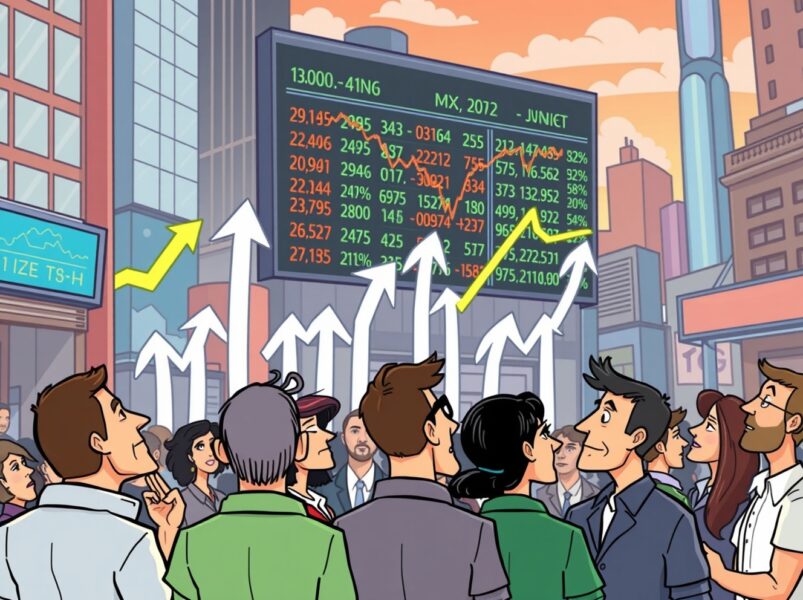
BitcoinWorld Crucial US Stock Market Update: What Wednesday’s Mixed Close Reveals The financial world often keeps us on our toes, and Wednesday was no exception. Investors watched closely as the US stock market concluded the day with a mixed performance across its major indexes. This snapshot offers a crucial glimpse into current investor sentiment and economic undercurrents, prompting many to ask: what exactly happened? Understanding the Latest US Stock Market Movements On Wednesday, the closing bell brought a varied picture for the US stock market. While some indexes celebrated gains, others registered slight declines, creating a truly mixed bag for investors. The Dow Jones Industrial Average showed resilience, climbing by a notable 0.57%. This positive movement suggests strength in some of the larger, more established companies. Conversely, the S&P 500, a broader benchmark often seen as a barometer for the overall market, experienced a modest dip of 0.1%. The technology-heavy Nasdaq Composite also saw a slight retreat, sliding by 0.33%. This particular index often reflects investor sentiment towards growth stocks and the tech sector. These divergent outcomes highlight the complex dynamics currently at play within the American economy. It’s not simply a matter of “up” or “down” for the entire US stock market; rather, it’s a nuanced landscape where different sectors and company types are responding to unique pressures and opportunities. Why Did the US Stock Market See Mixed Results? When the US stock market delivers a mixed performance, it often points to a tug-of-war between various economic factors. Several elements could have contributed to Wednesday’s varied closings. For instance, positive corporate earnings reports from certain industries might have bolstered the Dow. At the same time, concerns over inflation, interest rate policies by the Federal Reserve, or even global economic uncertainties could have pressured growth stocks, affecting the S&P 500 and Nasdaq. Key considerations often include: Economic Data: Recent reports on employment, manufacturing, or consumer spending can sway market sentiment. Corporate Announcements: Strong or weak earnings forecasts from influential companies can significantly impact their respective sectors. Interest Rate Expectations: The prospect of higher or lower interest rates directly influences borrowing costs for businesses and consumer spending, affecting future profitability. Geopolitical Events: Global tensions or trade policies can introduce uncertainty, causing investors to become more cautious. Understanding these underlying drivers is crucial for anyone trying to make sense of daily market fluctuations in the US stock market. Navigating Volatility in the US Stock Market A mixed close, while not a dramatic downturn, serves as a reminder that market volatility is a constant companion for investors. For those involved in the US stock market, particularly individuals managing their portfolios, these days underscore the importance of a well-thought-out strategy. It’s important not to react impulsively to daily movements. Instead, consider these actionable insights: Diversification: Spreading investments across different sectors and asset classes can help mitigate risk when one area underperforms. Long-Term Perspective: Focusing on long-term financial goals rather than short-term gains can help weather daily market swings. Stay Informed: Keeping abreast of economic news and company fundamentals provides context for market behavior. Consult Experts: Financial advisors can offer personalized guidance based on individual risk tolerance and objectives. Even small movements in major indexes can signal shifts that require attention, guiding future investment decisions within the dynamic US stock market. What’s Next for the US Stock Market? Looking ahead, investors will be keenly watching for further economic indicators and corporate announcements to gauge the direction of the US stock market. Upcoming inflation data, statements from the Federal Reserve, and quarterly earnings reports will likely provide more clarity. The interplay of these factors will continue to shape investor confidence and, consequently, the performance of the Dow, S&P 500, and Nasdaq. Remaining informed and adaptive will be key to understanding the market’s trajectory. Conclusion: Wednesday’s mixed close in the US stock market highlights the intricate balance of forces influencing financial markets. While the Dow showed strength, the S&P 500 and Nasdaq experienced slight declines, reflecting a nuanced economic landscape. This reminds us that understanding the ‘why’ behind these movements is as important as the movements themselves. As always, a thoughtful, informed approach remains the best strategy for navigating the complexities of the market. Frequently Asked Questions (FAQs) Q1: What does a “mixed close” mean for the US stock market? A1: A mixed close indicates that while some major stock indexes advanced, others declined. It suggests that different sectors or types of companies within the US stock market are experiencing varying influences, rather than a uniform market movement. Q2: Which major indexes were affected on Wednesday? A2: On Wednesday, the Dow Jones Industrial Average gained 0.57%, while the S&P 500 edged down 0.1%, and the Nasdaq Composite slid 0.33%, illustrating the mixed performance across the US stock market. Q3: What factors contribute to a mixed stock market performance? A3: Mixed performances in the US stock market can be influenced by various factors, including specific corporate earnings, economic data releases, shifts in interest rate expectations, and broader geopolitical events that affect different market segments uniquely. Q4: How should investors react to mixed market signals? A4: Investors are generally advised to maintain a long-term perspective, diversify their portfolios, stay informed about economic news, and avoid impulsive decisions. Consulting a financial advisor can also provide personalized guidance for navigating the US stock market. Q5: What indicators should investors watch for future US stock market trends? A5: Key indicators to watch include upcoming inflation reports, statements from the Federal Reserve regarding monetary policy, and quarterly corporate earnings reports. These will offer insights into the future direction of the US stock market. Did you find this analysis of the US stock market helpful? Share this article with your network on social media to help others understand the nuances of current financial trends! To learn more about the latest stock market trends, explore our article on key developments shaping the US stock market‘s future performance. This post Crucial US Stock Market Update: What Wednesday’s Mixed Close Reveals first appeared on BitcoinWorld.
Share
Coinstats2025/09/18 05:30

Forbes' 2026 Crypto Investment Trends Outlook: Institutionalization, Tokenization, Stablecoins, and the AI Machine Economy
PANews reported on January 2nd that Nina Bambysheva, Forbes' currency markets editor and analyst, published an article analyzing five major trends in crypto investment
Share
PANews2026/01/02 20:15

Zcash Price Faces Breakdown Risk
The post Zcash Price Faces Breakdown Risk appeared on BitcoinEthereumNews.com. Zcash price has maintained an apparent uptrend, fueling expectations of an impending
Share
BitcoinEthereumNews2026/01/02 20:35