Build a Python “auto-painter” that uses hardware entropy to seed a deterministic generative art run—then logs every stroke for perfect provenance.Build a Python “auto-painter” that uses hardware entropy to seed a deterministic generative art run—then logs every stroke for perfect provenance.

This Python “Auto-Painter” Creates a New Universe Every Time You Run It

There’s a strange feeling that washes over you when you witness something you’ve created take on a life of its own. It’s not just pride; it’s a deep, almost philosophical resonance. That’s the feeling I’ve carried since my “Auto-Painter Robot Brain” completed its first masterpiece. What began as a simple coding exercise evolved into a profound exploration of art, logic, and the very nature of creation itself.

This isn’t just an “art generator.” It’s a small-scale model of a universe, born from a single moment, unfolding its entire complex existence over a million perfect, logical strokes.

The Genesis: Building the Robot’s Mind

My goal was to design a Python-based “robot brain” that could autonomously generate abstract digital artwork. It needed a canvas, a set of tools, and a way to make “creative” decisions.

  1. The Digital Canvas: Using Pygame, I set up an 800x600 pixel window. This was the empty void awaiting creation.
  2. The Robot’s Toolkit: I endowed my robot with:
  • A Color Palette: A carefully chosen selection of blues, yellows, oranges, and reds.
  • Diverse Shapes: It could draw circles, rectangles, and polygons ranging from 3 (triangles) to 13 sides.
  • The Power of Transparency: Each shape could be semi-transparent, allowing for rich, layered effects.
  • Gradients: A key feature, giving shapes a dynamic, flowing look as they transition between two randomly chosen colors.
  1. The “Big Bang” — A Unique Seed: This was crucial. Instead of simple pseudo-randomness, I tapped into my computer’s hardware entropy pool using os.urandom. This meant that the very first decision — the "seed" for all subsequent random choices — was a unique snapshot of my computer's internal activity at that precise moment. Every time the script runs, a new "universe" is born, guaranteed to be different.
  2. The Laws of Physics: The core of the robot’s “brain” consisted of simple, deterministic functions. It would randomly choose a color (or two for a gradient), a position on the canvas, a size, and a shape type. If it chose a polygon, it would randomly select its number of sides.

The Act of Creation: A Million Strokes

Once initialized, the robot began its work. The process was set to run for 1 million strokes. For over two hours, this autonomous artist diligently layered shapes, colors, and gradients onto the digital canvas.

\ \ Each decision, each placement, each color choice was a direct, logical consequence of that initial “Big Bang” seed. There was no human intervention, no second-guessing, just the relentless, perfect execution of its programmed laws.

The final artwork, a dense tapestry of overlapping forms and colors, is a visual record of this entire journey.

Press enter or click to view image in full size

\

The Unveiling: Art, Logic, and Perfect Provenance

Upon completion, the robot’s work wasn’t just a single image. It delivered two profound artifacts:

  1. The Masterpiece (.png): The final abstract image itself.
  2. The “Story” (.txt): A meticulously detailed log file. This file records every single one of the million strokes, detailing its number, shape type, exact position, size, whether it was a gradient, its specific colors, and if applicable, its number of sides.

This is where the true significance of the project resonated with me.

Why This Isn’t “Just an Auto-Painter”

  • A “Perfect” Universe in a Bottle: This project functions as a self-contained, deterministic universe. From that singular “Big Bang” seed, its entire existence (the 1 million strokes) was pre-ordained. What appears chaotic to the human eye is, from a logical standpoint, a flawless, inevitable unfolding of events. There were no mistakes, no second thoughts — just pure, perfect execution of its foundational laws.
  • The Translation of Art into Logic: I didn’t paint this image. I built a system that understood how to paint based on my rules. I translated my artistic intuition (what makes good composition, pleasing colors, interesting forms) into pure logic. The robot became a proxy for my creative process, automating the very act of artistic generation itself.
  • The Ultimate Provenance: Every piece of art has a story. This robot generated its own. The log file is the complete, verifiable “artist’s statement,” a diary of every single creative decision made. It doesn’t just show the finished product; it provides the entire history of its creation, proving its unique origin and validating every stroke’s “intentionality” within its own system.

This project redefined my understanding of art. It’s not just about the final image, but the elegance of the system that created it. It’s a testament to the beauty of logic, the power of algorithms, and the profound parallels between a coded process and the very universe we inhabit — a single starting point, unfolding into a complex, perfect, and unrepeatable reality.

\ \

Market Opportunity
SEED Logo
SEED Price(SEED)
$0.0004793
$0.0004793$0.0004793
-0.24%
USD
SEED (SEED) Live Price Chart
Disclaimer: The articles reposted on this site are sourced from public platforms and are provided for informational purposes only. They do not necessarily reflect the views of MEXC. All rights remain with the original authors. If you believe any content infringes on third-party rights, please contact service@support.mexc.com for removal. MEXC makes no guarantees regarding the accuracy, completeness, or timeliness of the content and is not responsible for any actions taken based on the information provided. The content does not constitute financial, legal, or other professional advice, nor should it be considered a recommendation or endorsement by MEXC.

You May Also Like

Academic Publishing and Fairness: A Game-Theoretic Model of Peer-Review Bias

Academic Publishing and Fairness: A Game-Theoretic Model of Peer-Review Bias

Exploring how biases in the peer-review system impact researchers' choices, showing how principles of fairness relate to the production of scientific knowledge based on topic importance and hardness.
Share
Hackernoon2025/09/17 23:15
Foreigner’s Lou Gramm Revisits The Band’s Classic ‘4’ Album, Now Reissued
Foreigner’s Lou Gramm Revisits The Band’s Classic ‘4’ Album, Now Reissued

The post Foreigner’s Lou Gramm Revisits The Band’s Classic ‘4’ Album, Now Reissued appeared on BitcoinEthereumNews.com. American-based rock band Foreigner performs onstage at the Rosemont Horizon, Rosemont, Illinois, November 8, 1981. Pictured are, from left, Mick Jones, on guitar, and vocalist Lou Gramm. (Photo by Paul Natkin/Getty Images) Getty Images Singer Lou Gramm has a vivid memory of recording the ballad “Waiting for a Girl Like You” at New York City’s Electric Lady Studio for his band Foreigner more than 40 years ago. Gramm was adding his vocals for the track in the control room on the other side of the glass when he noticed a beautiful woman walking through the door. “She sits on the sofa in front of the board,” he says. “She looked at me while I was singing. And every now and then, she had a little smile on her face. I’m not sure what that was, but it was driving me crazy. “And at the end of the song, when I’m singing the ad-libs and stuff like that, she gets up,” he continues. “She gives me a little smile and walks out of the room. And when the song ended, I would look up every now and then to see where Mick [Jones] and Mutt [Lange] were, and they were pushing buttons and turning knobs. They were not aware that she was even in the room. So when the song ended, I said, ‘Guys, who was that woman who walked in? She was beautiful.’ And they looked at each other, and they went, ‘What are you talking about? We didn’t see anything.’ But you know what? I think they put her up to it. Doesn’t that sound more like them?” “Waiting for a Girl Like You” became a massive hit in 1981 for Foreigner off their album 4, which peaked at number one on the Billboard chart for 10 weeks and…
Share
BitcoinEthereumNews2025/09/18 01:26
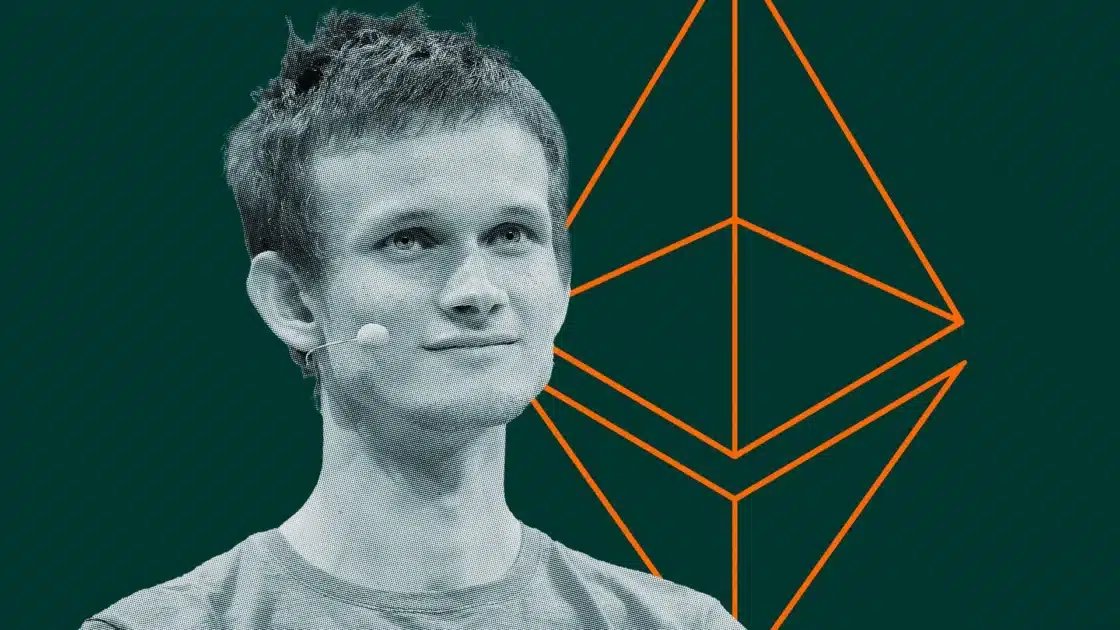
Vitalik Buterin Reveals Ethereum’s Bold Plan to Stay Quantum-Secure and Simple!

Vitalik Buterin Reveals Ethereum’s Bold Plan to Stay Quantum-Secure and Simple!

Buterin unveils Ethereum’s strategy to tackle quantum security challenges ahead. Ethereum focuses on simplifying architecture while boosting security for users. Ethereum’s market stability grows as Buterin’s roadmap gains investor confidence. Ethereum founder Vitalik Buterin has unveiled his long-term vision for the blockchain, focusing on making Ethereum quantum-secure while maintaining its simplicity for users. Buterin presented his roadmap at the Japanese Developer Conference, and splits the future of Ethereum into three phases: short-term, mid-term, and long-term. Buterin’s most ambitious goal for Ethereum is to safeguard the blockchain against the threats posed by quantum computing.  The danger of such future developments is that the future may call into question the cryptographic security of most blockchain systems, and Ethereum will be able to remain ahead thanks to more sophisticated mathematical techniques to ensure the safety and integrity of its protocols. Buterin is committed to ensuring that Ethereum evolves in a way that not only meets today’s security challenges but also prepares for the unknowns of tomorrow. Also Read: Ethereum Giant The Ether Machine Takes Major Step Toward Going Public! However, in spite of such high ambitions, Buterin insisted that Ethereum also needed to simplify its architecture. An important aspect of this vision is to remove unnecessary complexity and make Ethereum more accessible and maintainable without losing its strong security capabilities. Security and simplicity form the core of Buterin’s strategy, as they guarantee that the users of Ethereum experience both security and smooth processes. Focus on Speed and Efficiency in the Short-Term In the short term, Buterin aims to enhance Ethereum’s transaction efficiency, a crucial step toward improving scalability and reducing transaction costs. These advantages are attributed to the fact that, within the mid-term, Ethereum is planning to enhance the speed of transactions in layer-2 networks. According to Butterin, this is part of Ethereum’s expansion, particularly because there is still more need to use blockchain technology to date. The other important aspect of Ethereum’s development is the layer-2 solutions. Buterin supports an approach in which the layer-2 networks are dependent on layer-1 to perform some essential tasks like data security, proof, and censorship resistance. This will enable the layer-2 systems of Ethereum to be concerned with verifying and sequencing transactions, which will improve the overall speed and efficiency of the network. Ethereum’s Market Stability Reflects Confidence in Long-Term Strategy Ethereum’s market performance has remained solid, with the cryptocurrency holding steady above $4,000. Currently priced at $4,492.15, Ethereum has experienced a slight 0.93% increase over the last 24 hours, while its trading volume surged by 8.72%, reaching $34.14 billion. These figures point to growing investor confidence in Ethereum’s long-term vision. The crypto community remains optimistic about Ethereum’s future, with many predicting the price could rise to $5,500 by mid-October. Buterin’s clear, forward-thinking strategy continues to build trust in Ethereum as one of the most secure and scalable blockchain platforms in the market. Also Read: Whales Dump 200 Million XRP in Just 2 Weeks – Is XRP’s Price on the Verge of Collapse? The post Vitalik Buterin Reveals Ethereum’s Bold Plan to Stay Quantum-Secure and Simple! appeared first on 36Crypto.
Share
Coinstats2025/09/18 01:22
